

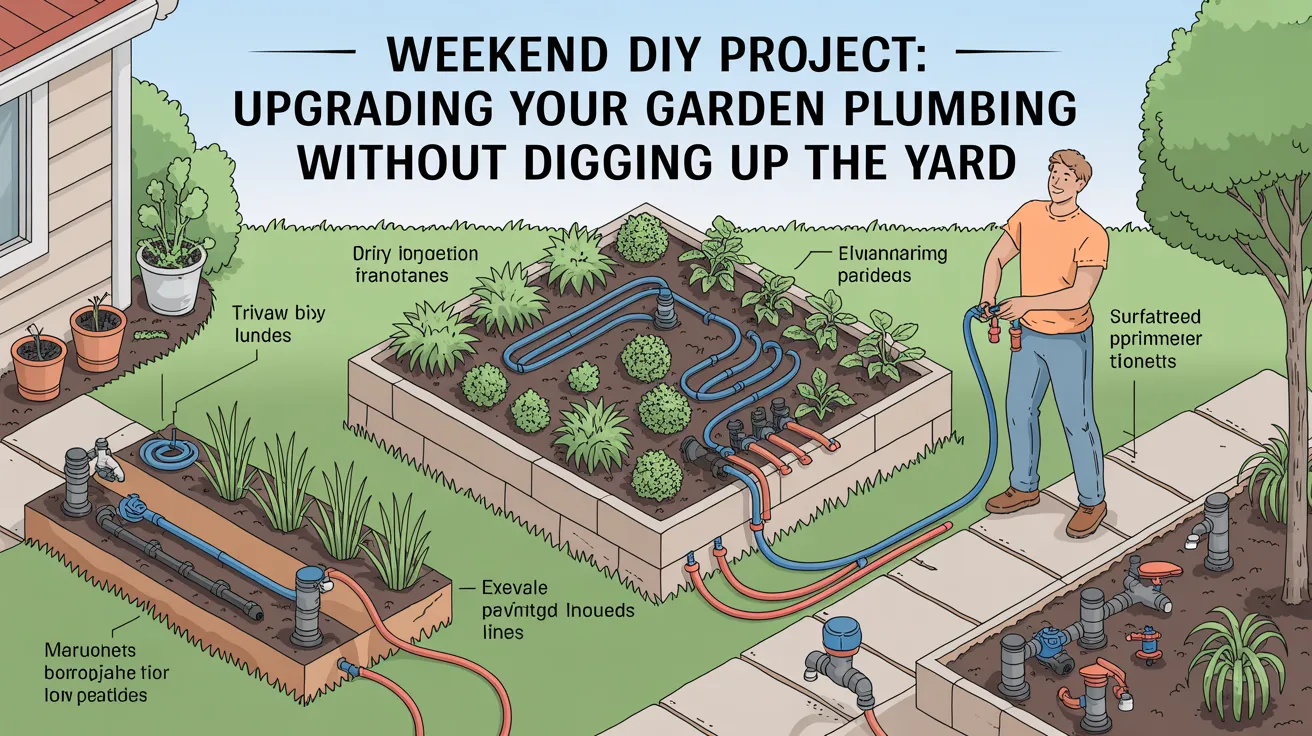
For many homeowners, the phrase garden plumbing upgrade instantly conjures images of torn-up lawns, muddy trenches, and a weekend sacrificed to heavy labor—or worse, an expensive call to a professional installer. That assumption keeps countless gardens stuck with inefficient, frustrating setups that make even basic watering feel like a chore.
The reality is far more encouraging. Some of the most effective improvements to garden plumbing can be completed entirely above ground or with minimal interference to your existing system. With the right approach, a handful of well-chosen components, and a free weekend, you can dramatically improve how water moves through your garden—without ever touching a shovel.
This guide takes an editorial, practical look at how to modernize your garden plumbing the smart way: by identifying friction points, upgrading control and connections, and building a system that’s flexible enough to grow with you.
Start Where the Frustration Lives
Before buying parts or redesigning anything, pause and observe how you actually use water outdoors. Most garden plumbing issues don’t stem from the main supply line; they come from the small, everyday interactions that add up over time.
Ask yourself a simple question: What consistently slows me down or irritates me when I’m working in the garden?
For most homeowners, the answers are strikingly similar:
- Hoses that need constant swapping between taps
- Leaks that spray water at the connection point
- Sprinklers that underperform due to pressure loss
- No easy way to shut water off outside in an emergency
These aren’t structural problems. They’re interface problems—issues caused by aging fittings, cheap connectors, or a lack of thoughtful layout. And that’s exactly why they’re so DIY-friendly to fix.
Why Connection Quality Matters More Than You Think
Garden plumbing lives a hard life. Fittings are exposed to sun, temperature swings, vibration, and repeated tightening and loosening. Over time, low-grade plastic connectors warp, internal washers degrade, and threads lose their bite. The result is a system that technically “works,” but never works well.
Upgrading your hose connections and fittings is one of the fastest ways to see immediate improvement. High-quality fittings offer:
- More reliable seals, reducing leaks and wasted water
- Consistent internal diameter, which helps maintain pressure
- Smoother threading, making hoses easier to attach and remove
- Longer lifespan, especially in outdoor conditions
This is the kind of upgrade that takes minutes per connection but pays off every time you turn the tap. Better connections don’t just improve performance—they reduce daily friction, which is often the real goal of DIY improvements.
Reclaim Control With Outdoor Shut-Off Valves
If your only way to stop outdoor water flow is inside the house, you’re operating with unnecessary risk and inconvenience. A burst hose, cracked connector, or accidental sprinkler knock-over becomes a sprint indoors instead of a quick twist of a valve.
Adding outdoor shut-off valves—especially near hose connections or garden zones—changes how safely and confidently you can work. With local control, you can:
- Instantly stop water if something fails
- Perform maintenance without disrupting indoor water use
- Isolate specific hoses, beds, or systems
- Reduce wear on interior plumbing caused by constant cycling
Modern DIY-friendly shut-off valves are designed for straightforward installation and require no modification to underground pipes. Positioned thoughtfully, they act as checkpoints in your system—small components that provide outsized peace of mind.
Build a Centralized Garden Water Station
One of the most transformative upgrades you can make—without digging—is creating a dedicated garden water station. Rather than treating your outdoor tap as a single-use outlet, a water station turns it into a controlled distribution hub.
A simple, effective station typically includes:
- One primary supply connection from the tap
- A splitter or manifold
- Individual shut-off valves for each hose or system
- Clearly defined, organized outlets
This setup allows you to leave hoses connected, assign specific lines to specific tasks, and reduce the wear that comes from constant connecting and disconnecting. It also keeps the area visually tidy, which matters more than most people expect in a frequently used space.
Durability is crucial here. Because everything is exposed, components should be chosen specifically for outdoor use. Many DIY gardeners prefer sourcing valves, fittings, and manifolds from focused suppliers like PlumbingSell, where compatibility and material quality are more consistent.
👉 DIY builders often source components from https://plumbingsell.com/ to avoid mismatched threads and short-lived replacements.
Design for the Garden You’ll Have, Not Just the One You Have Now
A well-designed garden plumbing upgrade doesn’t just solve today’s problems—it anticipates tomorrow’s projects. That might include:
- Adding drip irrigation to garden beds
- Connecting a seasonal outdoor sink
- Extending water to a new planting area
- Integrating timers or smart irrigation later
The key principle is modularity. By keeping connections accessible, using standardized fittings, and avoiding buried complexity, you ensure that future changes won’t require undoing past work. Each upgrade becomes a building block rather than a dead end.
This approach is especially valuable for DIYers, because it protects your time investment. When your garden evolves, your plumbing can evolve with it—without restarting from scratch.
A Smarter Way to Spend a Weekend
DIY garden plumbing doesn’t need to be disruptive, technical, or intimidating. In fact, the most satisfying improvements often come from focusing on the small details that affect daily use: better connections, smarter control points, and a cleaner layout.
By upgrading how water moves above ground, you avoid unnecessary labor while gaining a system that’s easier to use, easier to maintain, and far more enjoyable. It’s the kind of project that fits neatly into a weekend—and keeps paying dividends every time you step into the garden.
When done right, these upgrades quietly transform gardening from something you tolerate into something that feels smooth, efficient, and genuinely pleasant. And that’s exactly what a good DIY project should deliver.
