

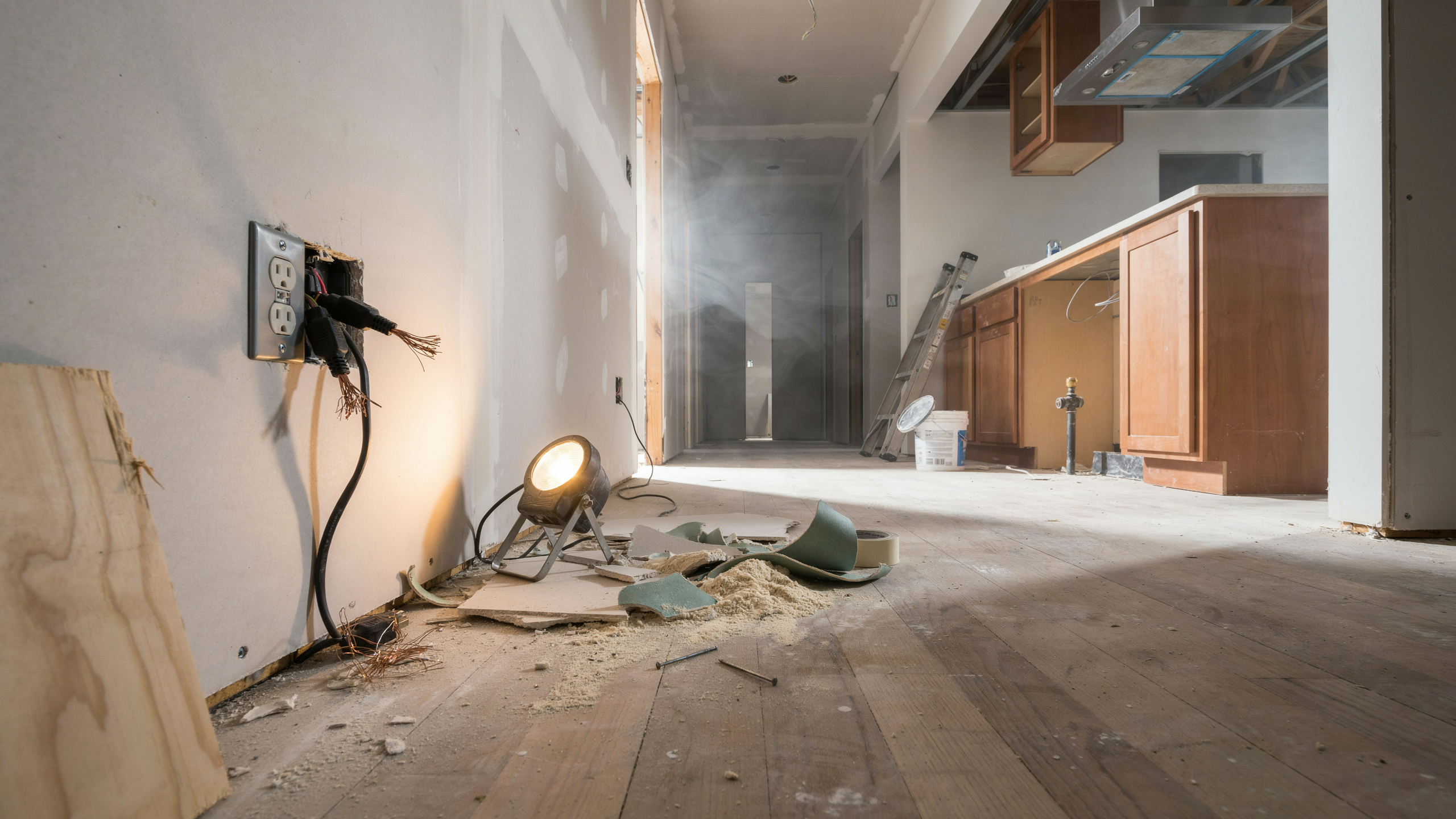
A renovation is one of the more rewarding projects a homeowner can take on. Modern finishes, layout improvements, and a boost in resale value all make the effort worthwhile. However, in the shuffle of remodeling, fire safety often gets pushed to the side.
Flammable materials, exposed electrical circuits, and heaps of clutter increase structural fire risks in all sorts of unexpected ways. These oversights can be costly, but knowing what to watch out for ensures a safe, efficient, hazard-free renovation. Let’s explore some common remodeling mistakes—plus, how to avoid them in your own project.
1. Blocked or Painted-Over Sprinkler Heads
Never paint a fire sprinkler head. Even a single coat of paint will insulate the sprinkler head’s heat-sensitive mechanism, which slows its response time. Decorative soffits, beams, and other elements installed too close to a sprinkler head can obstruct the spray pattern as well. Communicate to your contractor that all sprinkler heads must remain untouched.
2. Circuit Overloads or Shortcut Wiring
Electrical failures and malfunctions cause tens of thousands of home fires each year, the National Fire Protection Association (NFPA) estimates. Renovations can further escalate that danger since new kitchens, home offices, or media rooms often draw more power than the old rooms they replace. It can be tempting to load that power onto whatever electrical circuit is already there, but this is also a risky move.
Daisy-chained outlets or junction boxes behind fresh drywall might seem like easy shortcuts in the moment, but cutting these corners can lead to scorch marks. Before you close up the walls, have a licensed electrician confirm the panel can carry this new load.
3. Recessed Lights Buried in Insulation
Recessed light fixtures that aren’t IC-rated run hot enough to spark a fuse in any object or material pressed against them. This is especially hazardous in the case of ceiling remodels. Exposed insulation can come into contact with recessed light fixtures, and those flammable insulation fibers can easily ignite into a blaze.
The U.S. The Department of Energy’s Building America Solution Center calls for at least three inches of clearance around a non-IC light fixture. But the more efficient solution is to install IC-rated (insulation contact) fixtures wherever a ceiling meets insulation, then drop in LED bulbs to keep the heat levels down.
4. Blocked Hallways, Doorways, or Exits
Imagine you’re in the third week of a full kitchen remodel. Cabinet boxes lean against one wall, a table has migrated into the hall, drop cloths are strewn on the floor, and a tile saw has been left in the back doorway. None of this clutter seems urgent until the stovetop catches fire, smoke fills the room, and you have seconds to escape.
Debris accumulates during any renovation project, so be sure to declutter the space at least once a day. Maintain two clear exits from every occupied room in the house, and never let the heap of debris outlast the construction workday.
5. Piles of Flammable Items
Some rags can catch fire with no spark at all. A cloth soaked in stain, oil, or solvent can generate heat as it dries, which can increase its flammability. Other renovation waste, from sawdust to cardboard to wood offcuts, are also highly combustible. Here are a few smart storage habits keep these materials in check:
- Seal solvents and finishes in their original containers, away from heat.
- Drop used rags into a covered metal can, not a trash bag.
- Sweep dust often, especially near items that can spark or heat.
- Clear all the combustible scrap offsite, instead of letting it stack up.
6. Smoke Alarms Left Disabled
Demolition can set off nuisance false alarms from the smoke detectors, often causing one of your contractors to remove the batteries. But once the project is over and the crew leaves, it might slip your mind to put the batteries back in. To avoid this serious mistake, The U.S. Fire Administration advises testing out each smoke alarm monthly, as well as replacing any units older than 10 years, to ensure they’re all in working order.
How to Keep Your Home Remodel Fire-Safe
Most of these hazards can be resolved with a few simple habit changes and effective fire safety upgrades. Here are some action steps you can take right now to protect your entire household while the renovation is in progress.
- Confirm the circuits can handle new appliances before drywall goes up.
- Keep two exits clear at all times, then tidy up the site each evening.
- Store finishes and oily rags in sealed, fire-safe containers.
Once the dust settles, after your remodel, run a final pass in each room of the house. Test all smoke alarms, replace any broken or expired units, and visually inspect the fire sprinklers for damage. A renovation is also the perfect time to invest in new safety equipment since open walls and ceilings make new systems easier to install.
Bottom line: fire protection should be part of the renovation design each step of the way—not just an afterthought or a box to check off. After all, the whole point of any remodeling project is to ensure your home looks and functions at its best.
