

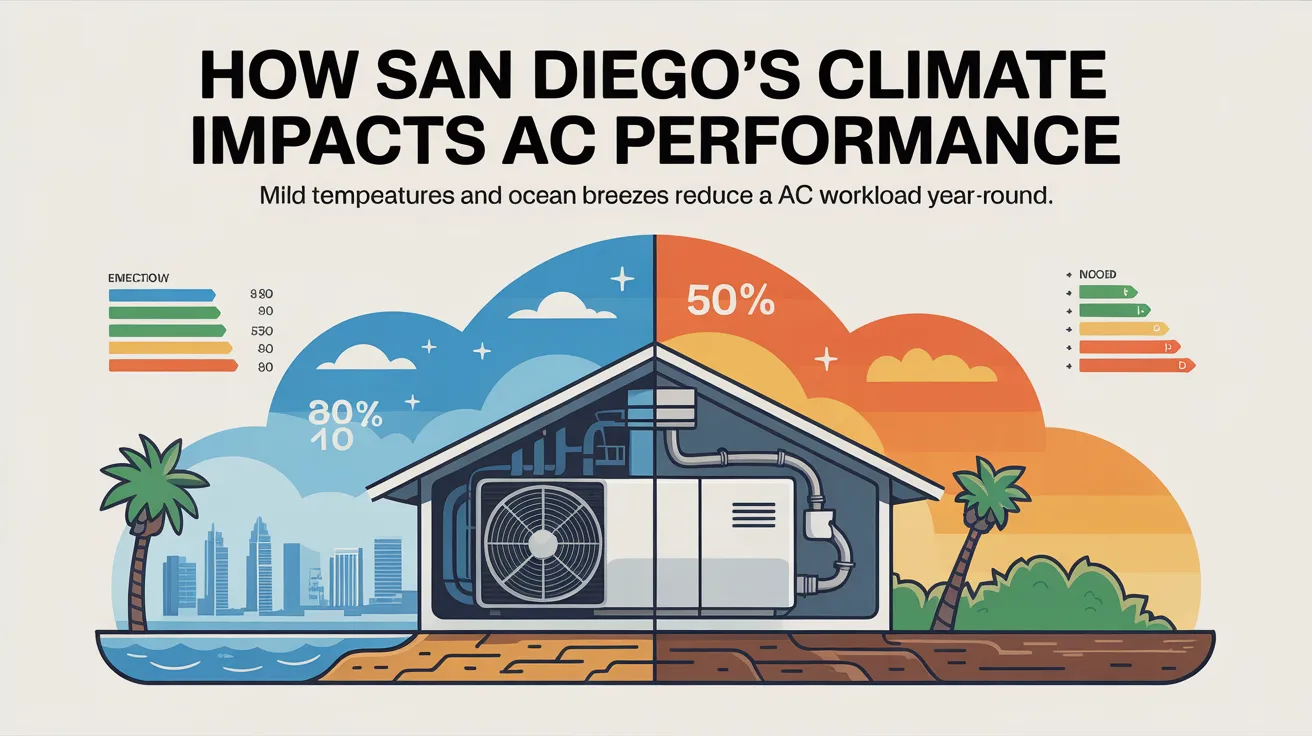
San Diego is widely celebrated for its enviable weather be it warm summers, mild winters, or seemingly endless sunshine. But while that sunshine and coastal breeze make for a beautiful place to live, they also create a unique set of challenges for your home’s air conditioning system. From salty ocean air to intense inland heat waves, San Diego’s climate is harder on AC units than most homeowners realize. Understanding how local conditions affect AC performance in hot climates is the first step toward keeping your system running efficiently, reliably, and for as long as possible.
The Coastal Challenge: Salt Air, Humidity, and Your HVAC System
While San Diego’s humidity levels are relatively moderate compared to cities like Miami or Houston, that added moisture still forces your AC system to work harder. When ambient humidity is elevated, the system expends more energy removing moisture, which directly impacts air conditioner efficiency in hot weather and increases wear on the unit over time.
For homeowners in coastal neighborhoods like La Jolla, Ocean Beach, or Coronado, regular inspections of the outdoor unit are especially important. Rinsing condenser coils periodically and checking for signs of corrosion can make a significant difference in the long-term HVAC performance in a coastal climate.
Hotter Days, Harder Working ACs
While San Diego’s coastal areas enjoy natural cooling from ocean breezes, inland communities like El Cajon, Santee, and Escondido regularly experience temperatures that climb well above 90°F, sometimes reaching triple digits during summer heat waves. These extended periods of high heat place enormous strain on residential air conditioning systems.
Here’s why, air conditioners are designed and rated to operate efficiently within a specific temperature range. When outdoor temperatures soar, the system’s condenser which is responsible for expelling heat from inside your home to the outside has to work against a much hotter outdoor environment. This means longer run cycles, increased energy consumption, and significantly more stress on the compressor, which is the most expensive component in your entire AC system. Poor AC performance in hot climates is often traced back to an overworked compressor struggling to keep pace with extreme heat.
Repeated exposure to these high-heat conditions without proper maintenance can shorten the lifespan of your unit considerably. In San Diego’s inland areas, air conditioner efficiency in hot weather isn’t just a comfort issue, it’s a major financial one.
Why San Diego AC Maintenance Is Crucial
Given the compounding effects of coastal corrosion, marine layer humidity, and intense inland heat, regular San Diego AC maintenance isn’t optional, it’s essential. A well-maintained system handles climate stress far better than a neglected one. Annual or bi-annual professional tune-ups allow a licensed technician to catch developing problems before they turn into costly repairs or full system failures.
During a professional maintenance visit, a technician will clean and inspect the condenser and evaporator coils, check refrigerant levels, test electrical connections, lubricate moving parts, and verify that airflow is unrestricted throughout the system. Each of these tasks directly contributes to better AC performance in hot climates by ensuring the unit isn’t fighting against avoidable inefficiencies.
Hurn Mechanical understands the specific demands that San Diego’s climate places on residential AC systems and provides the kind of thorough, knowledgeable service that keeps local homeowners comfortable through even the hottest summer months.
Top Tips for Better Air Conditioning Efficiency
Beyond professional maintenance, there are several practical steps San Diego homeowners can take to improve air conditioner efficiency in hot weather and reduce unnecessary strain on their systems.
- Keep the outdoor unit clear: Ensure at least two feet of clearance around your condenser unit. Trim back any shrubs, and rinse the unit with a garden hose periodically to remove dust, salt residue, and debris, especially if you live near the coast.
- Use a programmable or smart thermostat: Avoid cooling an empty home. Set your thermostat to ease up during the hours you’re away and cool down before you return. This simple adjustment can dramatically reduce energy consumption without sacrificing comfort.
- Seal air leaks in your home: Gaps around windows, doors, and ductwork allow cool air to escape and hot air to creep in, forcing your system to run longer. Weatherstripping and duct sealing are inexpensive fixes that deliver noticeable improvements in overall HVAC performance in a coastal climate.
- Schedule maintenance before summer: Don’t wait until your AC is struggling to book a service appointment. A spring tune-up gives your technician time to identify and resolve any issues before the peak cooling season begins.
- Close blinds and curtains during peak sun hours: Blocking direct sunlight from entering through south- and west-facing windows can reduce indoor temperatures significantly, lightening the load on your AC throughout the hottest part of the day.
Conclusion
San Diego’s climate is beautiful but it is not easy on air conditioning systems. The combination of salty coastal air, marine layer humidity, and intense summer heat creates a demanding environment that requires homeowners to be proactive about their AC care. Understanding the unique ways that local conditions affect AC performance in hot climates empowers you to make smarter decisions about maintenance, usage, and efficiency.
The good news is that with the right habits and the help of experienced professionals like Huron Mechanical, your AC system can handle everything San Diego’s climate throws at it, keeping your home cool, your energy bills manageable, and your system running strong for years to come.
Frequently Asked Questions
Does living near the coast in San Diego really affect my AC unit?
Yes, significantly. Salt-laden ocean air accelerates corrosion on the metal components of your outdoor condenser unit, which can degrade coils, fins, and electrical connections faster than in inland areas. Coastal humidity also forces your AC to work harder to remove moisture from the air.
How often should San Diego homeowners schedule AC maintenance?
At minimum, San Diego homeowners should schedule a professional AC tune-up once a year, ideally in the spring before peak cooling season. However, given the added stress of coastal salt air, marine layer humidity, and intense inland heat, bi-annual maintenance is strongly recommended for most San Diego properties.
Why does my AC seem to struggle more during inland heat waves than on typical summer days?
AC systems are rated to operate efficiently within a specific outdoor temperature range. During heat waves, when inland temperatures push well above 90°F or into triple digits, your condenser has to expel heat into an already-hot outdoor environment, which dramatically reduces its efficiency. The system runs longer, the compressor works harder, and energy consumption spikes.
