

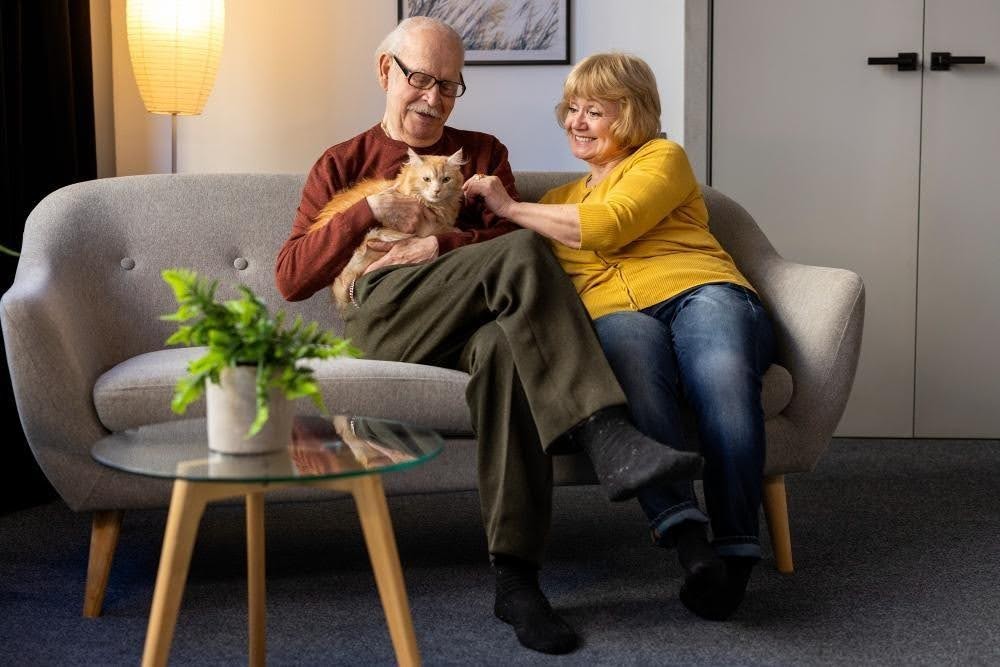
Elderly parents at home from Freepik
Getting aging parents to move in with you is surely a lovely act that brings everyone close together. However, you may notice many issues that you may have never considered before but deserve attention when your parents decide to live with you on a daily basis.
Most homes are designed with young people in mind, but the things that you find stylish might actually pose a serious threat to your elderly parent’s well-being. Here are some indicators that your home needs work before they can move in with you.
Unwanted Clutter and Inadequate Lighting
If there is visible clutter, especially in the primary passageways, know that your home is not yet ready for your parents to move in. For a young person, it may be nothing more than a minor inconvenience to jump over an exposed wire or find their way through a dark hallway.
However, for an older person, these situations pose actual dangers. Similarly, ordinary household lighting creates shadows in corridors that could cause one to trip and fall. That’s why it’s important to ensure that floors are clear. You can do this by:
- Eliminating throw rugs
- Storing cables properly
- Keeping enough space between furniture to move with canes or walkers
It’s also a good idea to install LED motion sensors that activate whenever someone approaches the bathroom at night. But, obviously, these measures alone won’t cut it. Ultimately, you have to think about having human oversight, and that’s when you can take advantage of personal home care service.
No doubt, you can focus on home improvements to make your property safer for your elderly parents, but having an experienced person around can cut the risk of accidents quite significantly. The service often comprises Certified Home Health Aides (CHHAs) that act as the real safety net for the elderly individual.
Supervised by RNs, CHHAs help elderly folks perform their activities of daily living. This means that having a professional caregiver near you will ensure your parents have compassionate care that a motion-sensor light simply can’t offer.
Improperly Designed Bathroom
If you have a bathroom designed mainly for aesthetics with no second thoughts given to accessibility, your parents may find it difficult to live with you. That’s likely the case when your guest bathroom has a standard bathtub and shower, and high walls with a low toilet.
Remember, bathrooms are the most dangerous rooms for seniors, mainly due to a combination of steam, slippery surfaces, and the physical exertion required to move around. For instance, balancing on one leg to get into and out of a bathtub is something that gets harder with age.
Additionally, low toilets are very hard on the legs and hips when getting up. And couple this with an unstable towel rack that older folks try to grab on to when getting up and you’re waiting for an accident to happen. To make your bathroom more accessible, you should:
- Get rid of those fancy towel bars and opt for ADA-compliant grab bars bolted to the studs.
- Get your parents a Comfort Height toilet or toilet seat riser with handles.
- Consider converting your old tub into a zero entry, curbless shower, or at least get a good quality shower chair with a handheld shower head.
These bathroom modifications will cost some time and money, but they go a long way toward helping your parents retain their dignity while also reducing the risk of fall-related disaster.
A Lack of Time to Spend With Your Parents
Your household likely isn’t ready for your parents to move in if you can’t spend time with them. A few important factors that quickly become invisible threats in case you bring your elderly parent home are social isolation and polypharmacy (managing multiple medications). An older person who stays alone at home may make medication errors, eat poorly because they can’t cook, and suffer deep loneliness, which can accelerate cognitive decline.
To avoid these issues, you must develop a care plan in advance. The plan should include organizing a medication management system using either a smart pill box or a charted log. You should also think about discharge coordination if they’re moving directly after a hospital stay, making sure all follow-up appointments are scheduled and accessible.
If you truly want to bridge the support gap, consider adding some additional companionship or personal assistance to the equation. Bringing in a professional on a daily basis to help out with meal prep, cleaning, and socializing will allow the house to stay vibrant. This also helps support self-reliance while ensuring your parent’s well-being remains top priority.
Endnote
Preparing your home for a parent entails not only physical factors but emotional ones too. When you address hazards in the layout, prepare a safe bathroom, and ensure you have reliable professionals to back you up, you will create a place that your loved ones will truly love.
