

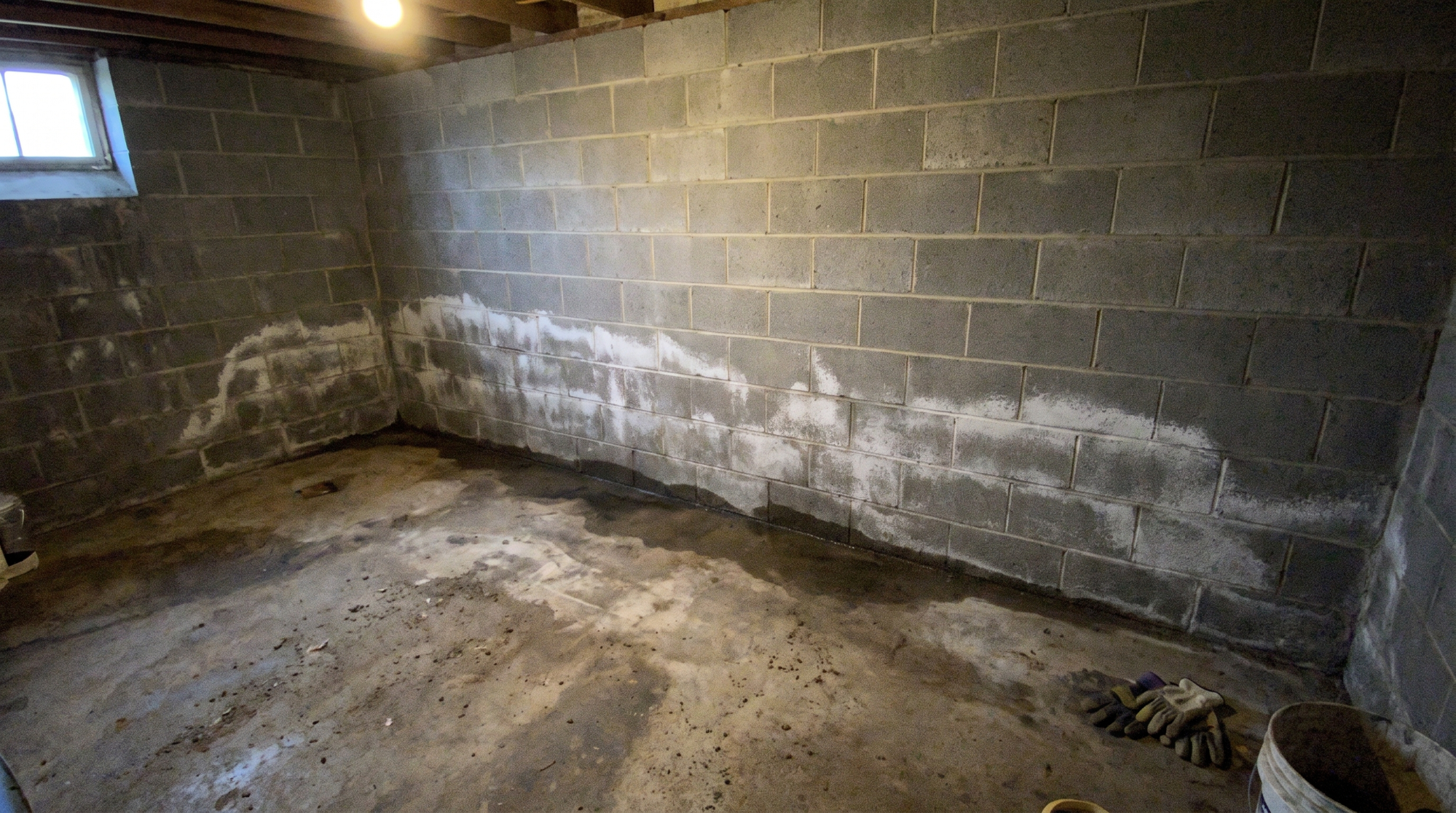
Basements almost never flood out of nowhere. By the time there’s standing water on the floor, the house has usually been dropping hints for months, sometimes years. The trouble is that the hints are quiet. A faint smell here, a chalky streak there, a box of holiday decorations that feels slightly soft on the bottom.
Water is also one of those problems that gets more expensive the longer it goes unnoticed. Extending a downspout might cost you twenty dollars and a Saturday morning. Mold remediation and a torn-out finished basement cost a great deal more than that.
So it pays to know what the early warnings actually look like. Here are seven signs worth taking seriously, roughly in the order homeowners tend to notice them.
1. A Musty Smell That Never Airs Out
Every basement smells a little like a basement. That alone isn’t the sign. The sign is an earthy, musty odor that returns within a day or two no matter how long you run a fan or leave the windows open.
That smell is usually mold or mildew, and mold can’t survive without a steady moisture source. If you can smell it but can’t see it, it’s often growing somewhere hidden: behind paneling, under carpet, inside a stored cardboard box, or in a wall cavity. Trust your nose over your eyes on this one. Odor almost always shows up before anything visible does, which makes it the earliest warning on this list.
2. White, Chalky Streaks on the Walls
That powdery white residue you sometimes see on concrete or block walls has a name: efflorescence. It’s mineral salt left behind when water seeps through the wall and evaporates on the interior surface. Wipe it with a finger and it feels like fine chalk.
Efflorescence itself is harmless. What it tells you is not. Those streaks are physical proof that water is traveling through your foundation wall, even if the wall feels bone dry when you touch it. Brush it off and watch the spot. If the white residue keeps returning, water keeps coming through.
3. Paint That Bubbles, Flakes, or Peels Off the Foundation
Paint on a masonry wall fails from behind. Moisture pushes through the concrete, gets trapped behind the paint film, and slowly lifts it away in bubbles and flakes. You’ll often see this low on the wall, or in one concentrated patch rather than across the whole surface.
The tempting response is to scrape and repaint, maybe with one of those waterproofing paints. Resist that urge, at least as a first move. A fresh coat over an active moisture problem is a bandage, and the water pushing from the other side will lift it again. The peeling is information. Use it to find the source before you cover it up.
4. Rust Where Rust Shouldn’t Be
Take a slow lap around your basement and look at the metal. The feet of the water heater and furnace. Nail heads in the lower framing. Shelving legs, the base of support posts, the little leveling feet under the washing machine.
Rust needs moisture, and metal near the floor rusts first because dampness settles low. A ring of rust around appliance feet often means the slab has been repeatedly damp, even if you’ve never once seen a puddle. It’s one of the most overlooked signs because nobody stares at their water heater’s feet, which is exactly why it’s worth five minutes of your time.
5. Hairline Cracks With Staining Around Them
Some reassurance first: most foundation cracks are cosmetic. Concrete shrinks as it cures, and thin vertical hairlines are a normal part of a house settling into itself.
The cracks that matter are the ones with a story around them. Dark staining along the edges. A trail of that white efflorescence below. Damp edges a day after a storm. Those details mean water is actively using the crack as a door.
Mark the ends of any suspicious crack with a pencil and date it. If it grows over the following months, if it’s wider than about an eighth of an inch, or if it runs horizontally, you’ve moved past the monitoring stage. Horizontal cracks in particular can signal soil pressure against the wall and deserve a professional opinion promptly.
6. Damp Patches That Appear After Rain, Then Vanish
This one fools a lot of people because it cleans up after itself. A dark patch shows up on the floor or the lower wall a day after heavy rain, then dries out by the weekend, so it never quite feels urgent.
Pay attention to the timing rather than the size. Moisture that tracks rainfall is almost always surface water arriving from outside: a gutter overflowing next to the foundation, a downspout with no extension, or soil that slopes toward the house instead of away from it. Oddly enough, that’s good news. Exterior water delivery problems tend to be the cheapest ones to fix, provided you catch them before years of soaking take a toll on the wall.
7. Walls That Sweat
Sometimes a damp wall isn’t a leak at all. It’s condensation, the same physics as a cold glass of lemonade on a humid afternoon. Warm indoor air touches cool concrete and drops its moisture on the surface.
There’s a simple test to tell the difference, and it costs about as much as a sandwich wrap. Tape a square of aluminum foil tightly to the wall, sealing all four edges, and leave it for a day or two. Then peel it off. If the room side of the foil is wet, you have a humidity problem, and a dehumidifier will genuinely help. If the wall side is wet, moisture is coming through the foundation itself, and no dehumidifier on earth will fix that.
What to Do if You’re Seeing These Signs
Start With the Exterior
Start outside, not inside. A large share of basement moisture problems begin with rainwater being delivered directly to the foundation, so the first fixes are the boring ones: clean the gutters, extend every downspout at least six feet from the house, regrade soil so it slopes away from the walls, and make sure window wells drain. These steps are cheap, and they resolve a surprising number of damp basements on their own.
When to Call a Professional
If the signs continue after the exterior is handled, or if you’re seeing the bigger red flags like a horizontal crack, water at the joint where the floor meets the wall, or a wet wall-side foil test, it’s time to have a contractor who specializes in basement waterproofing evaluate the house. A good evaluation looks at the whole water path, from the roofline to the footing, and matches the fix to the actual problem, whether that’s crack injection, interior drain tile, a sump system, or an exterior membrane. Be wary of anyone who quotes the biggest job in the catalog without walking the outside of your home first.
The Bottom Line
None of these seven signs means your house is failing. They mean your house is talking. Two or more of them together is a conversation worth having sooner rather than later, because the cheapest time to fix a water problem is always before the flood.
