

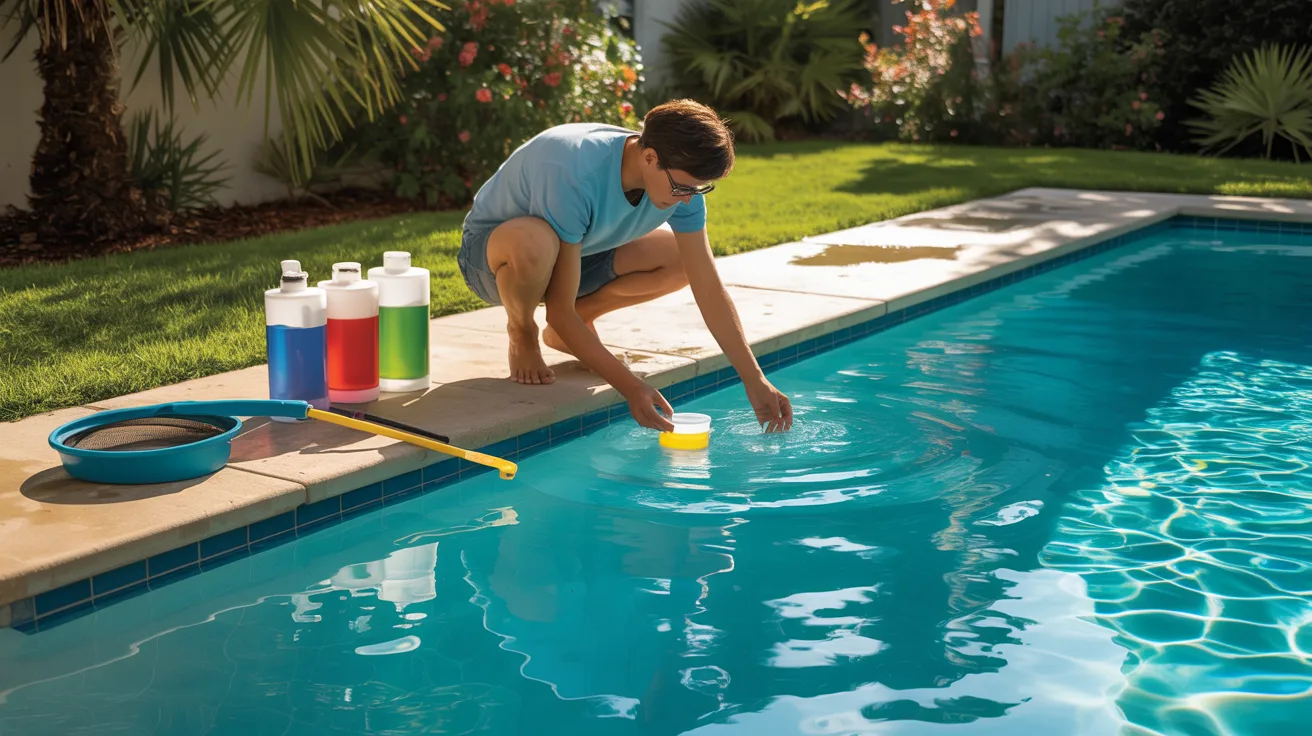
You’re probably realizing that owning a pool is easy, but maintaining it clean in this climate takes consistency. The heat, sun exposure, and sudden storms in Texas can throw your pool out of balance faster than expected.
Here’s the simple truth. Pool maintenance comes down to three things done consistently. Keep the water moving, keep it clean, and keep the chemistry balanced. Once you understand how those work together, everything else becomes manageable.
Quick Overview: What Matters Most
- Circulation → Run your pump daily to prevent algae and stagnant water
- Cleaning → Remove debris before it sinks and causes buildup
- Chemistry → Keep pH, chlorine, and alkalinity within proper range
- Heat Impact → Texas sun burns off chlorine faster than most climates
- Storm Impact → Rain can dilute chemicals and introduce contaminants
- Consistency → Small weekly routines prevent major problems
This gives you a clear starting point. The rest is about building a routine that fits your pool and your schedule.
Why Pool Maintenance Feels Harder in Texas
Texas weather works against you.
High temperatures speed up algae growth and reduce chlorine effectiveness. Water evaporates faster, which concentrates minerals and throws off balance. Then sudden rainstorms hit and dilute everything at once.
This constant swing is why pools in Texas require more attention than milder climates. You are not just maintaining a pool. You are constantly adjusting to changing conditions.
Once you accept that, your approach becomes more proactive instead of reactive.
Circulation: The Foundation of a Clean Pool
Water needs to move. That is non-negotiable.
Your pool pump pushes water through the filter and keeps debris from settling. Without proper circulation, even balanced water can turn cloudy or green.
In Texas, running your pump for 8 to 12 hours per day is a solid baseline. During peak summer, that often needs to increase. Some pools benefit from longer run times, especially when temperatures stay high for extended periods.
Pay attention to how water flows.
Return jets should push water in a circular pattern to avoid dead spots. Areas with poor movement are where algae starts first.
Also keep your skimmer and pump baskets clean. When they clog, circulation drops and problems build up quickly.
Cleaning: Stay Ahead of Debris
Debris is not just cosmetic. It affects water quality.
Leaves, bugs, and dirt break down in the water and create nutrients for algae. That is why regular cleaning matters more than most new pool owners expect.
Skim the surface frequently, especially during windy days or after storms. Brushing the walls and steps helps prevent buildup that you cannot always see at first.
Vacuuming once a week keeps the bottom clear and reduces long-term staining.
A few simple habits make a difference.
- Skim before debris sinks
- Brush areas with low circulation
- Vacuum consistently instead of waiting for buildup
Automated tools can help, but even basic manual cleaning keeps the pool under control when done regularly.
Chemistry: Where Most Problems Start
Water chemistry is what keeps your pool safe and clear.
Testing once or twice a week is enough for most pools. In Texas, you may need to check more often during extreme heat or heavy usage.
The key levels to focus on are straightforward.
pH should stay between 7.2 and 7.6.
Chlorine should stay between 1 and 3 ppm.
Alkalinity should stay between 80 and 150 ppm.
When these are balanced, everything else becomes easier to manage.
One mistake many new pool owners make is relying only on test strips. They are convenient, but not always accurate. A liquid test kit gives better readings and helps you make more precise adjustments.
Shocking the pool every one to two weeks also helps reset the water, especially after heavy use or storms. Doing this at night improves effectiveness since sunlight breaks down chlorine.
How Texas Weather Changes Your Routine
Weather is not just a background factor. It directly affects your pool.
Heavy rain adds water and dilutes chemicals. That can leave your pool under-sanitized and more vulnerable to algae.
Extreme heat increases evaporation, which raises mineral concentration and lowers water levels.
Keep your water level around the middle of the skimmer opening. Too high and it affects skimming. Too low and the pump can pull in air.
After any major weather change, test and adjust your chemistry. Waiting too long usually leads to more work later.
Filtration: The Part That Gets Ignored
Your filter does more than you think.
As water circulates, the filter captures dirt, debris, and microscopic particles. Over time, it builds up pressure as it collects contaminants.
When the pressure rises about 10 psi above the clean starting level, it is time to clean or backwash the filter.
Ignoring this step reduces efficiency and makes everything else harder. Clean water depends on clean filtration.
Building a Routine That Actually Works
The biggest difference between a clean pool and a problem pool is consistency.
You do not need to spend hours every day. You just need a simple routine that prevents issues before they start.
Daily checks keep things under control. Weekly maintenance keeps things stable.
For some homeowners, keeping up with that routine is manageable. For others, especially during peak Texas heat, it quickly becomes time-consuming. That is where a professional swimming pool maintenance service can help maintain consistent water quality without the guesswork.
Trying to fix everything at once after neglect usually costs more time and money.
Common Mistakes New Pool Owners Make
Most problems come from the same habits.
Running the pump too little.
Skipping regular testing.
Letting debris sit too long.
Ignoring small imbalances until they grow.
None of these seem serious at first, but they build up fast in Texas conditions.
Staying consistent avoids all of them.
Keeping Your Pool Clear Without Overcomplicating It
Owning a pool in Texas does not need to feel overwhelming.
The key is understanding that maintenance is not about reacting to problems. It is about preventing them with small, consistent actions.
When you keep water moving, remove debris early, and stay on top of chemistry, your pool stays clear with less effort.
These pool maintenance tips are simple, but they work when applied consistently. Once the routine becomes part of your schedule, maintaining your pool feels less like a chore and more like part of enjoying it.
