

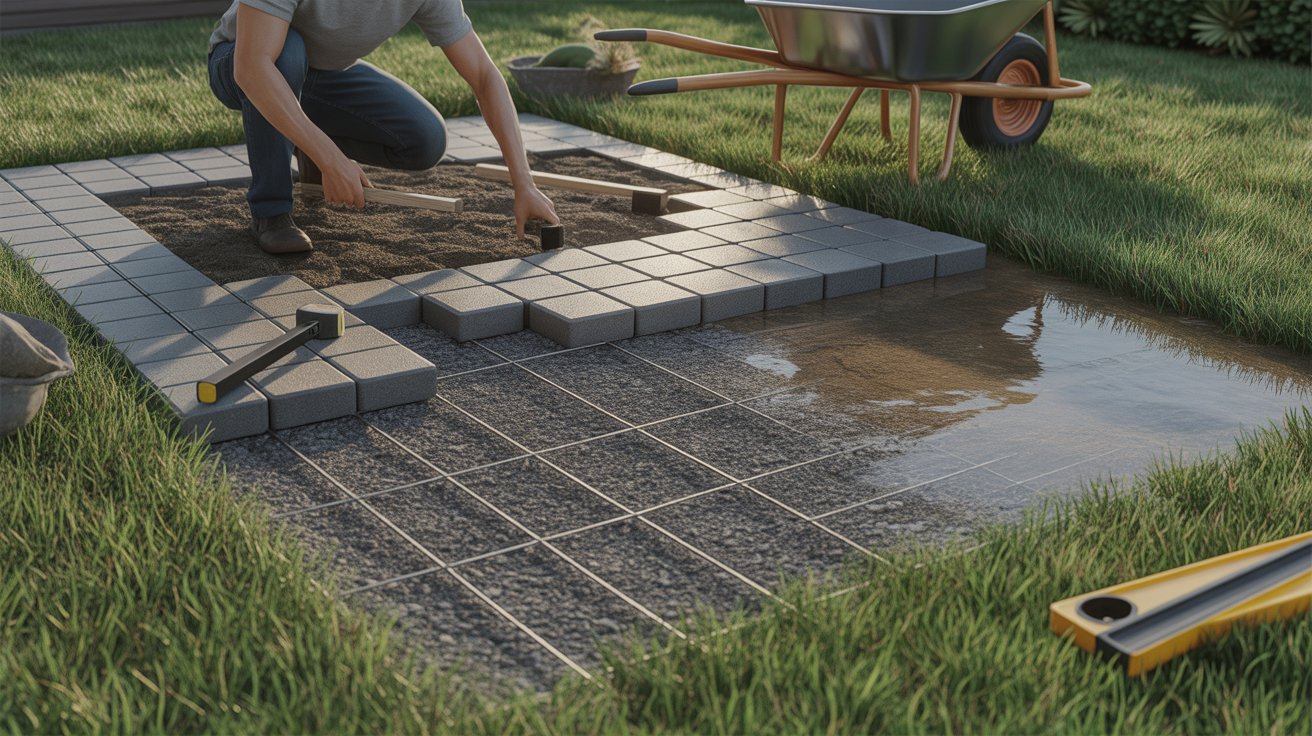
If your backyard turns into a soggy mess after every decent downpour, you’re not alone. Poor drainage is one of the most common issues homeowners face – and it’s not just inconvenient. Standing water can damage lawns, attract pests, and even impact nearby structures over time.
The good news? You don’t always need complex drainage systems or heavy excavation to fix it. In many cases, installing permeable pavers can dramatically improve how water moves through your yard – while also creating a functional, attractive surface.
Let’s walk through how it works and how you can install them yourself.
What Are Permeable Pavers (And Why Do They Work)?
Permeable pavers are designed to allow water to pass through the surface rather than run off it. Instead of pooling on top (like with concrete), rainwater filters through gaps or porous materials into a specially prepared base layer below.
That base layer – typically made of crushed rock or aggregate – temporarily stores water and allows it to slowly soak into the soil beneath.
Some systems use open-cell grids (often filled with gravel or grass). Products like Truegrid Pavers are a good example of this style, where the structure provides strength while still allowing water to infiltrate naturally.
The result? Less pooling, less runoff, and a backyard that actually drains the way it should.
When Permeable Pavers Are the Right Solution
Permeable pavers are ideal if you’re dealing with:
- Water pooling in lawn or patio areas
- Muddy, unusable sections of the yard
- Poor drainage around outdoor entertaining spaces
- Slightly sloped areas where runoff collects
- Clay-heavy soils (when paired with the right base preparation)
They’re not a silver bullet for every drainage issue – but for surface water problems, they’re one of the most effective and DIY-friendly options.
Tools and Materials You’ll Need
Before you get started, gather the essentials:
- Permeable pavers (grid or modular system)
- Crushed rock/aggregate (various sizes for base layers)
- Geotextile fabric
- Shovel or excavator (depending on scale)
- Plate compactor (can usually be hired)
- Level and string line
- Wheelbarrow
- Hose or water source
Step-by-Step Installation Guide
1. Mark Out and Excavate the Area
Start by marking the area where you want to install the pavers. Use stakes and string lines to define the boundaries and ensure straight edges.
Next, excavate the area. The depth will depend on your soil type and intended use, but generally:
- 100–150mm for light foot traffic
- 150–250mm+ for heavier use (like vehicles)
Make sure to remove all organic material (grass, roots, etc.), as this can lead to settling later.
2. Install Geotextile Fabric
Lay geotextile fabric across the excavated area. This step is often overlooked, but it’s critical.
The fabric:
- Prevents soil from mixing with your base material
- Improves long-term stability
- Helps maintain drainage performance
Overlap the edges slightly if using multiple sheets.
3. Build the Base Layer
This is the most important part of the entire process.
Add your crushed rock base in layers:
- Start with a coarse aggregate (larger stones) for drainage
- Add a finer layer on top for leveling
Compact each layer thoroughly using a plate compactor. Don’t rush this step – poor compaction is the number one reason DIY paving projects fail.
Aim for a firm, level surface with a slight fall (around 1–2%) away from structures to encourage water movement.
4. Lay the Permeable Pavers
Now for the satisfying part.
Lay your permeable pavers directly on the prepared base. Most systems are modular and designed to interlock, making installation straightforward.
Work from one corner and move outward, checking alignment as you go. If needed, you can cut pavers to fit edges or awkward shapes.
5. Fill and Finish the Surface
Depending on the type of paver you’re using, fill the voids with:
- Gravel (for a clean, low-maintenance finish)
- Soil and grass seed (for a greener look)
Spread the material evenly and sweep it into the cells or gaps. Lightly compact or water it in to help it settle.
Tips for Long-Term Success
A few small details can make a big difference:
- Don’t skip the base preparation – it’s everything
- Ensure proper slope – even permeable systems need direction
- Use quality materials – cheaper aggregates can break down over time
- Keep it clean – occasionally remove debris to maintain permeability
Final Thoughts
Permeable pavers strike a rare balance – they solve a practical problem while improving the look and usability of your outdoor space.
Whether you’re dealing with a muddy patch, pooling water near your patio, or just want a more resilient surface, this approach gives you a DIY-friendly way to fix drainage at the source – not just manage the symptoms.
And while there are plenty of systems available, options like Truegrid Pavers highlight how effective modern permeable designs can be – combining structural strength with excellent water infiltration.
If you take the time to prepare your base properly and follow the steps above, you’ll end up with a surface that not only looks great but performs well for years to come.
