

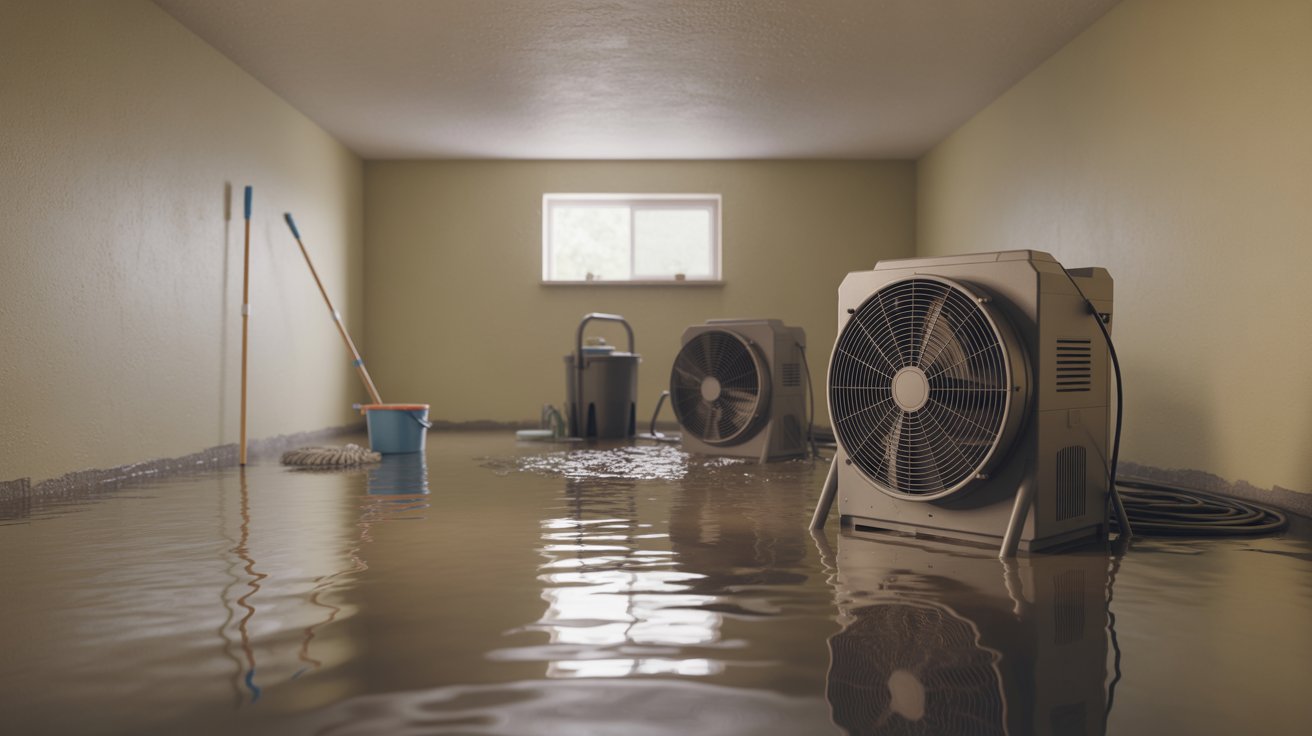
Basement flooding can happen quickly. A heavy storm, burst pipe, or broken sump pump might leave you with several inches of water in just minutes. It’s a stressful and overwhelming situation for homeowners.
The good news is that acting quickly can help limit damage and lower repair costs. This guide explains what to do after basement flooding, covering safety, cleanup, and repairs.
Make Safety Your Top Priority
Always think about safety before entering any standing water.
If water is close to electrical outlets, appliances, or the breaker panel, stay out of the area. Turn off the basement’s power at the main breaker if it’s safe. If you can’t, contact an electrician or your utility company.
Look for signs of structural damage, such as cracks in the foundation, sagging ceilings, or buckled floors. If you notice serious damage, leave the area and call a storm damage recovery and repair professional.
Think about the type of water involved. Clean water from a pipe is less risky than water from a sewer backup. Gray or black water can contain bacteria and other harmful substances. If you need to enter, wear gloves, boots, and a mask.
Stop the Source of the Water
Stop the source of water before starting any cleanup.
If a burst pipe caused the flood, turn off your home’s main water supply. If the sump pump stopped working, check if it lost power or needs fixing. Heavy rain can also cause flooding if gutters are clogged or drainage is poor.
If water is coming in from outside, use sandbags or temporary barriers to direct it away from your foundation. If you have a sewer backup, don’t use toilets or sinks until the problem is fixed.
If you can’t find or stop the source of the water, call an emergency water removal company immediately.
Remove Standing Water Quickly
The longer water stays, the more damage it can do. Mold may start growing in as little as 24 to 48 hours.
For small floods, use a wet/dry vacuum. For deeper water, a submersible pump works better. Buckets and mops can help with small puddles.
For large floods, it’s best to call professionals. They have powerful pumps that remove water much faster than home equipment. Quick removal helps protect your walls, floors, and belongings.
Start the Drying Process Immediately
Once you’ve removed the standing water, start drying the area immediately.
Start by taking wet items out of the basement. Remove rugs, furniture, cardboard boxes, and anything else that soaks up water. These items hold moisture and slow down drying.
Next, set up fans and dehumidifiers to help dry out the space. Aim fans across walls and floors. If the weather is dry, open windows to let in fresh air.
How long it takes to dry depends on how much water got in and what materials were affected. Most basements take several days to dry completely. Moisture hidden inside walls can take even longer.
Clean and Disinfect the Area
After the area is dry, cleaning is very important.
Scrub hard surfaces such as concrete floors and walls with soap and water. After cleaning, apply a disinfectant to kill bacteria and get rid of odors. This is especially important if the water was contaminated.
Porous materials like drywall, insulation, and carpet padding usually need to be removed and replaced. They hold moisture and can develop mold quickly.
Preventing Mold After Basement Flooding
Mold can begin to grow just one or two days after water exposure. Look out for musty smells, dark spots on walls, or peeling paint.
If you see signs of mold, call a professional mold remediation company. Mold spreads quickly and can harm indoor air quality.
Assess and Repair the Damage
Once you’ve finished cleaning up, carefully inspect the basement.
Check the framing, support beams, and foundation for cracks or warping. Wood that has soaked up water can weaken over time. Flooring like laminate and carpet often needs to be replaced.
If drywall got wet, it usually needs to be cut out at least 12 inches above the water line. Wet insulation behind the walls should also be replaced.
Have a licensed professional inspect any electrical systems or HVAC units that were exposed to water. Water and electricity together can be very dangerous.
How Much Does Flooded Basement Repair Cost?
Repair costs depend on how much water got in and how much damage it caused.
If you handle minor flooding quickly, it may only cost a few hundred dollars. Bigger floods that damage floors, drywall, or electrical systems can cost several thousand dollars.
If mold develops, repair costs go up even more. The longer water stays, the more expensive repairs will be. Acting quickly can save you money.
Filing an Insurance Claim After Basement Flooding
Get in touch with your insurance company as soon as you can.
Take clear photos and videos of the damage before you start cleaning up. Save all receipts for equipment rentals, supplies, and repairs.
Standard homeowners insurance might cover sudden problems like burst pipes. But flooding from heavy rain or rising groundwater usually needs separate flood insurance. Check your policy to see what’s covered.
How to Prevent Basement Flooding in the Future
Taking steps to prevent flooding can lower the risk of it happening again.
Keep your sump pump in good shape and test it often. Think about adding a battery backup in case the power goes out. Clean your gutters and make sure downspouts direct water away from your foundation.
Seal any cracks in your basement walls and improve the slope of your yard so water flows away from your house. Installing a backwater valve can also help prevent sewer backups.
Regular maintenance can make a big difference in protecting your home.
Conclusion
Basement flooding is stressful, but acting quickly can make a big difference. Put safety first. Stop the water source, remove standing water, and start drying as soon as possible.
Clean and disinfect the area well to prevent mold. Fix any damaged materials and take steps to avoid future flooding.
If the damage feels overwhelming, don’t hesitate to call a professional. Acting fast protects your home, your health, and your investment.
