

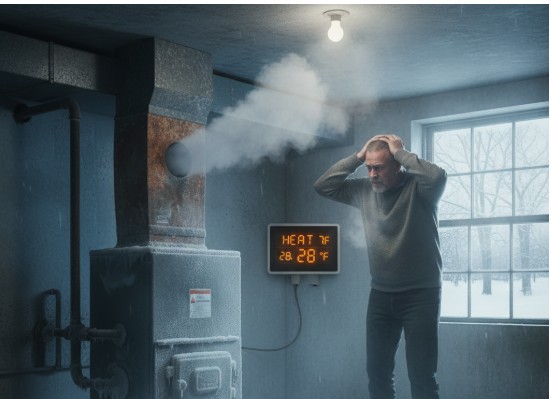
When a homeowner notices that their furnace is blowing cold air even though the thermostat is clearly set to “Heat,” it can be both alarming and confusing. This issue is surprisingly common and does not always mean there is a catastrophic failure; often, other system components such as airflow, ignition, or control circuits are at fault. In a place like Bozeman, Montana, where winter heating demand is high, understanding why this happens—and how to address it—can make a real difference in comfort, energy costs, and long-term reliability.
What Are the Most Common Reasons a Furnace Blows Cold Air?
Why Is a Furnace Blowing Cold Air Even When the Thermostat Calls for Heat?
When the thermostat sends a heat call, but only cold air comes through the registers, several interrelated issues may be responsible. One frequent cause is a misconfigured or malfunctioning thermostat. According to HVAC experts, if the fan setting on the thermostat is on “ON” instead of “AUTO,” the blower fan can run continuously—even when the burners are not firing—resulting in unheated airflow.
Another possible culprit is a dirty or clogged air filter. When the filter is severely restricted, airflow is reduced, and the furnace can overheat, triggering a safety shutdown of the burners.In that situation, the blower may continue running, pushing only cool air into the living space.
Ignition issues also come into play. Older furnaces may rely on a pilot light, and if it goes out, the burners won’t light.In more modern gas furnaces, a failing ignitor or a faulty gas valve may prevent proper burner operation, again causing cold air to circulate.
A dirty flame sensor is another frequent design safety shutdown trigger. If the sensor cannot detect a flame (because it’s coated in soot or dust), it can shut off the burner while allowing the blower to keep running. Temperature safety switches — such as limit switches — may also trip if the furnace overheats, cutting off heat but leaving the fan on.
Finally, leaky or poorly insulated ductwork may undermine the system’s ability to distribute heat. Warm air can escape through unsealed joints or cracks, especially in homes with duct runs through attics or crawlspaces, causing seemingly cold air to exit at the vents.
How These Problems Specifically Impact Bozeman Homes
In Bozeman, Montana, where winters are long and heating is essential, these furnace issues are more than minor annoyances—they can significantly impact energy bills, system wear, and resident comfort. For instance, if the furnace’s airflow is compromised by a clogged filter or blocked ducts, the system may short-cycle or overheat, which wastes fuel and stresses mechanical components.
Because many Bozeman homes may have older HVAC systems or extensive duct networks, leak-prone ductwork adds to the inefficiency. In such cold climates, every loss of warm air translates into additional fuel consumption as the furnace works to compensate. Poor ignition or a failing gas valve can also lead to repeated starts or lockouts, which not only reduce efficiency but may necessitate furnace repair Bozeman Montana sooner rather than later.
Why Maintenance Matters: Preventing the “Blowing Cold Air” Problem
Why Fall Furnace Maintenance in Bozeman, Montana, Can Prevent These Issues
Scheduling fall furnace maintenance in Bozeman, Montana is a key preventive step. During a seasonal tune-up, a technician will typically inspect and clean the air filter, check the flame sensor, verify ignition components, and test safety switches like the high-limit switch. This proactive service helps catch problems before they lead to cold-air operation.
During maintenance, an HVAC professional may also examine ductwork for leaks or insulation problems. Sealing or repairing those ducts can substantially improve heat delivery, reduce the risk of overheating, and restore efficient operation. Unaddressed leaks can cause significant heat loss, especially in unconditioned spaces, reducing the warm air that actually reaches the residents.
When It’s Time for Furnace Repair or Replacement
If maintenance reveals recurring or serious problems—such as a failing gas valve, ignition failure, or deteriorating control board—a furnace repair Bozeman Montana or even component replacement may be justified. For example, a furnace gas valve replacement Bozeman Montana might be necessary if the valve no longer reliably supplies fuel to the burners.
In some cases, safety devices like the limit switch or high-limit shut-off may fail repeatedly. When that happens, it is often safer and more cost-effective to repair or replace those components than to continue risking repeated shutdowns and cold-air cycles.
Could This Be an Emergency? When to Call for Help
If a homeowner repeatedly experiences cold air despite proper thermostat settings, or if the system seems to shut down unexpectedly, an emergency furnace repair Bozeman Montana call may be warranted. Persistent ignition failures, gas valve problems, or control board issues can pose safety risks or lead to costly damage.
Also, if there are signs of an unsafe condition — such as the smell of gas, unusual noises, or frequent system lockouts — professional intervention should not be delayed. HVAC technicians have the training and tools to diagnose complex errors and restore safe, efficient operation.
How a Furnace Blowing Cold Air Signals Broader System Health
When a furnace cycles into a “cold air” mode, it often signals an underlying imbalance or incremental failure in the system. Rather than being a standalone symptom, it usually reflects broader mechanical, electrical, or fuel-related issues.
For example, a failing flame sensor not only causes burner lockout but also indicates the need for proper cleaning or replacement. Dirty burners or a compromised heat exchanger may lead to inefficient, unsafe combustion. Likewise, a high-limit switch that trips frequently suggests chronic overheating, often tied to restricted airflow or weak duct design.
By addressing the root causes of the cold-air symptom—through inspection, cleaning, and component servicing—homeowners can improve furnace reliability, lower energy consumption, and extend the life of their heating equipment.
Five Common Questions About This Issue
- Why does my furnace blow cold air shortly after starting? Often, this happens because the blower fan starts immediately, before the burners have had time to ignite or warm up, especially if the thermostat’s fan setting is not on “AUTO.”
- Can changing a dirty air filter really fix the problem? Yes — a clogged filter restricts airflow, which may cause the furnace to overheat and shut down its burners for safety, while the blower continues to run.
- How does a dirty flame sensor cause cold airflow? If the flame sensor can’t detect a flame (because it’s dirty or coated with soot), it can shut off the burner even if ignition lights briefly, leaving the blower running with no heat.
- Could duct leaks be the reason I feel cold air? Absolutely. Holes, cracks, or disconnected duct joints allow heated air to escape before it reaches the vents, making it feel like the furnace isn’t producing warmth.
- What if the gas valve is failing? If the gas valve is not opening properly or the gas supply is low, the burners may fail to ignite. In that case, a furnace gas valve replacement Bozeman Montana or professional inspection is likely needed.
Conclusion
A furnace that’s blowing cold air when the thermostat is set to “Heat” is a clear warning sign — but it doesn’t always mean a full system failure. Often, the culprit lies in incorrect thermostat settings, airflow restrictions (like a dirty filter), ignition problems, or safety shutdowns triggered by dirty sensors or overheating. In a region like Bozeman, Montana, these issues are especially critical due to high heating demand and the strain placed on heating systems during long, cold winters.
By investing in fall furnace maintenance in Bozeman, Montana, homeowners can catch and correct many of these problems before they escalate. Regular servicing also provides an opportunity to detect more serious faults — such as a failing gas valve — that may require furnace repair Bozeman Montana or specialized components like a furnace gas valve replacement Bozeman Montana.
When recurring symptoms persist or sudden failures emerge, emergency furnace repair Bozeman Montana should be considered to address safety risks and prevent further damage. For trusted, professional HVAC care when tackling these issues, Premier Systems Heating, Air Conditioning & Boilers offers comprehensive diagnostic, maintenance, and repair services to keep systems running safely and efficiently.
