

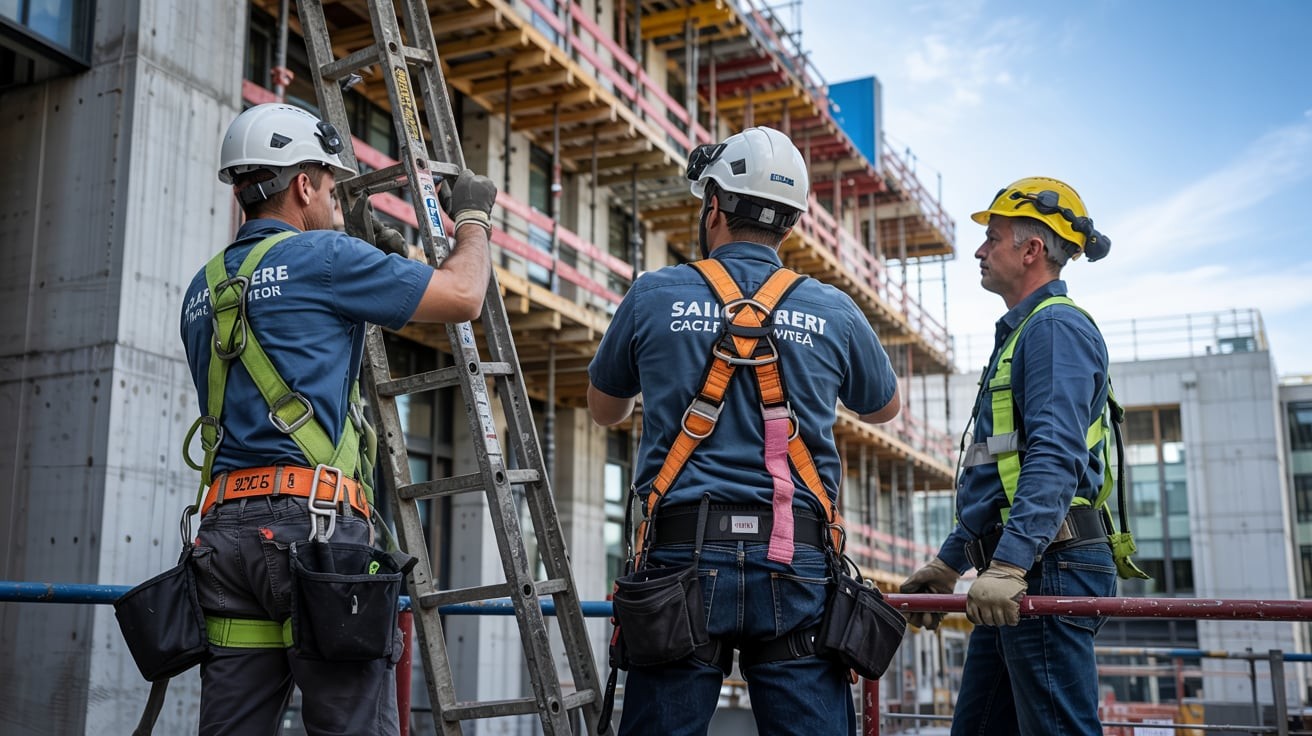
Working at heights is packed with risks. One mistake and you face major injuries. Australia saw an increase in worker fatalities from falls from 17 to 29 from 2022 to 2023.
Often, this isn’t due to inadequate equipment; rather, it is because workers are unaware of catastrophic mistakes or don’t comply with industry rules.
Here are the top serious mistakes you must know about while working at heights.
1. Ignoring Risk Assessment
A common and fatal mistake in the height working field is not doing proper risk assessment or skipping it altogether. While working on similar work sites, workers often assume that the risks are identical to those of the previous ones.
However, no two distinct sites are the same. What might have been safe in the previous location might not be in the present one. Weather extremities, differences in ground quality, equipment setup from scratch, and risks can appear from anywhere.
Without a risk assessment, you risk overlooking the hazards, risking your own and your team members’ lives. If you’re unaware of how it’s done, enrol in an accredited working at heights course from a registered training organisation to learn all the mandatory steps to ensure everyone’s safety.
Therefore, always conduct a rigorous job safety analysis before commencing. If you identify any risk or hazard, map the appropriate measures to overcome it. Inform all workers about the issue so they’re cautious.
2. Not Wearing the Proper Equipment
Sometimes, workers find the equipment, give it a quick glance, and put it on. Since the gear was fine the last day, they assume it’s still okay.
However, safety equipment deteriorates over time when exposed to the sun, rain, dust, and site chemicals.
Many even wear outdated gear just because they don’t want the trouble of learning to use new ones. Other times, employers don’t want to invest in new ones when the previous ones are still high quality.
But it can lead to the worst scenario: equipment failure and falling from a height. Thus, always inspect safety equipment before use. Check for rust, loose or torn stitching, or cracks. Ask the supervisor or employer to replace damaged equipment as soon as possible.
3. Incorrect Fall Protection System Usage
If you wear gear incorrectly or use the wrong gear for a specific task, you’re bound to meet accidents. Avoid mistakes like keeping harness straps too loose or too tight. Never attach an incorrect component to anchors. Be wary of connecting lanyards at unsafe angles.
These major mistakes can lead to detachment of the safety component under pressure or make an individual fall a longer distance. A proper course can help you brush up on the latest fall protection gear usage.
4. Ignoring Weather and Environment
The weather and environment have a significant influence on safety for high-altitude work. But most teams don’t cease work during weather issues. Workers feel they can face the weather head-on without concerns.
On a day with high winds, workers are more likely to lose their balance. Extreme rain can make them slip from surfaces and soften the ground, making scaffolds and ladders unstable. Extremes of heat or cold can also cause workers to fall ill or impair their judgment.
So, check the weather forecast for the day before planning a work day. If the wind speed becomes too high, it suddenly rains, or visibility is reduced, stop working immediately. Resume the project once the weather improves. Be aware of your rights in case anyone pushes you to work in a poor environment and risks your safety.
5. Not Maintaining Three-Point Contact
When workers are in a rush, carry more tools than they should, or are just overconfident owing to their years of experience, they ignore this rule. In reality, workers must always maintain three points of contact while climbing up or descending ladders and scaffolding. Otherwise, there’s a considerable risk of falling.
According to this rule, always hold the ladder/scaffold with two hands and one foot or one hand and two feet. If you need to carry anything, use the right belts or other appropriate carrying gear and keep your hands free.
6. Leaning Far or Overreaching
Sometimes, it feels like a task can be finished if you stand on your tiptoes and extend your arm: all you have to do is be careful not to fall! After all, why again reposition the entire equipment for a small bit of work?
This can cause your entire body to become unbalanced, leading to instability and a potential fall. So, always take your time to reposition equipment, even if it takes more time.
Closing Thoughts
Additionally, establish proper communication and develop a robust rescue plan for each site. Remember, there’s no second chance for mistakes. So, be vigilant and protect yourself by preventing any accident at all costs.
