

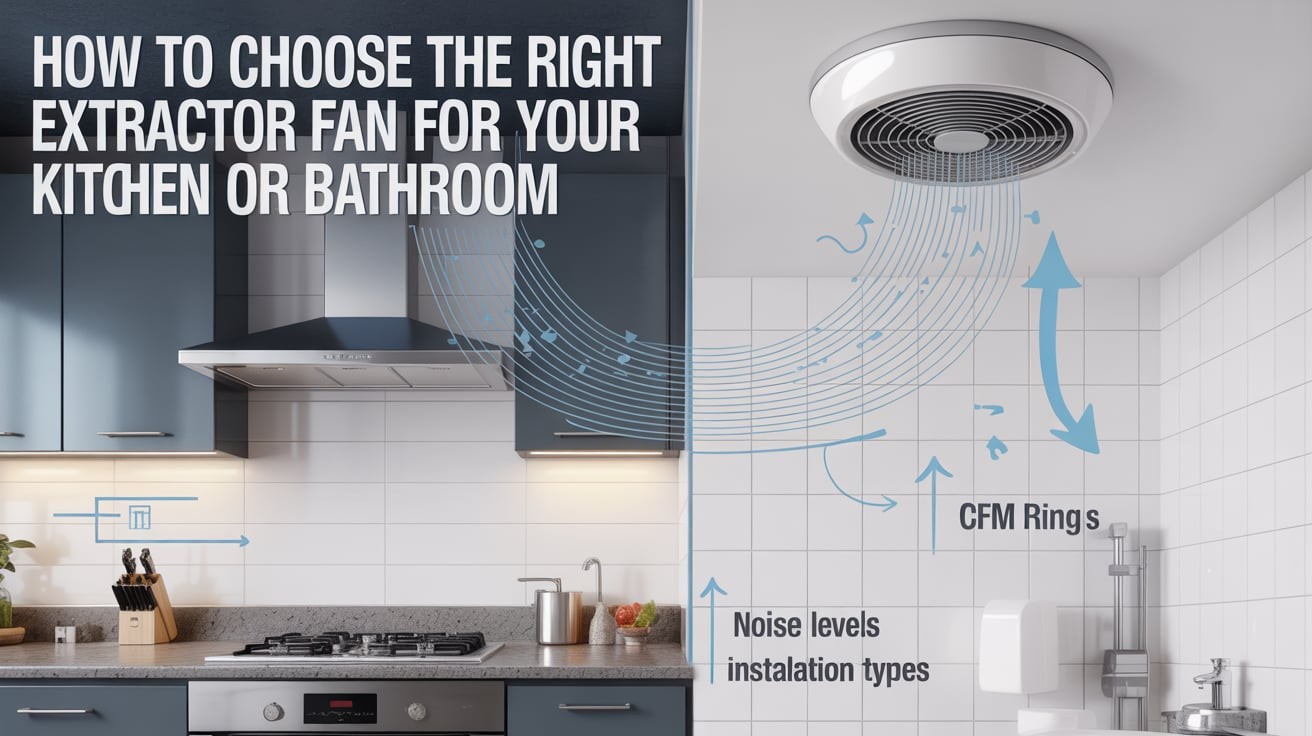
Good ventilation is essential in any home. Whether it’s the lingering smell of last night’s curry in the kitchen or the steam fogging up your bathroom mirror, an effective extractor fan helps maintain air quality, reduce moisture, and prevent mould growth. But with so many options on the market, how do you choose the right extractor fan for your kitchen or bathroom? Let’s break it down.
Why an Extractor Fan is Important
In kitchens, extractor fans help remove cooking odours, grease, and excess heat. Without proper ventilation, these can settle on your walls, cupboards, and ceilings, leading to unpleasant smells and even structural damage over time.
In bathrooms, the key issue is moisture. Every hot shower or bath generates steam, which can condense on surfaces and encourage mould and mildew growth. Not only is this unsightly, but it can also pose health risks. A reliable bathroom fan helps keep the space dry and fresh.
Factors to Consider When Choosing an Extractor Fan
Airflow Capacity (Measured in Litres per Second or Cubic Metres per Hour)
The size of your room determines how powerful your extractor fan needs to be. Bathrooms generally require a fan with at least 54 m³/h airflow, while kitchens often need something stronger due to higher levels of heat, smoke, and grease. Always check the manufacturer’s recommendations to match the fan capacity with your room size.
Ducting and Ventilation Pathways
Extractor fans remove air through ducting that leads outside. If the ducting is long or has several bends, you’ll need a more powerful fan to ensure efficient airflow. For apartments or units where ducting is limited, you might need a ductless (recirculating) fan with a charcoal filter.
Noise Levels
Nobody enjoys a fan that sounds like a jet engine. Noise levels are measured in decibels (dB). A quiet fan for a bathroom should be around 25–30 dB, while kitchen fans may tolerate slightly higher levels since they often operate alongside cooking noise.
Energy Efficiency
With rising energy costs in Australia, choosing an energy-efficient extractor fan is not only good for the environment but also helps keep your electricity bills down. Look for models with low-watt motors or energy-saving modes.
Extra Features
Modern extractor fans come with handy features such as:
- Humidity sensors – automatically switch on when moisture levels rise.
- Timers – ensure the fan runs for a set period after use.
- Backdraft shutters – prevent outside air or insects from entering when the fan is off.
These features can add convenience and improve overall air quality in your home.
Kitchen vs Bathroom Fans: Key Differences
While both serve a similar purpose, the requirements differ:
- Kitchen fans: Designed to handle grease, smoke, and strong odours. Often integrated into rangehoods or mounted on walls/windows.
- Bathroom fans: Focused on removing moisture quickly to prevent mould. Ceiling-mounted options are popular, especially in smaller bathrooms.
Always choose a fan designed for the specific room you’re ventilating.
Installation and Compliance
In Australia, extractor fans must comply with Building Code of Australia (BCA) requirements, particularly when installed in bathrooms without windows. For safety, especially in wet areas, ensure installation is done by a licensed electrician.
Final Thoughts
Choosing the right extractor fan for your kitchen or bathroom comes down to room size, airflow needs, ducting setup, and convenience features. By considering these factors, you’ll invest in a fan that not only keeps your home fresh but also protects it from long-term damage caused by excess moisture and odours.
A good extractor fan is not just a home improvement, it’s a health and comfort upgrade. If you’re unsure which option suits your space, consult a ventilation specialist or electrician who can recommend the best model for your needs.
