

Have you ever opened a cabinet door only to find your dishes barely fit inside? Or maybe you’ve struggled to reach items pushed too far back?
You’re not alone. Cabinet depth plays a huge role in how well your kitchen or bathroom functions every day.
The right cabinet depth can make cooking easier and storage more practical. It affects how your appliances fit and how smoothly you move around your space. When depths are wrong, simple tasks become frustrating.
Today we’ll look at the standard measurements for base cabinets, wall cabinets, tall cabinets, and pantry units.
Understanding these basics will help you make better choices for your home.
What Cabinet Depth Measures
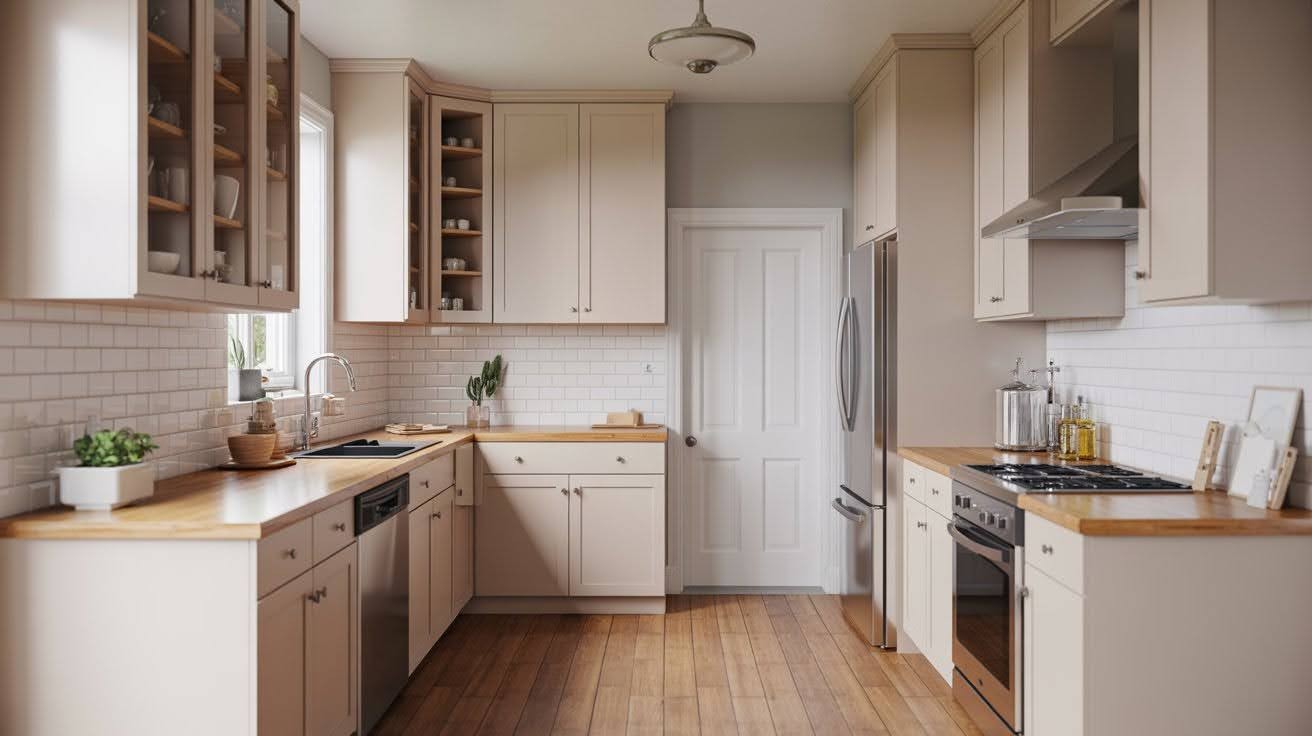
Cabinet depth is the distance from the front face of your cabinet to the back wall. Think of it as how far the cabinet sticks out into your room.
Many people confuse cabinet depth with countertop overhang. Your countertop usually extends about 1 to 1.5 inches beyond the cabinet face. This gives you a comfortable edge to work against.
Getting these measurements right matters more than you might think. Your dishwasher needs to fit perfectly under the counter. Your refrigerator should align with your cabinets. Even a half-inch mistake can cause big problems during installation.
Depth vs. Height and Width
Cabinet dimensions work together like puzzle pieces. Height runs from your floor to the top of the cabinet. Width measures from one side to the other.
But depth ties everything together. A deeper base cabinet gives you more storage space. However, it also takes up more floor space in your kitchen.
When all three measurements work well together, your kitchen feels balanced and functions smoothly. Get one wrong, and the whole design can feel off.
Standard Depths for Base Cabinets
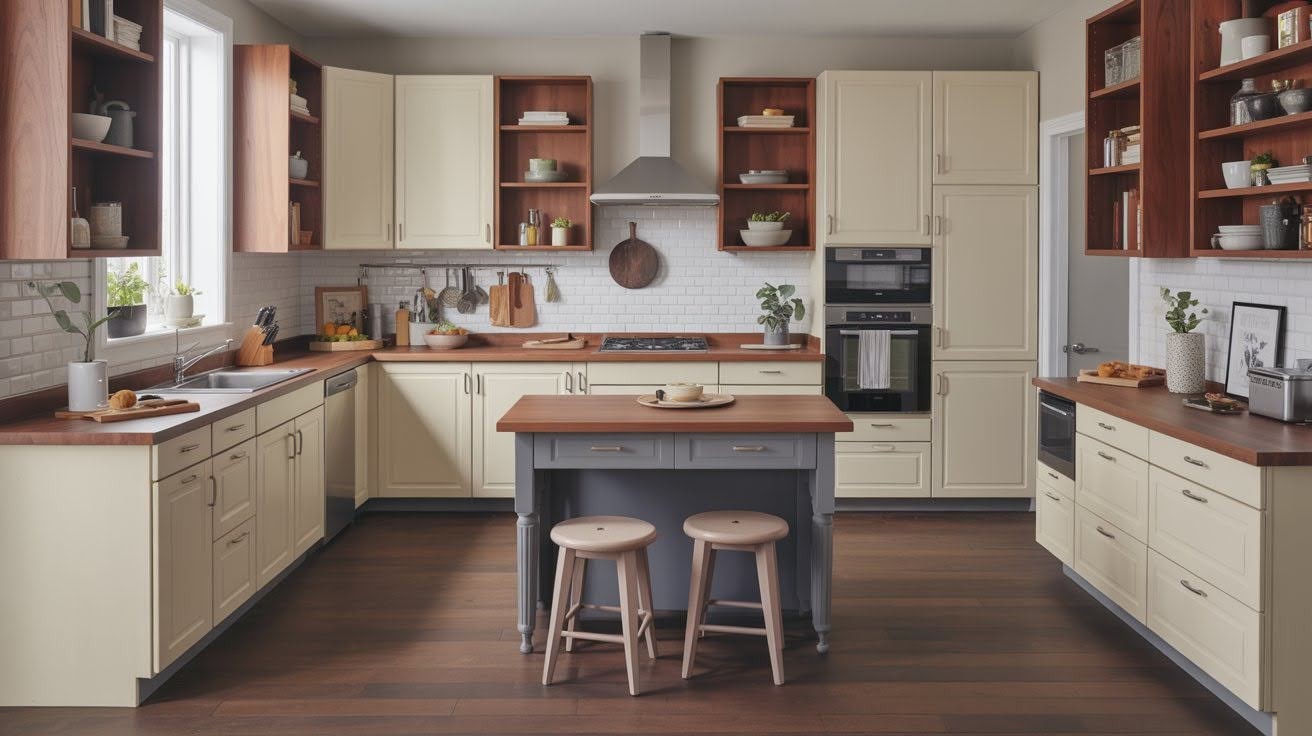
Base cabinets sit on your floor and support your countertops. They’re the workhorses of kitchen storage and need the right depth to function well.
Typical Base Cabinet Depth
Most base cabinets are 24 inches deep. Add a countertop and you get 25 to 26 inches total.
This depth works because you can reach everything inside easily. Go deeper and items at the back become hard to grab. You’ll end up stretching or forgetting what’s stored there.
Variations and Custom Options
Tight spaces work better with shallow cabinets at 12, 15, or 18 inches deep. These fit well in narrow kitchens.
Kitchen islands sometimes use deeper cabinets since you can reach them from both sides. Just remember that deeper cabinets mean less walking space in your kitchen.
Standard Depths for Wall Cabinets
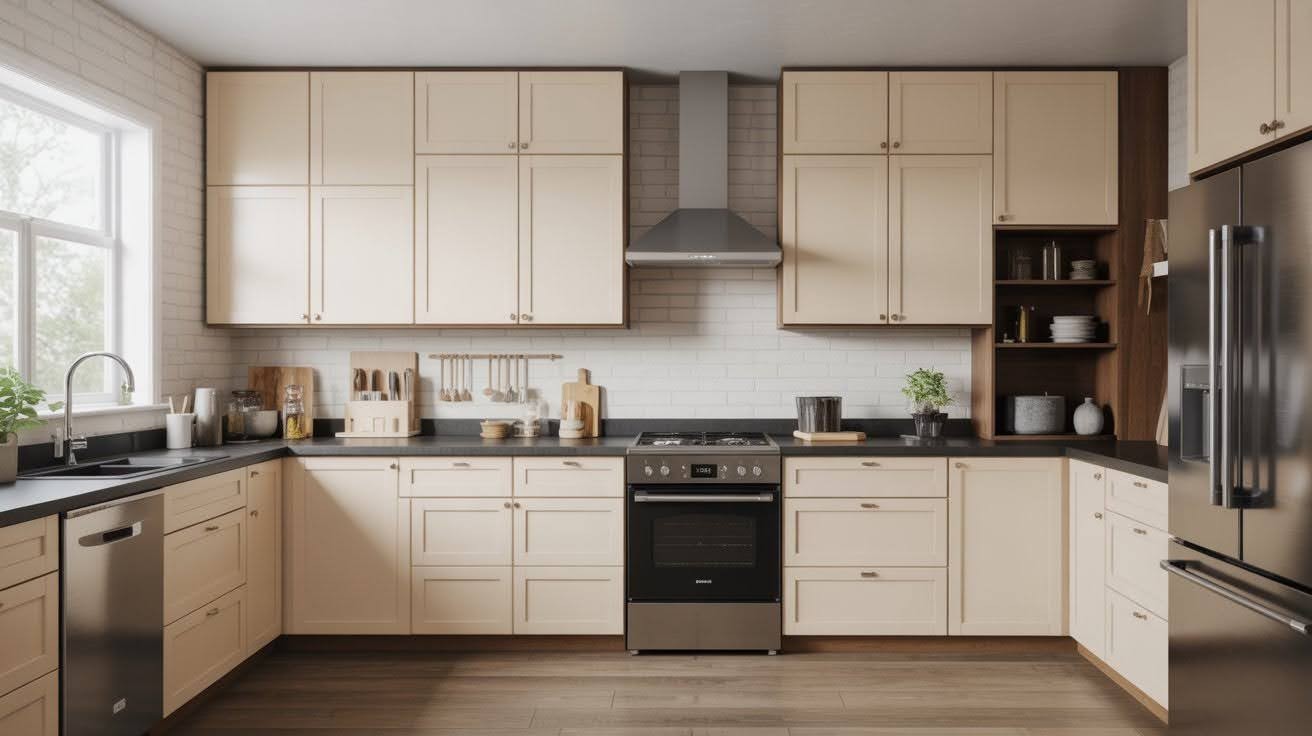
Wall cabinets hang above your counters and provide storage without taking up floor space. Getting their depth right keeps your kitchen functional and safe.
Typical Wall Cabinet Depth
Standard wall cabinets measure 12 inches deep. This keeps them from hitting your head while you work at the counter below.
Some wall cabinets can go up to 24 inches deep. You’ll usually see these deeper ones above appliances like refrigerators or ovens.
Considerations for Placement
Wall cabinets above countertops work best at 12 to 15 inches deep. This gives you storage space while leaving room to work comfortably below.
Cabinets over appliances can be deeper because you don’t stand directly under them. The extra depth makes it easier to reach items stored inside.
Remember that deeper wall cabinets can make your kitchen feel cramped. They also create more shadows on your work surface below.
Standard Depths for Tall and Pantry Cabinets
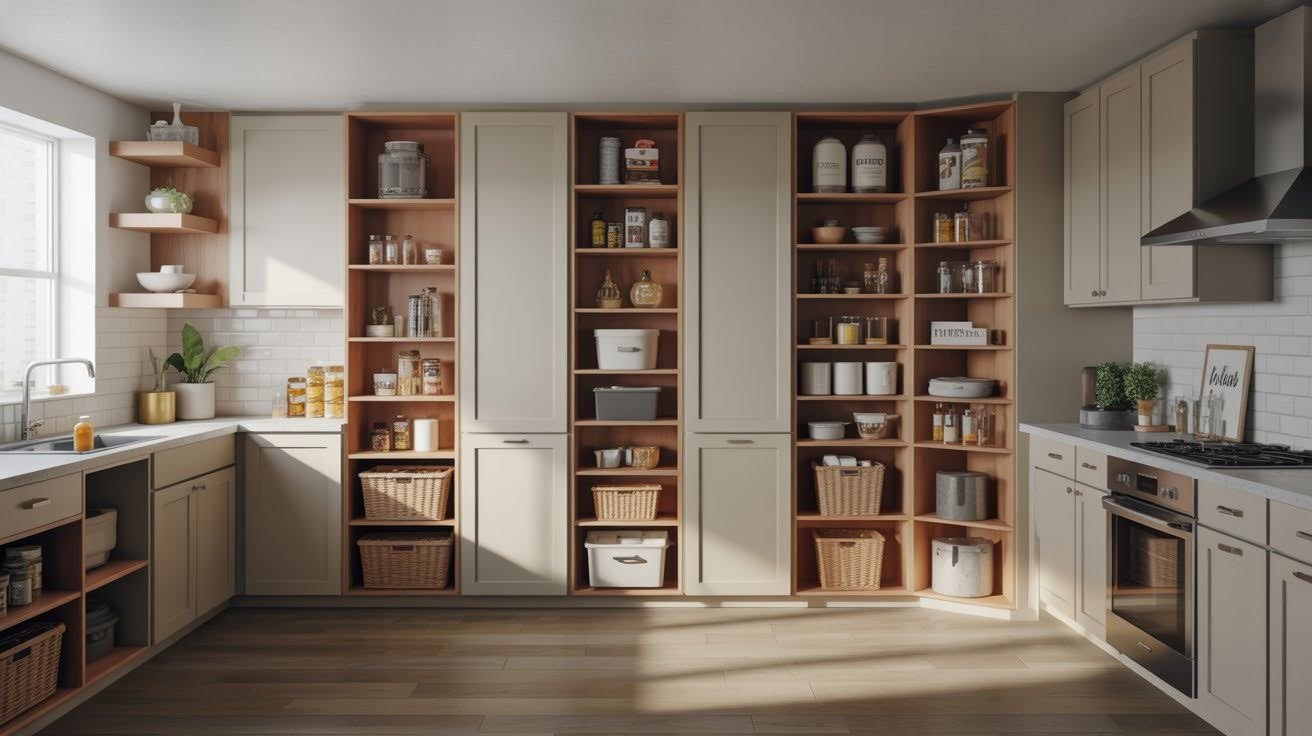
Tall cabinets run from floor to ceiling and maximize your storage space. Their depth depends on what you plan to store inside.
Tall Cabinet Depths
Most tall cabinets come in two depths: 12 inches or 24 inches.
Use 12-inch deep cabinets for pantry items like cans, boxes, and jars. The shallow depth lets you see everything at a glance.
Choose 24-inch deep cabinets for utility storage. These work great for brooms, vacuum cleaners, or small appliances you don’t use daily.
Pantry Cabinet Depths
Pantry cabinets offer the most flexibility in sizing. You can find them in 12, 24, or 36-inch depths to match your needs.
Deeper pantry cabinets hold more items, but can make things hard to find. Shallow ones keep everything visible but limit what you can store.
Think about your kitchen layout,too. Deep cabinets need more clearance space in front of them.
Shallow Cabinets and Special Considerations
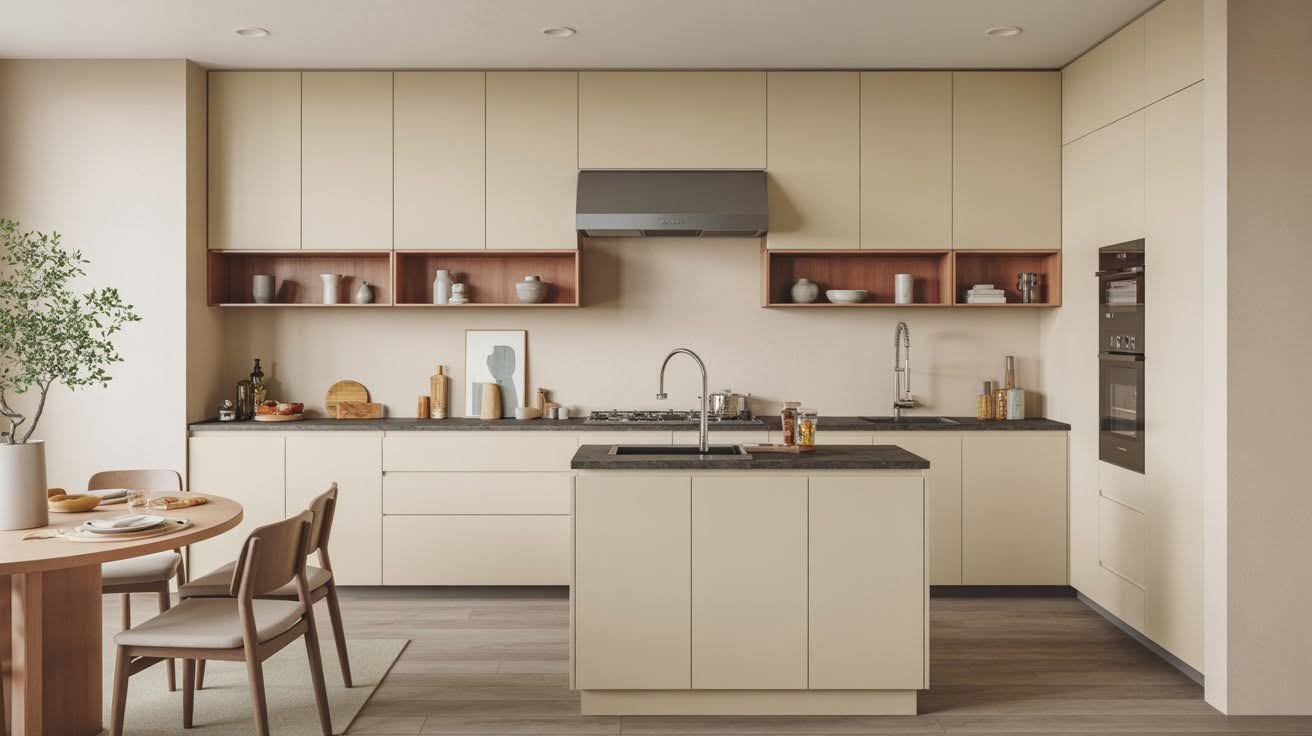
When to Use Shallow Cabinets
Shallow cabinets work well in dining areas or small islands where full-size cabinets would block movement.
Bathrooms often need shallow cabinets due to limited space. Compact kitchens also benefit from the extra walking room.
Balancing Functionality and Space
Shallow cabinets give you more floor space but less storage inside. You’ll need to organize carefully to make them work well.
The countertop overhang becomes more important with shallow cabinets. It helps create a usable work surface even when storage is limited.
Comparison Table of Cabinet Depth
| Cabinet Type | Standard Depth | Depth With Countertop | Standard Height | Standard Width | Notes / Usage |
| Base Cabinets | 24″ | 25-26″ | 34.5″ (without countertop) | 9″ -48″ (usually in 3″ increments) | Foundation for countertops and sinks; holds kitchenware and appliances |
| Wall Cabinets | 12″ | N/A | 12″ , 30″ , 36″ , 42″ | 12″ -36″ (can range 9″ -48″ ) | Above countertops; store cookware, food; deeper over appliances like fridge |
| Tall Cabinets | 12″ or 24″ | N/A | 84″ , 90″ , 96″ | 18″ , 24″ , 36″ | Pantry or utility cabinets; full-height storage for food, brooms, appliances |
| Pantry Cabinets | 12″ (pantry) / 24″ (utility) | N/A | 84″ -96″ | 12″ , 24″ , 36″ | Tall cabinets with flexible sizing; maximize storage |
| Shallow Cabinets | 12″ , 15″ , or 18″ | N/A | Varies | Varies | Used for islands, dining areas, or spaces with clearance issues |
| Cabinets Over Fridge | 24″ (deeper for access) | N/A | Varies (12″ -24″ typical) | Varies | Deeper than standard wall cabinets for easier access and alignment with fridge |
Practical Tips for Choosing the Right Cabinet Depth
Selecting the right cabinet depth takes more than just measuring your space. Here are key factors to consider for a kitchen that works well for you.
- Plan your cabinet depth around your kitchen’s work triangle. This connects your sink, stove, and refrigerator. Deeper cabinets can create tight spaces that slow you down.
- Think about how you cook daily. Frequent cooks might want deeper base cabinets for large pots and pans. Light cooks often find standard depths work perfectly.
- Match your upper and lower cabinet depths when possible. This creates a clean, balanced look that feels intentional.
- Align cabinet faces when you must use different depths. This keeps your kitchen looking organized even with mixed sizes.
- Consider custom solutions for unique spaces. High ceilings might need deeper wall cabinets. Narrow kitchens often work better with shallow options.
- Use filler strips to bridge gaps when standard cabinets don’t fit perfectly. This saves money compared to fully custom cabinets.
- Modified cabinets can solve tricky layout problems without breaking your budget.
Conclusion
Getting cabinet depth right makes all the difference in your kitchen’s daily function.
We’ve covered the standards: 24 inches for base cabinets, 12 inches for wall cabinets, and flexible options for tall and pantry units.
But numbers are just the starting point. Your cooking habits, family size, and kitchen layout should guide your final choices.
I’ve seen too many beautiful kitchens that don’t work well because depth was an afterthought.
Take time to measure carefully and think about how you actually use your space. Consider your appliances, your storage needs, and how you move around while cooking.
When cabinet depth matches your lifestyle, your kitchen becomes a joy to use instead of a daily frustration.
Frequently Asked Questions
What is the standard depth for base cabinets?
Standard base cabinets are 24 inches deep without the countertop. When you add a countertop, the total depth becomes 25 to 26 inches.
How deep should wall cabinets be above my countertops?
Wall cabinets above countertops should be 12 to 15 inches deep. This depth prevents you from hitting your head while working and keeps items within easy reach.
Can I use deeper cabinets in my kitchen island?
Yes, kitchen islands can use deeper cabinets since you access them from multiple sides. Just make sure you have enough walking space around the island for comfortable movement.
What depth works best for pantry cabinets?
Pantry cabinets work well at 12 inches deep for easy visibility of stored items. You can go deeper for more storage, but items at the back become harder to reach.
When should I consider shallow cabinets instead of standard depth?
Use shallow cabinets in tight spaces, narrow kitchens, or areas where you need more walking room. They work well in galley kitchens or when space is limited.
