

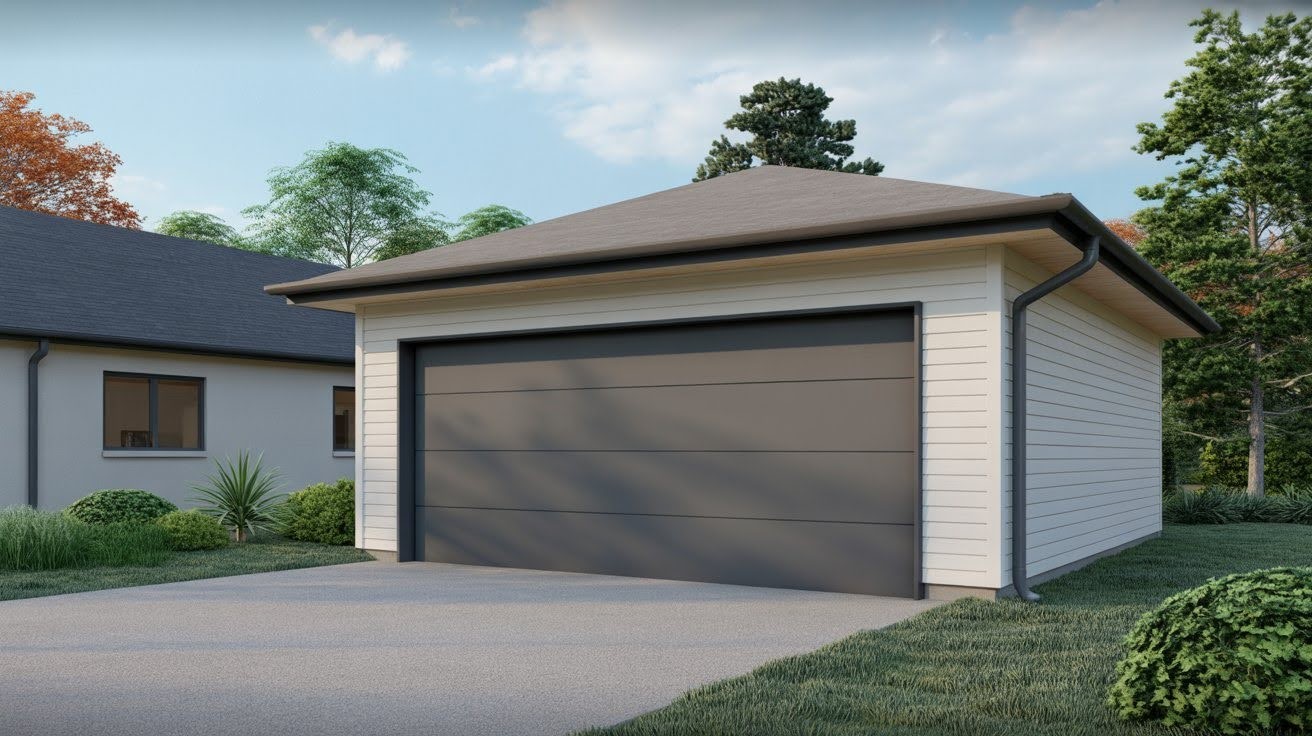
Choosing the right garage door size matters more than you think. If you’re planning a new garage or replacing an old door, I know how confusing dimensions can get.
This guide breaks down standard 2 car garage door size options to help you make smart decisions.
I’ll show you typical measurements, what affects your choice, and how different vehicles fit. You’ll learn about width and height standards, material options, and when custom sizing makes sense.
By the end, you’ll know exactly what size works for your space and cars. Let’s get your garage project on track.
What is a Standard 2 Car Garage Door?
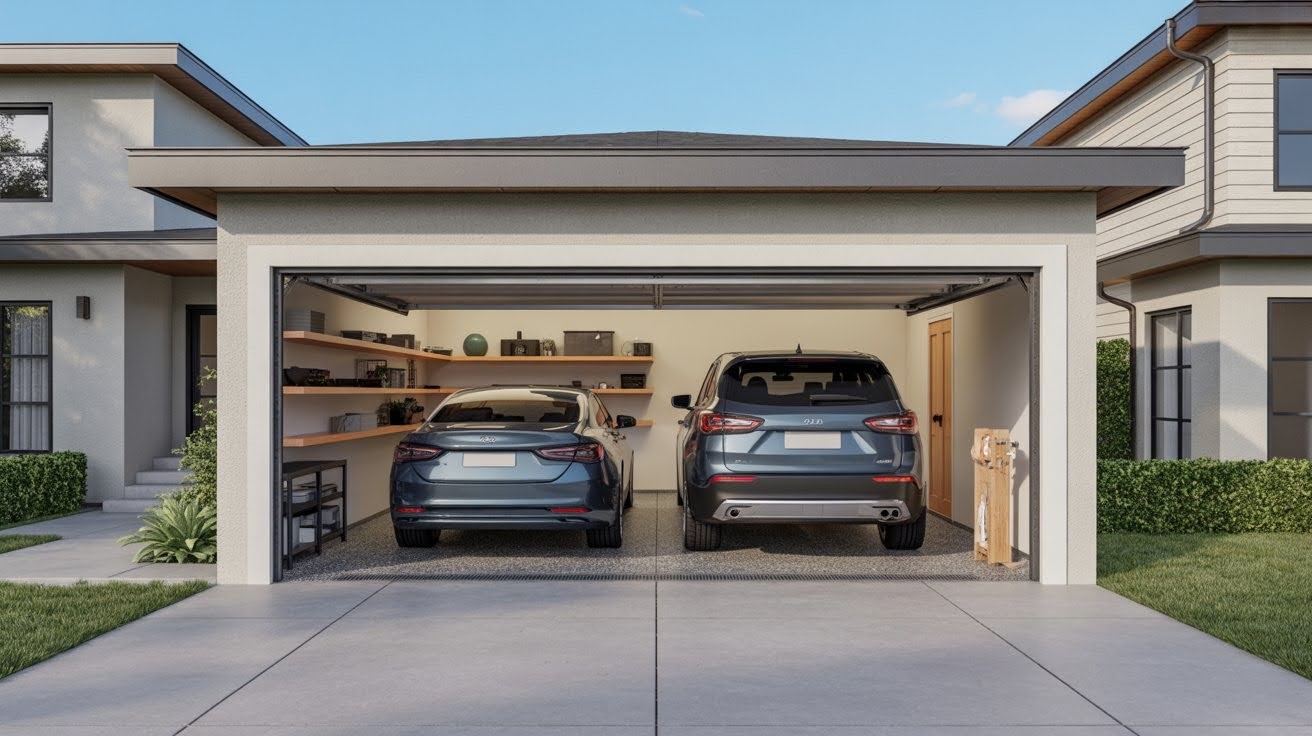
A 2 car garage door fits two vehicles comfortably. Standard sizes make planning and installation straightforward.
Most doors are 16 to 18 feet wide and 7 to 8 feet tall. Some go up to 20 feet for larger vehicles. This width lets two vehicles park side by side with room to open doors.
The height works for standard cars and most SUVs. Single car doors measure 8 to 10 feet wide.
A 2 car door is basically double the width, giving you flexibility for larger trucks or vans.
Factors to Consider When Choosing a 2 Car Garage Door
Your garage door needs to match your specific situation. Several factors determine what size and style works best for you.
Vehicle Types and Sizes
Think about what you park inside. SUVs, trucks, and vans need more room than compact cars. Measure your vehicles before deciding. Check the width with mirrors extended.
Taller vehicles like lifted trucks or commercial vans might need extra height. You want at least 2 feet of clearance on each side for doors and walking space.
Garage Layout and Parking Configuration
How you park affects door selection. Most people park side by side, which needs a wider door. Some garages use tandem parking where one car sits behind the other.
Offset arrangements can work too. Your layout changes what door width you need. Side by side parking requires the full 16 to 18 feet.
Ceiling Height and Clearance
Standard garage ceilings sit at 8 to 9 feet high. This works for most vehicles. If you drive a tall truck or want overhead storage racks, consider higher ceilings.
An 8-foot door in a 9 foot ceiling leaves room for the door mechanism. Taller vehicles might need a 9-foot door with a 10-foot ceiling.
Additional Storage and Workspace Needs
Garages serve multiple purposes. You might store bikes, tools, or create a workshop area. Plan for these needs when choosing door size.
If you need lots of storage space inside, a wider door helps. Sometimes going oversized or custom makes sense. This gives you room to move large items in and out easily.
Standard 2 Car Garage Door Configurations
You have options for how your garage door opens. The configuration affects function and appearance.
Single Large Door vs. Two Separate Doors
|
Door Type |
Pros |
Cons |
|
Single Wide Door |
Clean look, costs less to install, easier operation with one opener |
Needs more wall space when open, complete replacement if damaged, harder to operate manually |
|
Two Separate Doors |
Can open just one side, easier manual operation, simpler to replace one door |
Costs more upfront, requires two openers, takes more maintenance |
Material and Design Options
|
Material |
Benefits |
Considerations |
|
Steel |
Strong, affordable, needs little maintenance |
Most common choice |
|
Aluminum |
Resists rust better than steel, works well in coastal areas |
Dents more easily |
|
Wood |
Classic look |
Needs regular maintenance like painting and sealing |
|
Composite |
Resists weather damage, comes in many styles |
Blends benefits of other materials |
Custom and Oversized Options
Standard sizes don’t fit every situation. Sometimes you need something different. Custom doors work when you have unusual needs. Maybe you own a large RV or boat.
Perhaps you run a business from home with commercial vehicles. Oversized doors give you the space standard options can’t provide.
Measure carefully before ordering custom. Write down the width, height, and depth of your opening. Check for level floors and square corners.
Note any obstacles like pipes or electrical boxes. Custom doors cost more but solve specific problems. You get exactly what you need.
Work with experienced installers who understand non-standard installations. They can spot potential issues before you order.
Conclusion
I’ve been helping people with garage projects for years, and door size always comes up first. The standard 2 car garage door size ranges from 16 to 18 feet wide and 7 to 8 feet tall.
Consider your vehicles, storage needs, and garage layout before deciding. Single wide doors cost less, while double doors offer flexibility.
Custom options exist when standard sizes don’t work. Measure carefully and talk to professionals about installation.
What size are you considering for your garage? Share your thoughts below.
Frequently Asked Questions
What is the most common 2-car garage door size?
The most common size is 16 feet wide by 7 feet tall. This fits two standard vehicles comfortably with room for door clearance on both sides.
Can I fit an SUV and a truck in a standard 2-car garage?
Yes, most SUVs and trucks fit through a 16 to 18-foot wide door. Just measure your vehicles with mirrors extended to confirm clearance on both sides.
Should I get one large door or two separate doors?
One large door costs less and looks cleaner. Two separate doors let you open just one side and are easier to fix if damaged.
How much does a standard 2 car garage door cost?
Basic steel doors range from $750 to $1,500 installed. Insulated or custom doors with windows cost $1,500 to $3,500 depending on materials and features.
Do I need a taller door for a lifted truck?
Most lifted trucks need an 8-foot tall door instead of the standard 7 feet. Measure from ground to the highest point of your vehicle before ordering.
