

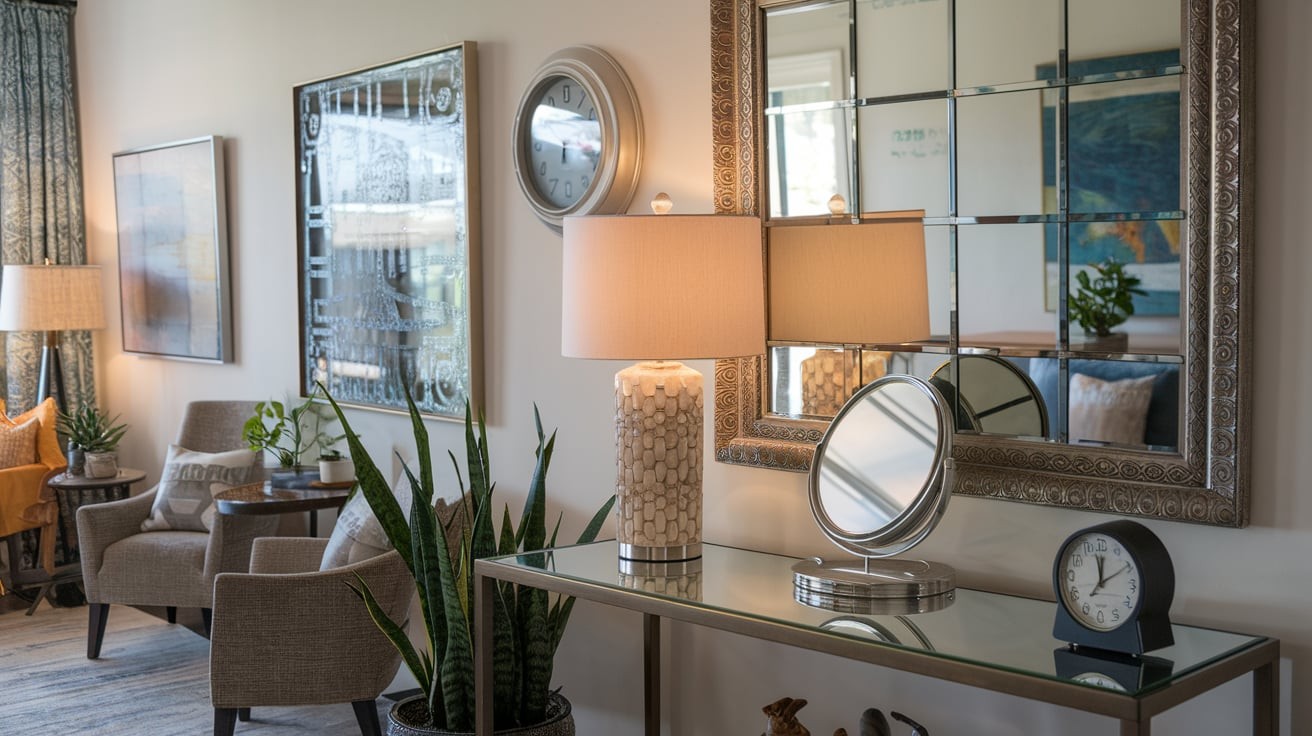
Mirrors and clocks often appear in homes as practical additions, yet their influence stretches far beyond utility. They help shape how a room feels, how people move within it, and how the atmosphere settles throughout the day. When placed with intention, these pieces can bring calm, clarity, rhythm, and balance to a space without drawing too much attention. Their quiet presence plays a meaningful role in a room’s experience, making them far more valuable than mere decor.
Thoughtful interiors depend on how objects work together. Mirrors and clocks add subtle layers that soften or sharpen a space’s character, depending on what the room needs. They are adaptable, understated, and timeless, which is why they continue to hold a steady place in both modern and traditional homes.
How Mirrors Support Light, Space, and Visual Ease
Mirrors carry a unique ability to influence the quality of light in a room. A well-placed mirror can brighten a dark corner, soften shadows, and extend natural daylight deeper into a home. This shift in light does more than improve visibility. It helps the room feel more open and alive.
A mirror opposite a window can reflect greenery, sky, or nearby structures, adding depth to the room. Even a small mirror can transform the feel of a narrow hallway or compact entryway by giving the eye more space to travel. Mirrors also support visual rest. Their reflective surface adds clarity without cluttering the room, allowing the room to breathe.
Mirrors also guide movement. When placed near entry points, they subtly guide the eye, helping people navigate the space. Their presence lifts the atmosphere, making rooms feel calm without requiring additional furnishings.
Clocks and the Quiet Rhythm of Daily Living
Clocks bring a sense of grounding to a room. They support daily routines not just by telling time but by stabilising the rhythm of the day. Their steady presence helps create an environment where time is felt rather than rushed.
A kitchen clock helps guide morning routines and evening meals. A clock in the living room sets a quiet tempo for the day. An entryway clock offers a moment of clarity before heading outdoors. Unlike digital devices, which often introduce noise or distraction, a well-designed clock supports awareness without demanding attention.
The design of a clock influences the emotional tone of the room. Clean, minimal clocks add a sense of calm. Larger clocks introduce structure. Traditional styles can bring warmth. Modern designs feel steady and composed. Whatever the style, clocks offer stability, grounding the room through their steady presence.
How These Pieces Work Together
Mirrors and clocks may seem unrelated at first, but together they influence the balance of the room. Mirrors bring light and openness. Clocks bring structure and rhythm. When combined, they create a sense of harmony that helps a space feel more complete.
Mirrors support:
- Light flow
- Visual balance
- Spaciousness
- Calmness
Clocks support:
- Routine
- Predictability
- Visual structure
- Gentle awareness
Placed thoughtfully, these two elements shape a room’s feel without overwhelming it. They contribute to the atmosphere rather than decoration, making them ideal for spaces where balance matters.
The Role of Placement in Achieving Balance
Placement determines the impact of both mirrors and clocks. A mirror hung too high may reflect the ceiling rather than the view. A clock placed at an awkward angle may interrupt the flow of the room. When positioned with intention, these pieces blend in naturally and become part of the room’s rhythm.
Considerations for mirrors:
- Place across from the windows to reflect natural light
- Avoid placing them where they reflect clutter
- Use mirrors to widen narrow or compact spaces visually
- Choose sizes that match the scale of the room
Considerations for clocks:
- Keep them visible but not dominant
- Choose designs that complement nearby textures
- Ensure the size supports the proportions of the wall
- Consider quieter mechanisms for peaceful rooms
Placement should help the room breathe. When positioned correctly, mirrors and clocks work together to guide the eye and support calm.
Supporting a Sense of Well Being at Home
Well-balanced spaces contribute to a sense of ease. Mirrors brighten the atmosphere while clocks steady the pace of the room. Together, they support emotional comfort and help create a home that feels anchored, clear, and enjoyable to live in.
This sense of well-being is often created through simple interactions. A soft reflection of morning light through a mirror. A quiet glance at a clock during a slow afternoon. These small moments add rhythm and comfort to daily life in a way that large furniture or bold decor sometimes cannot.
Mirrors and clocks also help rooms transition between activities. A mirror in a bedroom adds calm at the start and end of the day. A clock in a study supports steady focus. In living areas, the combination of both pieces shapes an environment that is easy to settle into.
Design Choices That Strengthen the Room
Mirrors come in many forms, from large sculptural pieces to subtle frameless designs. Choosing the right type helps reinforce the room’s personality. Rounded mirrors add softness. Rectangular designs bring structure. Decorative frames introduce warmth and character.
Clocks follow the same pattern. Slim, modern clocks create clarity. Oversized clocks become gentle focal points. Wooden frames contribute warmth. Metal designs feel contemporary. When carefully selected, both pieces support the home’s overall identity.
Design is not about matching styles perfectly. It is about creating a mix that feels natural. Mirrors and clocks help achieve that balance by offering understated support.
A Quiet but Essential Contribution
Although these pieces rarely dominate a room, they shape it in meaningful ways. They help people understand the space, move through it, and enjoy the atmosphere more fully. They work silently in the background, influencing light, rhythm, and comfort.
Mirrors and clocks hold a special place in well-balanced interiors because they add clarity without noise and structure without tension. They help homes feel lived in and intentional rather than overly styled or crowded.
For those who value pieces that bring calm and structure to a room, Shopica includes a range of mirrors and clocks shaped with the same attention to detail that supports comfortable daily living.
