

Have you ever stood in the curtain aisle, completely stuck on which color to pick? I’ve been there too.
The color you choose for your curtains affects everything from the mood of your space to how much natural light fills the room. It can even make or break how well your furniture and decor work together.
I know picking the right curtain color can feel overwhelming with so many options out there. But don’t worry.
I’m here to walk you through simple, practical tips that will help you choose the perfect shade for every room in your home.
Understand the Role of Curtain Color in a Room
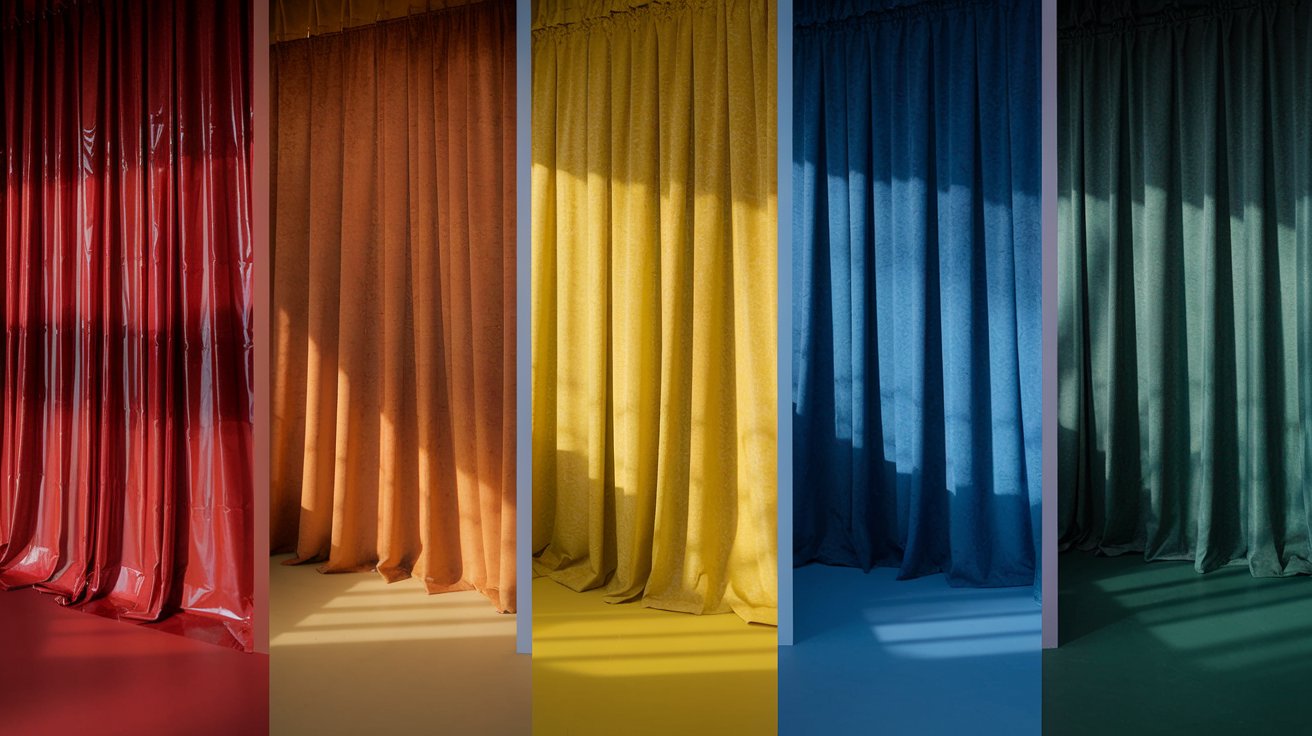
Curtain colors do more than look pretty. They change how your room feels and how light moves through your space.
Influence on Mood
The colors you choose for your curtains can change how you feel in a space. Warm colors like red, orange, and yellow bring energy to a room. They work great in living rooms, kitchens, or anywhere you want people to feel lively.
Cool colors like blue, green, and purple have the opposite effect. They make spaces feel calm and peaceful. I recommend these shades for bedrooms or reading nooks where you want to relax.
Light shades create a subtle, airy feel. Dark shades make a bold statement and add drama to your space.
Effect on Light
Curtain color changes how natural light moves through your room. It’s not just about blocking the sun. It’s about creating the right atmosphere.
Shiny fabrics bounce light around and make rooms feel brighter. Matte fabrics soak up light and create a softer look. The fabric texture matters just as much as the color itself.
Lighter curtain colors let more light through and make small rooms feel bigger. Darker colors absorb light and create cozy, intimate spaces perfect for bedrooms.
Coordinate Curtain Colors with Walls

Your curtains and walls need to work together. The right pairing makes your room feel complete and balanced.
Complement vs. Contrast
You have two main approaches. Low contrast creates a smooth, cohesive look. Choose curtain colors close to your wall shade for a subtle effect.
High contrast makes your curtains pop as a focal point. Pair light walls with dark curtains or the opposite. This adds personality to your room.
For neutral walls, try soft pastels for a gentle touch or bright colors for energy. Bold walls like navy look great with neutral curtains. Pastel walls pair nicely with white or cream for an airy feel.
Matching with Room Palette
Curtains tie your entire color scheme together. Look at your furniture, rugs, and decor. Pick a curtain color that appears elsewhere in the room.
The color wheel helps here. Complementary colors like blue and orange create vibrant spaces. Analogous colors like blue, teal, and green feel calm and harmonious.
Consider Room Type and Function

Different rooms need different curtain colors. Think about how you use each space before choosing a shade.
Living Room Curtains
Living rooms are where you spend time with family and guests. Layered sheer curtains let natural light flood in during the day. They keep your space bright and welcoming.
For more privacy and a dramatic look, go with heavier fabrics. They add weight and richness to your living area while blocking outside views when needed.
Bedroom Curtains
Bedrooms are all about rest and comfort. Dark, luxurious fabrics help you sleep better by blocking out light. They create a relaxing atmosphere perfect for winding down.
Velvet or silk curtains give your bedroom an upscale, sophisticated feel. These materials add texture and make the space feel more special.
Dining Room Curtains
Dining rooms can handle more personality. Printed or patterned curtains add visual interest and make the space feel lively. They’re great conversation starters during dinner parties.
If you prefer a classic look, neutral shades work beautifully. They let your furniture and table settings take center stage without competing for attention.
Patterns vs. Solid Colors
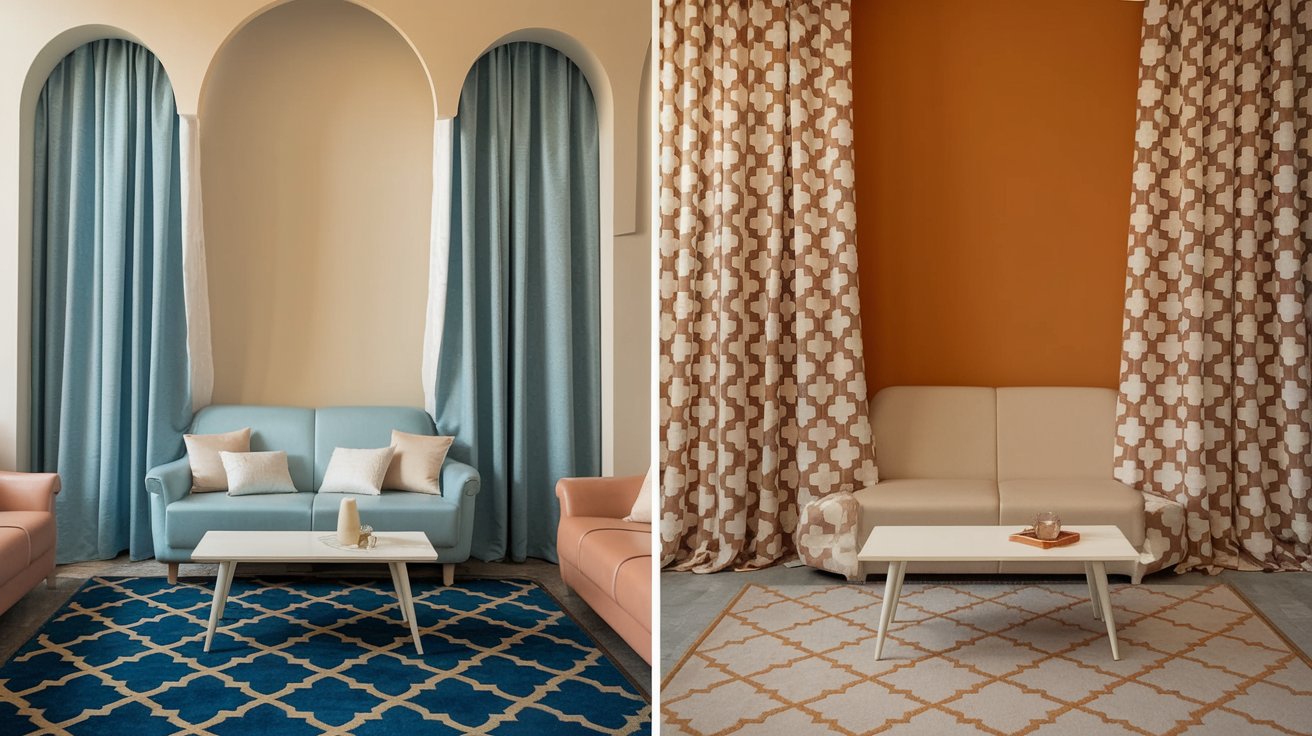
Choosing between solid and patterned curtains depends on what’s already in your room. Both options have their place in home design.
Solid Curtains
Solid color curtains are versatile and easy to work with. They layer beautifully with your existing decor without creating visual clutter.
If your room already has patterned furniture, rugs, or wallpaper, solid curtains are the way to go. They balance out busy spaces and let other design elements shine.
Printed Curtains
Patterned curtains make a statement. They can become the focal point of your room, especially in spaces with minimal decor.
The trick is to choose prints that repeat accent colors already present in your room. This creates cohesion and ties everything together. If you have blue throw pillows, pick curtains with blue in the pattern.
Trims or borders help connect patterned curtains to your overall design. A border that matches your wall color or furniture can make the curtains feel intentional and polished.
Practical Tips from Interior Design Experts
- Always test curtain swatches in your room’s natural light before buying. Colors look completely different in store lighting compared to your home.
- Don’t feel like you need to use the same curtain color in every room. Each space has its own personality and deserves its own treatment.
- Let your curtains inspire other color choices in the room. Pull accent colors from patterned curtains for throw pillows or artwork.
- Consider the time of day you use each room most. Morning rooms benefit from lighter curtains while evening spaces can handle darker, richer tones.
- Take photos of your curtain options against your walls. This helps you compare choices side by side and makes deciding much easier.
Conclusion
Choosing the right curtain color comes down to understanding a few key factors. Think about the mood you want to create, how light moves through your space, and how colors work with your walls. Consider patterns versus solids and what each room actually needs.
Don’t be afraid to experiment with swatches and try layering different fabrics. I’ve seen rooms completely change with the right curtain choice. Take your time testing colors in natural light.
Now it’s your turn. Pick curtain colors that reflect your personal style, set the right mood, and make each room work better for you.
Frequently Asked Questions
What curtain color makes a room look bigger?
Light colors like white, cream, and soft pastels make rooms feel more spacious. They reflect light and create an airy, open atmosphere.
Should curtains match the wall color or furniture?
There’s no strict rule here. Curtains can match either your walls for a cohesive look or your furniture to tie the room together.
What color curtains go with gray walls?
Gray walls are versatile and work with almost any curtain color. Try white for a clean look, navy for contrast, or blush pink for warmth.
Can I use different curtain colors in different rooms?
Absolutely! Each room has its own purpose and can have its own curtain color. Just make sure the overall feel of your home still flows naturally.
How do I know if I should choose patterned or solid curtains?
Choose solid curtains if your room already has busy patterns in furniture or decor. Go with patterned curtains in simpler rooms where they can become a focal point.
