

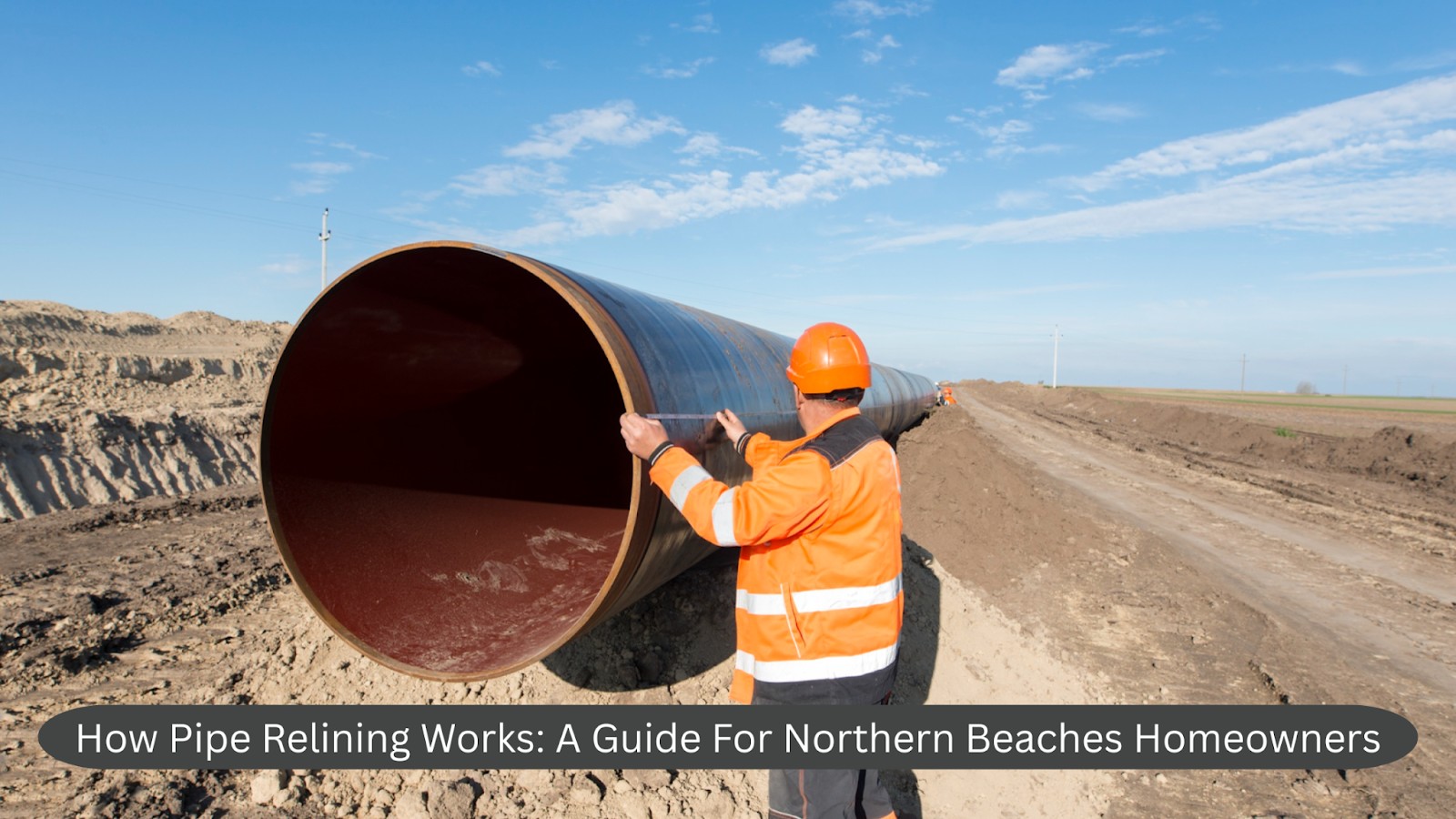
The pipe is not the worst part of repairing your plumbing. It is digging up your garden or driveway to reach it. A majority of homeowners dread the excavators more than the leak itself. No one would wish their yard to be ruined.
The Northern Beaches homes have major plumbing problems—talk of sandy soil shifts. Tree roots search for water. Things are eroded along the coast. These forces are always exercised on your underground pipes—the ancient ways involved trenching onto your land.
But there is a smarter choice in pipe relining. This guide explains the working principle of relining, as well as why homeowners in the Northern Beaches are opting for it over conventional repair methods.
What Is Pipe Relining?
Pipe relining refers to a procedure in which pipes are repaired or replaced internally without the need to dig up the surrounding soil.
It is done by inserting a resin-saturated liner in the existing pipework. When this liner cures (hardens), it produces a smooth, continuous structural pipe with no joints that can be stronger than the original.
Key Benefits:
- No Digging: Maintains your gardens, driveways, and retaining walls.
- Speed: The majority of jobs are done within one day.
- Cost-Effective: The cost of restoring the concrete or landscape is eliminated.
When you live in sandy soil or have difficult access, the most logical action to take is to engage an expert in pipe relining Northern Beaches to maintain the value of your property and resolve the plumbing crisis.
Why Pipe Problems Are Common in the Northern Beaches?
The Northern Beaches are not only known for their beaches, but also for the botany and geology that are also closely related to the plumbing systems.
- Aggressive Tree Roots: Native trees, such as Eucalypts and Figs, have aggressive root systems. Approximately 58.9% of all pipe failures in such coastal and urban conditions are attributed to tree root intrusion, primarily affecting old clay and earthenware pipes that are common in the area.
- Sandy and Shifting Soils: Coastal soils are typically sandy and therefore susceptible to tidal and heavy rain-induced movement. This flow may cause stiff pipes (such as old earthenware) to flex or break, allowing roots to enter.
- Saltwater Corrosion: Properties near the ocean have saltwater in the groundwater system, which may accelerate the corrosion of older cast iron pipework.
The biological process where the roots tend towards moisture is referred to as hydrotropism. The smallest slit in a pipe can emit moisture vapour, and this sends a signal to the roots to grow towards that exact slit.
Step-by-Step: How Pipe Relining Works
Pipe relining is a high-tech and systematic process. Here is what you can look forward to upon the arrival of a team at your house.
1. Initial Inspection and Diagnosis
It starts with the inspection of CCTV drain cameras. The plumber then inserts a high-definition camera inside the line to identify the type of damage, such as a tree root ball, misalignment, or a crushed part.
2. Cleaning the Pipe
The old pipe must be in perfect condition before it can be lined with a liner. Technicians use high-pressure hydro-jetting (as high as 5,000 PSI) to clean the interior of the pipe.
- Aim: Scale, grease, and tree roots removal.
- Output: A free-flowing surface resulting in a bond-perfect liner.
3. Liner Preparation
A felt or fibreglass sleeve is typical of the liner. It is soaked with a special epoxy resin. The calculation at this step, known as the wet-out, depends precisely on the diameter of your pipe and the length of the repair.
4. Installing the Liner
The resin-coated liner is inserted into the pipe using an inversion drum or a pull-in-place technique. This is then pressure-filled with compressed air or water, nudging the wet resin firmly against the inside of your old pipe.
5. Curing the Liner
This is the place where magic occurs. The resin needs to harden.
- Ambient Curing: Left to dry naturally (slower).
- Hot Water/ Steam: Accelerates the reaction.
- UV Light Curing: UV curing technology (controlling approximately 45% of the market) is the fastest and energy-efficient method to cure. A UV light train is dragged through the liner and cured almost immediately.
6. Final Inspection
Finally, the calibration tube is then removed, after which the camera can be re-inserted to confirm the work once it is cured. You get a video file that depicts a smooth and new pipe.
When Pipe Relining Is the Best Solution?
Relining is versatile but particularly unbeatable in the following scenarios:
- Under Infrastructure: If the broken pipe is under a swimming pool, in a new-laid driveway, or in the slab of your home.
- Heritage Gardens: When it is necessary to save an existing landscape.
- Recurring Blockages: When you are required to jet your drains in 6 months due to roots, relining will provide a permanent solution.
- Multiple Bends: Modern liners are flexible and can accommodate 90-degree bends and changes in diameter (for example, 100mm changing to 150mm pipes).
Lifespan and Durability
The most typical question to ask them all is: How long does it last? The standard industry warranties for pipe relining typically range from 30 to 50 years; however, lab tests suggest that the material may have significantly greater durability.
According to studies comparing trenchless technology to excavation, it was found that the use of relining methods resulted in a reduction of approximately 59% in CO2 emissions.
You are making a much greener choice for your home repairs by eliminating the heavy equipment needed for digging and the manufacture of new heavy PVC or concrete pipes.
How to Select a Specialist in the Northern Beaches
Not all plumbers are relining experts. This requires costly equipment and special training.
- Check Equipment: Are they self-equipped with relining equipment and UV curing lights, or do they subcontract? (Having equipment is typically beneficial in terms of lower prices and responsibility.)
- Local Experience: Do they have experience with the difference between digging in Manly sand and in Collaroy clay?
- Warranty Transparency: The warranty should include both materials and labor for installation.
- Before/After Footage: It is best always to request a copy of the CCTV footage before the final invoice is paid.
Conclusion
Pipe relining solves plumbing problems without damaging property. As a result, you retain your garden, driveway, and tranquillity.
This approach has endured for decades and addresses the distinct issues that Northern Beaches homes face. Root damage, moving sand, eroding coasts – they take them all.
Stop worrying about excavators ruining your landscape. Get a free evaluation done by a local relining expert. Determine whether your pipes are compatible with this innovative solution.
