

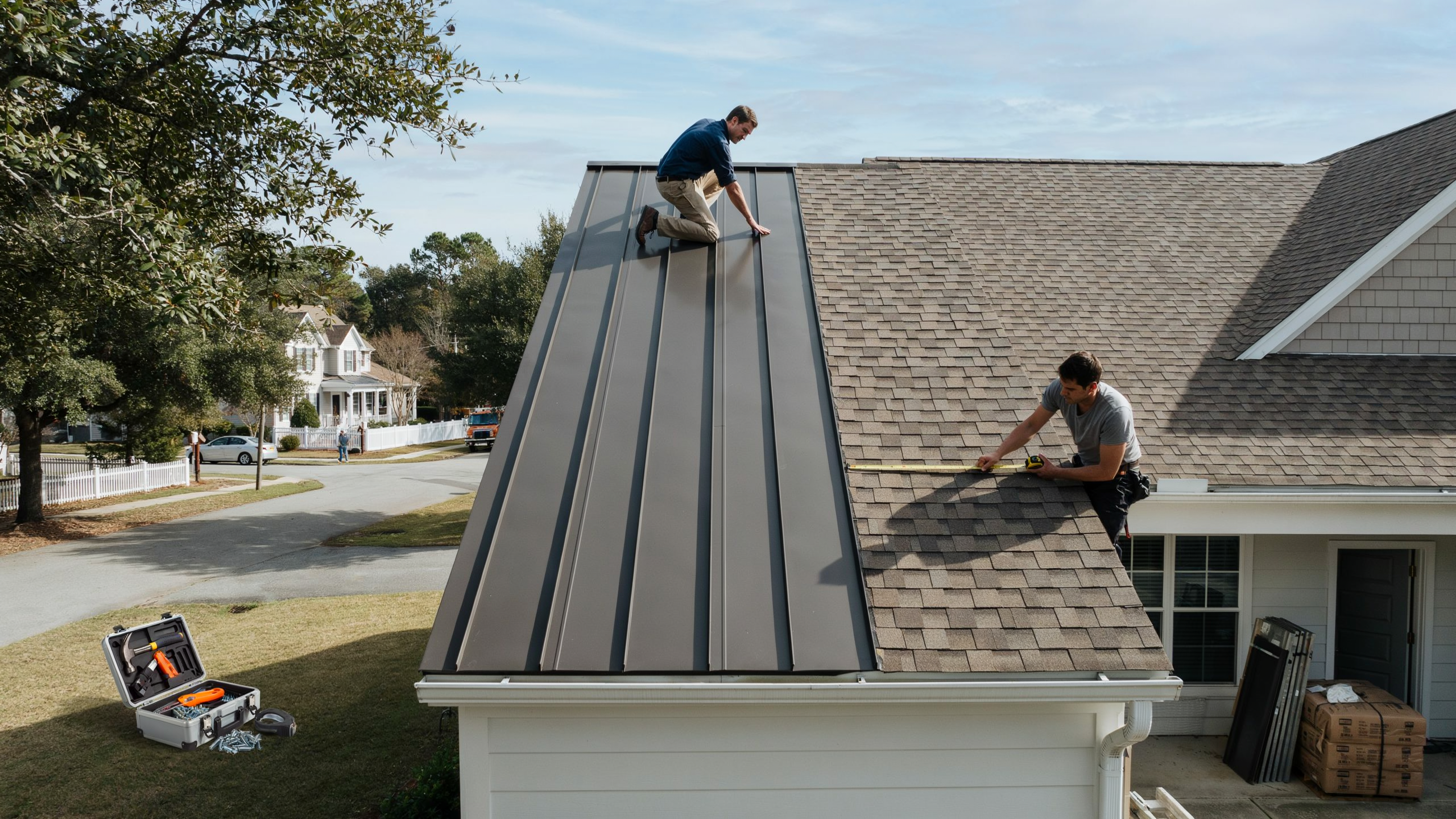
The first metal-roof estimate can create real sticker shock. Asphalt shingles remain the lower-cost choice, while metal can cost roughly two to three times as much upfront. The gap may reach well over $10,000 on a larger home. Understanding what creates it helps you decide whether the investment fits your plans.
How Much More Does a Metal Roof Cost Than Asphalt Shingles?
Architectural asphalt shingles often cost about $4.50 to $8.50 per square foot installed. Standing-seam metal roofing commonly falls around $9.50 to $16 per square foot, although premium materials and complex installations can cost more. In many cases, metal costs about 50% to 150% more than a quality asphalt-shingle roof. Exposed-fastener panels may narrow the gap, while premium metals can widen it.
So, how much more does a metal roof cost than asphalt shingles? Consider a roof with 2,000 square feet of actual surface area. An asphalt replacement might fall between approximately $9,000 and $17,000, while standing-seam metal could range from about $19,000 to $32,000. These planning ranges show why homeowners should compare complete systems, not advertised material prices.
Roof Size Is Not the Same as Home Size
A 2,000-square-foot house does not automatically have a 2,000-square-foot roof. Overhangs, garages, roof pitch, dormers, and multiple sections increase the surface area. Contractors typically price roofing by the “square,” which equals 100 square feet of roof area. A professional measurement is the only reliable starting point.
Why Metal Roofing Costs More Upfront
Metal costs more partly because the material is more expensive, but labor matters too. Panels may need to be measured, cut, bent, and fitted specifically for the home. Standing-seam systems require specialized tools and precise work around valleys, ridges, vents, chimneys, and wall transitions. Mistakes can interfere with drainage or the natural expansion and contraction of metal.
Asphalt shingles are faster and more familiar for many crews to install. The pieces are smaller, easier to transport, and simpler to fit around detailed roof areas. That does not make asphalt installation unimportant. It requires less specialized fabrication, which helps keep labor costs lower.
The Type of Metal System Matters
Not every metal roof belongs in the same price category. Exposed-fastener panels are usually more affordable because screws pass directly through the panels. Standing-seam roofing uses concealed clips and fasteners, creating cleaner lines and allowing panels to move as temperatures change. It costs more, but many homeowners prefer its appearance and protected fastening points.
How Much More Does a Metal Roof Cost Than Asphalt Shingles? It Depends on the Home
When homeowners ask how much more does a metal roof cost than asphalt shingles, I first look at the roof rather than the material brochure. A simple two-sided roof costs less than a steep roof filled with valleys, skylights, chimneys, and dormers. Tear-off requirements, damaged decking, ventilation upgrades, flashing, and disposal fees also affect the total. Two similarly sized homes can receive very different estimates for valid reasons.
Central Ohio weather adds another layer to the decision. Roofs here face summer heat, freezing temperatures, heavy rain, wind, snow, and freeze-thaw cycles. Both asphalt and metal can perform well when the material fits the home and installation is correct. Workmanship matters more than buying a premium product and expecting it to solve every problem.
Get an Itemized Estimate
A useful estimate should explain what is included. Look for tear-off, underlayment, ice-and-water protection, flashing, ventilation, decking allowances, fasteners, cleanup, warranties, and permits when applicable. Ask whether the metal quote covers standing seam, exposed-fastener panels, or metal shingles. Without those details, comparing bottom-line prices can be misleading.
How Much More Does a Metal Roof Cost Than Asphalt Shingles Over Time?
The upfront number tells only part of the story. Architectural asphalt shingles often provide around 20 to 30 years of service, depending on quality, ventilation, weather, and installation. Metal roofing may last 40 to 70 years or longer when properly selected and maintained. A long-term homeowner could replace an asphalt roof more than once during the expected life of one metal roof.
That is why how much more does a metal roof cost than asphalt shingles becomes a different question over 40 or 50 years. Metal may still cost more, but its annualized cost can become much more competitive. It may also reduce concerns about granule loss, cracking, and repeated full replacements. A homeowner expecting to move in five years may not receive enough long-term benefit to justify the higher initial price.
Which Roof Is the Better Value?
Asphalt shingles are often practical for homeowners who need dependable protection at a manageable upfront price. They are widely available, come in many styles, and can perform well as part of a complete roofing system. Metal makes more sense for homeowners who value longevity, a distinctive appearance, and the possibility of avoiding another replacement. Neither option is automatically smarter for every property.
When we evaluate a roof, we focus on the home, budget, ownership timeline, and condition of the existing deck. A low estimate can become expensive if important components are missing, while the highest estimate is not automatically best. The goal is to understand exactly what you are buying. An experienced local inspection makes that comparison far more useful.
Talk With a Central Ohio Roofing Professional
The honest answer to how much more does a metal roof cost than asphalt shingles is usually somewhere between “noticeably more” and “more than double,” depending on the system and home. A detailed estimate will show whether the added investment creates meaningful long-term value. 614 Exteriors helps Central Ohio homeowners compare materials, installation systems, and full project costs without reducing the decision to one price per square foot.
With more than 25 years of construction and roofing experience, the team understands how local weather and roof design affect performance. The right roof should protect the house, match the budget, and still make sense years after installation.
