

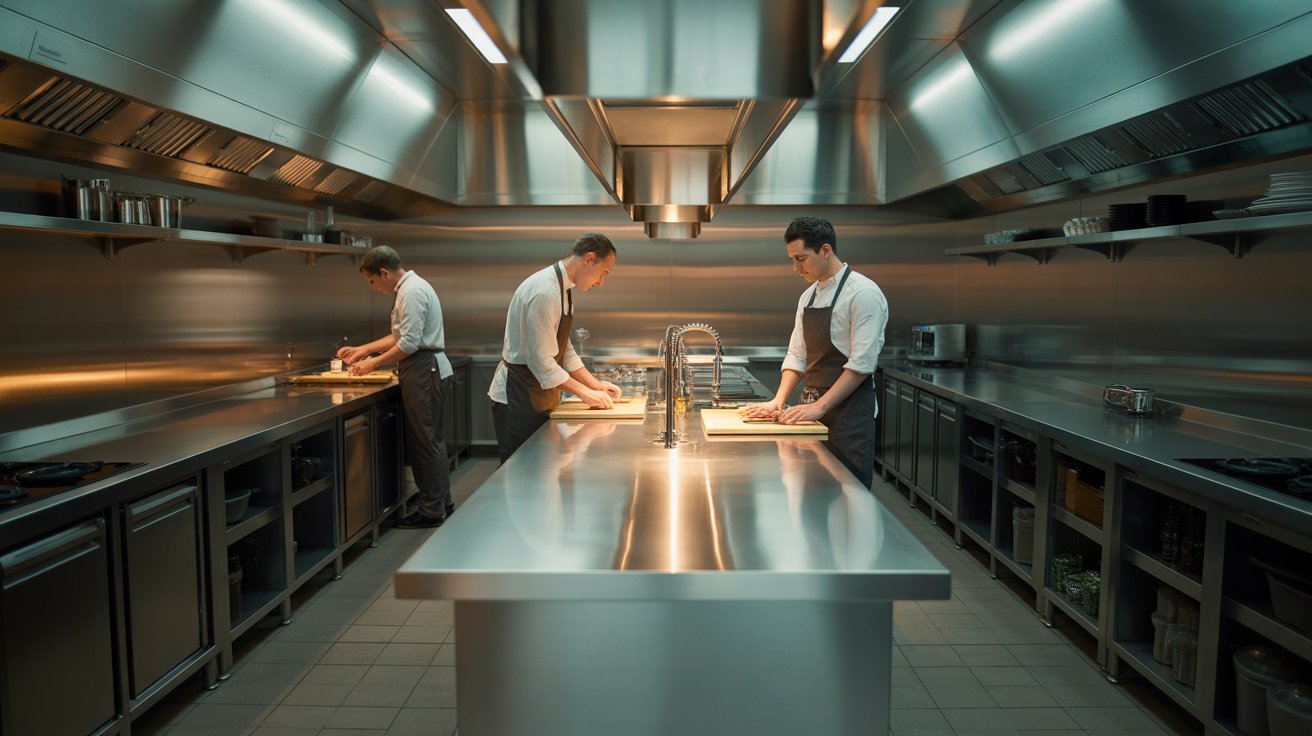
Urban restaurants have a problem to solve: how to achieve a high level of output with an extreme shortage of kitchen space. The answer lies in choosing the appropriate equipment. Among the basic equipment, stainless steel work tables appear to be a fundamental tool for a small kitchen. This is because they are strong, versatile, and simple to maintain, making them a perfect tool for chefs and kitchen staff who need to work at maximum efficiency without compromising safety.
Combining work tables with an appropriate layout design will create highly performing small kitchens. Furthermore, the inclusion of modular kitchen equipment will be a great way to enhance efficiency.
The Modular Advantage in Commercial Layouts
For small kitchen spaces, every square foot counts. Modular designs ensure 100% utilization of floor space in confined areas, resulting in a streamlined kitchen environment that offers unimpeded movement for the cooks and kitchen staff. Heavy-use kitchens often require 18-gauge stainless steel, which can support up to 450 lbs. This is the standard for small heavy-use areas, which require maximum dependability.
Here are three ways modular stainless steel work tables can help improve kitchen efficiency:
- Customizable Configurations: Modular tables can be combined or separated according to specific kitchen needs.
- Integrated Storage: Pull-out drawers, cabinets, and shelves provide convenient storage for kitchen essentials.
- Efficient Cleaning: Smooth surfaces and NSF-certified materials ensure quick and efficient cleaning, which is essential in kitchen areas.
With strength, flexibility, and hygiene, modular tables are more than just a surface; they are the backbone of a well-organized kitchen.
Scaling Vertically: Overhead Racks and Undershelves
Lack of floor space is a problem in many kitchens; therefore, vertical organization is a necessity. Overhead racks and undershelves enable chefs to place frequently used items at arm’s length, reducing unwanted movement.
This facilitates a ‘Zero-Step’ system of workflow, a system in which every movement is deliberate and useful in reducing unwanted time and energy spent during food preparation. Heavy-duty steel work tables with adjustable undershelves are commonly used by architects in these situations.
Apart from this, these features are beneficial in terms of safety and ergonomics as well. The undershelves, for instance, can be adjusted according to the needs of the kitchen, which prevents overcrowding while ensuring maximum accessibility at the same time. To illustrate, placing cutting boards, bowls, and appliances directly under the work surface helps in keeping the table clear while holding other items organized.
The use of NSF-certified parts helps in ensuring that both surfaces and storage spaces are kept clean and hygienic, which is a necessity in urban kitchens where regular inspections are common and spotless conditions are a requirement.
FAQ
What is the best depth for a small prep table?
The best depth for a small prep table is 24 to 30 inches. This allows for enough space for prep work without inhibiting mobility. Depth should allow for enough space for appliances and cutting surfaces, yet allow for easy access to essential items.
Are stainless steel tables better than wood for design?
Yes. Although wood can add a nice look to a kitchen, stainless steel is more durable, easier to maintain, and more resistant to heat and moisture.
