

Your home’s siding does more than shape its curb appeal. It plays a direct role in protecting the structure beneath it from moisture, temperature changes, and everyday wear. When siding begins to fail, the effects often extend beyond surface-level damage, creating issues that impact comfort, efficiency, and long-term durability.
Many siding problems start small and develop gradually. Cracks, gaps, or loose panels may seem cosmetic at first, but over time, they can compromise the home’s exterior envelope. Understanding how these issues form and why they matter helps homeowners make informed decisions about maintenance before larger repairs become unavoidable.
How Siding Protects Your Home
Siding acts as a barrier between your home and the elements. Rain, wind, heat, and cold all press against the exterior daily, and siding absorbs much of that exposure before it reaches the framing or insulation. When this barrier is compromised, addressing the issue early is critical. In many cases, homeowners benefit from professional siding repair services to restore the exterior barrier before moisture or air leakage affects the structure beneath. When siding is intact and properly installed, it helps regulate indoor temperatures and limits moisture intrusion.
In addition to protection, siding supports structural consistency. It works alongside house wrap, flashing, and insulation to create a layered defense system. Damage to any one layer, especially siding, can weaken the system as a whole and increase the risk of hidden deterioration behind the walls.
Cracks and Surface Breaks
Cracked siding is one of the most common issues homeowners encounter. These cracks can result from temperature swings, physical impact, or natural material aging. Even small fractures allow moisture to seep in, especially during heavy rain or snowmelt.
Once water penetrates cracked siding, it can spread behind panels and into wall cavities. This moisture may not be visible immediately, but over time, it can lead to rot, mold growth, or insulation damage. Addressing cracks early reduces the chance of deeper structural problems forming.
Warping and Buckling Panels
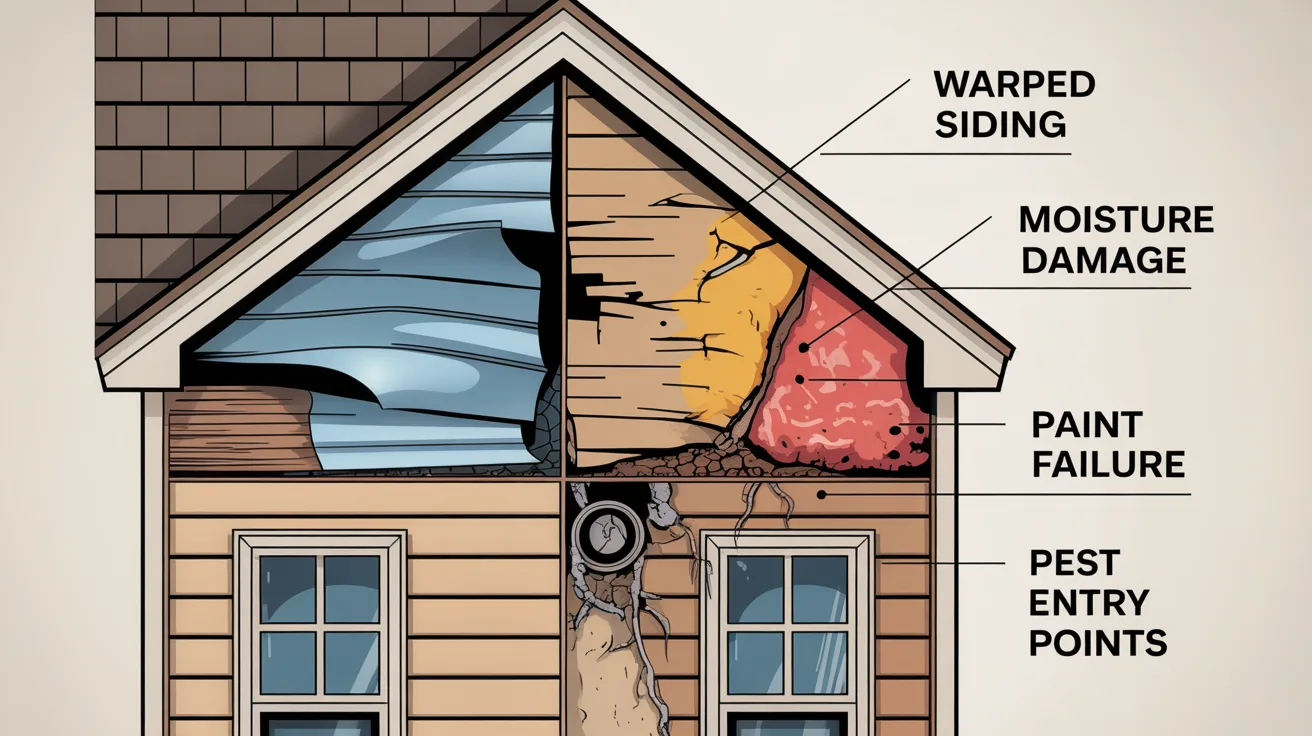
Warping occurs when siding panels bend or lose their original shape. This often happens due to prolonged heat exposure, improper installation, or trapped moisture. When panels warp, they no longer sit flush against the home, leaving gaps that compromise protection.
Buckled siding also disrupts airflow and water drainage. Instead of shedding moisture away from the home, warped panels can redirect it inward. Over time, this increases stress on adjacent materials and accelerates overall exterior wear.
Loose or Missing Sections
Strong winds, storms, and gradual fastener failure can cause siding panels to loosen or detach entirely. Missing sections expose the underlying layers of the home, leaving them vulnerable to direct environmental damage.
Even partially loose siding can create problems. Panels that shift or rattle may allow water and debris to enter the wall system. In many cases, homeowners discover that loose siding is a sign of broader fastening or structural issues that need attention.
Moisture Damage and Rot
Moisture is one of the most damaging forces acting on a home’s exterior. When siding fails to keep water out, wood framing and sheathing can begin to rot. This process often happens out of sight, making it difficult to detect until damage becomes extensive.
Rot weakens structural components and reduces their ability to support the home. Over time, affected areas may require more invasive repairs. Keeping siding in good condition helps maintain a dry exterior shell and limits prolonged moisture exposure.
Mold and Mildew Growth
Where moisture lingers, mold and mildew often follow. Damaged or improperly sealed siding creates ideal conditions for growth, especially in shaded or humid areas of the home. While some mildew appears on the surface, other growth can remain hidden behind panels.
Beyond aesthetic concerns, mold can affect indoor air quality if it spreads inward. Addressing siding damage that allows moisture buildup plays an important role in maintaining a healthier living environment.
Increased Energy Loss
Siding contributes to your home’s energy efficiency by supporting insulation and reducing air leaks. When panels crack, warp, or pull away, they create openings where heated or cooled air can escape. This forces HVAC systems to work harder to maintain indoor comfort.
Over time, energy loss from damaged siding can lead to higher utility bills. Restoring proper siding alignment and integrity helps stabilize indoor temperatures and improves overall efficiency without changing internal systems.
Pest Entry Points
Gaps and openings in siding provide easy access for insects and small animals. Once inside wall cavities, pests can damage insulation, wiring, and structural components. These issues often go unnoticed until infestations grow or secondary damage appears.
Maintaining siding reduces the number of access points available to pests. Tight, properly secured panels help keep unwanted intruders outside where they belong.
Aging Materials and Wear
All siding materials experience wear over time. Sun exposure, temperature fluctuations, and environmental pollutants gradually break down finishes and surfaces. As materials age, they become more brittle and less effective at protecting the home.
Regular inspection helps identify when aging siding shifts from normal wear to functional failure. Knowing when to repair or replace damaged sections prevents small issues from escalating into widespread deterioration.
Why Early Action Matters
Many siding problems worsen when left unaddressed. Minor cracks expand, moisture spreads, and structural stress increases. By responding early, homeowners can often avoid larger repair projects and limit disruption.
In situations where damage affects protection or structural performance, timely repairs help restore the home’s exterior barrier. Timely attention helps preserve the surrounding materials and supports long-term durability.
Integrating Siding Maintenance Into Home Care
Siding maintenance works best when it’s part of a broader home care routine. Seasonal inspections after storms or extreme weather help catch damage early. Looking for changes in alignment, surface condition, or moisture staining provides valuable clues.
Simple steps such as clearing debris, ensuring proper drainage, and monitoring high-exposure areas can extend siding lifespan. When combined with professional evaluation as needed, these practices help maintain consistent exterior performance.
Long-Term Benefits of Proper Siding Care
Homes with well-maintained siding tend to experience fewer moisture-related issues and more stable indoor conditions. Consistent exterior protection reduces stress on structural components and limits long-term repair costs.
Beyond functional benefits, maintained siding supports property value. A sound exterior signals overall home care and reduces concerns during inspections or resale evaluations.
Conclusion
Siding problems rarely resolve on their own. Cracks, warping, moisture intrusion, and material wear all signal reduced protection for your home. While these issues often begin subtly, their effects compound over time if ignored.
By understanding common siding problems and addressing them early, homeowners protect their investment and maintain a safer, more efficient living space. Thoughtful maintenance and timely repairs help ensure that siding continues to serve its essential role in home protection for years to come.
