

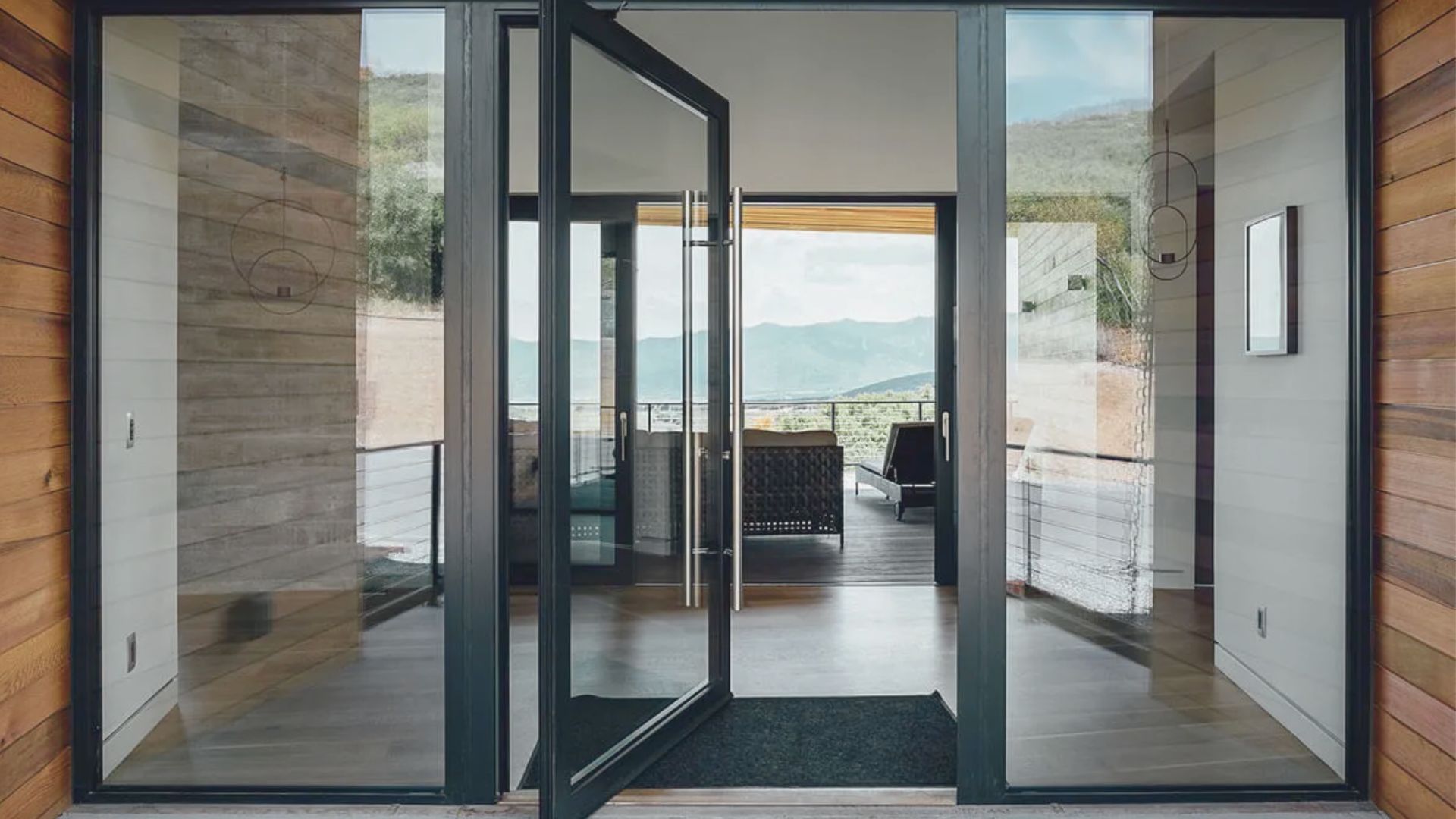
If you’re considering a pivot door for your home, you’re probably wondering if it’s the right choice. I’ll explain exactly what a pivot door is and help you decide if it fits your space.
This guide covers how pivot doors work, their pros and cons, costs, and installation requirements. You’ll learn how they compare to traditional doors and where they perform best.
I’ve spent time researching this so you don’t have to guess. By the end, you’ll know if a pivot door matches your needs, budget, and style.
Let’s get started.
What Is a Pivot Door?
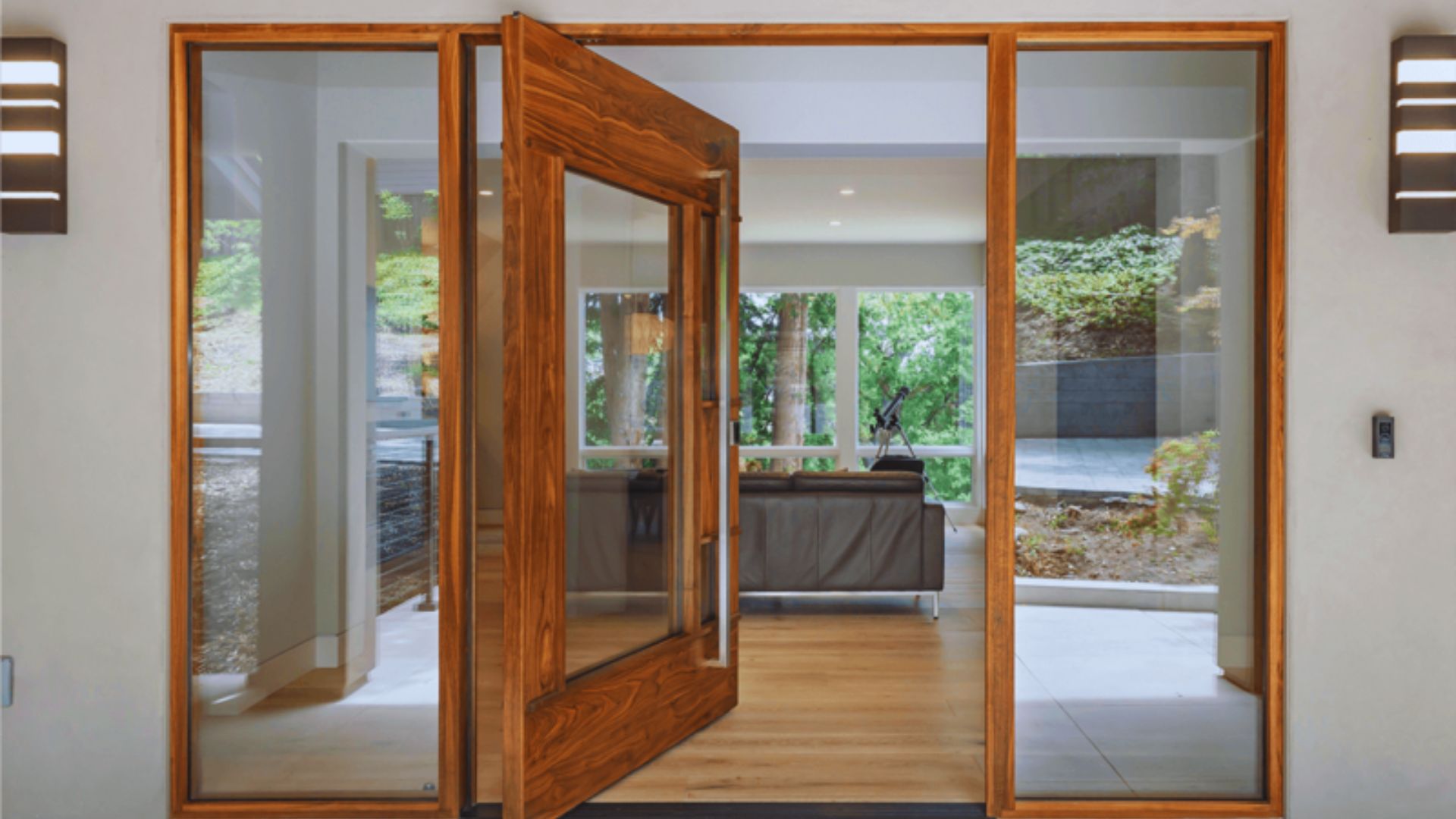
A pivot door rotates on a pivot box mechanism instead of traditional side hinges. The pivot point sits near the top and bottom of the door, creating balanced, smooth motion when opening.
The system has two parts: a bottom pivot box in the floor with bearings, and a top pivot attached to the header.
When you push the door, it rotates around these points with even weight distribution. This mechanism supports much heavier materials and larger sizes than traditional hinges.
Most pivot doors have the pivot point set back from the edge, so part of the door enters the room as it opens. Common materials include wood, steel, glass, and aluminum.
Many doors combine materials for visual interest.
Key Features of Pivot Doors
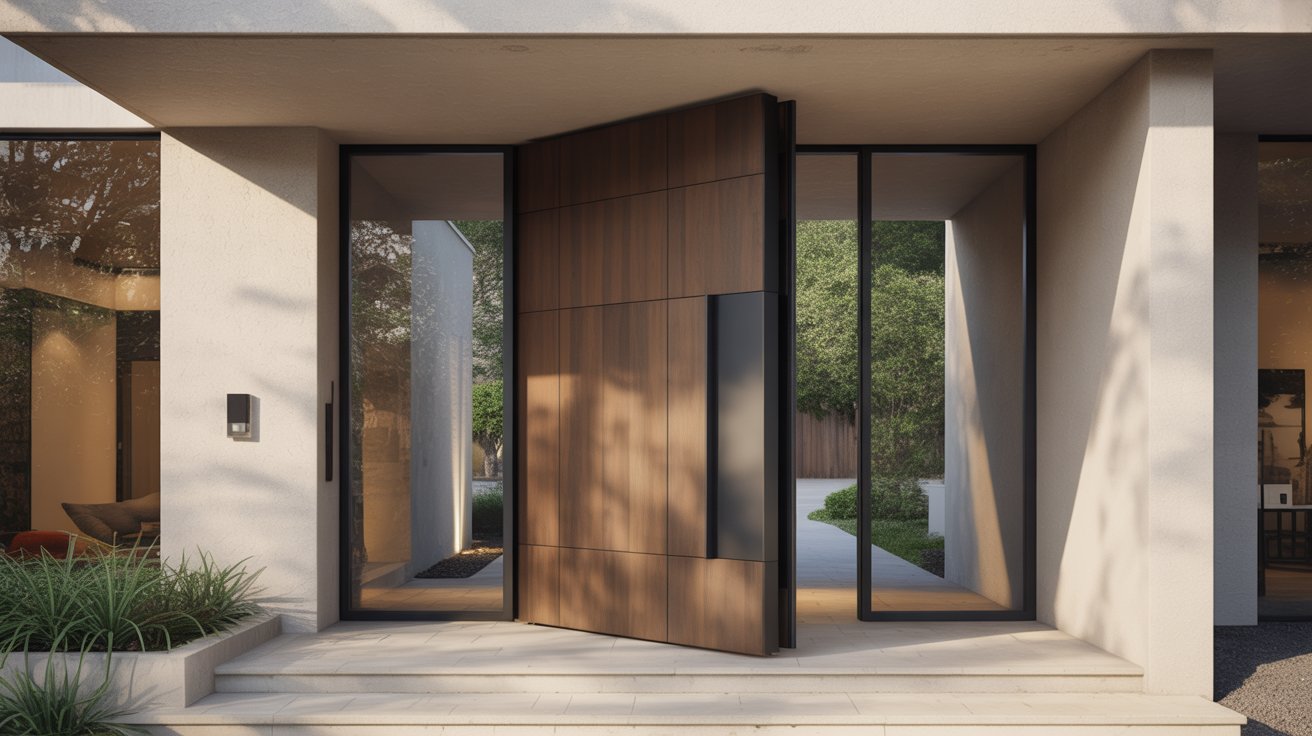
Pivot doors offer unique advantages in size, operation, and customization that set them apart from traditional doors.
Larger Door Sizes & Modern Vibe
Pivot doors can reach heights of 12 feet or more, which would be impossible with standard hinged doors.
The clean lines work perfectly with minimalist design since there are no visible hinges cluttering the surface.
Floor-to-ceiling options create grand entrances that make rooms feel more spacious. You can customize the appearance completely with solid panels, glass sections, or mixed materials.
Smooth, Dramatic Opening Motion
The pivot mechanism creates a graceful, controlled swing that moves effortlessly even when weighing several hundred pounds.
Ball bearing systems ensure the door glides open without sticking or requiring force.
You can control rotation speed with dampers or soft-close features to prevent slamming. Proper installation keeps operation fluid for years.
Wider Entryway Possibilities
Pivot doors can be much wider than traditional doors, creating impressive openings. The offset pivot allows for doors up to 6 feet wide or more, accommodating furniture moving and wheelchair access easily.
Double pivot doors create even larger openings for grand lobbies or expansive spaces. Custom widths match your exact specifications.
Available Custom Designs & Finishes
You can personalize every aspect of your pivot door. Choose from natural wood stains, painted finishes, or powder-coated metal. Glass options include clear, frosted, tinted, or textured varieties with decorative patterns or metal inlays.
Hardware finishes range from brushed nickel to bronze or black. You can add features like built-in lighting or smart locks.
Pros and Cons of Pivot Doors
Understanding both advantages and limitations helps you make an informed decision about pivot doors.
| Pros | Cons |
| Ideal for Oversized or Heavy Doors: Handles doors weighing 500+ pounds smoothly. Supports heavy materials like solid wood or thick glass without sagging. Offers complete design flexibility in height and width. | Reduced Weather Sealing: Creates small gaps that are harder to seal completely. Air and water penetrate more easily in extreme weather. Energy efficiency may suffer, increasing heating and cooling costs. |
| Striking Contemporary Curb Appeal: Sets your home apart with unique design. Increases perceived home value. Clean, minimalist appearance fits current trends and signals quality craftsmanship. | Potential Drafts in Harsh Climates: Cold or hot weather exposes sealing weaknesses. Offset pivot creates asymmetric seal. Snow and rain can seep in during storms. Requires extra weatherproofing. |
| Even Weight Distribution: Spreads weight between top and bottom points evenly. Less wear means longer-lasting alignment. Easy operation even for elderly or children. | Reduced Walkthrough Space: Part of door swings into room, taking up floor space. Lose a few inches of clear opening. Furniture placement requires careful planning. |
| Seamless Indoor-Outdoor Transition: Connects interior and exterior beautifully. Creates flowing, open-plan feel. Perfect for patios and entertainment. Makes spaces feel larger. | Higher Cost: Basic setup starts at $1,500 for hardware. Custom doors exceed $10,000. Installation adds $2,000 to $5,000. Structural modifications may be necessary. |
Where Pivot Doors Work Best
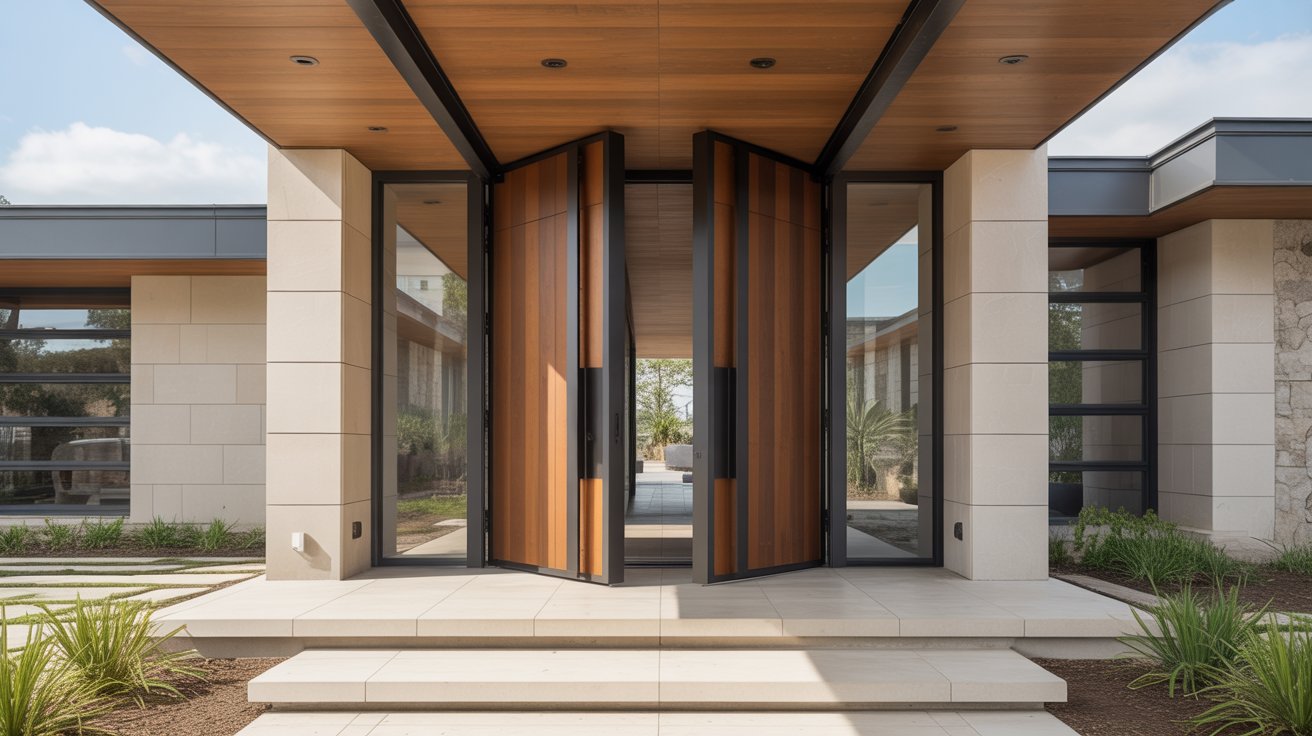
Front entrances with covered porches work best since the overhang protects the door from direct weather exposure and minimizes water intrusion.
The covering shields sealing points, extends the door’s life, and creates a protected focal point.
Modern homes with contemporary architecture embrace pivot doors naturally. The clean lines and uncluttered look with no visible hinges fit minimalist design principles perfectly.
Glass and steel combinations work especially well as statement entrances.
Wide doorways benefit from pivot doors since they make moving furniture easier and improve accessibility for wheelchairs and walkers.
Multiple people can enter or exit simultaneously, and pivot doors match the scale of large foyers better than standard doors.
Commercial or luxury settings like hotels, restaurants, luxury homes, office buildings, and retail stores use pivot doors for impressive entrances.
The grand opening creates memorable first impressions and signals quality and attention to design.
Pivot Door Size, Cost & Custom Options
Pivot doors offer flexibility in dimensions, pricing varies widely, and customization options are nearly limitless.
Standard and Oversized Dimensions
Standard pivot doors start at 8 feet tall and 3 feet wide for most residential applications. Oversized options reach 12 feet or higher with widths extending to 6 feet or more.
Weight increases dramatically with size: a 10-foot door might weigh 400 pounds or more. Floor-to-ceiling designs create the most dramatic visual effect, and manufacturers can build custom sizes to match your exact needs.
Cost Differences Between Pivot & Hinged Doors
Basic hinged doors cost $500 to $2,000 installed, while pivot door systems start at $3,000 for basic setups. Premium pivot doors range from $8,000 to $20,000 or more depending on custom designs and luxury materials.
Installation adds 20% to 30% to material costs. The investment pays off in visual impact that standard doors cannot match.
Hardware, Glass, and Finish Customizations
Pivot hardware comes in multiple finishes including brushed stainless steel, black, bronze, and brass. Glass options include different thicknesses and treatments, with tempered glass for safety.
Wood finishes range from natural stains to painted colors. Metal doors accept powder coating for scratch and weather resistance. Handles and locks come in countless styles from modern bars to traditional knobs.
Installation & Maintenance Tips
Proper installation and regular care ensure your pivot door performs smoothly for years.
- Look for heavy-duty ball bearings or cartridge systems in the bottom pivot box. The top pivot should be fully adjustable for fine-tuning alignment. Choose corrosion-resistant materials like stainless steel and systems with warranties of ten years or more.
- Your floor must be solid (concrete or well-supported wood) where the pivot installs. The header needs reinforcement to handle top pivot loads, and load-bearing walls should frame the opening. Consult a structural engineer for large doors and budget for steel reinforcement if needed.
- Clean the door surface regularly with appropriate cleaners for wood, glass, or metal. Protect wood doors from moisture by applying fresh finish every few years.
- Lubricate pivot bearings twice yearly with a few drops of appropriate oil. Inspect weatherstripping every six months and replace worn seals promptly to maintain performance.
- Check alignment annually and adjust pivot points if the door begins to stick or scrape. Proper maintenance prevents issues and extends the door’s lifespan.
Conclusion
Pivot doors make powerful statements in modern homes. I believe they work best in covered entries with moderate climates. Consider your budget carefully since costs run higher than traditional doors.
If dramatic visual impact matters more than maximum energy efficiency, a pivot door could be perfect for you. Think about your daily needs and local weather before deciding.
Have you considered a pivot door for your home? Share your thoughts in the comments below or check out our related articles on modern door options.
Frequently Asked Questions
Can pivot doors be used as interior doors?
Yes, pivot doors work great inside homes. They’re popular for closets, room dividers, and bathrooms where the smooth opening adds visual interest.
How much does a typical pivot door weigh?
Most residential pivot doors weigh 200 to 500 pounds. Glass and steel doors weigh more than wood, and size affects the final weight.
Do pivot doors require special flooring?
Yes, the floor must support the bottom pivot box. Concrete works best, though reinforced wood floors can work with proper installation.
Are pivot doors secure?
Pivot doors are very secure with quality locks. Multi-point locking systems and the door’s heavy weight make forced entry difficult.
How long do pivot door systems last?
Quality pivot systems last 20 to 30 years with proper care. Regular lubrication and seal replacement keep them working smoothly.
