

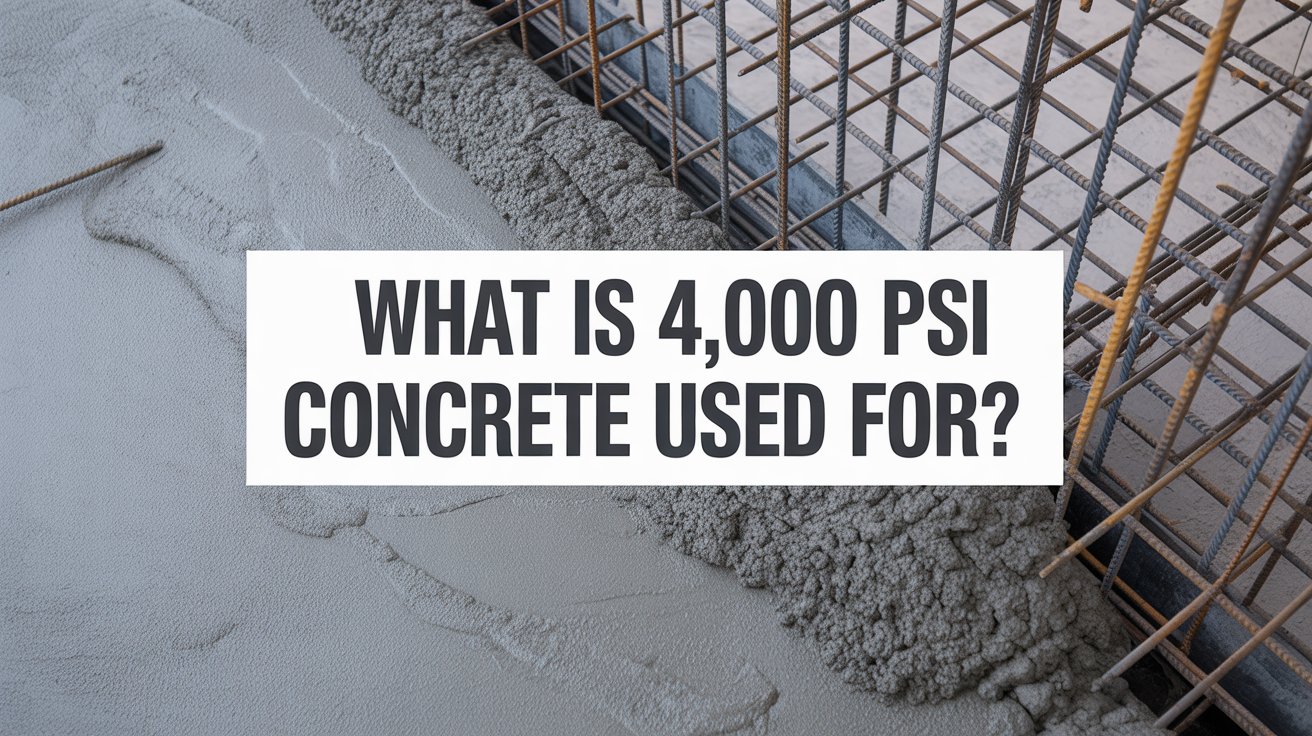
If you’re planning a driveway, garage floor, or commercial project, you’ve probably heard about 4,000 PSI concrete. But what does that number actually mean for your build?
I’ll walk you through everything you need to know about this popular concrete strength. PSI stands for pounds per square inch.
It measures how much pressure concrete can handle before it cracks. 4,000 PSI sits in the middle range between standard residential mixes and heavy-duty commercial grades.
This guide covers where 4,000 PSI concrete works best, why builders choose it, and how to decide if it’s right for your project. You’ll learn about real-world applications, testing methods, and cost comparisons.
Understanding 4,000 PSI Concrete

PSI measures compressive strength. A 4,000 PSI mix can withstand 4,000 pounds of pressure on each square inch. That’s enough for most driveways and garage floors.
Standard residential concrete ranges from 2,500 to 3,500 PSI. 4,000 PSI provides extra strength and resists cracking better. The mix uses more cement and less water, creating a denser surface. It costs about 10-15% more than 3,000 PSI concrete.
Contractors recommend 4,000 PSI for projects that need to last. Cold climates benefit most since it survives freeze-thaw cycles better. Many building codes now require 4,000 PSI for foundations and load-bearing structures.
Key Applications of 4,000 PSI Concrete

This strength level works perfectly for surfaces that face regular vehicle traffic and moderate to heavy use.
Driveways
Your driveway takes a beating from cars, trucks, and delivery vehicles. 4,000 PSI concrete holds up to these daily loads without developing surface cracks.
It handles the weight of multiple vehicles parked side by side. SUVs and trucks won’t leave impressions or cause settling.
The stronger mix also resists oil stains and deicing chemicals better. You’ll spend less time on repairs over the years.
Garage Floors
Garage floors need to support cars while dealing with temperature swings. 4,000 PSI concrete does both well.
It withstands the constant rolling weight of vehicles entering and leaving. Hot tires from summer driving won’t soften or damage the surface.
In cold climates, this strength prevents cracking from ground freeze. Your garage floor stays smooth and level longer.
Commercial Slabs
Retail spaces, warehouses, and office buildings use 4,000 PSI for interior floors. It supports foot traffic, furniture, and light equipment.
The surface holds up under daily cleaning with commercial equipment. Scrubbers and buffers won’t wear down the concrete.
It also works for loading areas where forklifts and pallet jacks operate. The concrete won’t chip or crack under these conditions.
Sidewalks and Walkways
Public sidewalks see thousands of footsteps daily. 4,000 PSI concrete lasts decades in these high-use areas.
It resists damage from strollers, wheelchairs, and delivery carts. Tree roots cause less cracking compared to weaker mixes.
Cities and municipalities prefer this strength for parks, plazas, and pedestrian zones. It reduces maintenance costs over time.
Foundations and Structural Footings
Building codes in many areas require 4,000 PSI for house foundations. It provides the strength needed to support entire structures.
The concrete transfers the building’s weight evenly to the ground. This prevents settling and structural damage.
It also resists moisture penetration better. Basements stay drier and foundation walls last longer.
Parking Lots
Commercial parking lots handle constant vehicle traffic. Cars, trucks, and buses roll over the same spots hundreds of times daily.
4,000 PSI concrete resists rutting and surface wear. It maintains a smooth driving surface for years.
The stronger surface also stands up to snow plows and deicing salt. Winter maintenance won’t destroy the concrete.
Why Builders Prefer 4,000 PSI Concrete

Professional contractors choose this strength level because it balances performance with reasonable costs.
Better Resistance to Freeze-Thaw Cycles
Water seeps into tiny cracks in concrete. When temperatures drop below freezing, that water expands and pushes the concrete apart.
4,000 PSI concrete has a denser structure with fewer air pockets. Less water gets inside, so there’s less freeze damage.
I’ve seen driveways in Minnesota last 20+ years with this mix. Lower-strength concrete in the same area cracks within 5-7 years.
Reduced Maintenance and Fewer Repairs
Stronger concrete simply needs less attention. You won’t deal with surface spalling or edge breakage.
Small cracks that form stay small. They don’t spread into major problems that need professional repair.
This saves money over the concrete’s lifespan. The higher upfront cost pays for itself through reduced maintenance.
Improved Durability Against Chemicals and Moisture
Car fluids, road salt, and cleaning products all attack concrete surfaces. 4,000 PSI holds up better against these chemicals.
The tighter surface prevents liquids from soaking deep into the concrete. Stains stay on the surface where you can clean them.
Moisture resistance also prevents mold and mildew growth in damp areas. Your concrete stays cleaner with less effort.
Longer Lifespan Compared to Lower-PSI Mixes
A well-installed 4,000 PSI driveway can last 30-40 years. That’s nearly double what you get from 2,500 PSI concrete.
The concrete maintains its strength even as it ages. Surface wear happens more slowly.
You might never need to replace it during your time in the home. That’s real value for your investment.
4,000 PSI vs. 4,500 PSI Concrete
Understanding the difference helps you avoid paying for strength you don’t need.
| Feature | 4,000 PSI | 4,500 PSI |
| Strength Difference | Standard strength | 12% stronger |
| Cost Difference | Base price | 5-8% more expensive |
| Cement Content | Standard mix | Slightly more cement |
| Appearance | Identical | Identical |
| Best For | Driveways, garage floors, standard residential projects | Heavy equipment storage, RVs, work trucks |
| Climate Suitability | Cold climates | Extremely cold climates with severe freeze-thaw |
| Value for Money | Better value for most homes | Only worth it for heavy-duty needs |
For most residential projects, 4,000 PSI offers better value. The performance difference doesn’t justify the extra cost. Save the higher strength for situations that truly need it. A standard driveway doesn’t require 4,500 PSI.
Talk to your contractor about your specific needs. They can recommend the right strength based on local conditions and usage.
Is 4,000 PSI Concrete Right for Your Project?

Choosing the right strength depends on several factors specific to your situation.
Factors to Consider: Climate, Load, Usage
Cold weather areas almost always benefit from 4,000 PSI. The freeze-thaw resistance alone makes it worthwhile.
Think about what will sit on the concrete. Regular car traffic justifies 4,000 PSI. Light foot traffic might not.
Consider how long you want the concrete to last. If you’re building for decades, invest in the stronger mix.
When to Upgrade to a Higher PSI Mix
Heavy vehicles or equipment storage calls for 4,500-5,000 PSI. Think loaded trucks, construction equipment, or industrial machinery.
Foundation walls supporting multiple stories might need 5,000 PSI or higher. Check your local building codes.
High-traffic commercial areas sometimes specify 5,000 PSI. The extra cost makes sense for these heavy-use applications.
When 3,000 PSI or 3,500 PSI May Be Enough
Simple garden pathways don’t need 4,000 PSI. A 3,000 PSI mix saves money without sacrificing performance.
Patios in mild climates can use 3,500 PSI. If you never see freezing temperatures, you don’t need the extra strength.
Decorative concrete that won’t bear weight can use lower ratings. Planters, borders, and landscape features fall into this category.
Conclusion
I’ve worked with enough concrete projects to know that 4,000 PSI hits the sweet spot for most residential and light commercial needs. It gives you the strength to handle real-world use without breaking your budget.
The extra durability means fewer repairs and longer life compared to standard mixes. Take time to discuss your specific project with a concrete professional.
They’ll help you choose the right strength based on your climate, usage, and long-term goals. Getting this decision right now saves you headaches down the road.
Frequently Asked Questions
How long does 4,000 PSI concrete take to cure fully?
Concrete reaches about 70% strength in 7 days and full 4,000 PSI strength at 28 days. You can walk on it after 24-48 hours, but wait at least 7 days before driving on it.
Can I use 4,000 PSI concrete for a shed foundation?
Yes, 4,000 PSI works great for shed foundations. It provides more than enough strength for typical shed loads and will last for decades without problems.
Does 4,000 PSI concrete crack less than lower grades?
It’s more resistant to cracking due to higher density and strength. However, proper installation, control joints, and adequate base preparation matter just as much as PSI rating.
How much does 4,000 PSI concrete cost compared to 3,000 PSI?
Expect to pay 10-15% more for 4,000 PSI concrete. The exact difference varies by location and supplier, but it typically adds $10-20 per cubic yard.
Do I need special tools to work with 4,000 PSI concrete?
No special tools are required. It pours, finishes, and cures the same way as lower-strength mixes. The main difference is in the mix proportions, not the installation process.
