

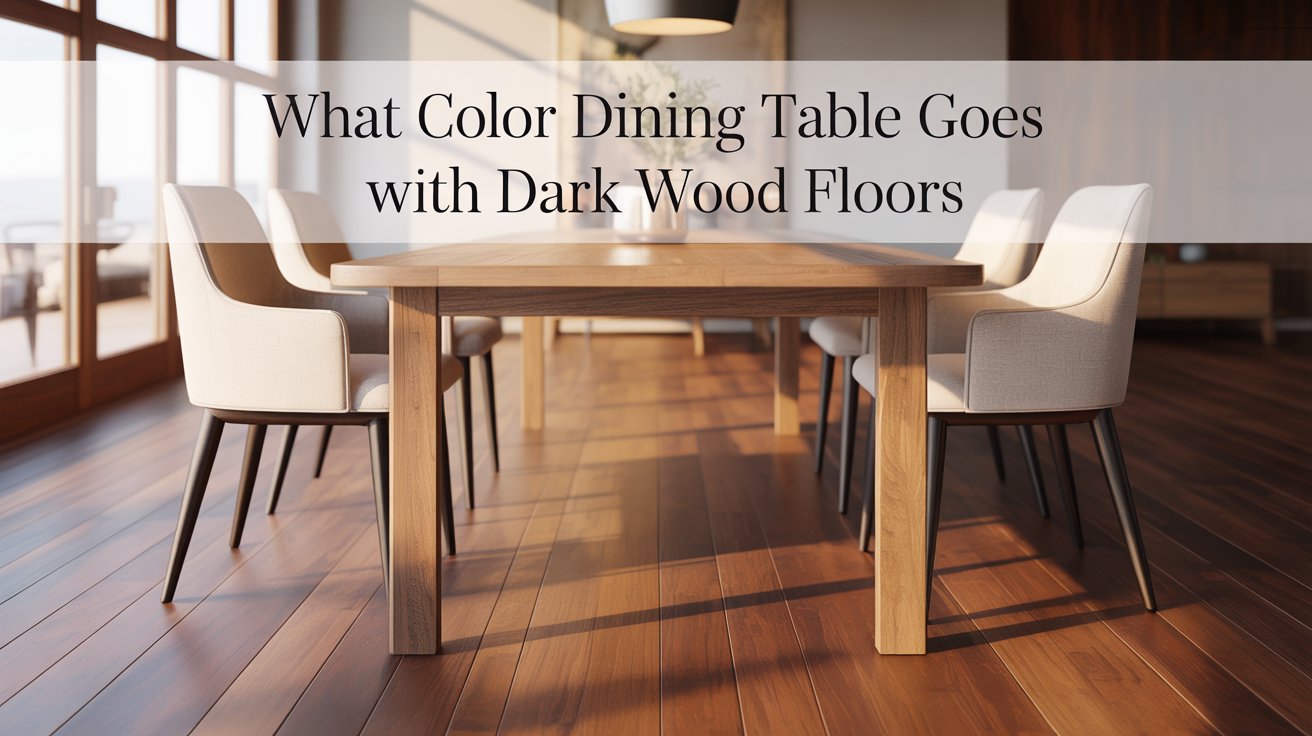
Picking the right dining table for dark wood floors is hard. You want it to match, but not to conflict too much with the floor as well.
The secret is in understanding contrast, undertones and how light interacts with your space.
We will discuss possible color combinations that work with dark floors. We will also explore when it is appropriate to match your table to your floors and when contrasting colors work better.
Plus, you’ll get some decorating tips to get your dining room looking great and figure out what color table best fits your decor.
Understanding Dark Wood Floors
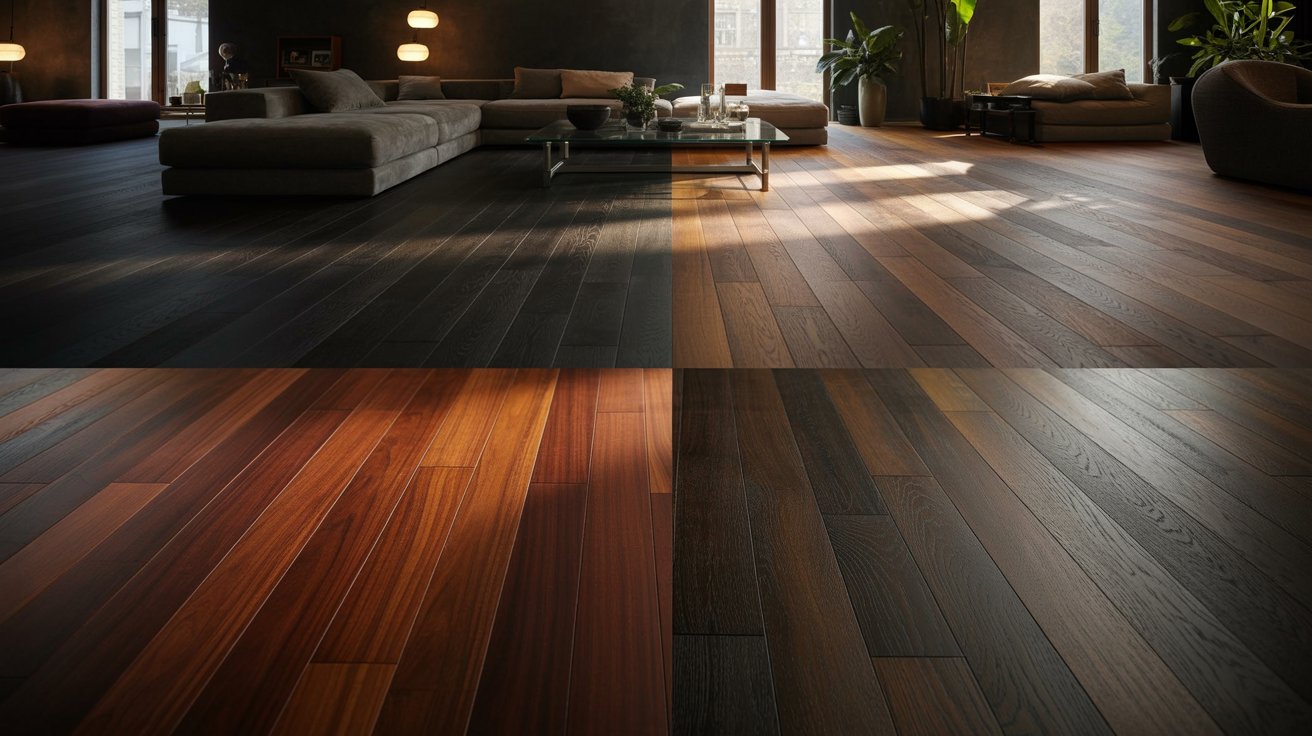
Dark wood floors come in many shades. Espresso has a rich, almost black tone. Walnut shows brown with slight purple hints. Mahogany leans red and warm. Dark oak appears deep brown with gray notes.
Each type has undertones that matter when picking a table. Warm undertones have red, orange, or yellow hues. Cool undertones show gray or blue shades. Neutral undertones fall somewhere in between.
Lighting changes how colors look in your space. Natural light makes colors appear true during the day. Artificial light can add yellow or blue tints. A table that looks perfect in the store might seem different at home.
Check your floor’s undertone before shopping. Look at it in morning and evening light. This helps you choose a table color that works all day long.
Choosing the Right Dining Table Color
Learn which dining table colors work best with dark wood floors, from light contrasts to bold matches for every style.
Go for Contrast with Light Woods
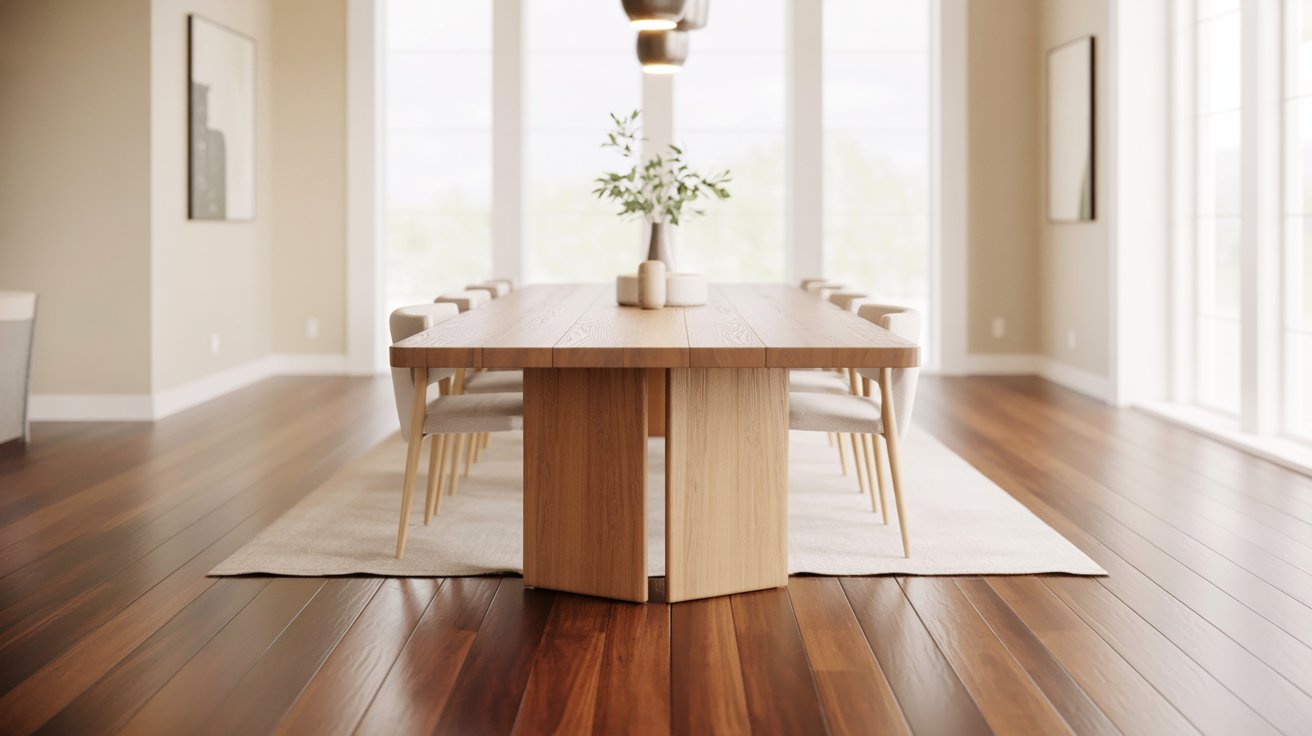
Light oak, ash, maple, or pine tables create a bright and airy feel. These lighter woods stand out against dark floors and make your space feel larger. This option works well in small or dim dining rooms where you need more visual lightness.
Add a rug under your table to connect the two tones. This creates a smooth transition between your light table and dark floors.
Create Warm Harmony with Medium Wood Tones
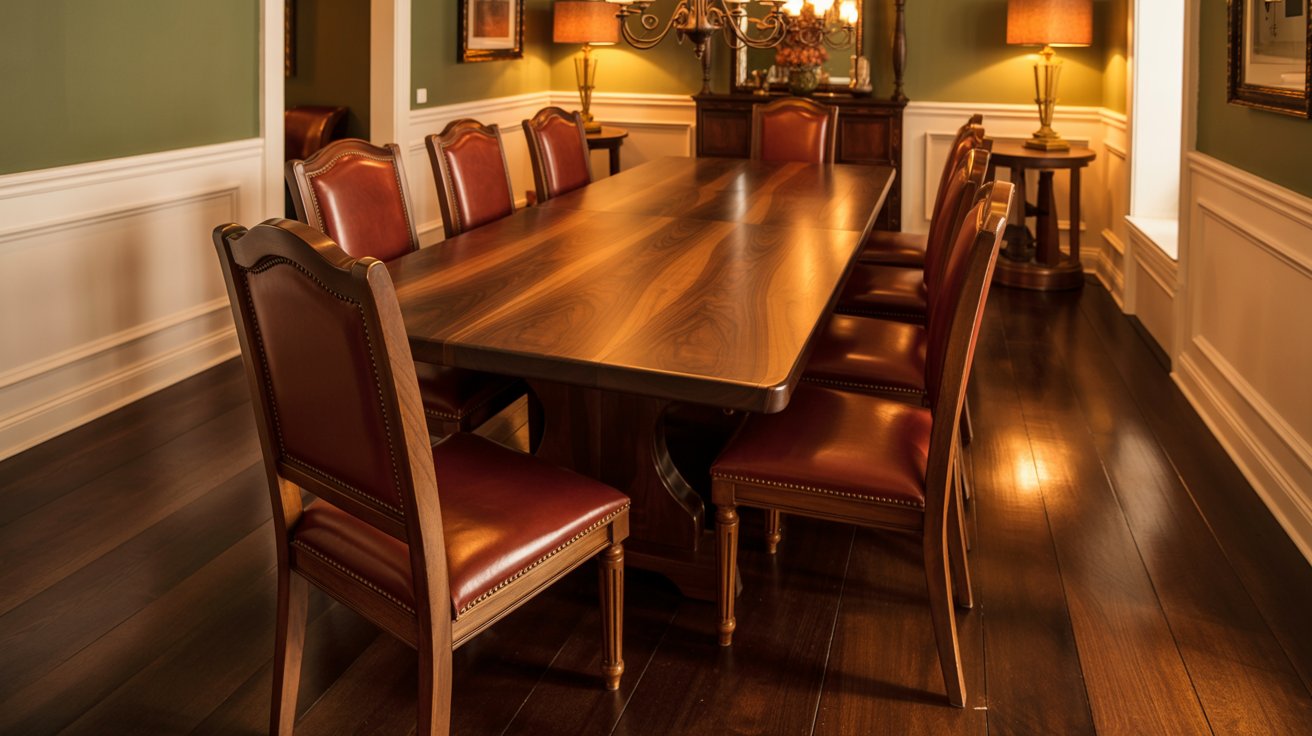
Walnut, acacia, and cherry tables blend naturally with dark floors. These medium tones create a cohesive look that feels complete and polished. Your room will have a warm, inviting atmosphere.
This approach works best for traditional or rustic interiors. The similar tones create harmony without boring repetition.
Modern Appeal with White or Cream Tables
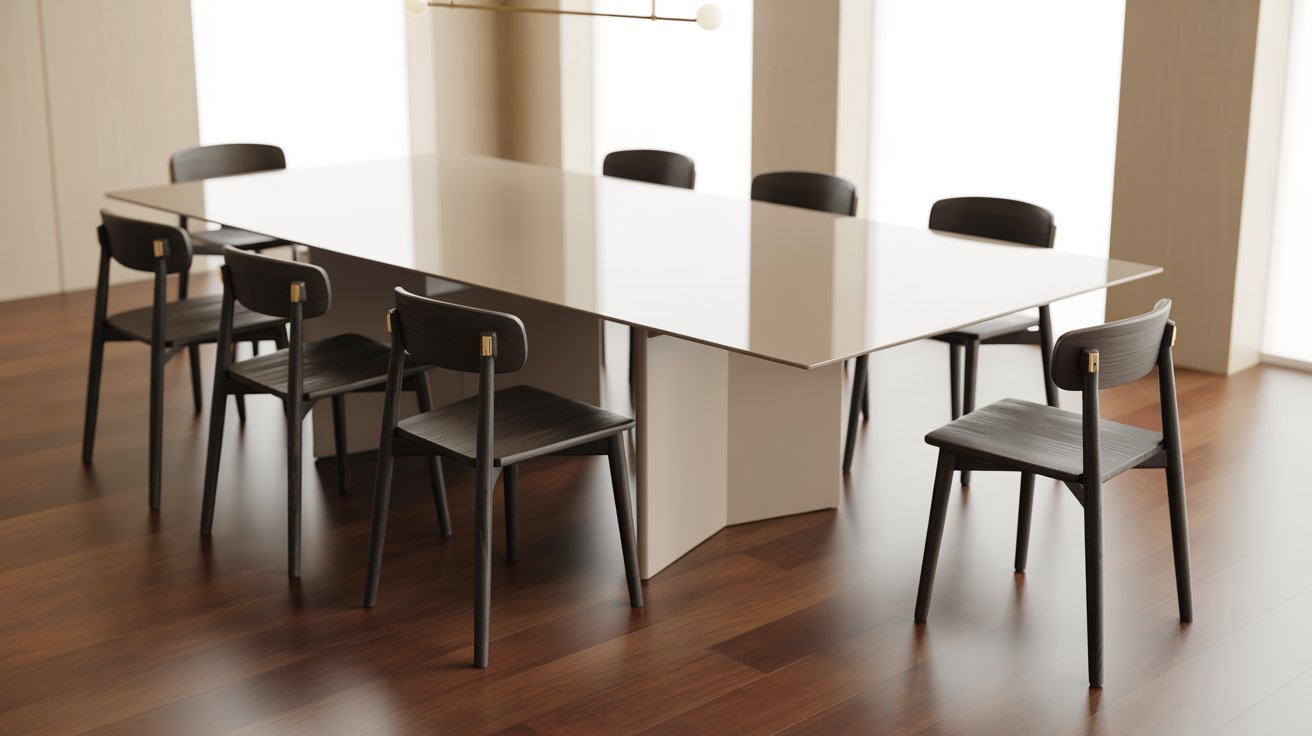
White or cream tables add crisp contrast and brighten your room instantly. The light surface reflects more light and opens up the space. This works beautifully in contemporary and minimalist homes.
Pair your white table with black or gold hardware for visual balance. This prevents the contrast from feeling too stark.
Bold and Sophisticated with Black Tables
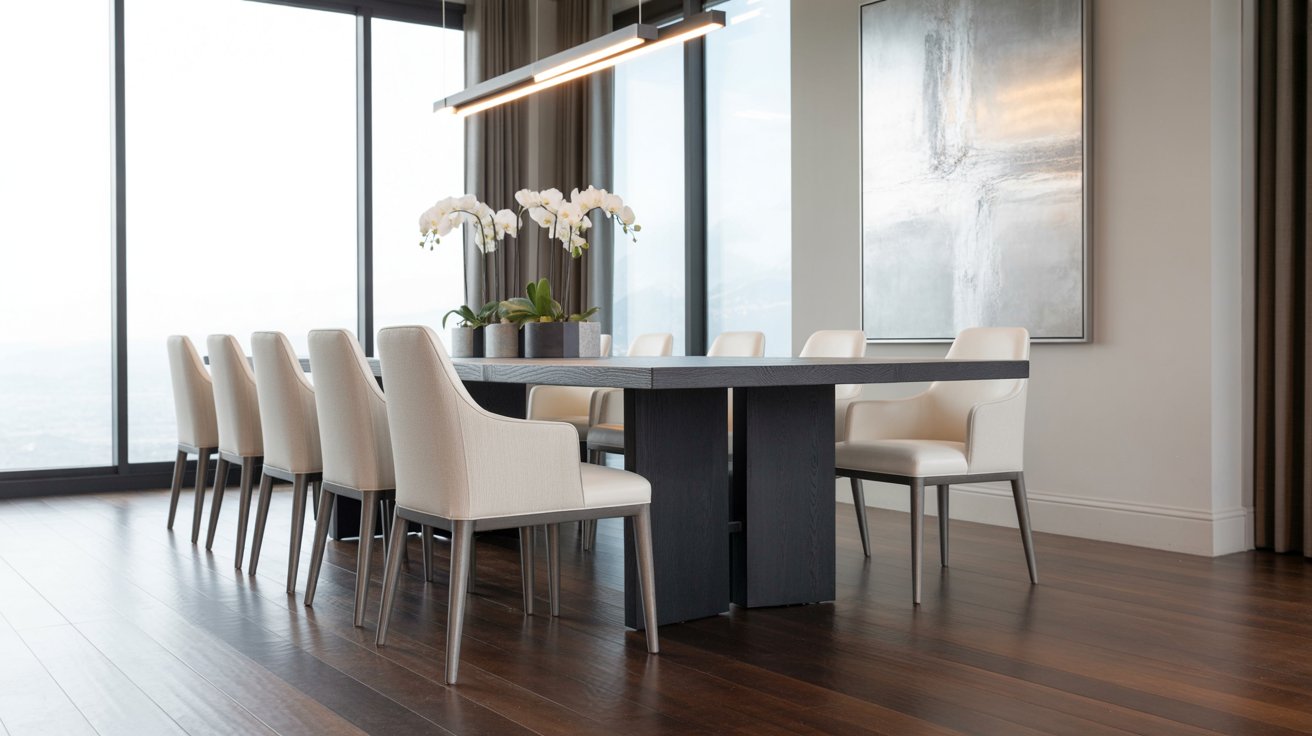
A black table creates a sleek monochromatic effect with dark floors. This combination feels dramatic and refined. The key is having enough light in your space.
Use this option only in well-lit rooms to avoid a heavy feeling. Balance the darkness with lighter chairs or bright decor pieces.
Natural Charm with Gray or Greige Tables
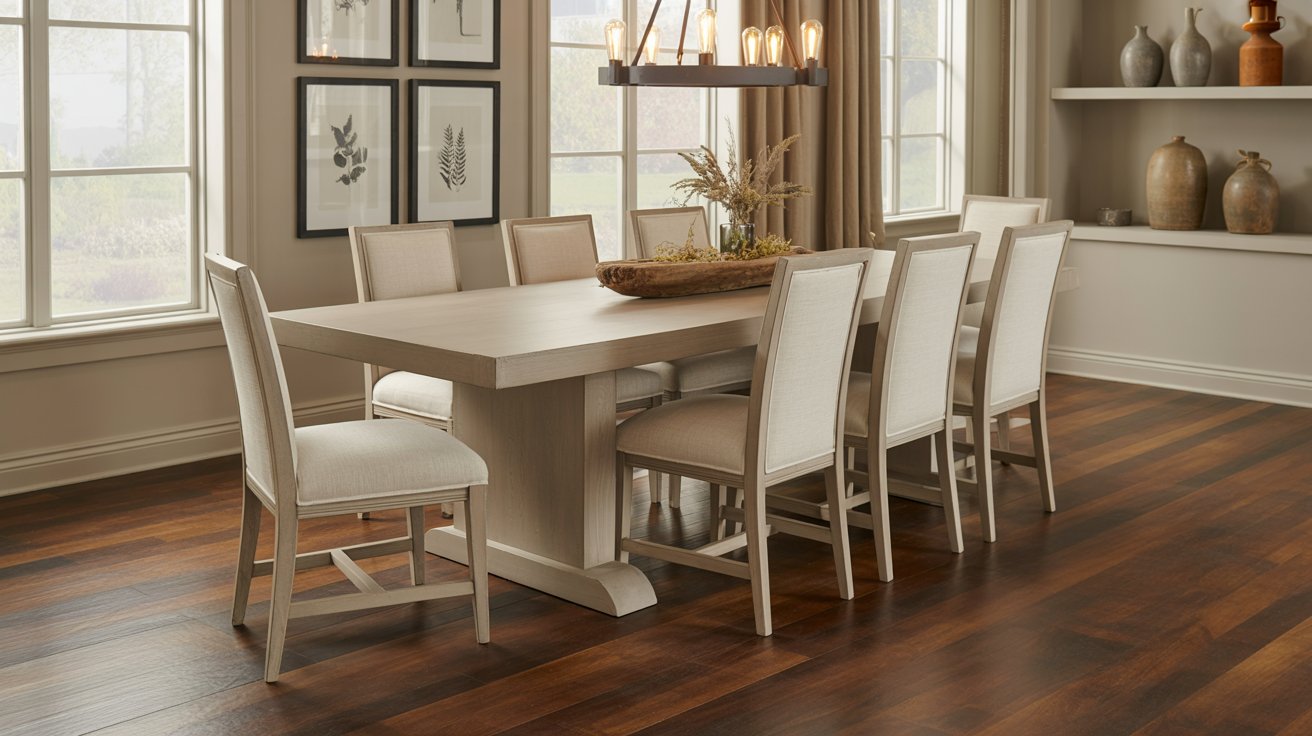
Gray or greige tables complement dark floors without harsh contrast. These neutral tones feel calm and sophisticated. They work perfectly for modern farmhouse or transitional styles.
The soft undertones help relax your space. Your room will feel balanced and put together.
Warm Character with Wood-and-Metal Tables
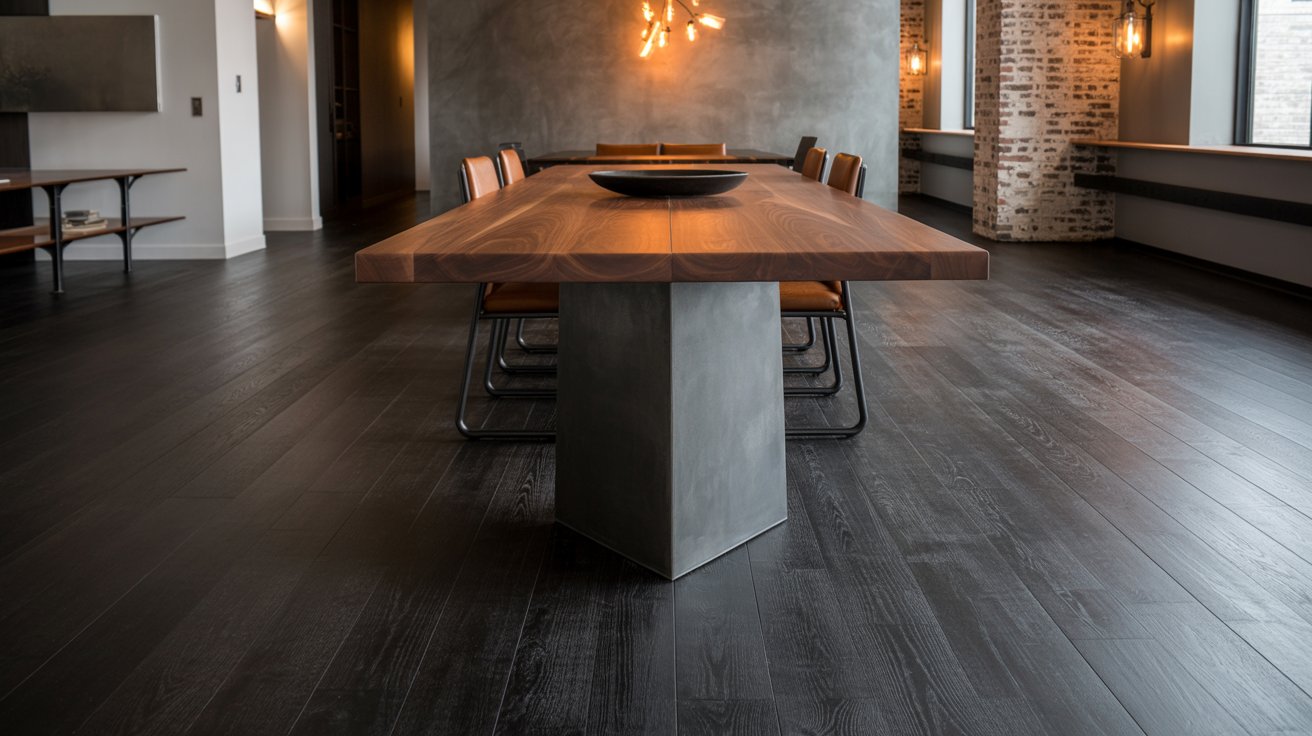
Mixed-material tables add visual interest to your dining room. A wood top with a metal base gives you texture and dimension. This style works for industrial, modern, or rustic designs.
Choose metal finishes that match your floor undertones. Brass warms up the space. Black adds drama. Steel keeps things cool and contemporary.
Matching Undertones for a Balanced Look
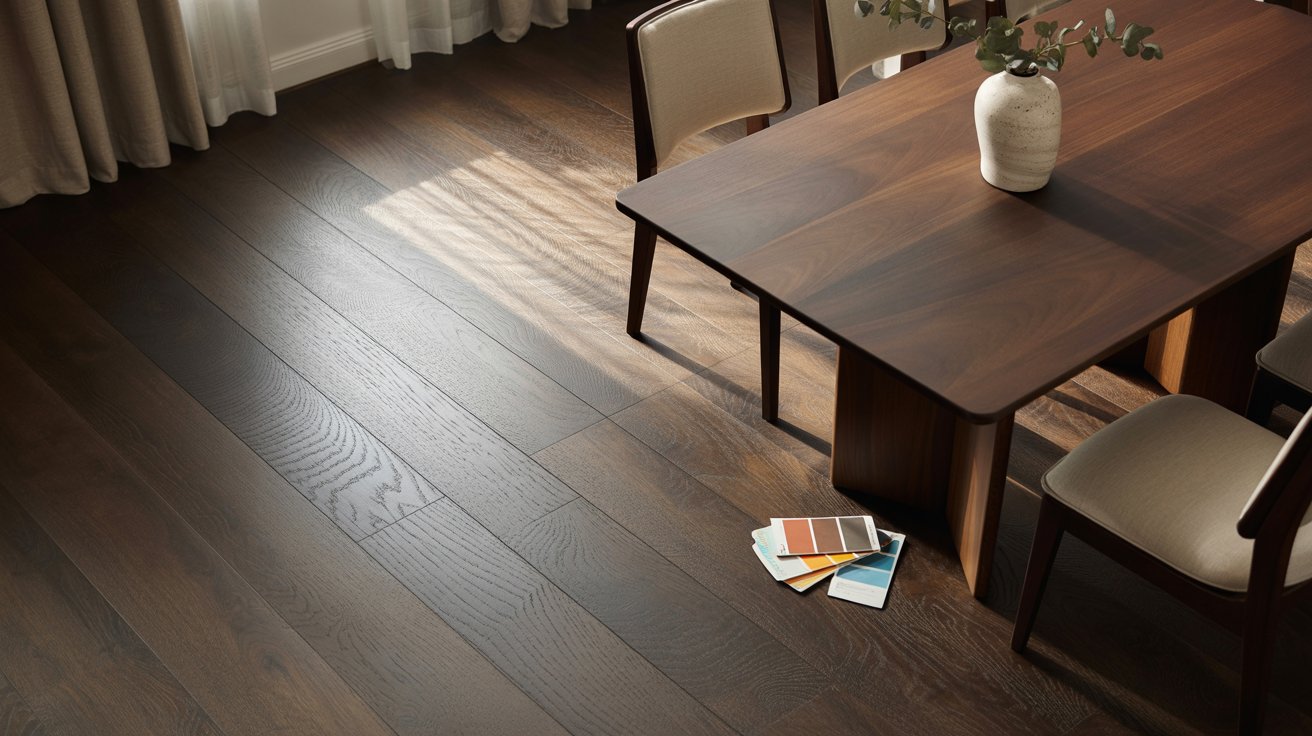
Warm floors pair best with warm-toned tables. Look for red, honey, or golden brown finishes. These colors create a natural flow in your room.
Cool floors look great with cooler tones. Try gray, espresso, or whitewashed tables. These shades complement the blue or gray notes in your flooring.
Not sure about your floor’s undertone? Place a white piece of paper on your floor. Look at the color that reflects back. Yellow, orange, or red means warm. Blue or gray means cool.
You can also compare your floor to paint samples. Hold warm and cool browns next to your flooring. See which one feels more natural. This simple trick saves you from costly mistakes.
Styling Tips for Cohesive Dining Room Design
- Use rugs to break up dark-on-dark combinations: A rug adds texture and softness between your table and floor. It also helps define your dining space. Choose a pattern or lighter shade to add visual interest.
- Pick lighter or upholstered dining chairs for balance: If your table and floors are both dark, light chairs brighten things up. Upholstered seats in cream, gray, or beige work beautifully. This prevents your room from feeling too heavy.
- Add metallic accents to introduce contrast: Brass, chrome, or bronze fixtures catch the light and add shine. Try metal chair legs, light fixtures, or cabinet hardware. These small touches make a big difference.
- Layer your lighting to highlight both table and flooring: Use a statement chandelier or pendant over your table. Add wall sconces or floor lamps for ambient light. Good lighting shows off the beauty of your dark floors and makes your table pop.
Common Mistakes to Avoid
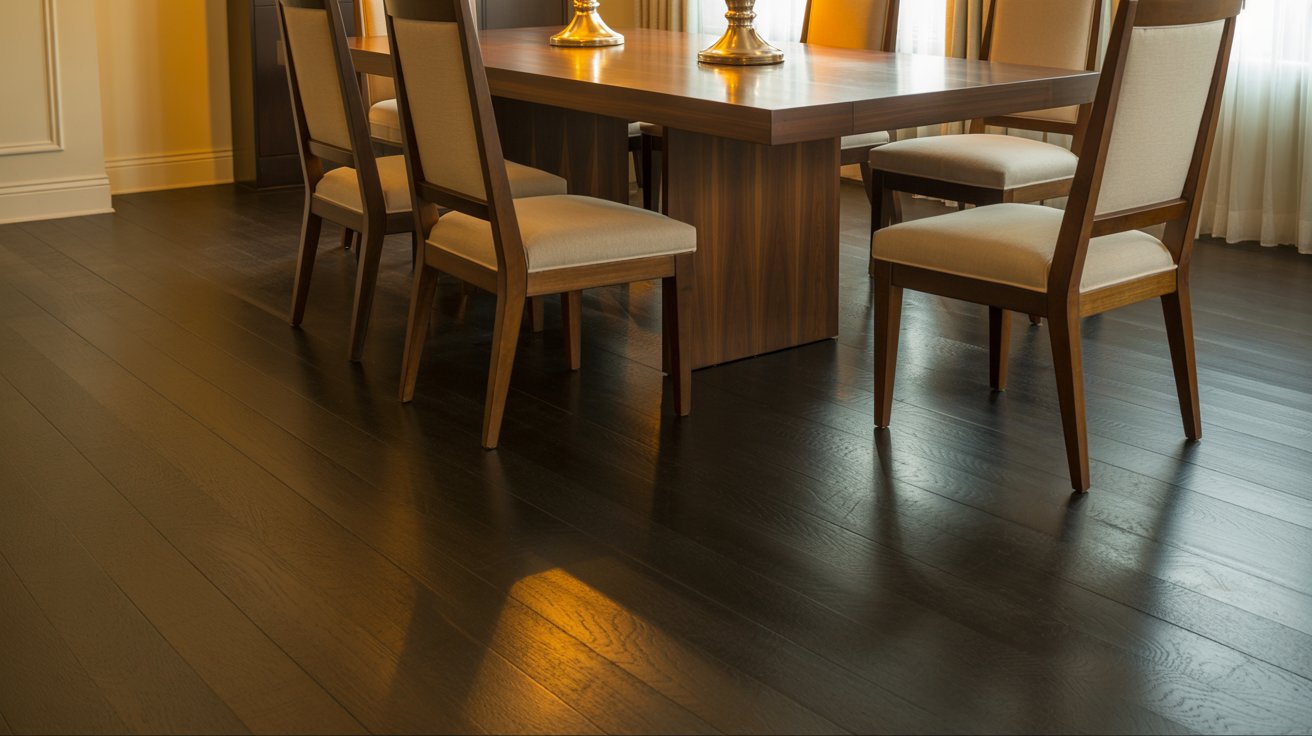
Matching your table and floor colors too closely is a common error. When they’re nearly identical, everything blends.
Your dining area loses definition and can look flat. Aim for some contrast to make your table stand out as a focal point.
Don’t ignore room lighting or wall color undertones. Your table color might look perfect in the store but wrong at home.
Always consider how much natural light your room gets. Also check if your wall colors lean warm or cool. These factors change how your table color appears.
Choosing a table finish that clashes with your flooring gloss level creates discord. A high-gloss table on matte floors can look out of place.
Similarly, a rustic matte table might feel wrong with polished floors. Try to match the sheen levels or keep them close. This creates a more harmonious look.
Conclusion
Dark wood floors can be made to look even better with the right table color. Become familiar with undertones, try test lighting and go for the colors that feel right.
You should take samples home to see what they look like in natural light during the day, and in the morning and evening in your home so that you don’t regret your purchase.
For a lasting look against trends, consider mixing materials or using neutral colors to match your changing tastes. Go with what feels right. Inside of, do what makes you happy.
Frequently Asked Questions
What color table works best with dark brown floors?
Light woods like oak or maple create beautiful contrast with dark brown floors. White, cream, or gray tables also work well and brighten up your space.
Can I use a black dining table with dark wood floors?
Yes, but make sure your room has plenty of natural or artificial light. Balance the darkness with lighter chairs and bright decor to avoid a heavy look.
Should my dining table match my floor color exactly?
No, matching too closely makes everything blend together and look flat. Aim for some contrast or variation in tone to help your table stand out.
How do I know if my floors have warm or cool undertones?
Place a white piece of paper on your floor and look at the reflected color. Yellow, orange, or red tones mean warm, while blue or gray tones mean cool.
What finish should my table have if my floors are glossy?
Try to match the sheen levels for a cohesive look. A glossy or semi-gloss table pairs well with polished floors, while matte finishes suit matte flooring better.
