

When I started my kitchen remodel, I kept asking what cabinets are made of and why everyone made such a big deal about it. Turns out, the material changes everything. It affects your budget, how long they last, and whether they’ll hold up to daily use.
I’ve spent years testing different cabinet materials in real kitchens. This guide covers solid wood, engineered options, synthetics, and specialty materials.
You’ll see honest pros and cons for each type. I’ll help you match materials to your actual needs and budget. No confusing jargon or sales pitches here.
Just straight answers that help you decide.
What Influences Cabinet Material Choice?
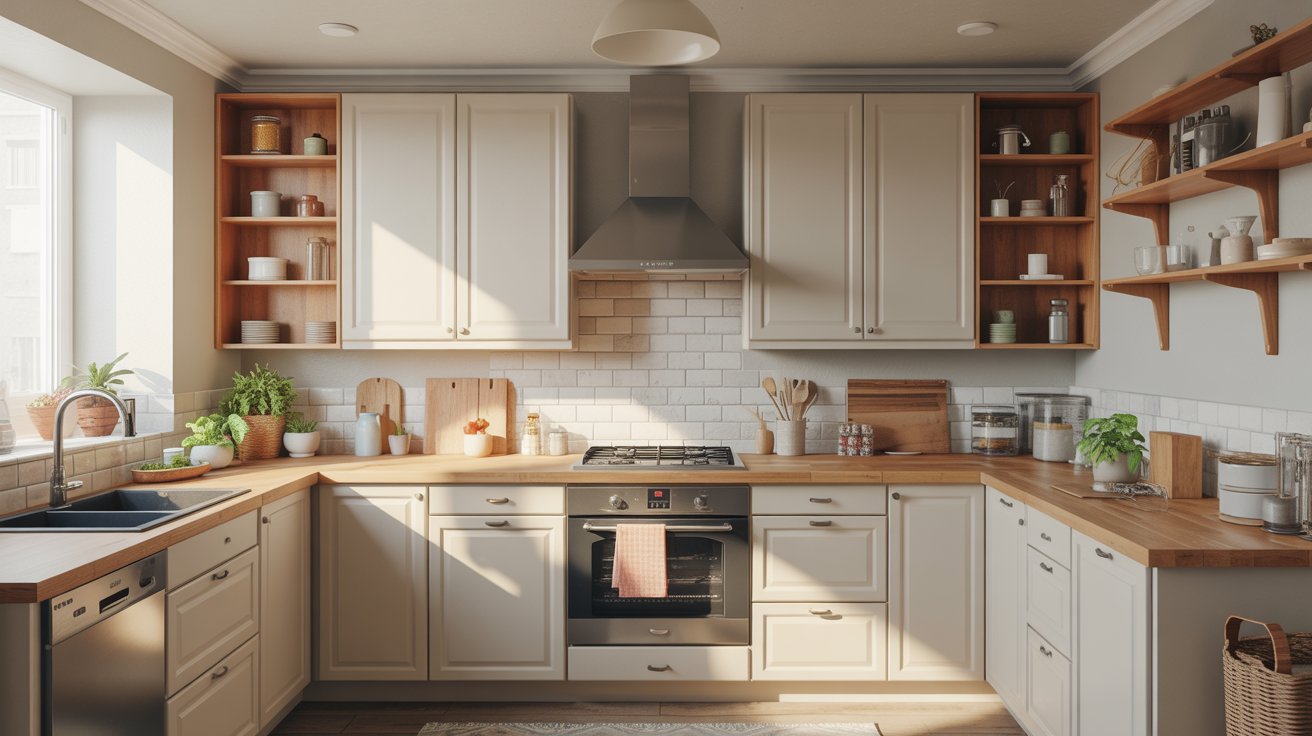
Your cabinet material decision depends on four main factors. Cost sits at the top for most homeowners. Solid wood costs more than particle board or laminate. Your kitchen style matters too.
A farmhouse kitchen needs different materials than a modern space. Think about how much wear your cabinets will handle. Families with kids need tough materials that clean easily.
Some people care about eco-friendly options. Bamboo and reclaimed wood fit that need. Balance these four things to find your best match.
Types of Cabinet Materials
Let me break down every material option so you can pick what fits your kitchen best.
Wood Types of Cabinet Materials
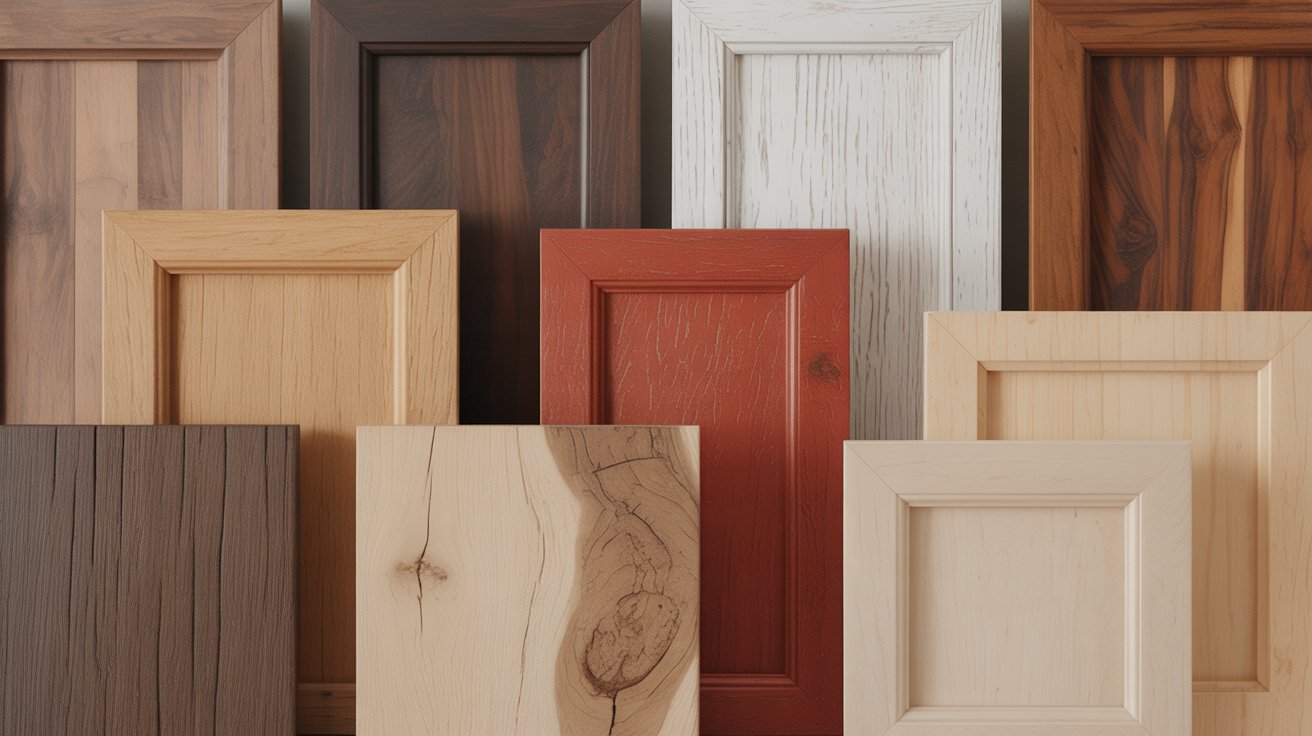
- Reclaimed Wood: Old barn wood and salvaged lumber give cabinets character. Each piece has unique marks and colors. This option costs more but helps the environment. It works great for rustic or industrial kitchens.
- Solid Wood Overview: Real wood cabinets last decades when cared for properly. They handle scratches better than most materials. You can sand and refinish them multiple times. The natural grain patterns add warmth to any kitchen.
- Oak (Red & White): Red oak shows bold grain lines and warm tones. White oak looks lighter with straighter grain. Both types resist dents and hold up well. Oak stains beautifully if you want to change colors later.
- Birch: This hardwood costs less than oak but still performs well. It has fine grain that looks clean and smooth. Birch accepts paint better than most woods. Minor dents can show up more easily though.
- Hickory: The hardest wood option available for cabinets. Wide color variation adds visual interest. Strong grain patterns create a bold look. This material stands up to heavy daily use.
- Maple: Smooth, tight grain makes maple perfect for painted cabinets. It’s nearly as hard as oak but costs slightly less. The light color works with any kitchen style. Maple resists wear from constant opening and closing.
- Cherry: Rich reddish-brown color deepens over time with light exposure. This premium wood has smooth grain and a luxurious feel. Cherry costs more than most other woods. It dents easier than oak or maple though.
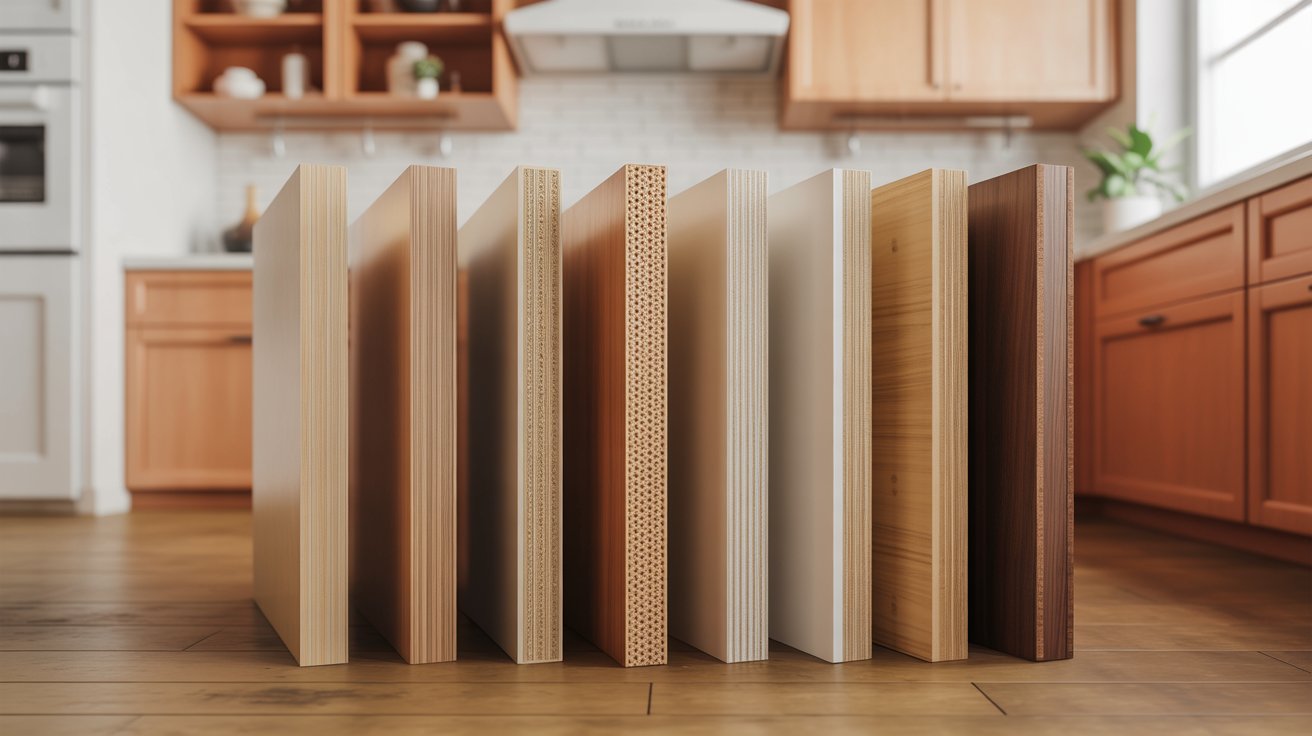
- Plywood: Thin wood layers glued together make plywood strong. It resists warping better than solid wood. Cabinet boxes made from plywood last longer. This costs more than particle board but less than solid wood.
- MDF (Medium-Density Fiberboard): Wood fibers compressed with resin create smooth surfaces. MDF takes paint exceptionally well with no grain showing. It costs less than plywood or solid wood. Moisture can damage it if it gets soaked.
- HDF (High-Density Fiberboard): Denser than MDF with better moisture resistance. This material holds screws tighter for door hinges. It works well for cabinet doors and drawer fronts. The smooth surface needs less prep before painting.
- Particle Board: The most budget-friendly cabinet material available. Small wood chips pressed together with adhesive. It works fine for cabinet boxes in dry areas. Water damage happens fast if it gets wet.
- Wood Veneers: Thin wood slices glued over cheaper core materials. You get the wood look for less money. Good veneers can fool most people. Lower quality ones peel at edges over time.
- Bamboo: Technically a grass that grows back quickly. Harder than many wood species. Light color fits modern and Asian-inspired designs. It handles moisture better than regular wood.
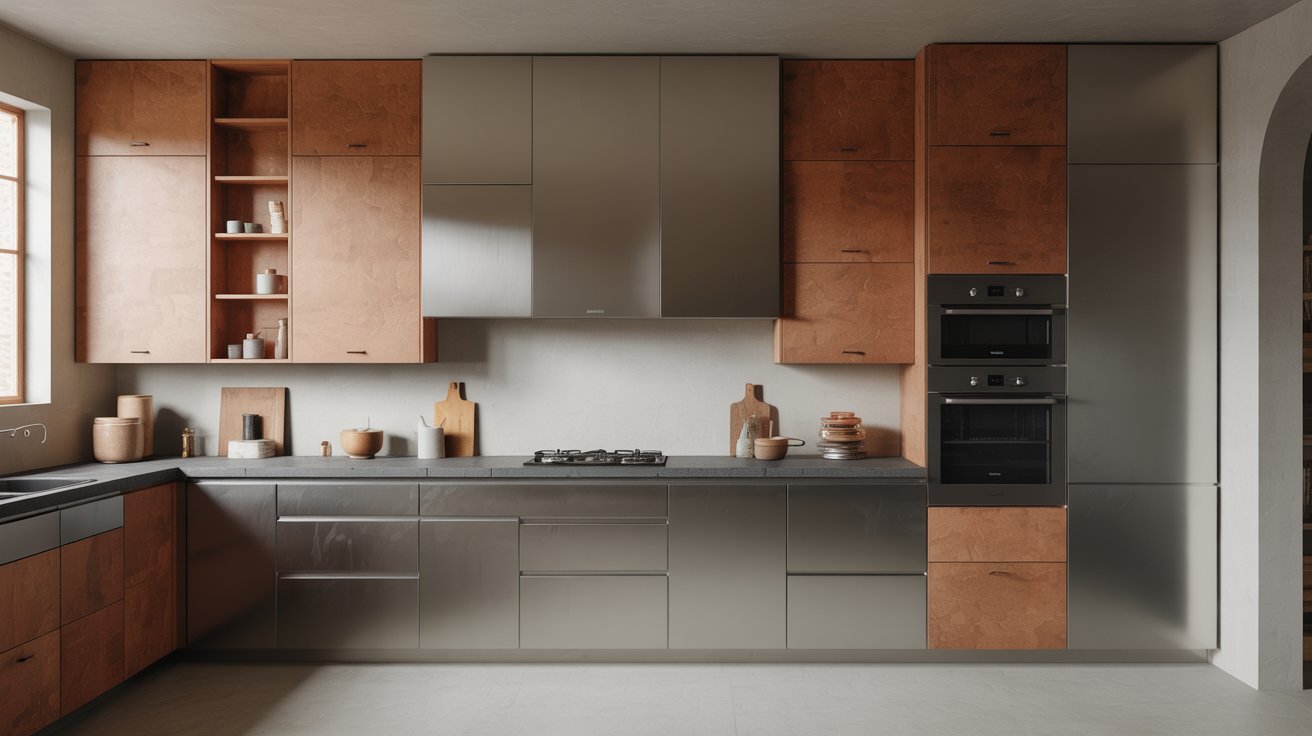
- Cork: Made from tree bark that regrows without cutting trees down. Naturally antimicrobial and water-resistant. The unique texture adds visual interest. Limited availability makes it harder to find and more expensive.
- Acrylic: Plastic sheets in glossy or matte finishes. High-shine surfaces reflect light around kitchens. They clean with just soap and water. Scratches show up easily on dark colors.
- Melamine: Particle board or MDF with plastic coating. The coating resists stains and moisture. Many color choices at low prices. Edges can chip if hit hard.
- Laminate: Paper or fabric layers covered in protective resin. This material imitates wood, stone, or solid colors. It wipes clean and resists heat fairly well. Old laminate can’t be refinished like wood.
- Thermofoil: Vinyl film heat-pressed onto MDF. Smooth surface with no seams or grain. It comes in white and light colors mostly. Heat from stoves can cause peeling near edges.
- PVC (Polyvinyl Chloride): Waterproof plastic that handles humidity perfectly. Great for bathrooms or damp basements. The synthetic look doesn’t suit traditional kitchens. This material lasts longer than thermofoil in wet conditions.
- Stainless Steel: Commercial kitchens use this for good reason. It never stains, rusts, or harbors bacteria. Fingerprints show up constantly though. The industrial look fits modern homes.
- Paper Composite: Recycled paper pressed with resin into solid sheets. Surprisingly tough and water-resistant. Limited color options compared to other materials. Good for eco-conscious homeowners on budgets.
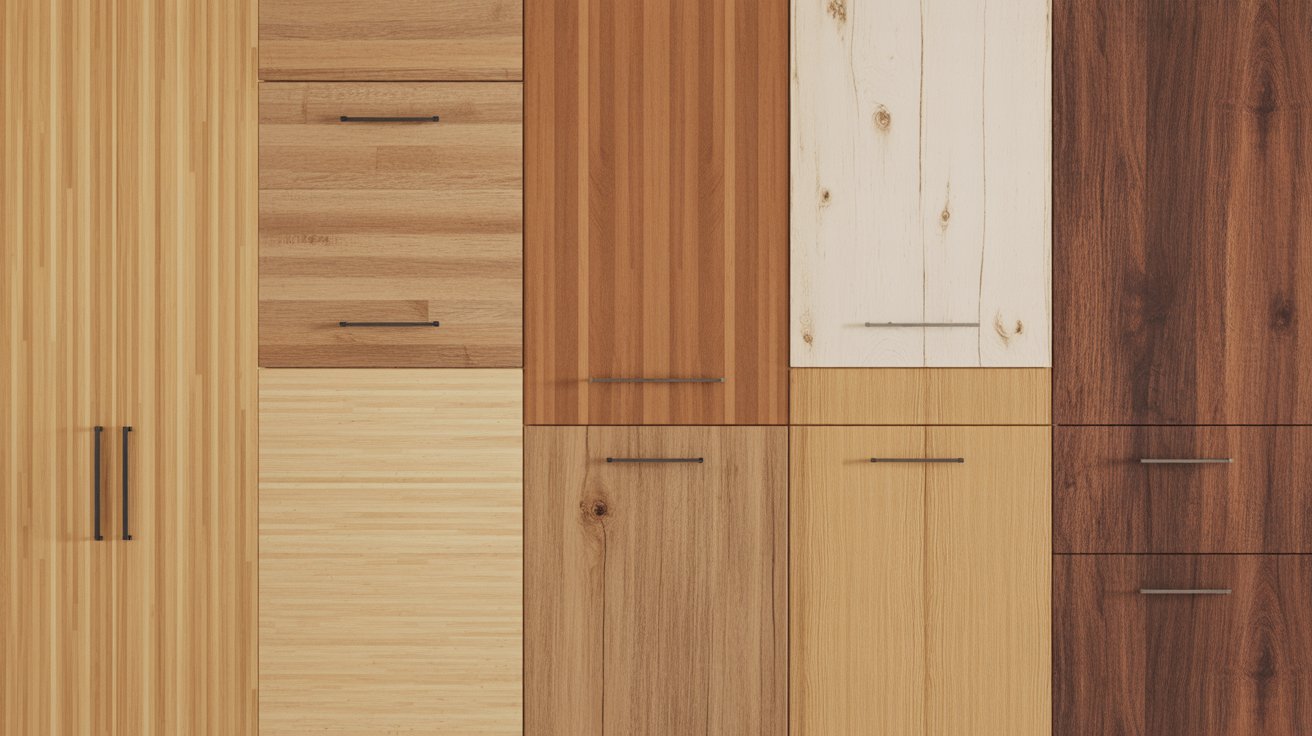
Engineered Wood Cabinet Materials
Eco-Friendly or Unique Wood Alternatives
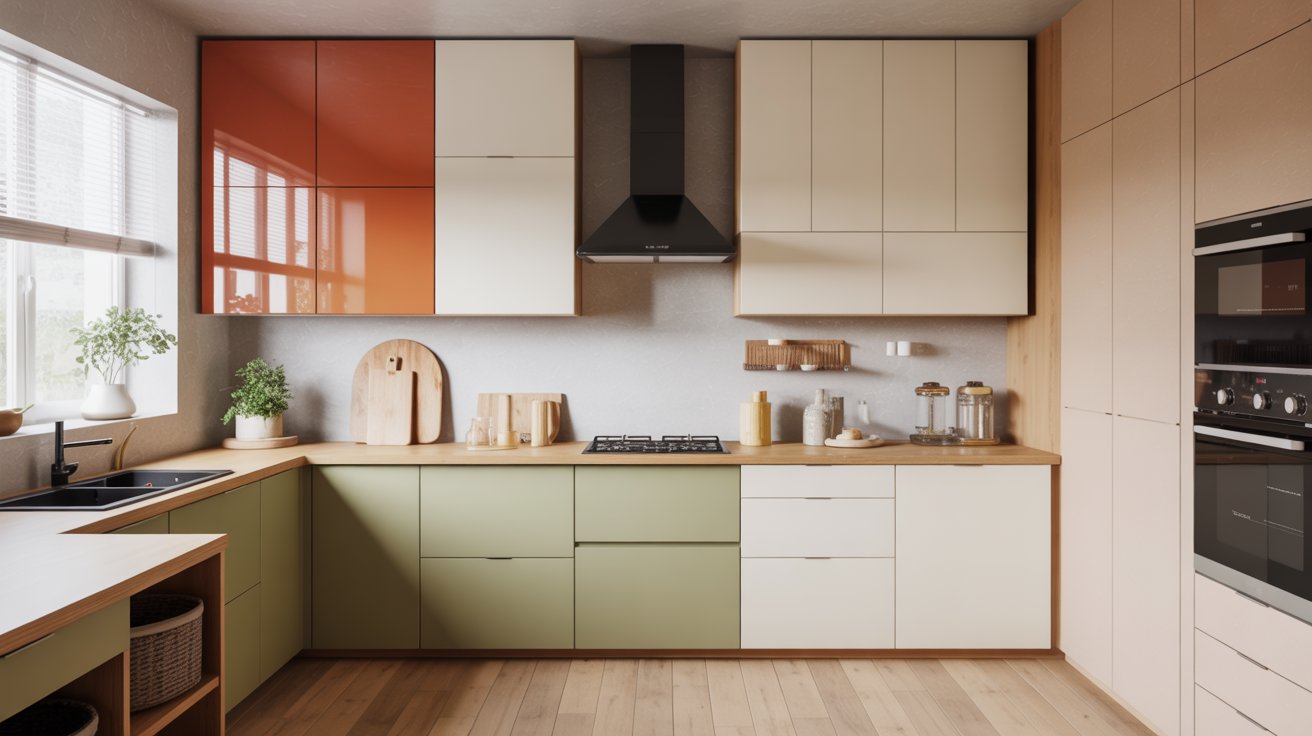
Synthetic Cabinet Materials
Surprising or Specialty Cabinet Materials
How to Choose the Right Cabinet Material
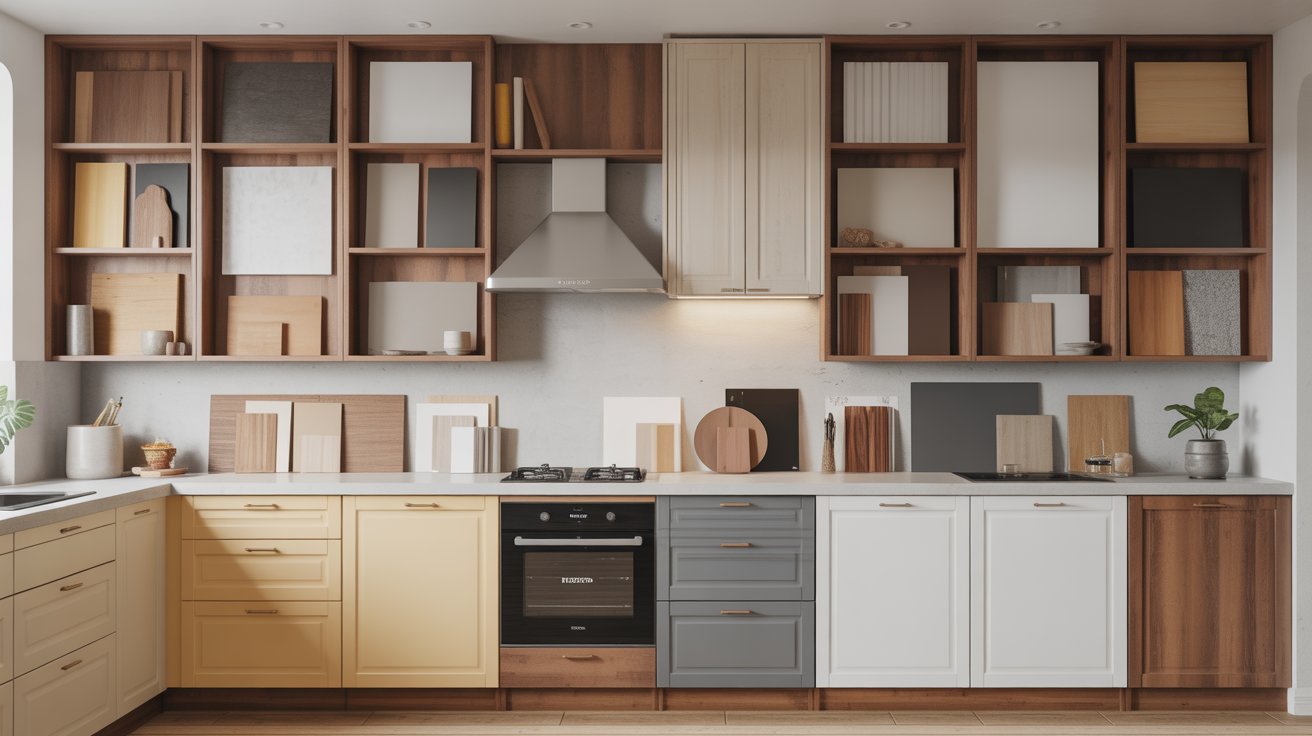
Your perfect cabinet material depends on how you actually live in your kitchen.
Budget Considerations
Set your total cabinet budget first. Solid wood eats up 40-60% more money than engineered options. Particle board cabinets cost the least but need replacing sooner.
Plywood with wood veneer splits the difference nicely. Factor in how long you plan to stay in your home. Long-term homes deserve better materials.
Customization Needs
Some materials accept customization better than others. Solid wood and MDF take paint easily if you want color changes. Thermofoil and laminate come in set finishes only.
Think about future updates. Wood cabinets can be sanded and restrained. Laminate cabinets need full replacement for new looks.
Function vs Appearance
Beautiful cabinets that fall apart serve nobody well. Busy families need materials that bounce back from daily hits. Laminate and acrylic clean up fast after messy meals.
Solid wood needs more careful cleaning and maintenance. Match material toughness to your real life habits. A show kitchen can handle delicate materials better than a family hub.
Durability & Maintenance Requirements
Wood cabinets need conditioning oil once or twice yearly. Laminate just needs wiping with damp cloth. Thermofoil can’t handle harsh cleaners or heat. Stainless steel shows every fingerprint but lasts forever.
Consider how much time you want to spend on upkeep. Some materials need professionals for repairs. Others you can fix yourself with basic supplies.
Conclusion
Now you know what cabinets are made of and how each material fits different needs. I spent weeks researching this before my own kitchen redo, and picking the right material made all the difference.
My plywood cabinets with maple doors still look great five years later. Think about how you use your kitchen daily and what you can actually afford.
The best material is the one that works for your real life, not just what looks good in magazines. Which material fits your kitchen best?
Share your thoughts in the comments below.
Frequently Asked Questions
What is the most durable cabinet material?
Solid hickory ranks as the hardest wood option. Stainless steel beats everything for pure durability though.
Are MDF cabinets a good choice?
MDF works great for painted cabinets in dry areas. Keep them away from sinks where moisture causes damage.
How long do laminate cabinets last?
Quality laminate cabinets last 10-15 years with normal use. They can’t be refinished when they wear out.
What’s the difference between plywood and particle board?
Plywood uses wood layers for strength. Particle board uses compressed chips and costs less but handles moisture poorly.
Are bamboo cabinets worth the investment?
Bamboo costs less than hardwood and resists moisture well. The light color works best for modern kitchens.
