

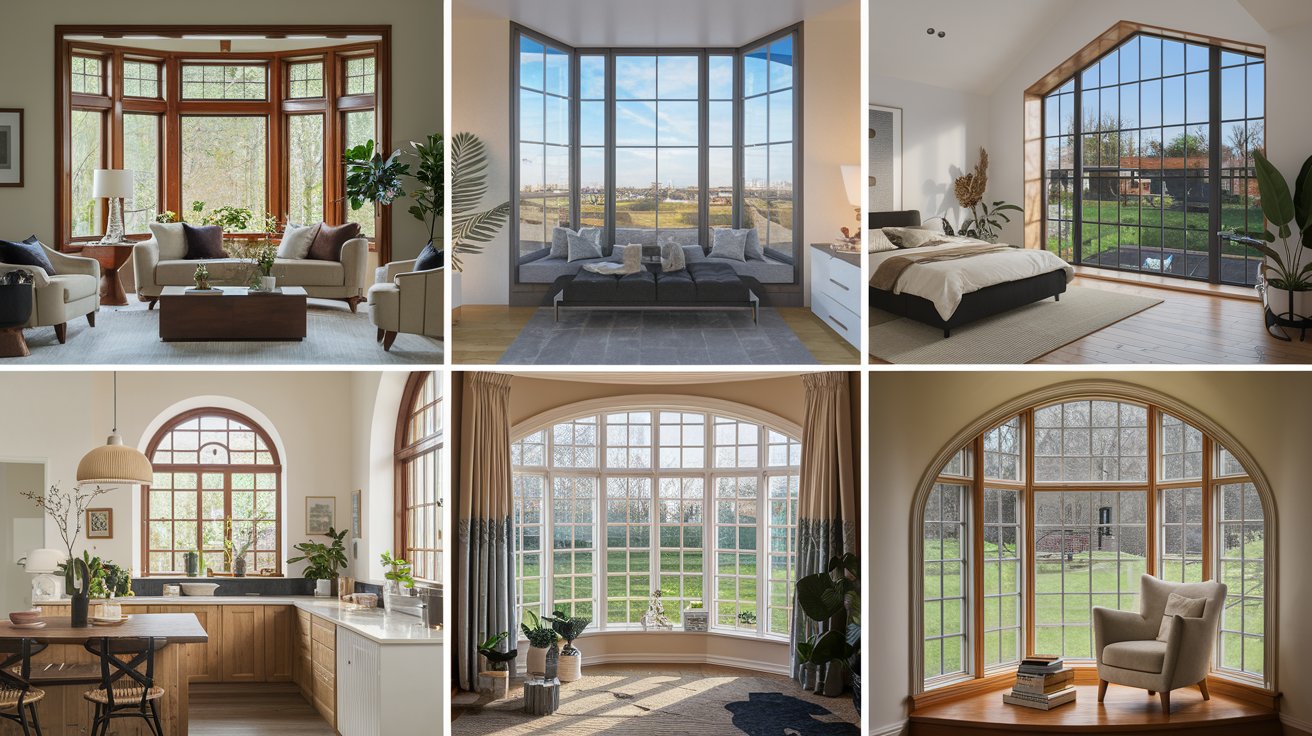
Bay windows bring light, space, and style to any home. These classic features project outward from your walls, creating extra room inside while adding charm to your exterior.
If you’re thinking about adding a bay window or replacing an existing one, you need to know your options. I’ll walk you through different types of bay windows in this guide.
You’ll learn which style works best for each room, fits your home’s design, and matches your budget.
This article covers everything from traditional full bay windows to custom designs, plus practical tips on installation.
Let’s find the perfect bay window for your home.
What Is a Bay Window?
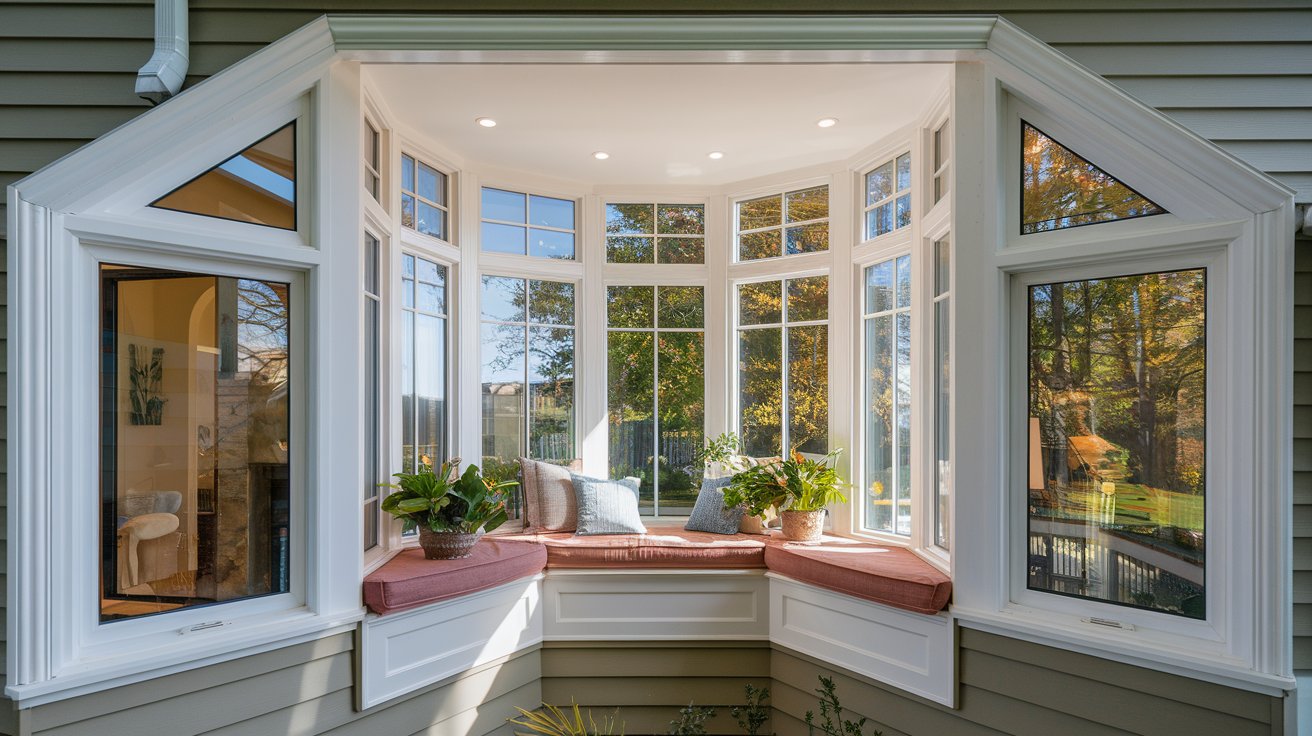
A bay window extends outward from your home’s exterior wall, creating additional interior space.
A bay window combines multiple panels that project out from your home. Most have a large center window with smaller side windows angled back.
These windows add usable room inside for reading nooks or plant displays. Light pours in from multiple angles.
Bay windows also boost curb appeal by adding depth to plain walls. Modern versions use vinyl, fiberglass, and treated wood for better insulation.
11 Types of Bay Windows
Choose from 11 distinct bay window styles, each designed for specific rooms, architectural looks, and functional needs.
1. Traditional / Full Bay Window
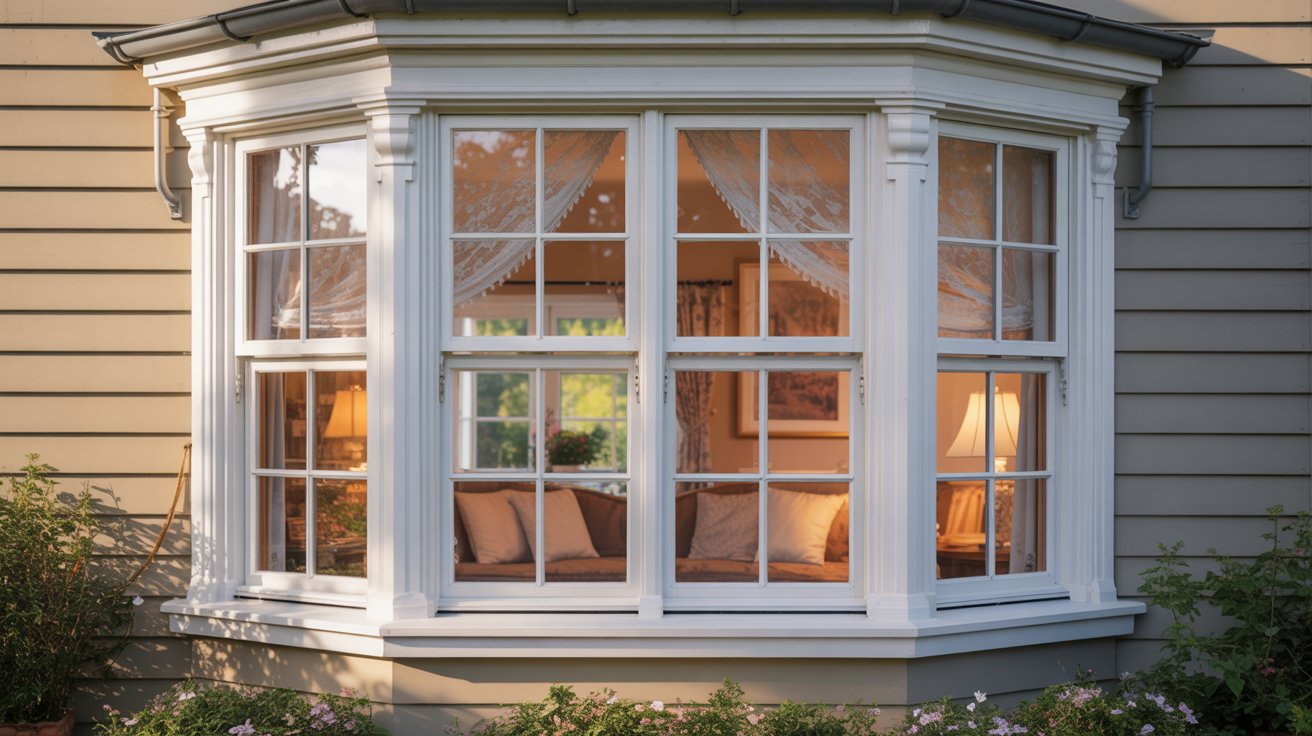
This classic design features a flat front panel with side windows angled at 30 or 45 degrees.
The traditional bay window has three sections. The center faces straight out while two side windows angle back. This adds usable space inside.
Living rooms and dining rooms work best for this style. Victorian and Colonial homes pair perfectly with traditional bay windows. The angled design lets in light from three directions.
2. Box Bay Window
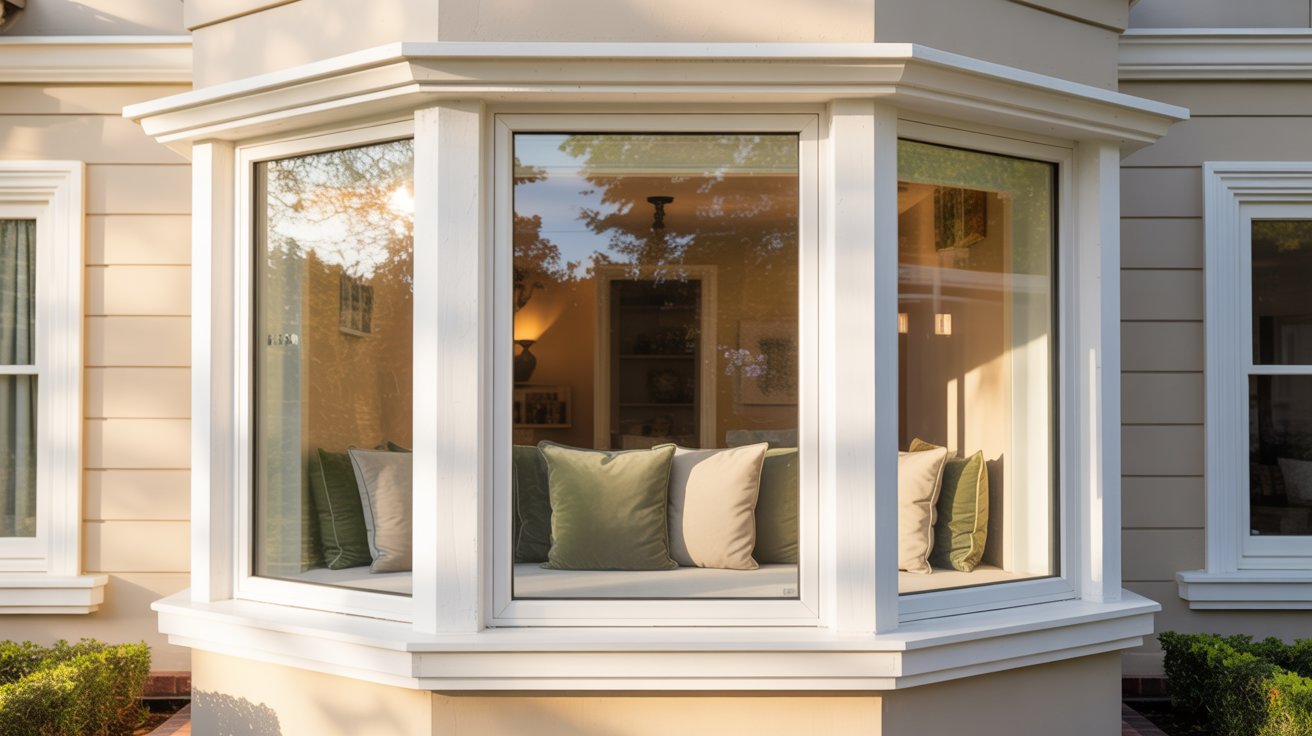
Box bay windows project straight out at 90-degree angles, forming a rectangular box shape.
This style creates clean, sharp lines. The side windows meet the front at right angles instead of diagonal slopes.
Kitchens and breakfast nooks benefit most from box bay windows. The flat surfaces fit countertops or dining tables easily. You won’t waste corner space.
Modern and transitional homes suit box bay windows perfectly. The 90-degree design maximizes interior space.
3. Bow (Curved) Bay Window
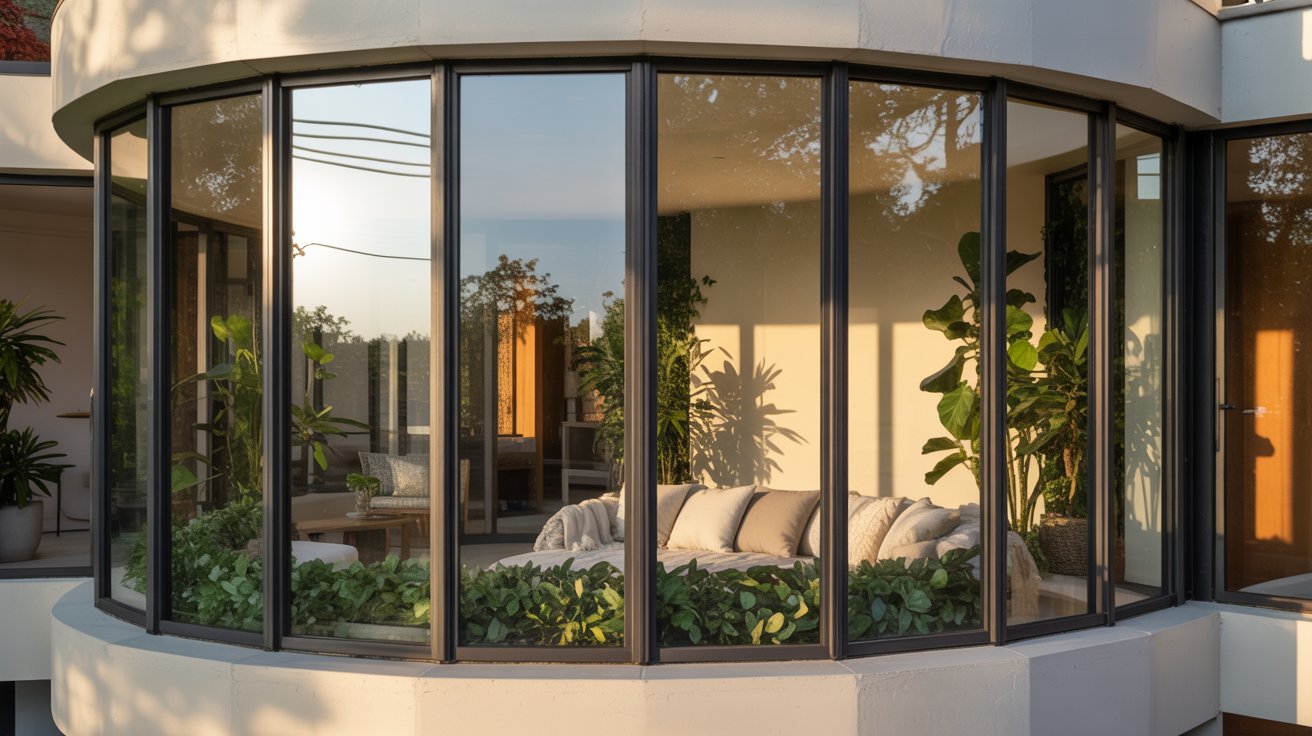
Bow windows feature four to six panels arranged in a smooth, gentle curve. Unlike traditional bays with sharp angles, bow windows create a flowing arc.
Each panel curves gradually into the next, forming a half circle projection. Master bedrooms and large living areas show off bow windows best.
The expansive glass provides panoramic views. Luxury homes, coastal properties, and traditional estates embrace bow windows.
The multiple panels let in light from more angles than three-panel designs.
4. Polygonal / Multi Sided Bay Window
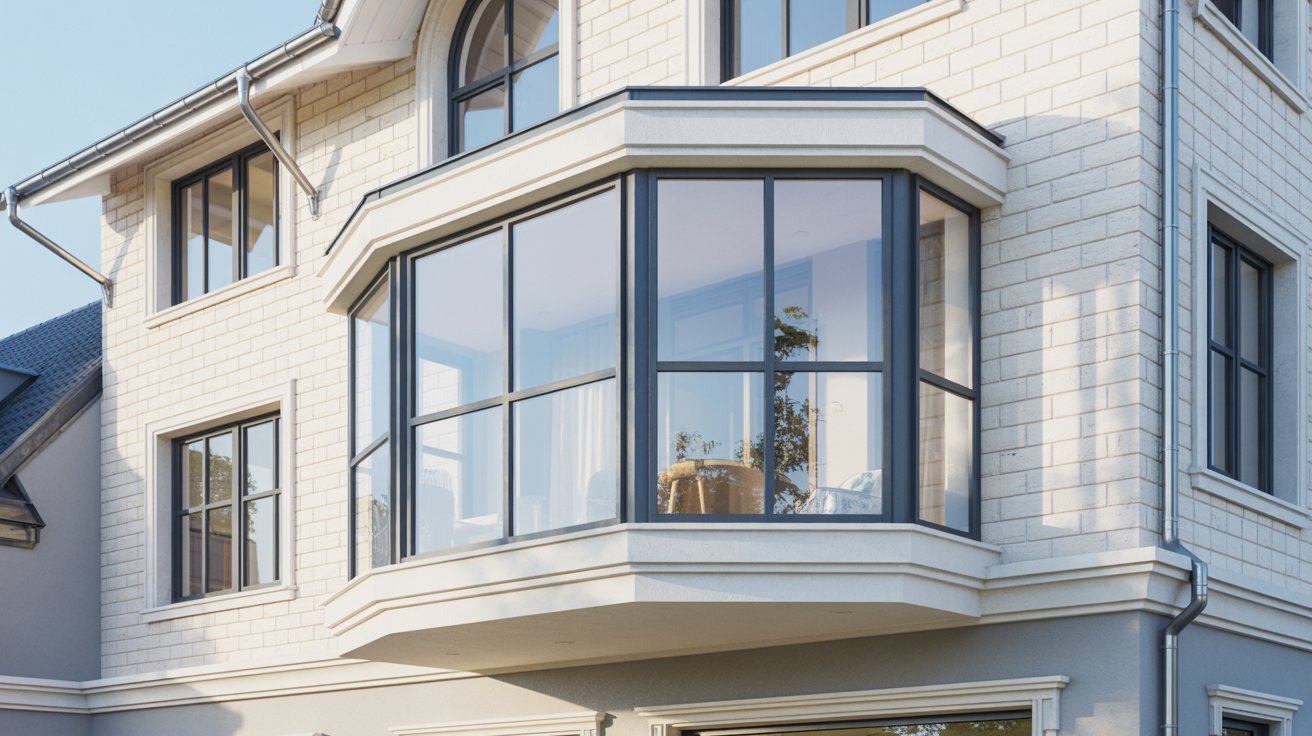
Polygonal bay windows use five or more angled panels to create a faceted, jewel-like appearance.
This style takes the traditional bay further. Instead of three sections, you get five, six, or more panels angled slightly.
The result looks like a cut gemstone. Use polygonal bays in statement areas where you want drama.
Modern homes and custom builds work well with this design. The multiple facets catch light throughout the day and provide 180 degree or greater views.
5. Cascading Bay Window
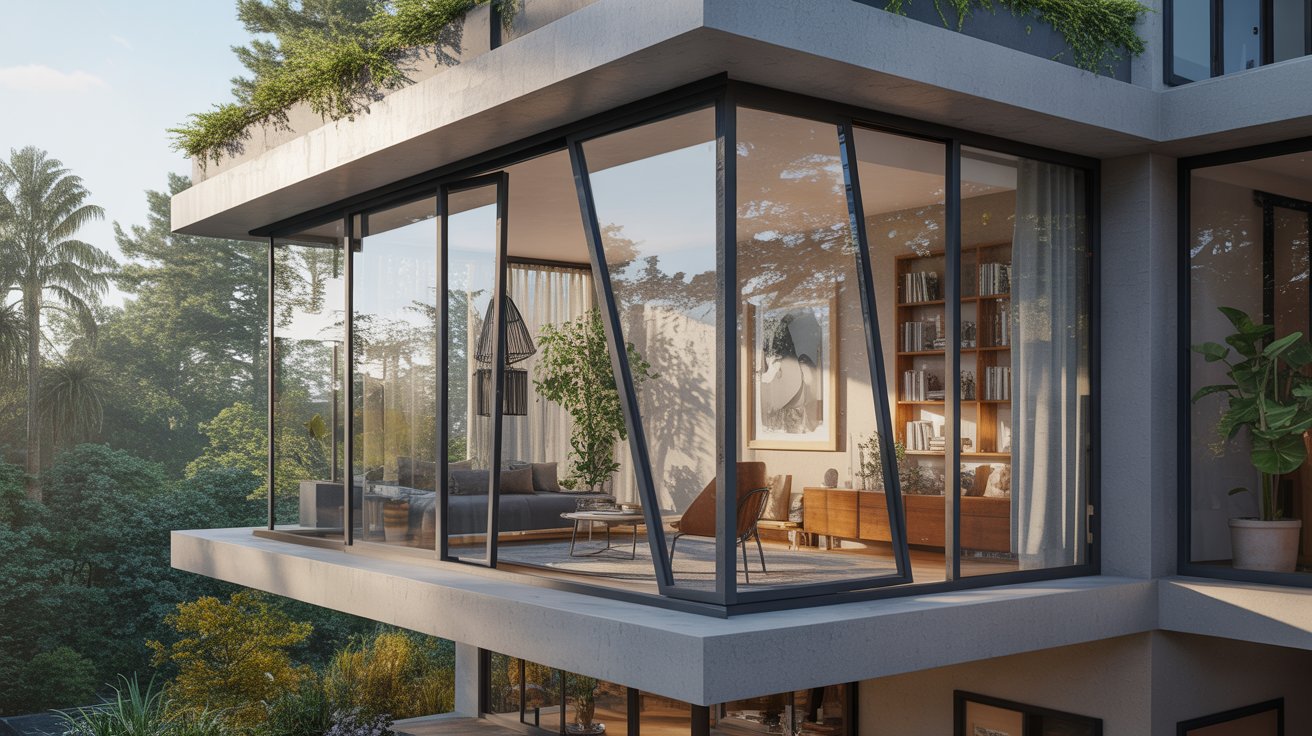
Cascading bay windows stack panels vertically or use slightly angled arrangements for a tiered effect.
This is a bay window for tight spots. The panels don’t project out far. Instead, they layer slightly to create depth without taking up much exterior space.
Stair landings and smaller spaces benefit from cascading designs. You get the bay window look without blocking walkways.
The reduced projection means lower cost and simpler installation.
6. Oriel Bay Window
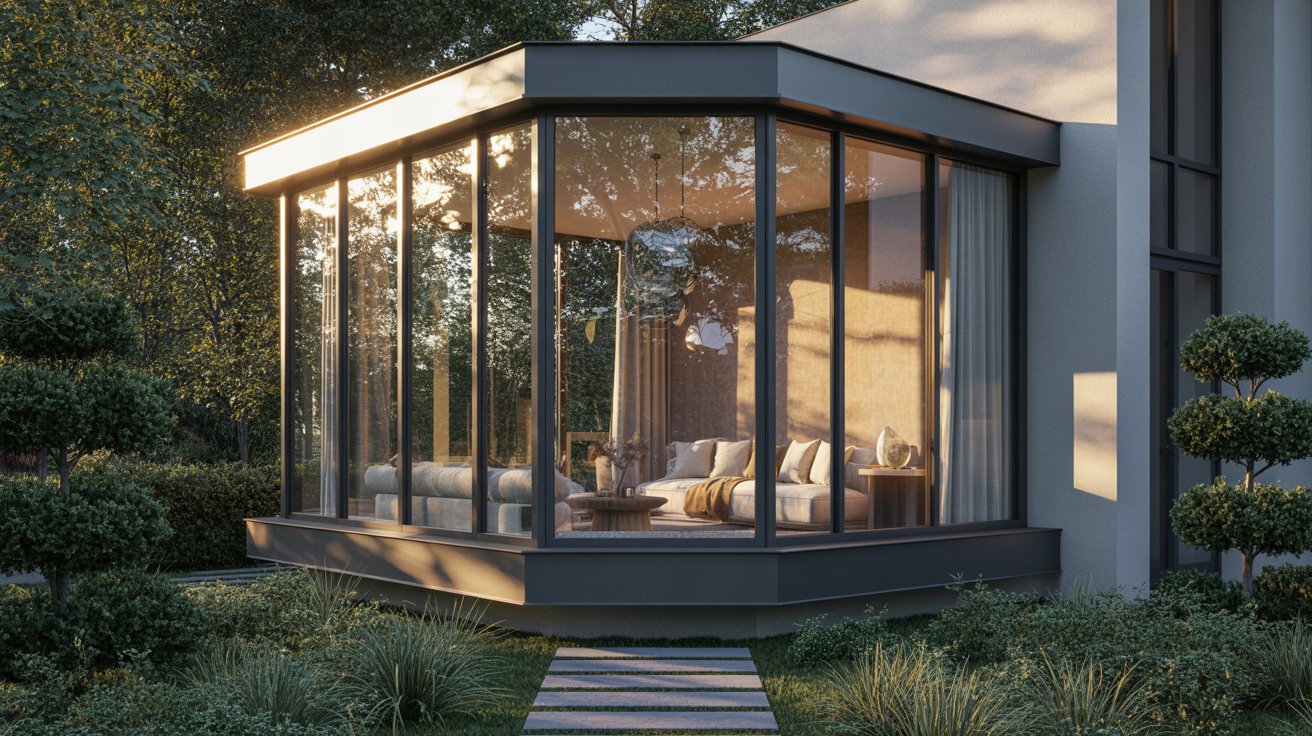
Oriel bay windows project from upper stories without ground-level support, held by brackets or corbels. An oriel window starts at the second or third floor.
Decorative brackets hold it against the wall, creating a floating appearance.
Upper floors and urban townhomes with zero lot lines use oriel windows.
Historic homes and Victorian designs feature this style. The design saves ground space while adding interior space upstairs.
7. Circle / Rounded Bay Window
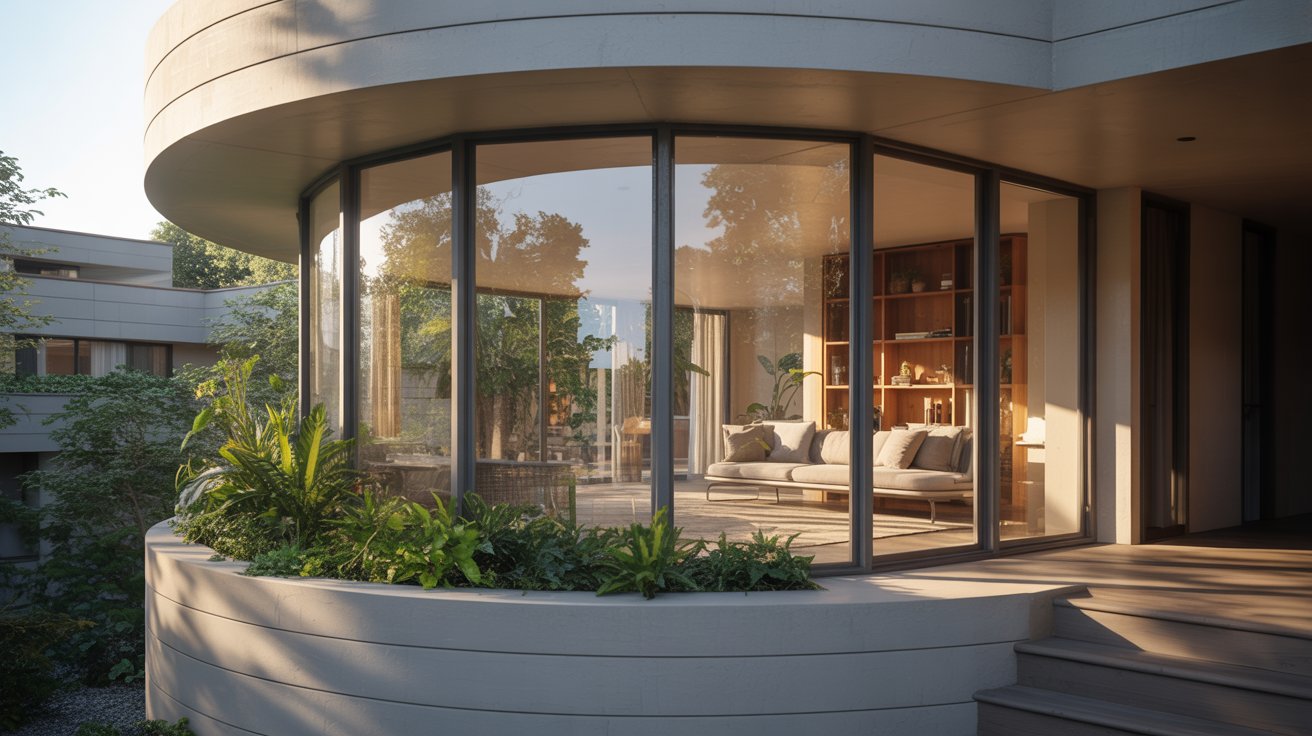
Circle bay windows feature a smooth curved design with no visible angles or seams. The glass curves in one continuous arc with no sharp corners or panel divisions.
The effect is smooth and modern. Front elevations, home libraries, and living rooms make strong statements with circular bays.
Modern homes and Art Deco designs pair beautifully with this style. The seamless curve provides unobstructed views.
8. Canted Bay Window
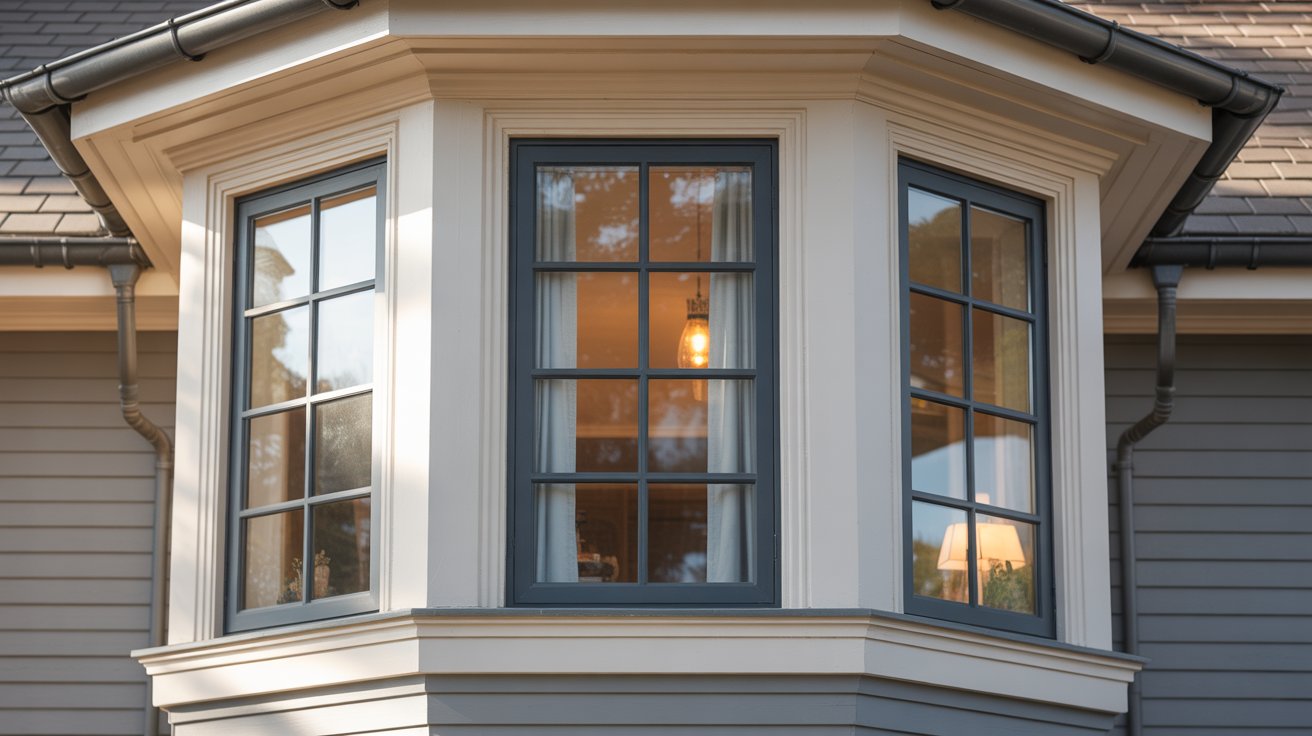
Canted bay windows feature a flat front with side windows angled between 30 and 45 degrees. A canted bay is similar to the traditional style but smaller with a more compact projection.
Smaller spaces and city lots benefit from canted designs. Victorian and Colonial architecture suits this style.
The compact projection adds space without overwhelming small rooms.
9. Garden Bay Window
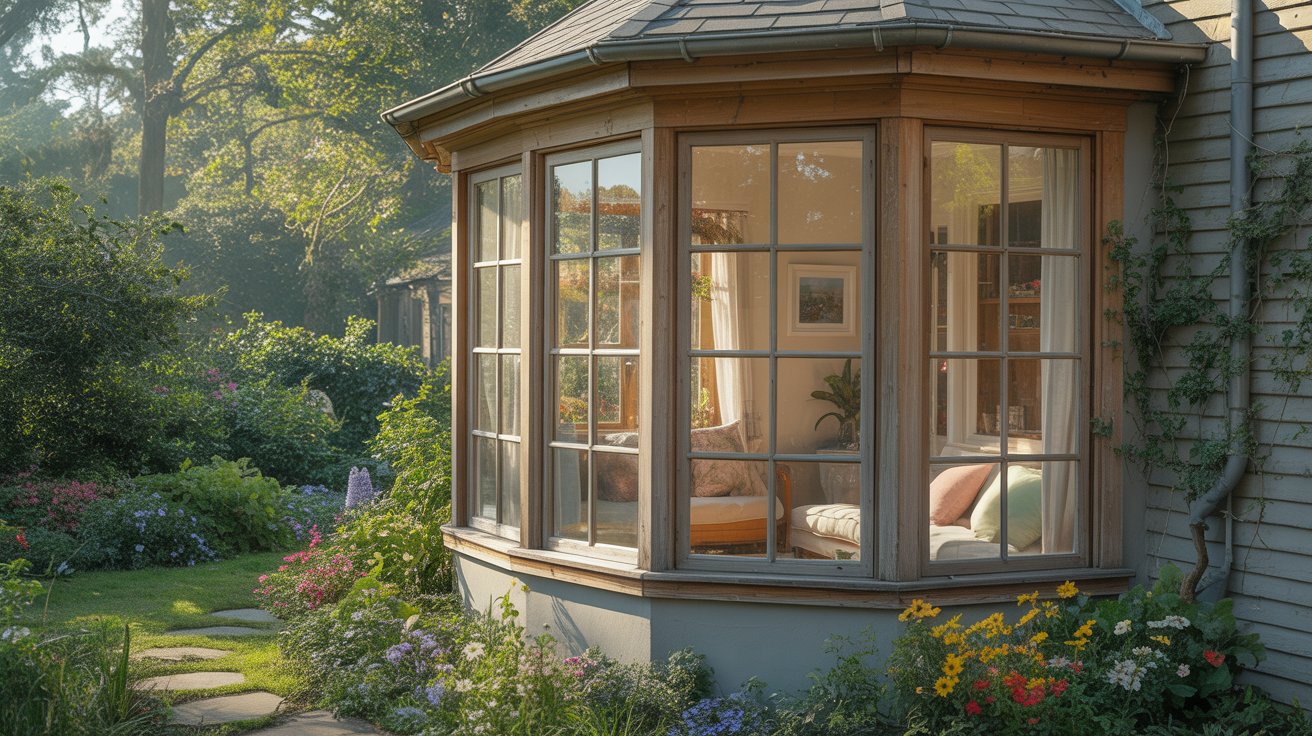
Garden bay windows feature deep sills specifically designed to hold plants and display items. The sill extends deep into the room.
Glass shelves sometimes span multiple levels, acting as a built-in greenhouse. Kitchens and sunrooms are natural fits for garden windows.
You can grow herbs within arm’s reach. The deep sill provides display space with light from three sides.
10. Three Section / Three Lite Bay Window
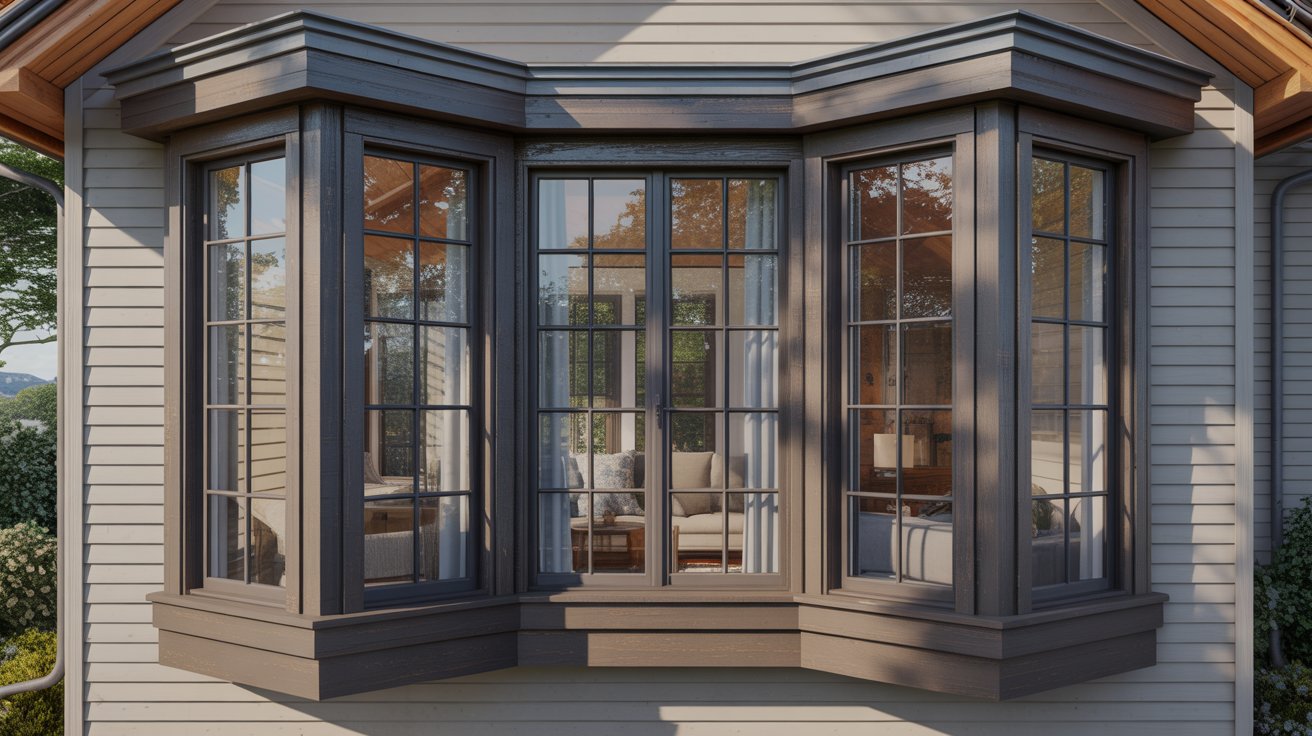
Three section bay windows combine one large fixed center panel with two smaller angled side windows.
This is the most common configuration. The center window doesn’t open, providing better insulation. The side windows open for airflow.
Living rooms and dining areas use three-section bays most often. Traditional homes and contemporary designs both accept this style. You get energy efficiency and ventilation.
11. Custom Bay Window
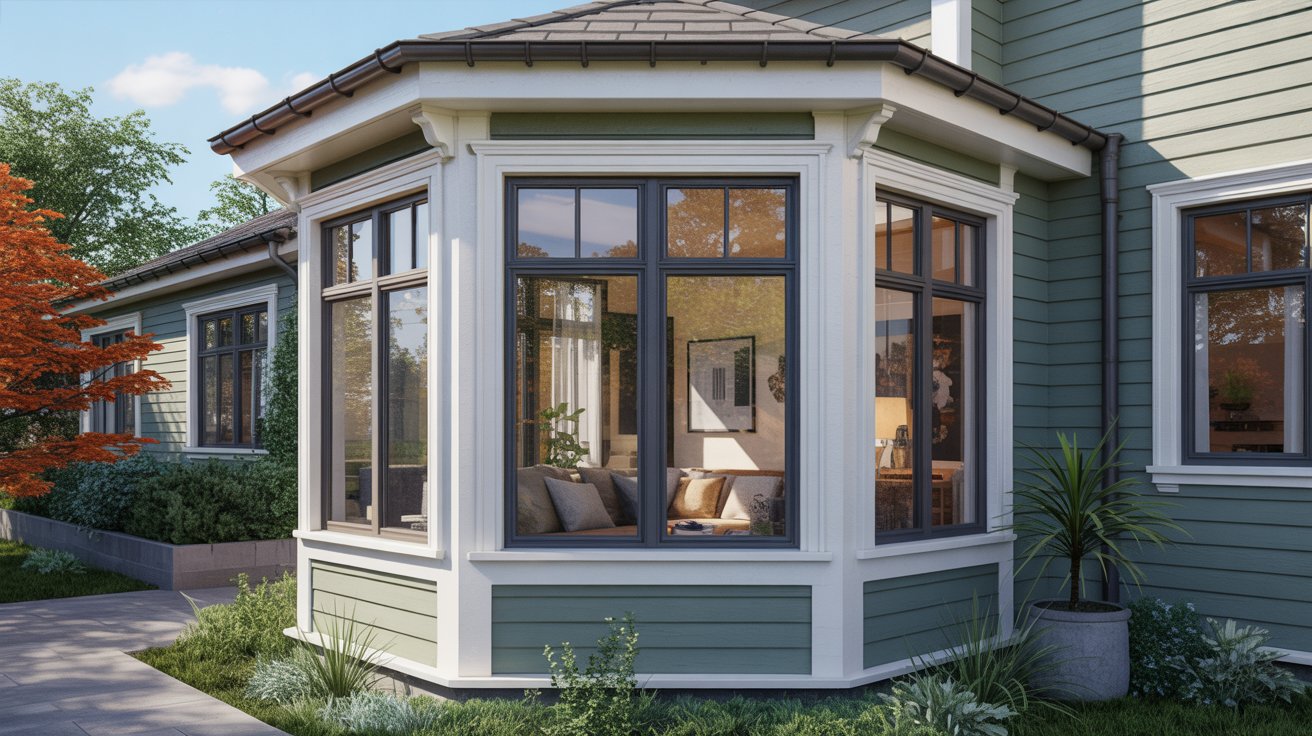
Custom bay windows are built to your exact specifications for shape, size, angle, and panel count. When standard options don’t fit your vision or space, go custom.
You choose every detail and the window maker builds exactly what you need. Rooms needing panoramic views or spaces with odd dimensions benefit from custom designs.
Custom windows solve problems that off the shelf products can’t address.
Comparing Styles: Features & Tradeoffs
Each bay window type offers different benefits for visual impact, added space, installation complexity, and cost.
|
Type |
Visual Impact |
Space Added |
Installation Difficulty |
Cost Range |
Best For |
|
Traditional |
Strong |
Moderate |
Moderate |
Mid-range |
Living rooms, formal spaces |
|
Box |
Clean, Modern |
Maximum |
Moderate |
Mid-range |
Kitchens, contemporary homes |
|
Bow |
Grand, Impressive |
Extensive |
High |
Premium |
Master suites, luxury homes |
|
Polygonal |
Dramatic |
Moderate-High |
High |
Premium |
Statement spaces, custom homes |
|
Cascading |
Subtle |
Minimal |
Low-Moderate |
Budget-Mid |
Tight spaces, landings |
|
Oriel |
Historic, Refined |
Moderate |
High |
Premium |
Upper floors, urban homes |
|
Circle |
Smooth, Gallery-like |
Moderate |
Very High |
Premium |
Modern homes, showcases |
|
Canted |
Classic, Compact |
Small-Moderate |
Low-Moderate |
Budget-Mid |
Small rooms, city lots |
|
Garden |
Practical, Fresh |
Minimal |
Low |
Budget |
Kitchens with herbs, displays |
|
Three Section |
Balanced, Reliable |
Moderate |
Moderate |
Mid-range |
General use, all rooms |
|
Custom |
Personalized |
Varies |
Varies |
Premium Luxury |
Problem-solving, special needs |
Matching a Bay Window to Your Home
Select bay window styles based on your home’s architecture, room function, and budget constraints.
Victorian and historic homes call for bow, oriel, or canted bay windows. Craftsman styles pair well with traditional or box bay windows.
Modern homes suit polygonal or box bay windows. Reading nooks need traditional bay windows. Kitchen dining areas work best with box bay windows.
Bedroom views shine through bow windows. Budget conscious choices include box and traditional bay windows. Premium options include bow and circle bay windows.
Installation & Expert Tips
Professional installation ensures your bay window performs well for decades.
- Contractors take precise measurements and build proper framing to support the window’s weight and projection
- Support beams or brackets must attach to solid framing members to prevent sagging and leaks
- Proper sealing and flashing around all joints prevents air and water infiltration
- Professional installation protects warranties and ensures energy efficiency in all seasons
- Experienced contractors know building codes and have the right tools to handle heavy glass panels safely
Conclusion
I’ve lived with bay windows in three different homes, and they’ve always been my favorite feature.
There’s something special about that extra space and the way light pours in from multiple angles.
After exploring these 11 types with you, I hope you can see which style fits your home and lifestyle. Think about how you use each room.
Consider your home’s architecture and your budget. Ready to move forward? Talk to a window professional about your top choices.
Many companies offer free consultations. Your perfect bay window is waiting.
Frequently Asked Questions
What is the average cost to install a bay window?
Bay window installation typically ranges from $1,500 to $8,000 depending on size, style, and materials. Custom designs and bow windows cost more. Box and canted styles fall on the lower end.
Can I install a bay window in any room?
Most rooms can accommodate bay windows if there’s exterior wall space. You need adequate structural support and clearance outside. Upper floors may require oriel style designs instead of ground supported projections.
How much extra interior space does a bay window add?
Bay windows typically add 12 to 24 inches of interior depth. Box and bow styles provide the most usable square footage. Canted and garden windows add less but still create functional space.
Do bay windows improve home value?
Yes, bay windows typically increase home value by improving curb appeal and livable space. Quality installation and appropriate style choices provide the best return. Buyers often pay premium prices for homes with well designed bay windows.
What maintenance do bay windows require?
Clean glass surfaces regularly and check seals annually. Inspect the roof area for leaks or damage. Lubricate operable panel hardware yearly. Properly maintained bay windows last 20 to 30 years or more.
