

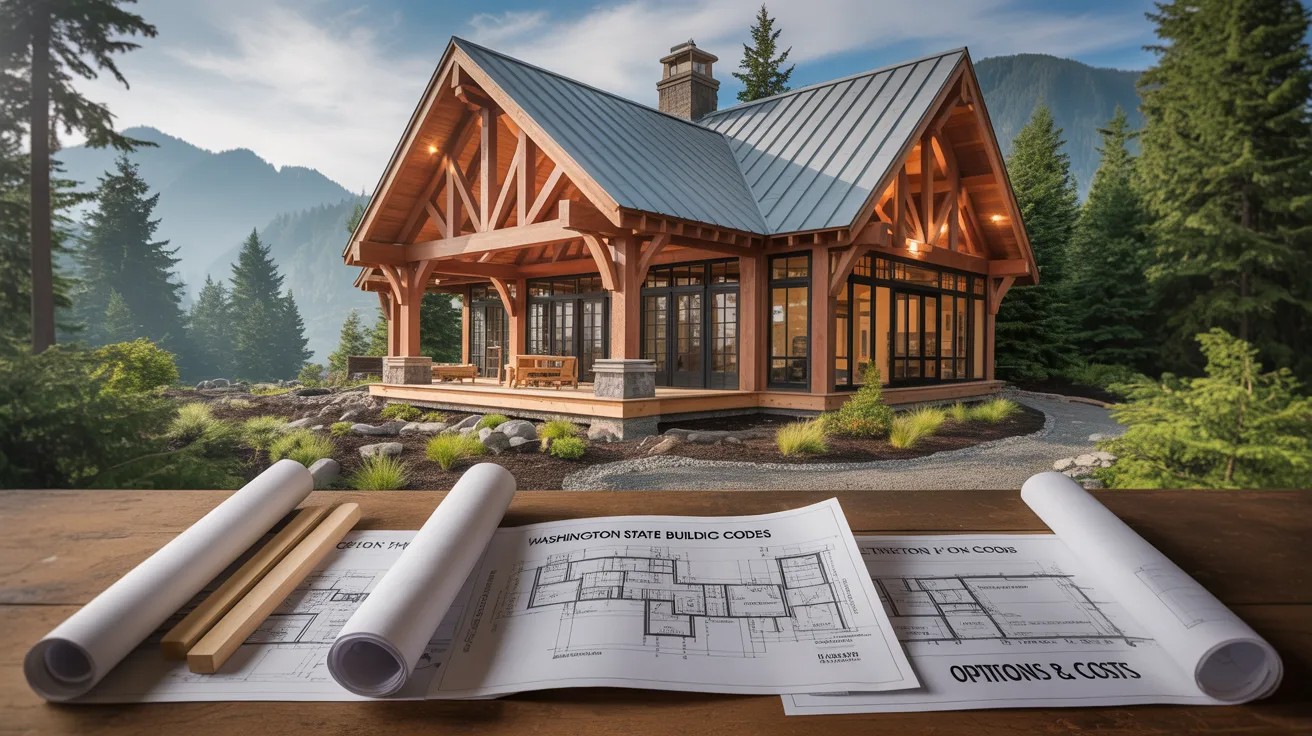
Picture this: You step onto your Cascades property, breathe pine-scented air, and watch a crane swing massive Douglas-fir beams into place. Within seven days, the bones of your forever home stand proud against the skyline—that’s the promise of 2026 timber-frame home kits in Washington.
Housing costs keep climbing while contractors stay booked. Pre-engineered timber frames arrive CNC-cut and ready to raise, slashing on-site labor and weather delays. Choose wisely and you secure an energy-tight structure built to outlast you; choose poorly and permit fees or hidden line items balloon.
In the guide below, we unpack real costs, 2026 code changes, and the kit providers proving this system works from Spokane to the San Juans.
Why timber-frame kits make sense in Washington
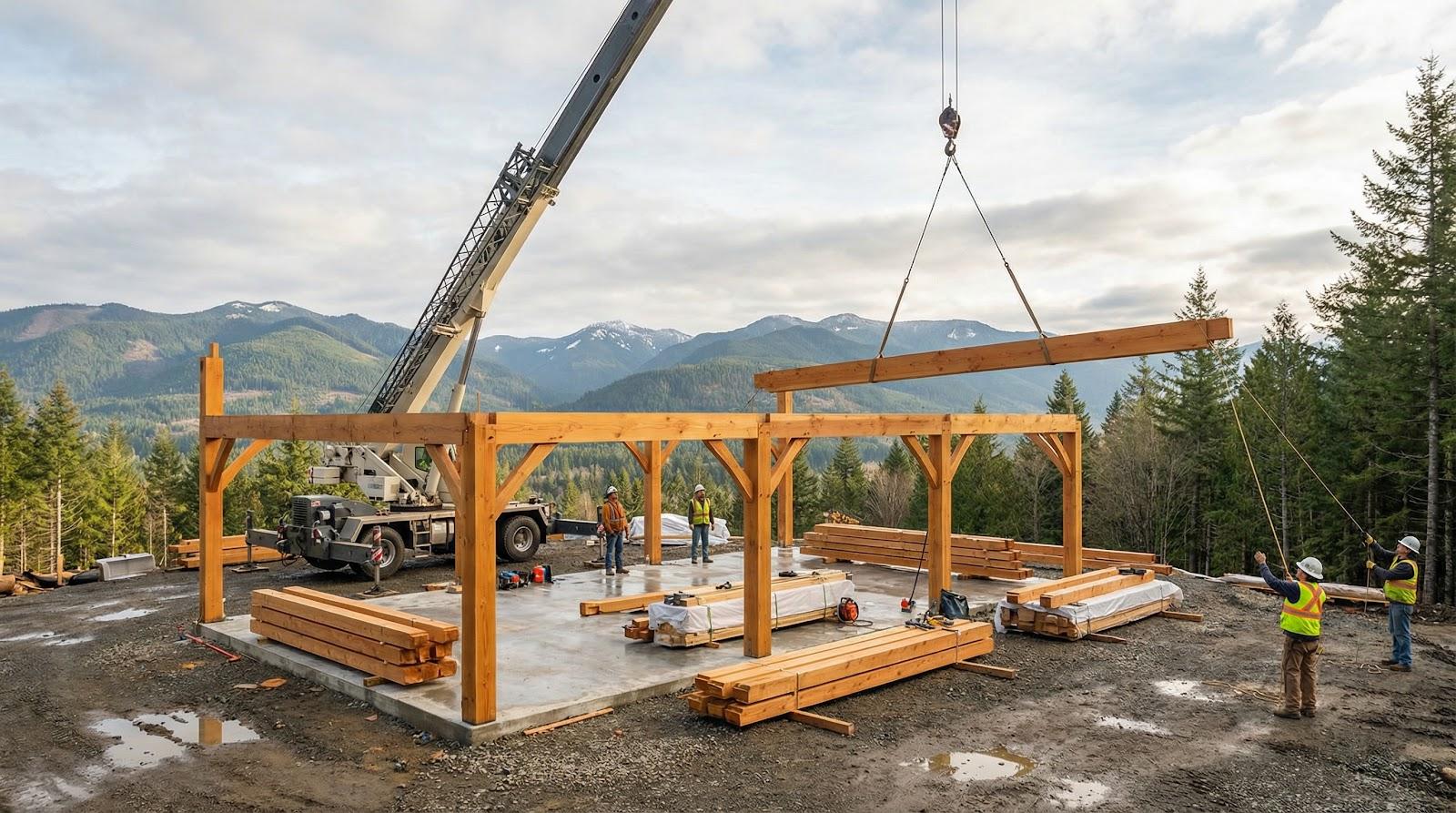
Washington rewards bold builders and punishes the unprepared. Rain, seismic activity, and uneven terrain test every nail. That’s why timber-frame kits now dot sites from Spokane to the San Juans.
Each kit starts in a climate-controlled shop where CNC machines cut every mortise and tenon to millimeter accuracy. When the truck reaches your land, the frame is ready to dry-fit. Crews lift, fit, and tighten the skeleton in days, often three to five, instead of months. Faster assembly trims labor costs and keeps your investment out of the drizzle.
Speed is only half the appeal. Big Douglas-fir posts create clear spans without interior load-bearing walls, delivering the vaulted great room buyers crave. Wrap the frame with structural insulated panels and the shell locks in heat like a thermos, meeting Washington’s 2026 energy code with room to spare.
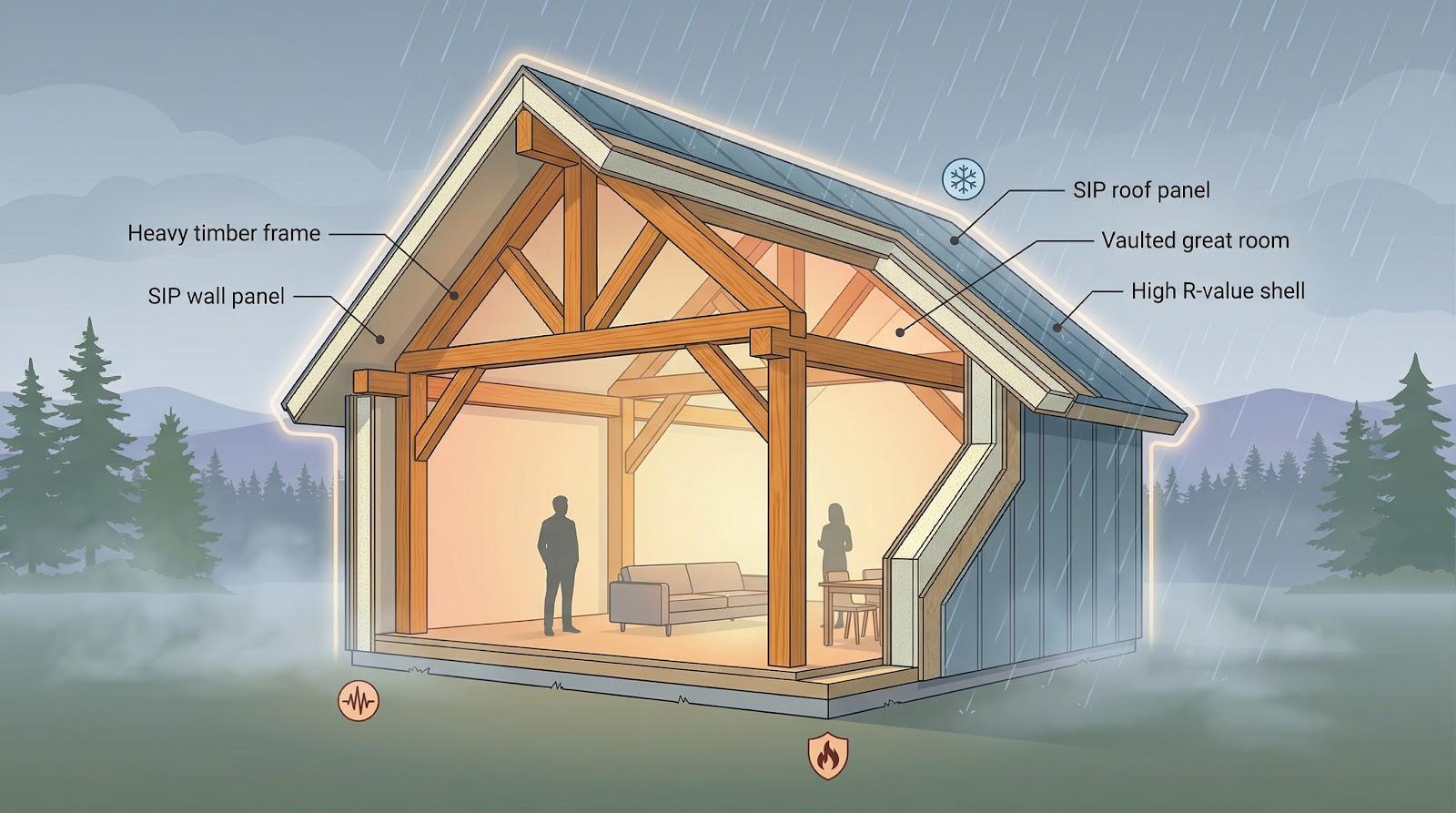
Durability builds confidence. Heavy timbers char slowly in a fire and flex under earthquakes, easing concerns for inspectors and insurers. Choosing certified Douglas-fir or reclaimed cedar also fits the state’s eco-first mindset.
A kit still needs a foundation, utilities, and finishes, yet starting with an engineered skeleton solves the hardest step first. You control quality up front, then personalize the interior on your schedule. In a market where carpenters are booked a year out, that head start is priceless.
Simply put, timber-frame kits turn Washington’s challenges into advantages. They help us build faster, stronger, and greener without giving up the view that drew us to the land in the first place.
Top timber-frame kit providers serving Washington
Choosing the right partner is half the battle. A solid kit firm delivers engineered plans that clear Washington’s code office, ships timbers on schedule, and stays available long after the last peg is tapped home.
Hamill Creek Timber Homes: custom craftsmanship with a Pacific-Northwest soul
Hamill Creek works just north of the border in British Columbia, yet its crews cross into Washington almost weekly. They mill Douglas-fir, cedar, or spruce in their shop, test-fit every joint, then arrive on site to raise the frame. On-site assembly is baked into the price, so you are not left scrambling to book a crane crew.
Hamill Creek Timber Homes website screenshot for Washington timber frame kits
Fabricating the frame as a prefab kit slashes on-site labor and trims material waste, according to Hamill Creek’s breakdown of timber frame prefab homes. Thanks to those efficiencies, their timber packages land between $60 and $90 per square foot for design, engineering, hardware, and frame raising. Most clients add structural insulated panels for energy code compliance, then hire a local general contractor for finishes.
Why builders like them: precision joinery, sustainable wood, and a willingness to tweak every truss until it frames your view. Why they may not fit every budget: up-front costs sit in the premium tier and lead times stretch if you want intricate custom work.
Barn Pros: home-ready barns for Washington’s backroads
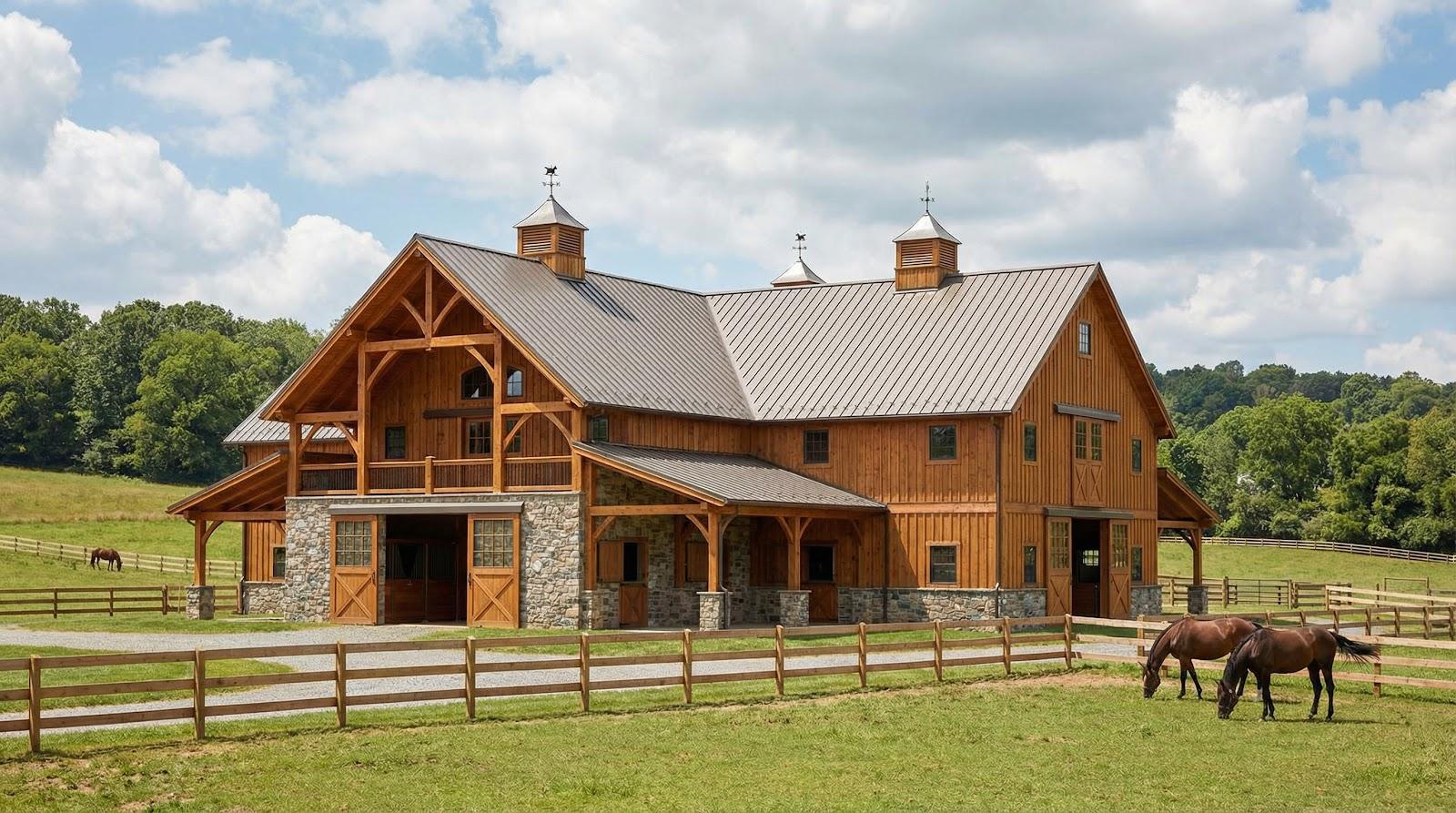
Drive a rural highway east of Monroe and you will spot more than one Barn Pros structure rising from pastureland. The company began with equestrian barns, then adapted those heritage forms into full-time homes.
Barn Pros barn home kits website screenshot for rural Washington builds
Kits arrive as bundled posts, beams, siding, and a roof package that locks up fast. Because Barn Pros keeps popular models in steady production, lead times stay shorter than bespoke outfits. That speed appeals to buyers who need animals—or family—under cover before winter rain.
Expect rustic charm out of the crate: gambrel roofs, lofts, and generous overhangs ready for summer string lights. Interiors remain blank slates. Many owners finish with modern kitchens and polished concrete floors for a farm-meets-city look.
The trade-off is flexibility. Walls and window placements follow the preset kit more closely than a custom frame. Heavy changes add cost and delay.
DC Structures: big catalog, code-ready plans
If you want choice, DC Structures hands you a catalog thick enough for Sunday reading. Modern cabins, barndominiums, lodge homes—each design comes pre-engineered and ready to adjust for your county’s snow or seismic zone.
Founded in Oregon, the firm knows Pacific Northwest terrain by heart. Their engineers adapt drawings to your site, then stamp the plans for permit submission. Fewer red-ink corrections mean a smoother sprint to the first inspection.
DC ships more than timbers. Your pallet includes siding, roof sheathing, and detailed assembly manuals. Many Washington owners lean on the company’s partner-builder network for a turnkey shell, then bring in local trades for finishes.
The catalog approach has limits. True custom layouts add design fees, and sheer option overload can stall decision-makers.
Lindal Cedar Homes: Northwest icon with a modern edge
Lindal has shipped cedar post-and-beam kits from Seattle since 1945. Decades of feedback from rainy Puget Sound sites flow into every new design.
Order a Lindal package and you get more than a skeleton. It arrives with engineered glulam timbers, cedar siding, premium windows, and tongue-and-groove ceilings that glow warm. Independent dealers across the state handle site visits, tweak floor plans, and guide you through permits—a concierge level of service rare in the kit world.
Style leans Northwest contemporary: low-sloped roofs, glass walls, and deep overhangs that frame mountain views while shielding decks from drizzle. Those flourishes and high-end materials push Lindal into the luxury bracket. Many owners treat the brand’s seventy-plus-year resale record as insurance against market swings.
Tamlin Timber Frame Homes: cross-border support, local know-how
Tamlin sits just outside Vancouver, yet its sales team can quote snow loads in Leavenworth without checking a chart. After thirty years shipping kits south, they know our counties as well as their own.
A typical package wraps a heavy-timber skeleton in pre-cut wall panels, weather barrier, windows, exterior doors, and a standing-seam roof. By the time the trucks leave, you have a locked-up shell ready for interior trades. That completeness shortens the schedule and helps lenders see a clear appraisal path.
Customer service is the real differentiator. Designers tune plans for your lot, logistics staff shepherd the load through the Blaine crossing, and coordinators prepare a permit binder your county reviewer can scan in one sitting.
PrecisionCraft Timber Homes: bespoke luxury without ceilings
Think of PrecisionCraft as an architecture firm that owns a timber-frame shop. Every project starts with a blank canvas, a site visit, and an architect sketching lines to capture your sunrise or lake reflection. Only after the drawings sing does the Idaho crew cut the first beam.
That design-first process unlocks floor plans no catalog can match—double-height glass towers, hybrid log-and-timber wings, or ski-lodge porte cochères. It also explains the price. Clients often invest $400 to $800 per finished square foot, a range that includes mountain-grade foundations and artisan stonework.
Choose this route when you want neighbors to slow the car and ask, “Who built that?” and when your budget and patience can answer confidently.
Blue Ox Timber Frames: handcrafted art for the wood aficionado
Step inside a Blue Ox frame and you feel the chisel marks. The Minnesota shop refuses mass production; every post is hand-squared, every brace curved by eye. Crews have flown to Orcas Island and Yakima alike, raising oak and reclaimed heart-pine skeletons that look lifted from a heritage farmstead.
There is no catalog. Instead, you trade sketches with craftsmen, swap wood samples, and settle on chamfers or walnut pegs. Once the design sings, Blue Ox numbers each joint, loads the truck, and meets your crane on site. A small crew lifts the frame in a few days, then heads home, leaving your builder to wrap and finish the dream.
Shipping heavy timbers across half the country costs real money, and Washington engineers must review the plans to satisfy seismic rules. Yet for owners who want a story in every beam, Blue Ox delivers something no production line can: soul.
The real cost of building a kit home in Washington
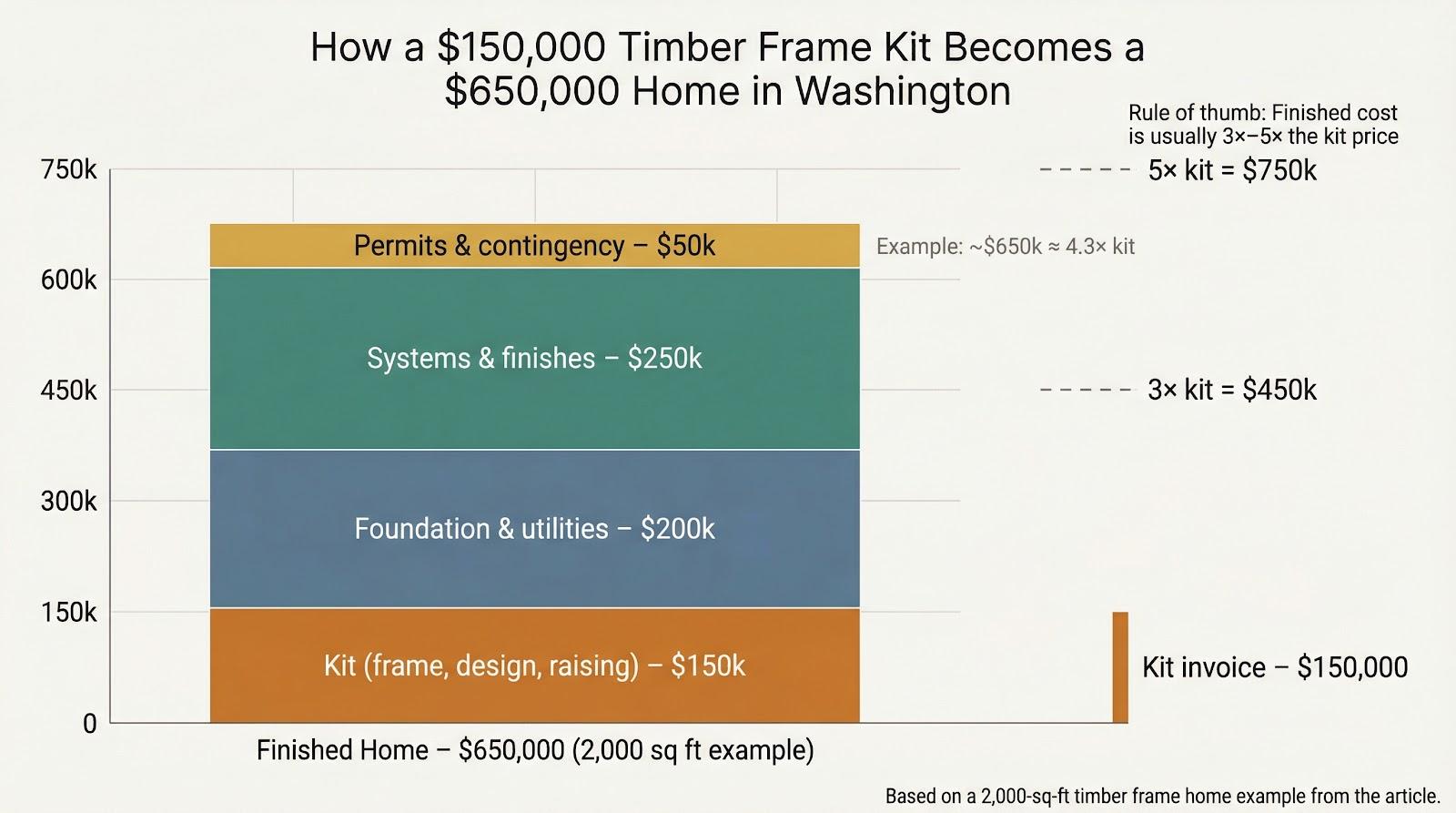
Sticker price on a timber-frame kit covers only a third of the bill. You still add every yard of concrete, each permit fee, and every finish upgrade before the real budget takes shape.
Across the state, finished costs usually land between $380 and $650 per square foot, or roughly three to five times the kit’s invoice total (PrefabReview.com). That multiplier covers site work, trades, finishes, and a contingency for weather or supply hiccups.
Here is a realistic scenario. You order a 2,000-square-foot frame for $150,000. Foundation, utilities, and rough carpentry add about $200,000. Mechanical systems and interior finishes pile on another $250,000. Add permits, engineering, and a 10 percent rainy-day fund, and the all-in tab reaches $650,000, which sits at the high end of the range above.
Kit completeness can swing the math. A bare-bones frame forces you to source windows, siding, and insulation, pushing total cost toward the five-times end. Highly inclusive shells, like those from Tamlin or Lindal, ship with roof, envelope, and doors, keeping spend closer to three times the kit price.
Location matters too. Labor rates in King County can double what you would pay east of the Cascades, while remote sites add freight and crane surcharges. Smart owners collect quotes from local trades before locking a kit order, then pad the budget by 10 to 15 percent so surprises do not halt progress.
One line item that rarely shocks is the frame itself. Hamill Creek posts a clear $60 to $90 per square foot for its timber packages, design and on-site raising included (HamillCreek.com). Knowing that fixed anchor lets you build a realistic pro-forma and keeps loan officers calm.
Add it up and a kit home is not a bargain-bin project. What you gain is price clarity early, fewer overruns later, and a structure built to last generations.
Codes, permits, and engineering: building by the Washington rulebook
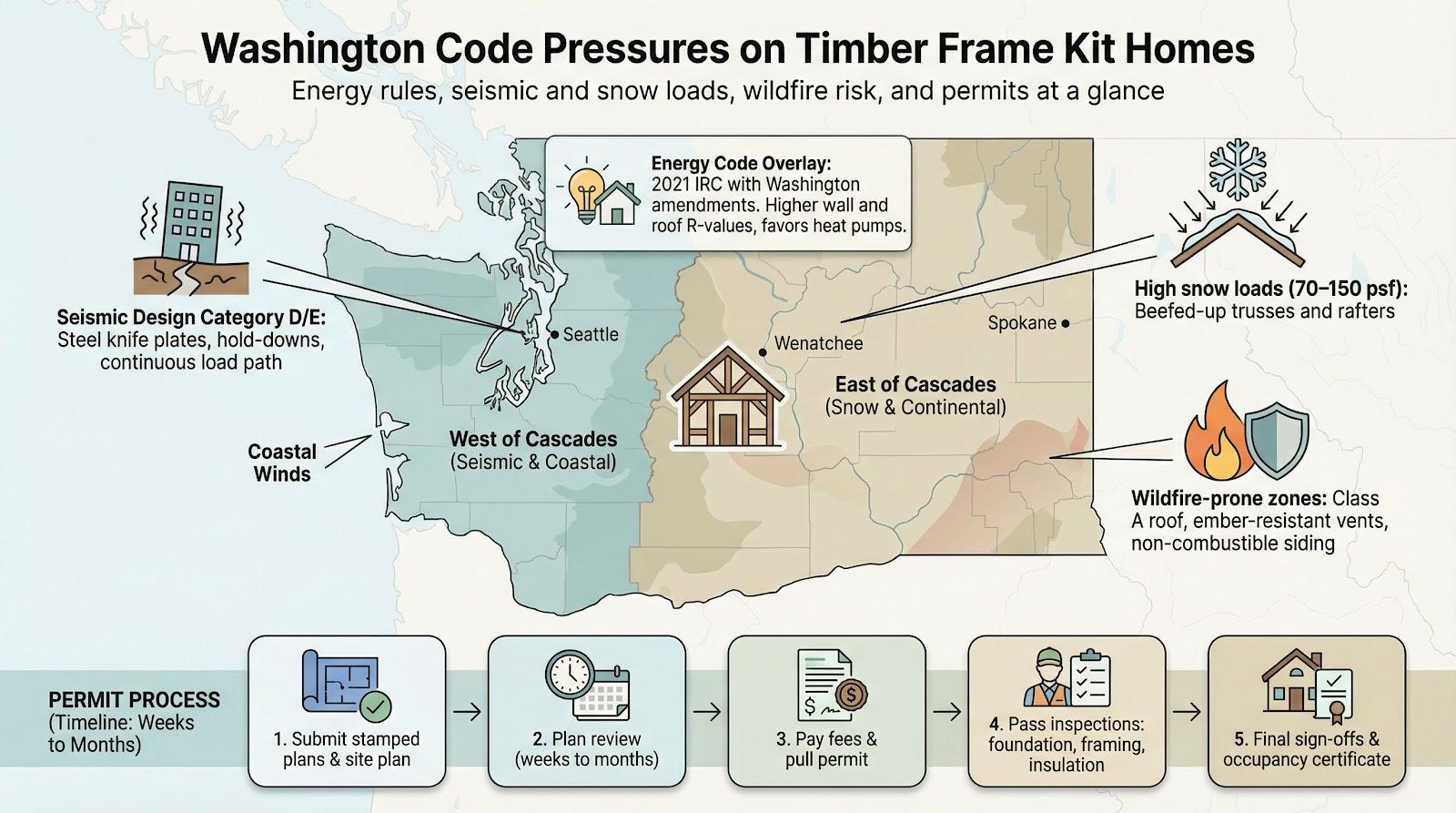
Washington enforces the 2021 International Residential Code with state amendments that took effect on March 15, 2024. The update raises wall R-values, requires continuous roof insulation, and favors electric heat pumps over gas furnaces.
Seismic loads come next. Western counties sit in Design Category D or E, so inspectors look for steel knife plates, hold-downs, and a continuous load path from ridge to footing. Heavy timber helps because it flexes without snapping, yet most engineers specify hidden steel brackets at key joints. Budget an extra few thousand dollars for that hardware if it is not already in the kit.
Snow rules flip the script east of the Cascades. Spokane, Kittitas, and Chelan counties require roof systems that handle 70- to 150-pound snow loads. Kit sellers can beef up trusses or double rafters for a modest fee, but only when you provide parcel elevation and the county snow table up front.
Wildfire codes remain a patchwork. While the state has not adopted a blanket WUI standard, many rural departments call for Class A roofing, ember-resistant vents, and non-combustible siding within hazard zones. Upgrading to metal roofing or fiber-cement cladding often cuts insurance premiums and eases lender concerns.
Permitting flows through five predictable steps:
- Submit stamped plans, energy worksheets, and a site plan.
- Wait through plan review—three weeks in rural Ferry County, six months in urban King.
- Pay impact fees and pull the building permit.
- Pass foundation, framing, and insulation inspections.
- Collect the occupancy certificate after final plumbing, electrical, and ventilation sign-offs.
Ask one question before you place a deposit: “Does the kit ship with Washington-licensed engineering?” A yes today removes weeks of back-and-forth later and keeps your timeline intact.
Financing and scheduling your build
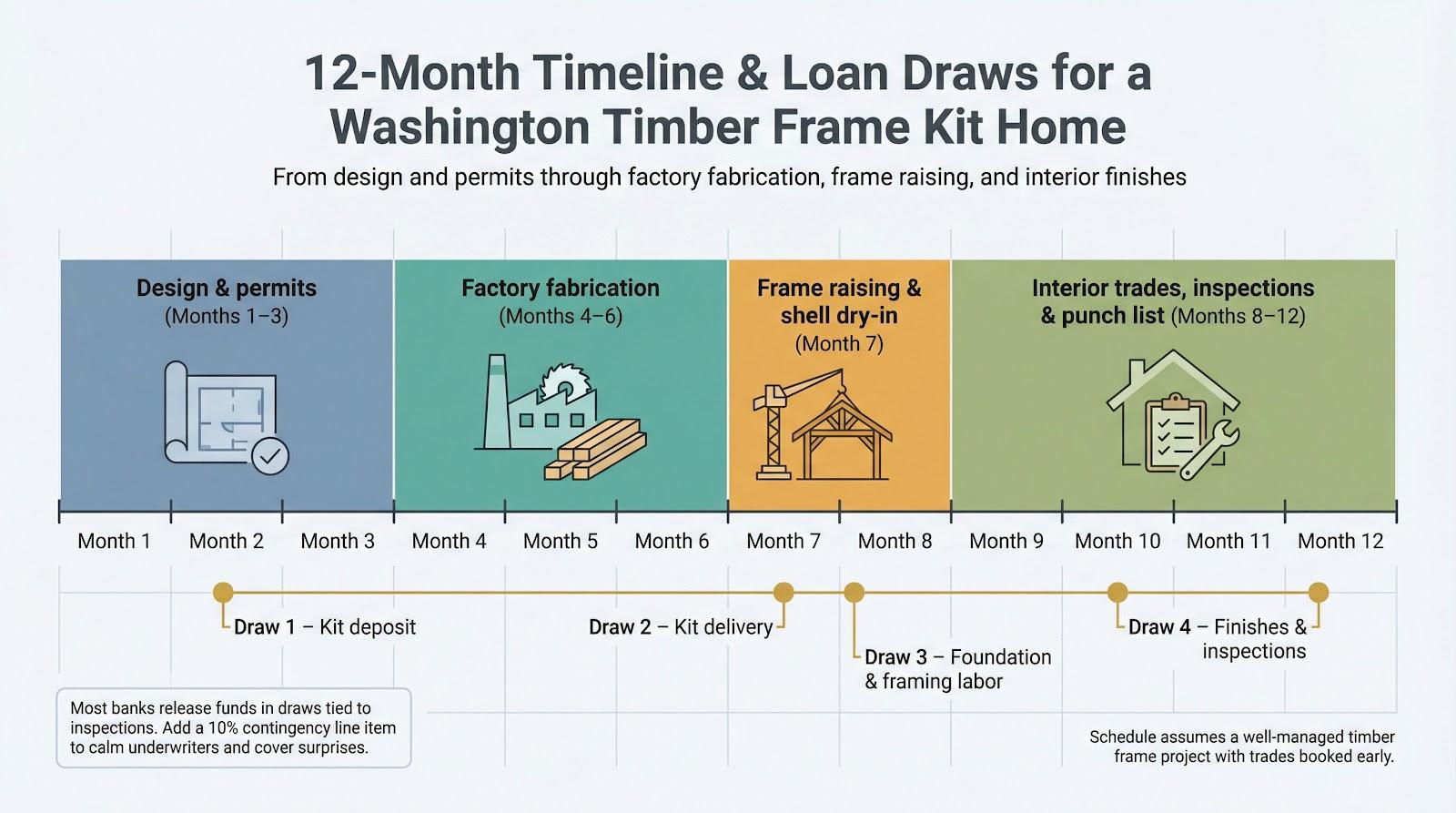
Timber-frame projects win lenders over when they see a tidy budget and a fixed-price kit contract. Walk into the construction-loan meeting with three documents:
- The kit quote.
- A line-item budget for everything else.
- A schedule that shows cash flowing out in logical stages.
Most banks release funds in draws. Tie the first draw to the kit deposit, a second to delivery, and later draws to foundation, framing labor, and finishes. Each release follows an inspection, so money arrives before suppliers demand payment. Add a 10 percent contingency line; it calms underwriters and protects you from lumber spikes or weather delays.
Now the calendar. From signed contract to move-in, even a modest kit stretches 12 months:
- Months 1–3: design tweaks and permit review.
- Months 4–6: factory fabrication, eight to sixteen weeks depending on shop backlog.
- Month 7: frame raising and shell dry-in, often finished inside four weeks.
- Months 8–12: interior trades, inspections, and punch-list cleanup.
Book electricians, plumbers, and drywall crews the day you order the kit. Stagger deliveries to keep the site clear, and aim to set trusses before November rain or February snow. Finance early, lock your trades, and the kit’s speed advantage stays intact through the last walkthrough.
Conclusion
Timber-frame kits offer Washington builders a faster, stronger, and energy-smart path to a custom home. By selecting a reputable kit provider, planning for full project costs, and navigating state codes early, you can raise a structure that stands for generations while keeping budgets predictable.
Frequently asked questions
Are timber-frame kit homes legal in Washington?
Yes. Counties review kit plans the same way they review any stick-built house. As long as your drawings carry a Washington engineer’s stamp and meet current energy and seismic rules, permits move forward. Reputable kit firms include those calculations before you submit.
What will the finished home cost?
Expect the turnkey price to land three to five times the kit invoice. A $120,000 frame often finishes between $360,000 and $600,000, depending on labor rates and finish level. The cost section above shows where each dollar goes.
How long does the project take from start to keys?
Plan on 12 months: three for design and permits, three for factory fabrication, one for frame raising and shell dry-in, and five for interior trades. Large or highly customized homes can reach 18 months, while tightly managed small builds have finished in nine.
Can I raise the frame myself to save money?
Only if you own rigging gear and have friends who treat barn-raising as recreation. Most owners hire the kit crew for the heavy lifting, then act as general contractor for interior work. That hybrid model trims labor while keeping structural assembly in expert hands.
What maintenance comes after move-in?
Heavy timbers stay dry and stable, so upkeep focuses on exterior finishes. Reseal cedar siding every five to seven years, clear gutters each fall, and budget for a new roof about every 30 years. The posts themselves char slowly in a fire and flex during small quakes, so the structure ages gracefully.
