

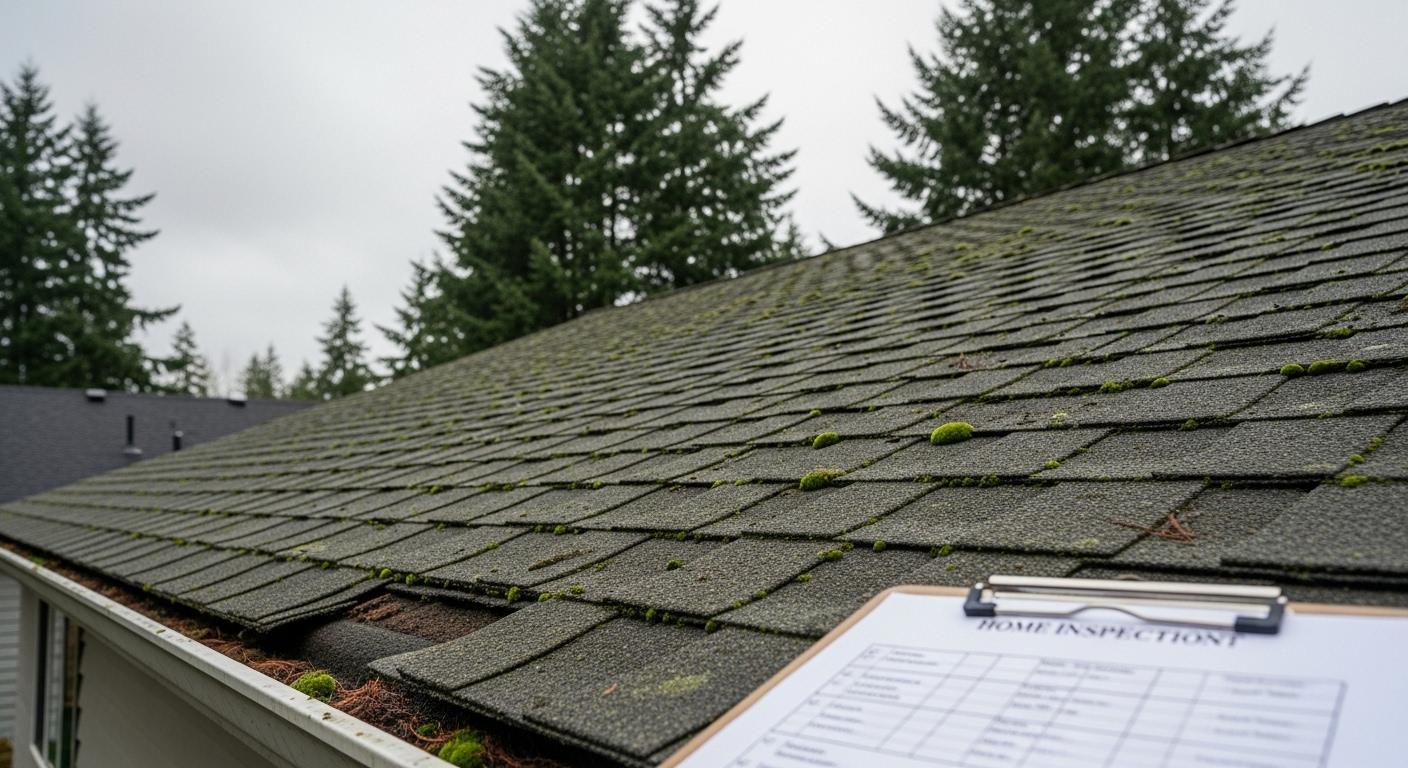
You are three weeks from closing on your dream home in Vancouver, WA. The inspection report comes back, and before the inspector even mentions the furnace, the plumbing, or the electrical panel, there it is on page one: roof moss and biological growth.
In Clark County, this is not a rare finding. It is the single most common exterior deficiency on home inspection reports, and it derails more real estate transactions than most buyers and sellers realize.
Why Moss Tops Every Clark County Inspection Report
Clark County averages over 40 inches of rain per year. Pair that with mild winters, mature tree canopy, and the shaded lots that define neighborhoods from Salmon Creek to Camas, and you have ideal conditions for moss, algae, and lichen to colonize roofs year-round.
Home inspectors are trained to flag biological growth because it is not cosmetic. Moss does structural damage:
- Lifts shingle edges as root systems work underneath, creating entry points for water
- Traps moisture against the roof deck, accelerating rot in the sheathing below
- Clogs valleys and flashing joints, redirecting water where it should not go
- Adds weight to the roof surface, especially when saturated after rain
An inspector who sees moss does not see a dirty roof. They see a liability, and they write it up accordingly.
What Happens When Moss Shows Up on an Inspection
Here is how the scenario plays out in most Clark County transactions:
If you are the seller:
- The buyer’s agent requests a roof cleaning or credits toward one
- If the moss is advanced, the buyer may request a full roof inspection by a licensed roofer, which often uncovers additional damage
- Typical negotiation: $3,000 to $8,000 in credits or price reductions
- Worst case: the buyer walks, and you relist with a known deficiency on the disclosure
If you are the buyer:
- Your lender may require the roof issue to be resolved before funding the loan
- FHA and VA loans are especially strict about roof condition; moss damage can delay or kill financing
- You inherit whatever damage has already occurred beneath those shingle edges
Either way, the moss costs someone money. The only question is how much.
The Real Cost Breakdown
Here is what Clark County homeowners are looking at:
|
Action |
Typical Cost |
|
Professional roof cleaning |
$350 to $600 |
|
Roof repair (water damage from moss) |
$1,500 to $5,000 |
|
Full roof replacement |
$12,000 to $25,000 |
|
Sale price reduction from inspection findings |
$3,000 to $8,000 |
|
Lost buyer (back on market) |
Weeks of carrying costs + stigma |
A $350 to $600 cleaning eliminates the problem entirely. Every other line on that table represents what happens when you wait.
The Timing Problem Most Homeowners Miss
Moss in Clark County follows a predictable cycle:
- Fall and winter: Moss spreads aggressively in wet, cool conditions
- Late winter (February-March): Growth accelerates as days lengthen and rain continues
- Spring: Moss is fully established and root systems have penetrated shingle layers
- Summer: Moss goes dormant but the damage it caused remains
Right now, in late winter, is the critical window. Moss that gets cleaned before spring never gets the chance to do its worst damage. Homeowners who wait until they are listing their home in May or June are cleaning moss that has already compromised their shingles for months.
What Inspectors Actually Write
Home inspectors in Washington State follow Standards of Practice that require them to report on roof coverings, flashing, and drainage. When they encounter moss, the language in the report typically includes:
- “Biological growth observed on roof surface. Recommend cleaning by qualified professional and evaluation for underlying damage.”
- “Moss accumulation in valleys and along shingle edges. Monitor for moisture intrusion.”
- “Recommend professional roof cleaning in Vancouver WA to prevent further deterioration.”
That language triggers buyer concern. Buyer concern triggers renegotiation. Renegotiation costs money.
What Professional Roof Cleaning Actually Involves
Professional moss removal is not someone with a pressure washer on your roof. In fact, pressure washing damages asphalt shingles and voids most manufacturer warranties.
Proper roof cleaning in Clark County involves:
- Low-pressure soft wash treatment that kills moss at the root without damaging shingles
- Targeted application of moss-inhibiting solutions that prevent regrowth for 12 to 18 months
- Debris removal from valleys, flashing, and gutters where organic buildup causes water damming
- Visual inspection of shingle condition during the cleaning process
The entire process takes a few hours for most residential roofs. There is no interior disruption, no scaffolding, and no multi-day project.
Who Needs to Act Now
Selling this spring or summer? Get the roof cleaned before you list. An inspection report with zero roof findings removes a major negotiation lever from the buyer’s side.
Staying in your home? February and March cleaning prevents the spring growth surge that causes the most damage. You protect your roof for the full year ahead.
Just bought a home? If the previous owner deferred maintenance, inherited moss is actively damaging your investment right now.
Do Not Let a $350 Problem Become a $15,000 Problem
Moss on a Clark County roof is not a matter of curb appeal. It is a structural issue that home inspectors are trained and required to flag. It affects financing, negotiations, and long-term roof integrity.
The fix is straightforward and affordable. The consequences of ignoring it are not.
Schedule your roof assessment today. All Seasons Cleaning Services provides professional roof cleaning throughout Vancouver WA and Clark County, with the expertise to handle every roof type in the Pacific Northwest climate.
Call now, get your roof cleaned, and take the biggest item off your next inspection report before it costs you thousands.
