

Choosing the right finish for your cabinets can make or break your kitchen’s look. I’ve helped countless homeowners figure out satin or semi gloss for cabinets, and I know how confusing it gets. The wrong choice means redoing everything later.
This guide covers both finishes in detail. You’ll learn how each one performs in real kitchens. I’ll walk you through appearance, durability, cleaning, and maintenance. We’ll also compare them side by side so you can pick what works for your space.
I’ve tested both finishes in my own home and client projects. The information here comes from actual experience, not guesswork.
Let’s find your perfect cabinet finish.
Understanding Paint Sheen
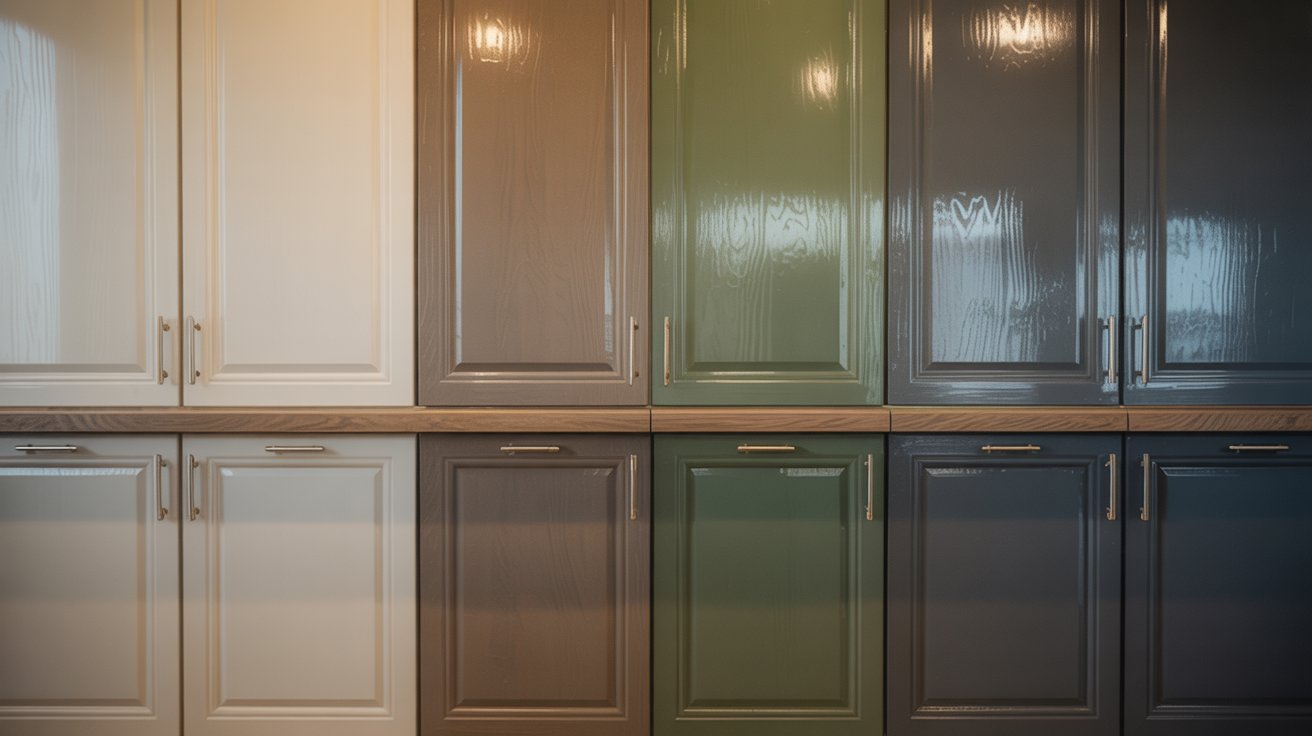
Paint sheen changes how your cabinets look and perform. It’s about more than just shine. The sheen level affects cleaning, durability, and how well your cabinets hide flaws.
Paint sheen measures how much light reflects off a surface. Low sheen finishes absorb light and look flat. High sheen finishes bounce light back and create shine. The sheen comes from how paint particles are arranged. Glossier paints have smoother surfaces that reflect more light.
Higher sheen means more light reflection. This makes colors look brighter and richer. It also highlights every scratch and dent. Lower sheen hides imperfections better. Small dings and wear marks blend in more.
Cleaning gets easier with higher sheen. The smoother surface resists stains and wipes clean faster. But that same smoothness shows fingerprints more clearly.
Satin Finish for Cabinets
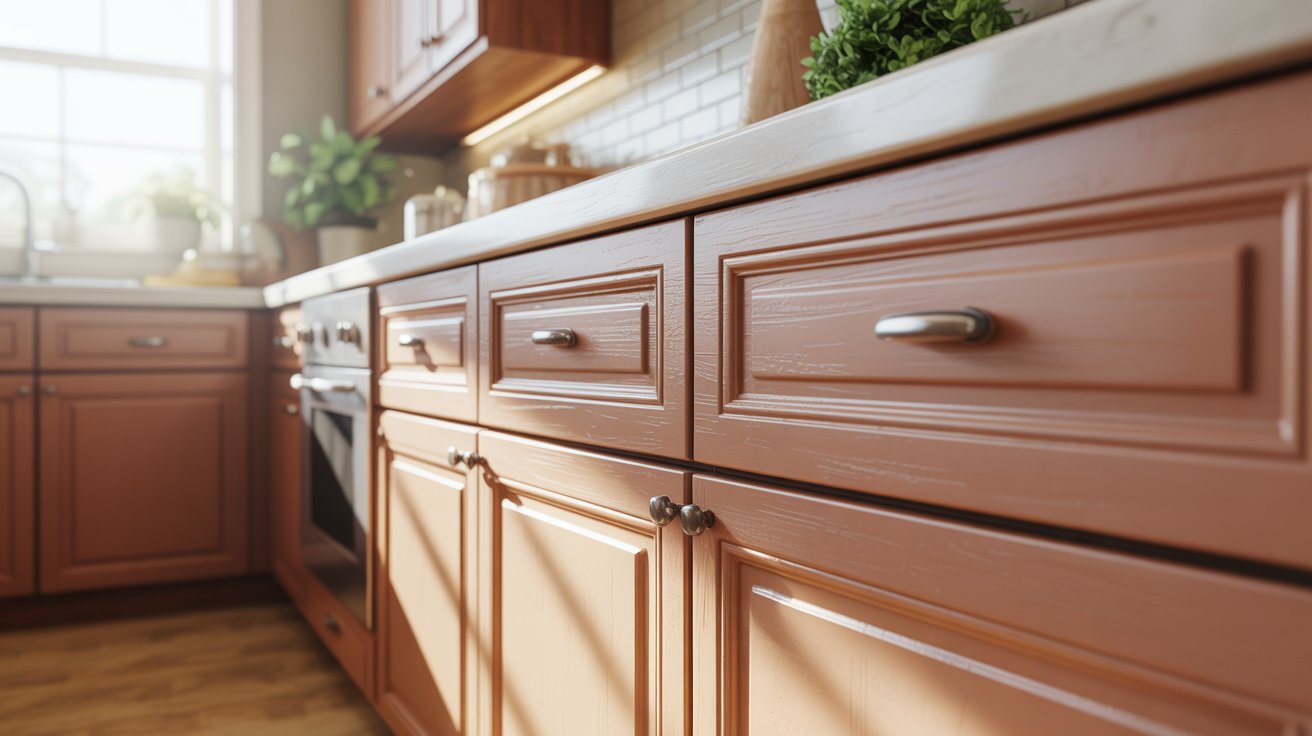
Satin sits in the middle of the sheen spectrum. It offers a soft glow without heavy shine. Many homeowners prefer it for everyday kitchens.
Appearance of Satin Cabinets
Satin creates a subtle glow that catches light gently. The finish looks smooth and soft to the eye. It’s less reflective than semi-gloss but not completely flat.
The look works well with natural light. It doesn’t create harsh reflections or glare. Your cabinets will have depth without looking shiny.
Colors appear true and even. The finish doesn’t amplify or dull the paint color. What you pick is what you get.
Pros and Cons of Satin Finish
| Pros | Cons |
| Moderate durability makes satin good for regular use. It holds up to normal kitchen activity without constant touch-ups. | Less shine for those wanting dramatic reflection. If you like glossy, polished looks, satin might feel too flat. |
| Easy to clean with just soap and water. Most kitchen messes wipe away without special products. | Can dull over time in high-touch areas. Cabinet handles and edges might lose their sheen after years of use. This happens faster with rough cleaning. |
| Conceals minor flaws in the cabinet surface. Small scratches and dings don’t show as much. This is great for older cabinets or busy families. | |
| Works with multiple design styles. Satin fits traditional, rustic, farmhouse, and transitional kitchens. It’s the most flexible finish option. |
Best Use Cases
High-traffic family kitchens benefit most from satin. Kids touching cabinets won’t leave obvious marks. The finish is forgiving.
Transitional, rustic, farmhouse, and traditional kitchens all look great with satin. The softer sheen matches these styles naturally.
Older cabinets with minor surface issues hide better under satin. You won’t need perfect prep work.
Maintenance Tips
- Clean with warm water and mild dish soap. Use a soft cloth or sponge. Avoid abrasive scrubbers that can wear down the finish.
- Stay away from harsh chemicals. Bleach and ammonia-based cleaners can damage satin paint over time.
- Touch up worn areas with matching paint. Feather the edges so new paint blends with old. Satin is easier to touch up than glossier finishes.
- Wipe up spills quickly. Don’t let grease or food sit on the surface. Even durable paint can stain if left too long.
Semi-Gloss Finish for Cabinets
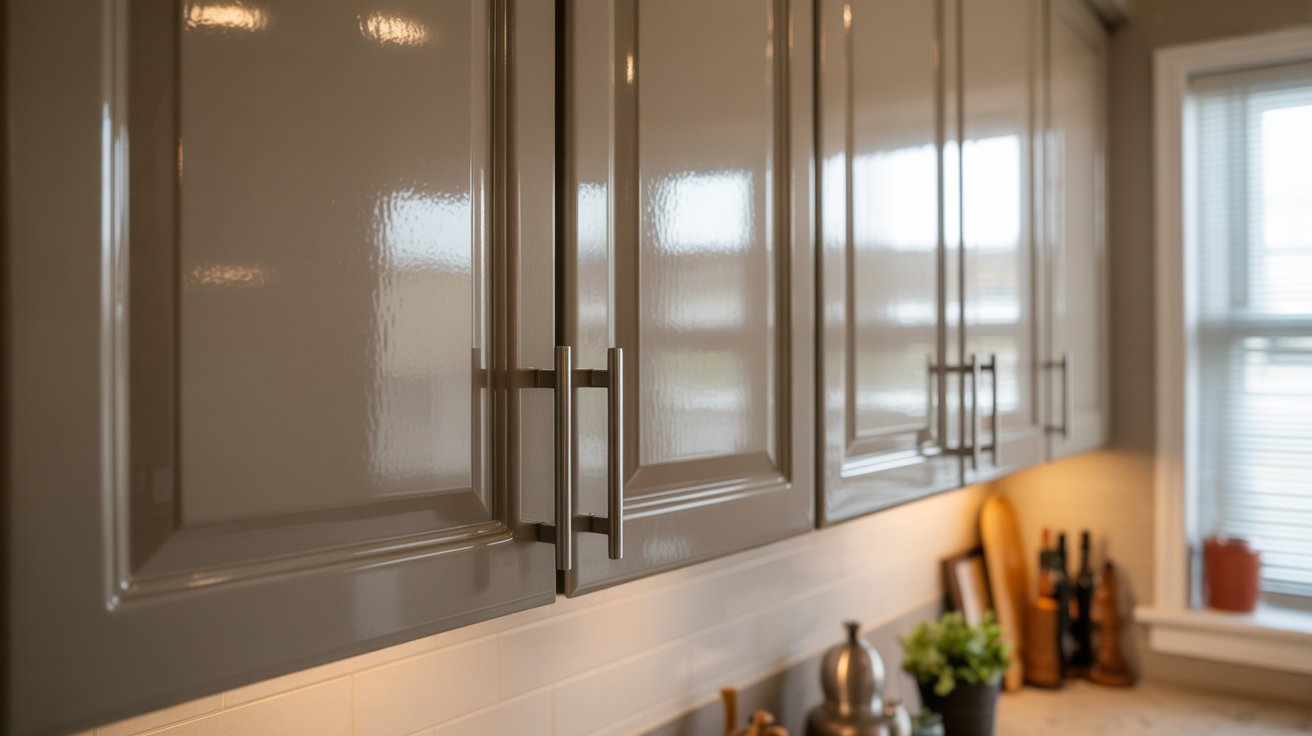
Semi-gloss brings serious shine to your kitchen. It’s the glossiest option most people use for cabinets. The finish is bold and reflects light strongly.
Appearance of Semi-Gloss Cabinets
Semi-gloss creates a shiny, reflective surface. Light bounces off it noticeably. Colors look more vibrant and intense.
The finish has a polished, high-end appearance. It makes cabinets look newer and more expensive. Some people say it looks almost wet.
Light fixtures and windows create visible reflections. This can brighten a dark kitchen or add drama to a light one.
Pros and Cons of Semi-Gloss Finish
| Pros | Cons |
| Highly durable and resistant to wear. Semi-gloss handles heavy use better than lower sheens. It lasts longer in busy kitchens. | Shows scratches, dents, and fingerprints. Every flaw is visible. The reflective surface makes imperfections obvious. |
| Moisture and stain resistant. The hard surface doesn’t absorb spills. Steam from cooking doesn’t penetrate as easily. | Requires careful surface prep and application. Your cabinets need to be perfectly smooth. Any bumps or rough patches will show. Painting takes more skill. |
| Easy to clean. A quick wipe removes most messes. The smooth finish doesn’t hold onto dirt. | |
| Highlights architectural details. If your cabinets have molding or raised panels, semi-gloss makes them pop. The light reflection emphasizes texture. |
Best Use Cases
Modern, minimalist, or high-end kitchens suit semi-gloss best. The sleek finish matches contemporary design.
Accent features or high-use areas benefit from the durability. Use semi-gloss on island cabinets or around the sink.
New cabinets with perfect surfaces look amazing in semi-gloss. The finish shows off quality construction.
Maintenance Tips
- Regular wiping with a microfiber cloth prevents buildup. Do this daily in heavy-use areas.
- Use mild cleaners only. A mix of water and gentle dish soap works well. Avoid anything abrasive.
- Touch-ups need careful application. The glossy surface makes patches obvious. Match the original paint exactly and use thin coats.
- Clean fingerprints often. Semi-gloss shows every touch. Keep a cleaning cloth handy.
Factors to Consider When Choosing a Finish
Multiple factors affect which finish works best. Think about your specific situation before deciding.
Kitchen Style & Design Theme
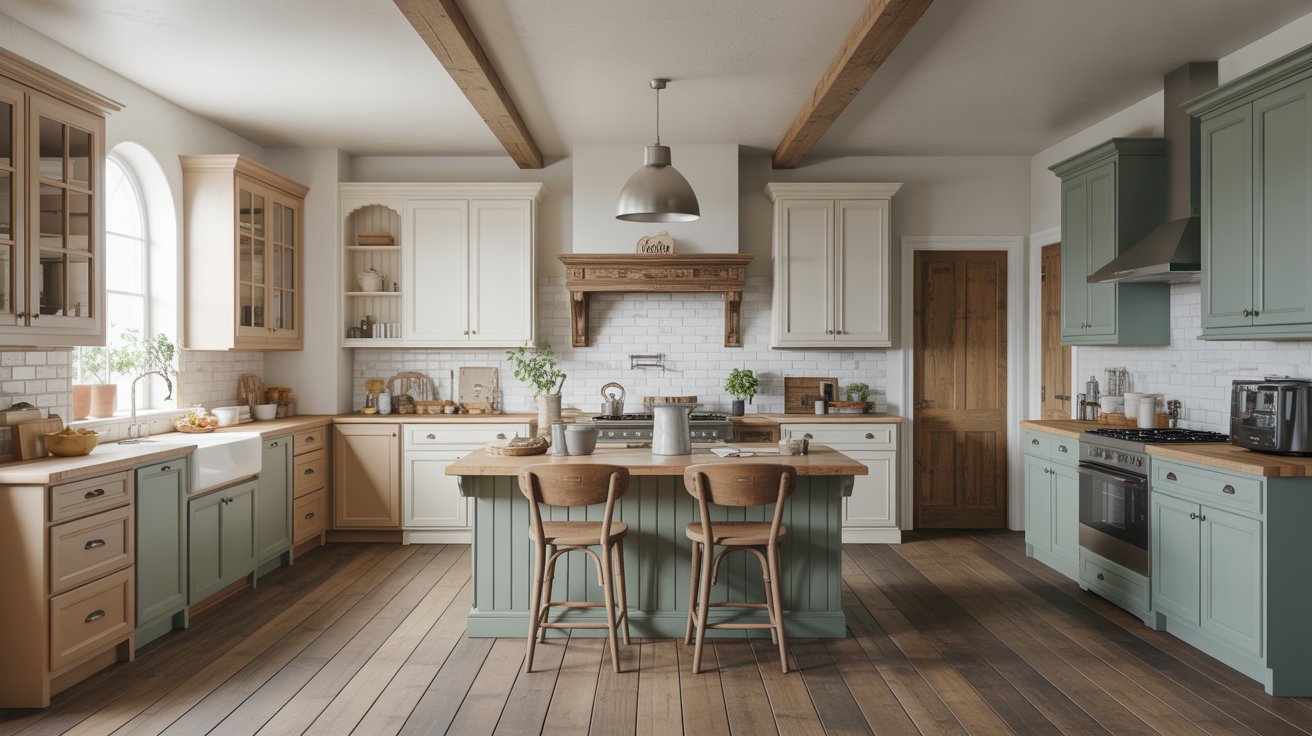
Traditional and rustic kitchens look better with satin. Modern and contemporary kitchens benefit from semi-gloss. Farmhouse kitchens can go either way based on your other finishes and personal taste.
Cabinet Material & Condition
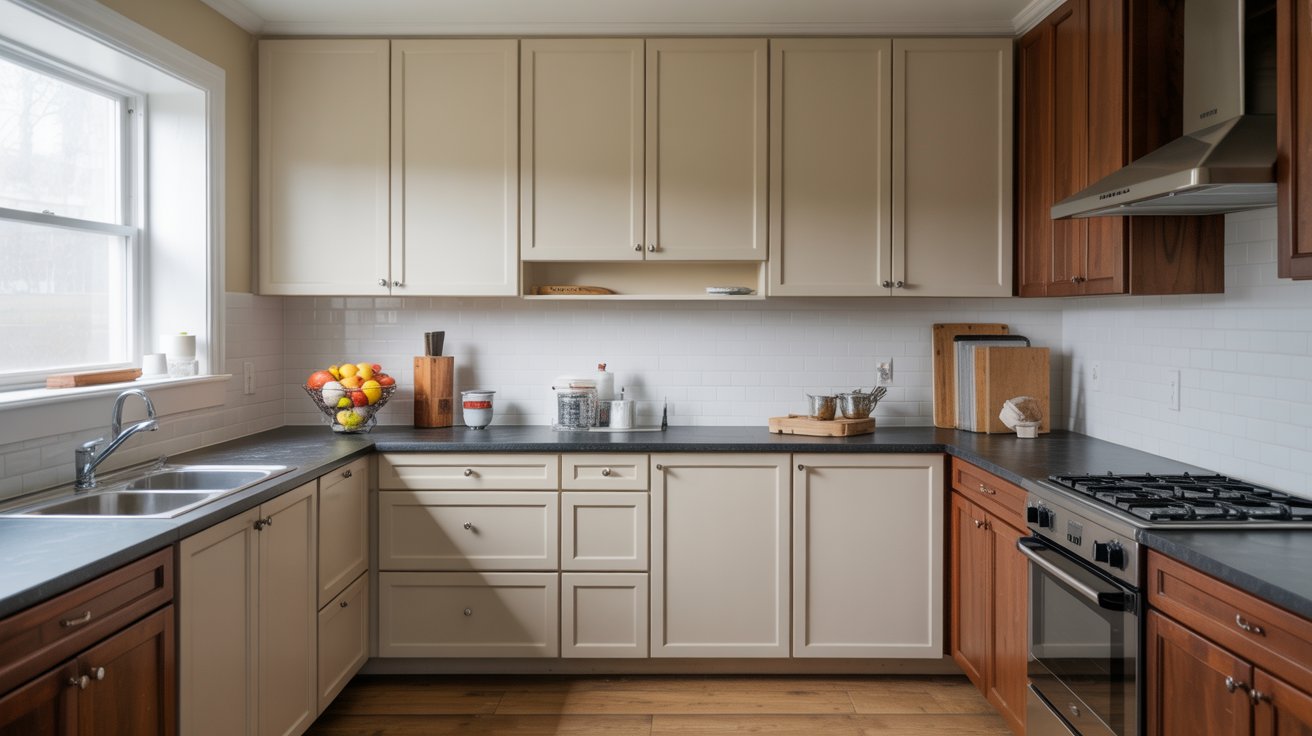
New cabinets with smooth surfaces can handle either finish. Older cabinets with minor wear need satin to hide small problems. Wood cabinets with visible grain work well with satin since semi-gloss might make the texture too prominent.
Lighting Conditions
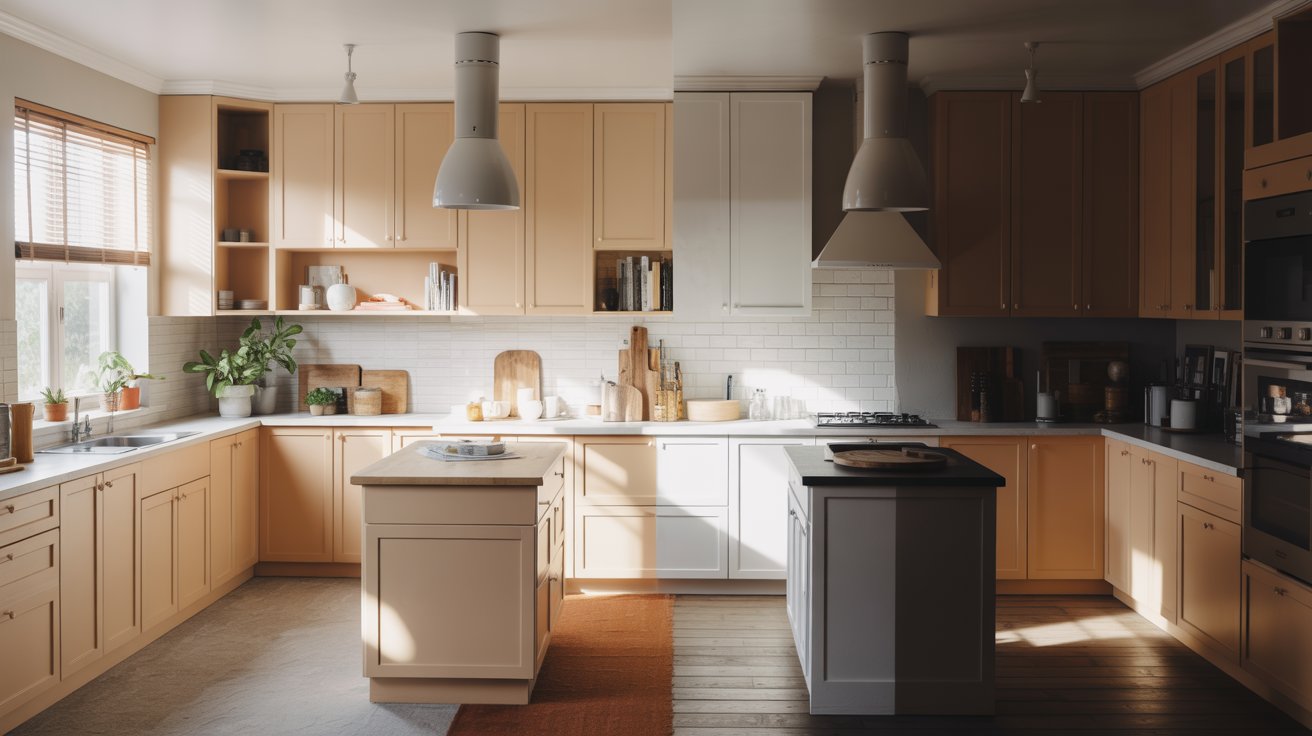
Kitchens with lots of natural light can handle semi-gloss. The extra reflection brightens the space. Darker kitchens also benefit from semi-gloss since the reflective surface bounces available light around. Average lighting works fine with either finish.
Lifestyle & Kitchen Usage
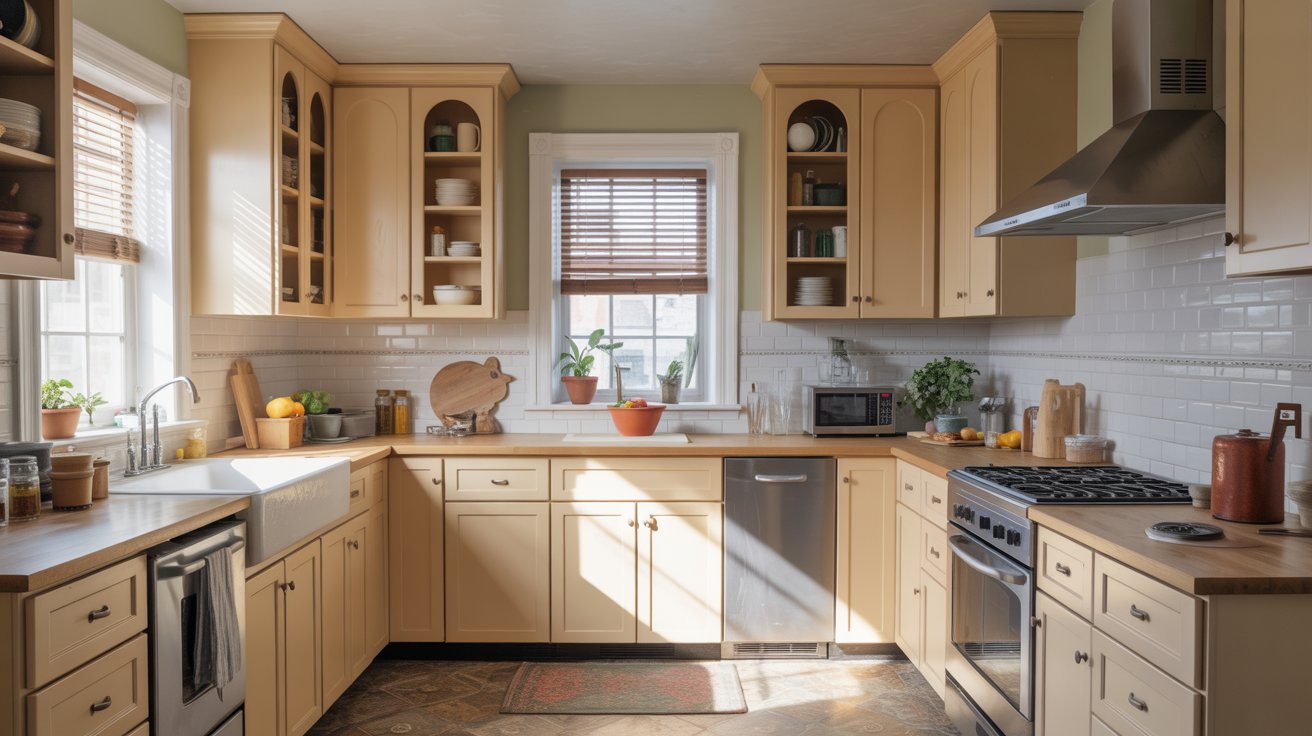
Families with young kids should pick satin since fingerprints and smudges show less. Heavy cooking means more moisture and grease, so semi-gloss resists both better. Light kitchen use makes either finish work.
Color Impact and Visual Preference
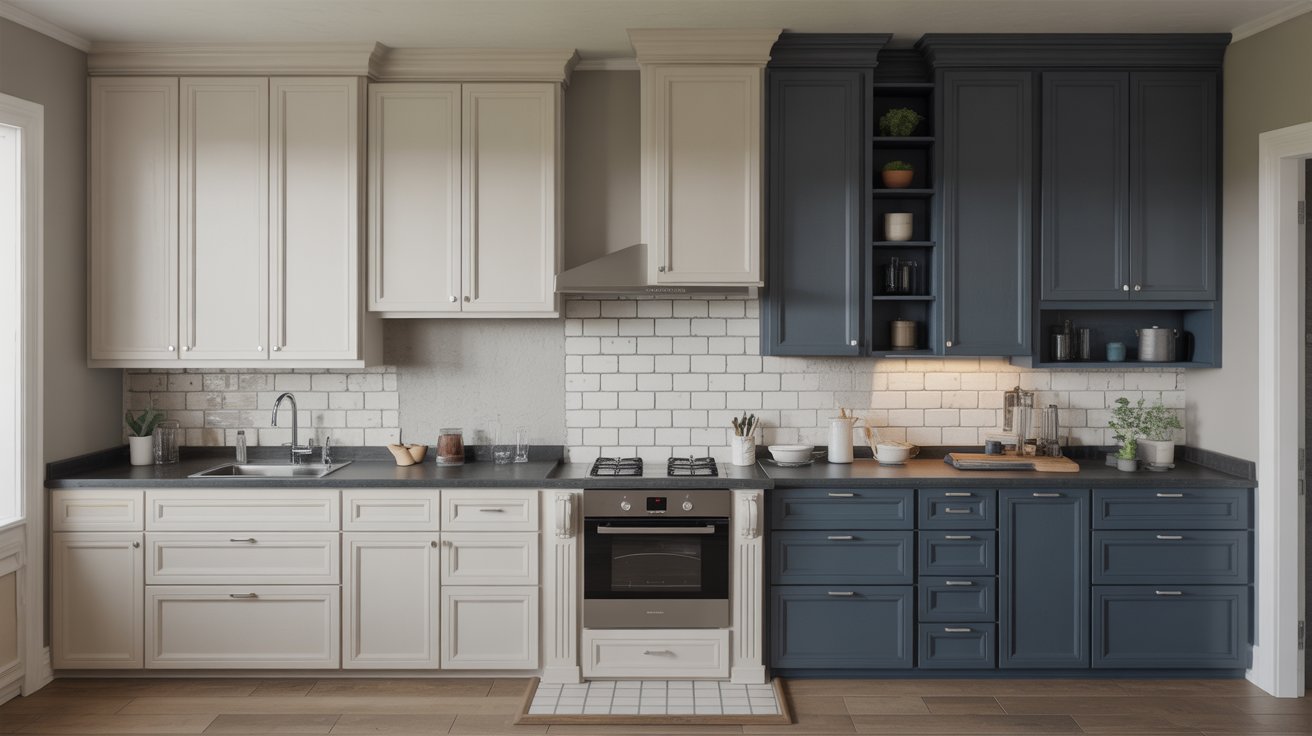
Dark colors look richer in semi-gloss. Light colors work well with both finishes. Bold colors can overwhelm in semi-gloss since the high shine amplifies intense hues. Satin tones them down slightly.
Budget and DIY Considerations
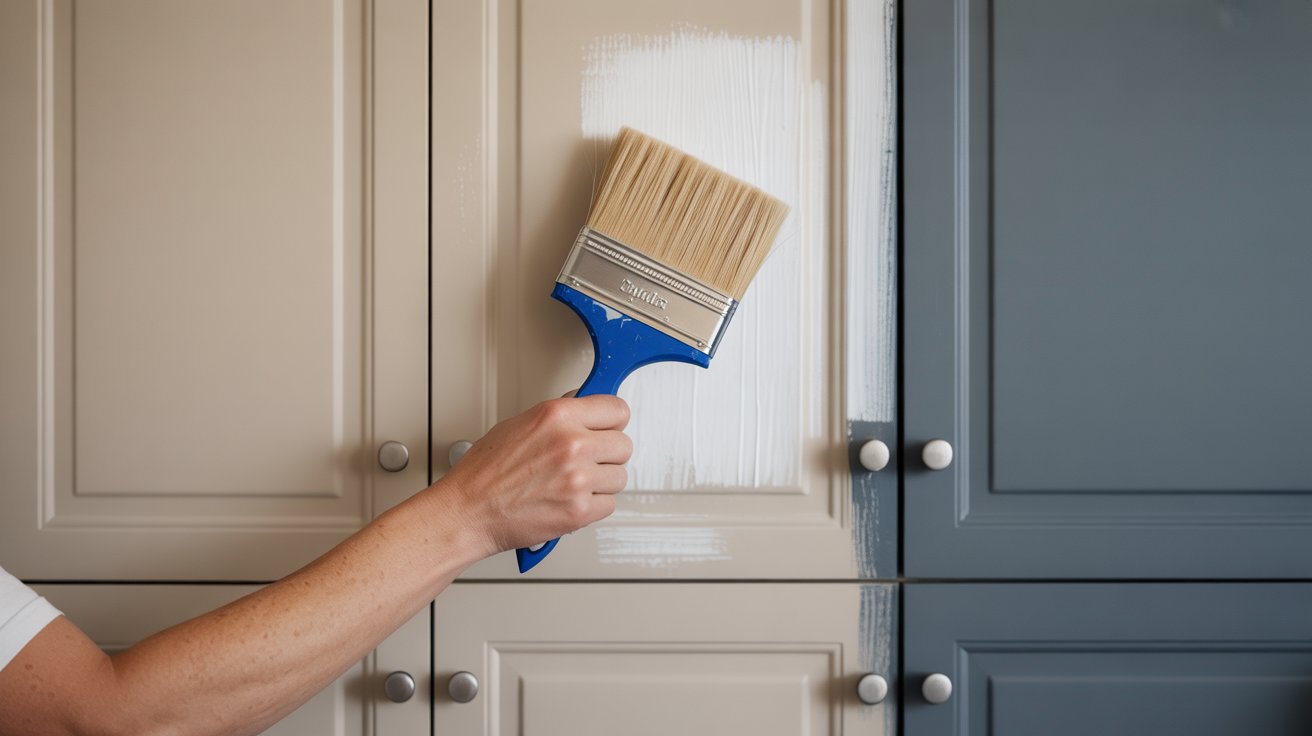
DIY painters find satin more forgiving since brush marks show less. Professional painting adds cost but makes semi-gloss look perfect. Paint costs are similar for both finishes. The main difference is prep time and skill needed.
Key Differences Between Satin and Semi-Gloss
Understanding these differences helps you choose correctly. Each finish performs differently in real kitchens.
Light reflection and shine levels: Semi-gloss reflects about 50-70% of light. Satin reflects 25-35%. You’ll notice the difference immediately. Semi-gloss is much shinier.
Durability and cleanability: Both clean easily, but semi-gloss has the edge. Its harder surface resists stains and moisture better. Satin still performs well for normal use.
How each handles imperfections: Satin hides scratches and dents much better. Semi-gloss shows every flaw. This matters more on older cabinets.
Cost and application considerations: Semi-gloss costs slightly more per gallon. It also requires better surface prep. You might need professional painting. Satin is more DIY-friendly.
Conclusion
I’ve painted my own kitchen cabinets twice. The first time, I picked semi-gloss because it looked fancy. Every fingerprint showed. I repainted with satin two years later and never looked back.
Both finishes have real benefits. Satin hides everyday wear and works with most styles. Semi-gloss is more durable and looks polished. Your choice depends on your kitchen’s condition, your design style, and how much maintenance you want.
Get sample pots of both finishes. Paint them on poster board or directly on a cabinet door. Live with them for a week. The right choice will become obvious.
Frequently Asked Questions
Can I mix satin and semi-gloss in the same kitchen?
Yes, you can combine both finishes. Use semi-gloss on lower cabinets that get more wear. Apply satin on upper cabinets for a softer look.
How long do satin and semi-gloss cabinet finishes last?
Both finishes last 8-10 years with proper care. Semi-gloss lasts longer in high-moisture areas. Satin might need touch-ups sooner around handles.
Is semi-gloss harder to apply than satin?
Semi-gloss requires more careful application and better prep. Every imperfection shows through. Satin is more forgiving for DIY painters.
Do darker cabinet colors work better with one finish?
Dark colors look richer in semi-gloss. The shine adds depth to navy, black, and deep gray. Satin softens dark colors for a more subtle effect.
Can I change from satin to semi-gloss later?
Yes, you can repaint over satin with semi-gloss. Light sanding helps the new paint stick. Just make sure your cabinets are in excellent condition first.
