
Home connectivity in Minneapolis has evolved from something we casually used to something we now depend on every single day. Whether you’re joining remote meetings, streaming high-quality videos, or helping your kids with online school, your internet connection shapes how smoothly your day runs.
But here’s the bigger picture many people don’t realize: the internet model you choose matters just as much as the speed you select. Copper-based connections like DSL and cable were built for a different era—one where homes had a single computer, minimal streaming, and no smart devices constantly running in the background.
Today’s digital lifestyle demands more. And that’s exactly where fiber internet steps in, offering a faster, more reliable, and future-ready way to stay connected. If you’ve ever wondered why it performs better, let’s break it down in simple, clear terms.
1. Fiber Internet Uses Light-Speed System
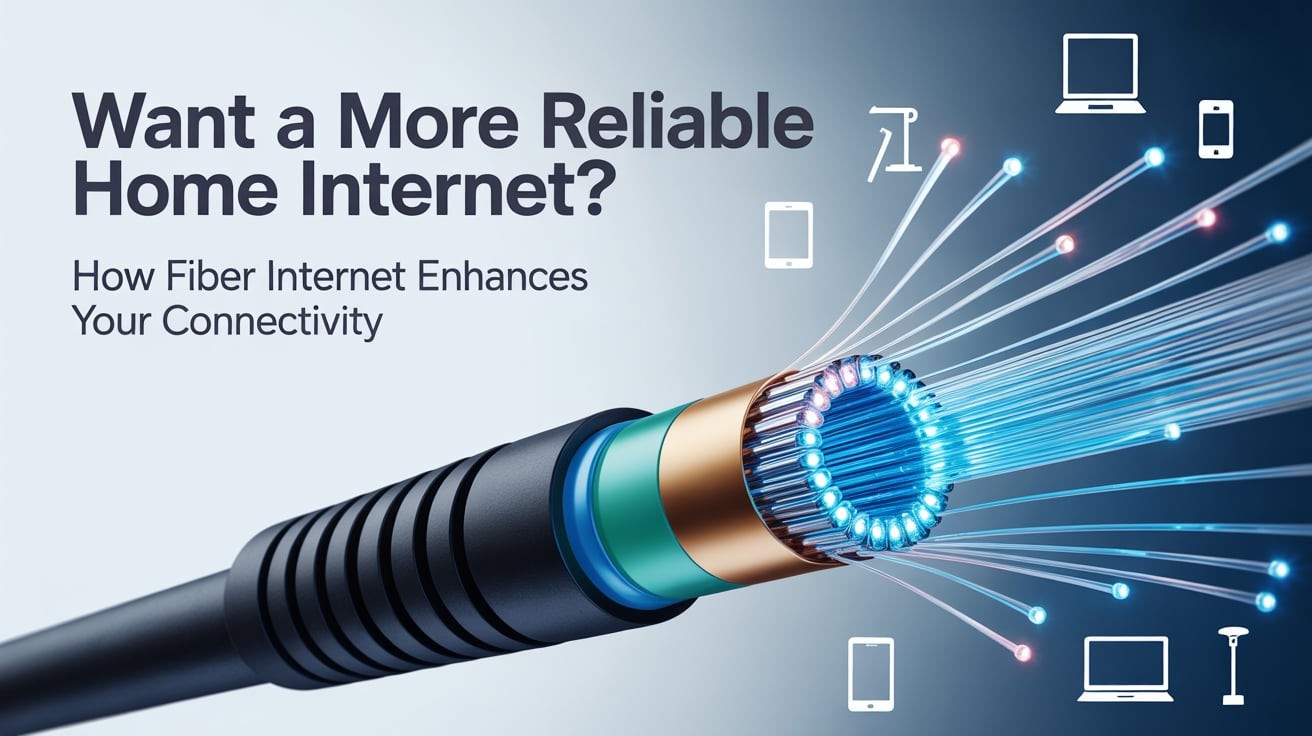
Do you know the biggest difference between fiber and traditional connections? Fiber doesn’t rely on electricity at all. Instead, it uses pulses of light sent through ultra-thin strands of glass.
That’s how it delivers extremely fast and consistent speeds, even during peak hours. Because the connection uses light rather than electricity, it is:
- Less affected by the weather.
- Not impacted by electrical interference.
- Able to carry far more data.
- Capable of symmetrical upload and download speeds.
All in all, what really matters for families is how this technology translates into everyday performance. That’s why many households turn to well-established fiber internet providers in Minneapolis, MN, like Frontier, when upgrading their home network. These providers use modern fiber infrastructure to bring the benefits of light-based technology into real homes. That, as a result, offers smoother video calls, faster uploads, and better support for smart devices.
2. Fiber Networks Reduce Lag and Buffering for a More Seamless Experience
Most people think buffering, or lag, comes from “weak Wi-Fi,” but often the issue is the underlying network. With cable or DSL, congestion can quickly build up because multiple households share the same bandwidth. During busy hours, your speed dips because everyone nearby is online at the same time.
Fiber networks, however, are designed differently. Their structure supports:
- Higher overall capacity.
- Better consistency during heavy usage.
- Lower latency (delay) in data transmission.
This is important for daily activities, including:
- Zoom meetings that stay stable.
- Online gaming with no lag.
- Smooth 4K and 8K streaming.
- Quick loading of cloud documents.
- Instant browsing and multitasking.
Low latency means your connection responds faster to every click, command, and request. Even smart devices—doorbells, thermostats, security cameras, appliances—work more reliably on a fiber-powered network. All in all, with most homes now running 20+ devices, the difference in performance is dramatic.
3. Fiber Enhances Smart Home Reliability and Multi-Device Performance
Today’s homes aren’t connected—they’re hyper-connected. Smart lights, smart locks, streaming boxes, gaming consoles, laptops, tablets, phones, speakers, and even refrigerators all share your internet. Older connection types simply weren’t built for this level of load.
Fiber, on the other hand, offers:
- Much higher bandwidth.
- More stable multi-device usage.
- Faster response times.
- A stronger backbone for smart home automation.
This matters because smart devices don’t just need speed—they need consistency. When one screen freezes, a camera lags, or cloud apps slow down, the entire home experience feels disrupted.
Fiber helps prevent:
- Choppy video feeds from security cameras.
- Delayed notifications.
- Stuck smart-home commands.
- Slow streaming in one room while someone else works in another.
Think of fiber as the foundation that keeps every modern device working in sync without strain.
4. Fiber Future-Proofs Your Home for New Devices and Bigger Demands
The digital world is growing fast — and so is the amount of data we use. From AI-powered devices to 8K streaming, holographic video calls, VR experiences, and cloud computing, future connectivity demands will only increase.
Fiber is uniquely designed to keep up because:
- It has massive bandwidth potential.
- It can be upgraded without replacing the core lines.
- It supports new standards and higher speeds with ease.
Unlike older systems that hit performance ceilings, fiber has room to grow for decades. Ultimately, fiber is not just “faster internet today.” It’s long-term infrastructure built to support the way we will live tomorrow.
Conclusion
Internet usage has transformed dramatically, and with smart homes, remote work, streaming demands, and digital tools increasing every year, the need for stronger connectivity is clear. Fiber internet meets that need by delivering unmatched speed, reliability, low latency, and the bandwidth required for modern homes.
Lastly, if you’re looking for a smoother, faster, and more future-ready online experience, upgrading to fiber is one of the most impactful decisions you can make for your home.
