

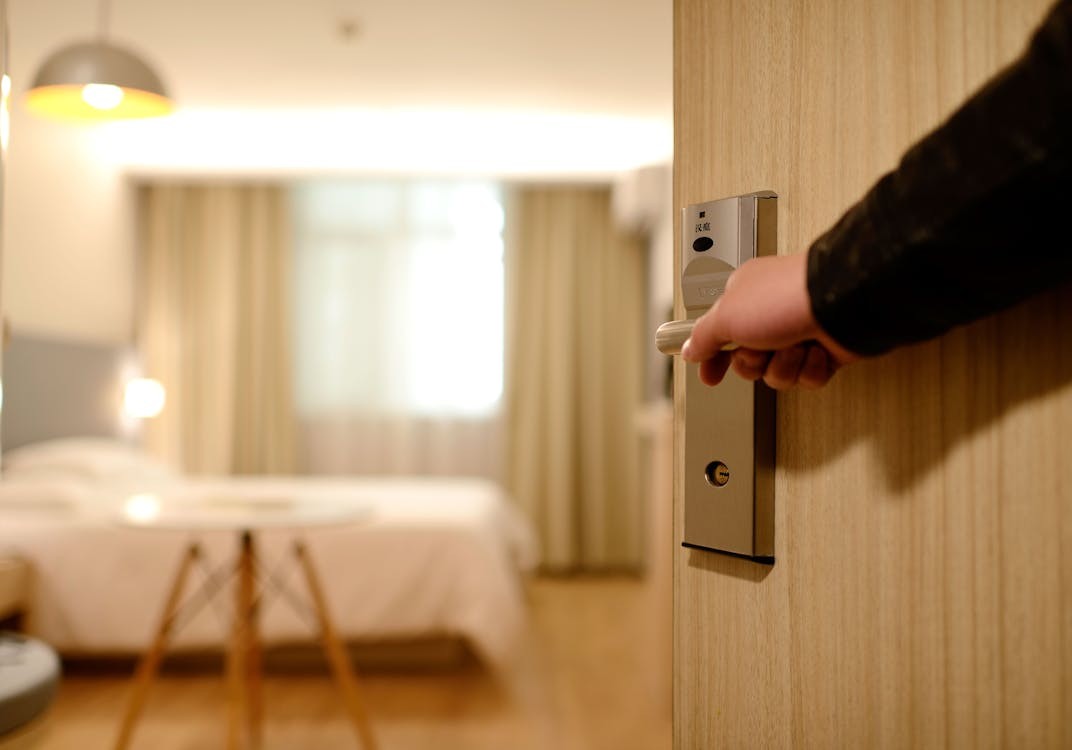
Before we get into specific upgrades, it helps to understand why doors get noisy in the first place. Most of the time, the issue comes from friction, loose hardware, air gaps, or the way the door meets the frame.
Small home improvements can fix these problems while also protecting your trim, hinges, and flooring.
The tips below are practical, budget-friendly, and easy to use in any home!
Tip 1: Add Soft Close Solutions to Reduce Impact
Soft-close tools help a door ease into the frame instead of hitting it sharply. They cushion the latch so the closing motion ends gently.
Cushioned latch plates and softeners can noticeably lower the noise that often happens in the final inch of closing.
These upgrades work on most doors and can be installed quickly.
Once added, you get less forceful contact and far less long-term wear on both the door edge and the frame.
Tip 2: Improve Frame Sealing to Cut Noise and Wear
Upgrading the sealing around your door frame helps block drafts while also reducing the vibration that creates noise.
Slim sweeps and drop-down seals offer a neat look while closing the small gaps that let sound travel through.
Better sealing can:
- Reduce vibration along the frame.
- Improve temperature control.
- Extend the life of weatherstripping.
This simple upgrade alone can make closing your door feel softer and more controlled.
Tip 3: Use Door Holders to Control Movement and Prevent Slams
A door that swings too freely tends to hit the frame with extra force, creating noise and causing wear on hinges, painted surfaces, and flooring.
Door holders help manage how the door moves, guiding it into a smoother close and reducing the sudden slams caused by drafts or fast movement.
So, many homeowners choose a door holder to keep the door steady and prevent repeated impact at the bottom edge.
Drop-down styles are especially helpful for protecting high-traffic entryways where doors get used all day long.
How does a door holder help? Well, it:
- Reduces swinging and accidental slams.
- Protects paint, trim, and flooring.
- Encourages a softer, quieter close.
This small upgrade adds both control and comfort to everyday door use.
Tip 4: Install Draft Excluders for Dual Noise and Wear Control
Draft excluders do more than improve insulation. They also help reduce the noise that happens when a door shuts.
EPDM (ethylene propylene diene monomer) draft excluders reduce both heat loss and the thud created when a door closes.
Choose the Right Material
Foam is great for sound absorption, while rubber offers stronger durability.
Placement Matters
Position the excluder so it lightly touches the floor. Too high and it will not help. Too tight and the door becomes harder to use.
Tip 5: Use Quiet Pads and Bumpers to Soften Contact
Quiet pads are one of the easiest fixes for loud doors.
Felt or silicone bumpers soften the moment the door meets the frame.
Place pads on both the upper and lower corners of the latch side of the door to noticeably reduce impact noise.
They work well in bedrooms, nurseries, and offices.
Installation is quick, and the pads last for months.
Tip 6: Adjust Hinges and Latches for Smooth, Quiet Movement
Misaligned hinges and strike plates often cause scraping or uneven closing force. When alignment is off, the door may catch, drag, or slam harder than it should.
Check Hinges
Look for loose screws, sagging, or metal shavings. Tightening or replacing screws helps the door move more naturally.
Check the Latch
If the latch doesn’t glide smoothly into the strike plate, a small adjustment can make the door close with less force and far less noise.
Tip 7: Maintain Hardware to Stop Noise Before It Starts
Noise often develops when hardware becomes dry or loose. A bit of silicone lubricant, routine cleaning, and tightening of screws can keep your door operating quietly.
Neglected hinges are a major cause of sudden door slams.
A seasonal hardware check can protect hinges, frames, and seals for years.
Tip 8: Pay Attention to New Noises
Small rattles or clicks are early signs of shifting parts.
Fixing these minor changes right away helps prevent bigger issues and keeps the whole home quieter.
The Takeaway
Small upgrades like these can make everyday living feel smoother and more comfortable.
With just a few smart adjustments, you can extend the life of your doors and create a calmer home!
