

I’ve spent countless summer evenings setting up outdoor spaces, and I know how tricky patio furniture on grass can be. You want a comfortable spot to relax, but you’re worried about killing your lawn or ruining your furniture.
Here’s the good news: you can have both.
In this guide, I’ll show you exactly how to protect your grass while keeping your furniture stable and dry.
We’ll cover what damages grass, how to prevent furniture wear, and the best setup methods that actually work.
I’ve tested these approaches myself, and I’m confident they’ll help you create the perfect outdoor space without sacrificing your lawn.
Why Setting Up Patio Furniture on Grass Needs Proper Planning?
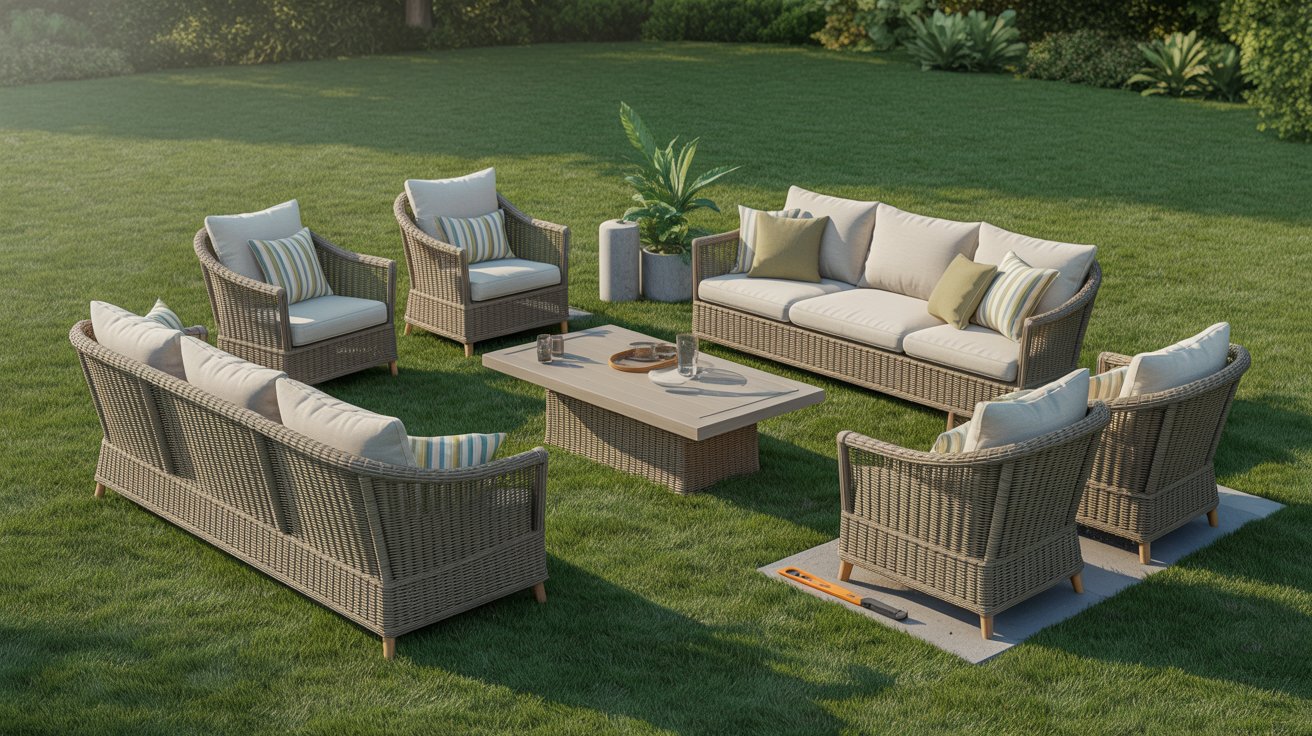
Grass holds moisture longer than hard surfaces. Morning dew and rain keep furniture legs damp, causing rust on metal and rot in wood. The ground is never truly flat, making furniture wobble.
Heavy pieces compress soil and block air from reaching grass roots. Without proper setup, you’ll see yellow patches and dead grass where furniture sits.
Not all materials handle grass well. Picking weather-resistant furniture and using pavers or mats makes a big difference. Moving pieces regularly gives grass time to recover.
A little planning now saves you from replacing damaged furniture and reseeding dead lawn spots later.
Does Patio Furniture Damage Grass?
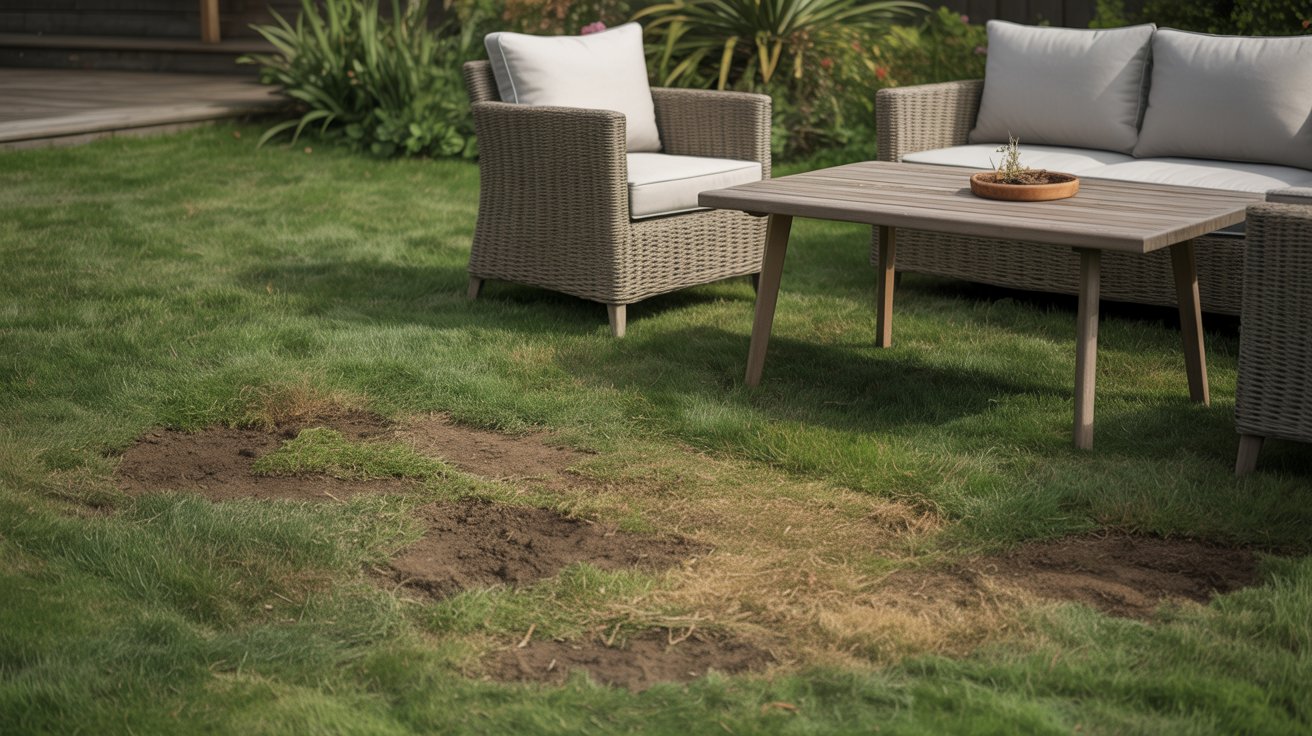
Yes, patio furniture can harm your lawn if left in place too long. The weight presses down on the soil and blocks essential sunlight from reaching the grass below.
Soil Compaction
Heavy furniture squashes the soil underneath. When soil gets packed down tight, air and water can’t reach the grass roots. The roots need oxygen to stay healthy and grow.
Compact soil also makes it harder for roots to spread. Over time, the grass in that spot becomes weak and thin. You’ll notice bare patches where furniture sits for weeks.
Blocked Sunlight
Grass needs sunlight to make food through photosynthesis. Furniture creates shade that stops this process completely. Without light, grass turns yellow and eventually dies. Even a few days of constant shade can stress your lawn.
Larger pieces like sectional sofas cause more damage than small chairs. The longer furniture stays in one spot, the worse the damage gets.
Foot Traffic Around Furniture
People walk around chairs and tables repeatedly. This constant stepping wears down grass in high-traffic zones. The combination of furniture weight and foot traffic doubles the problem.
Grass gets crushed from above and compressed from below. Areas near seating get hit hardest since people move in and out frequently.
How Grass Can Damage Patio Furniture?
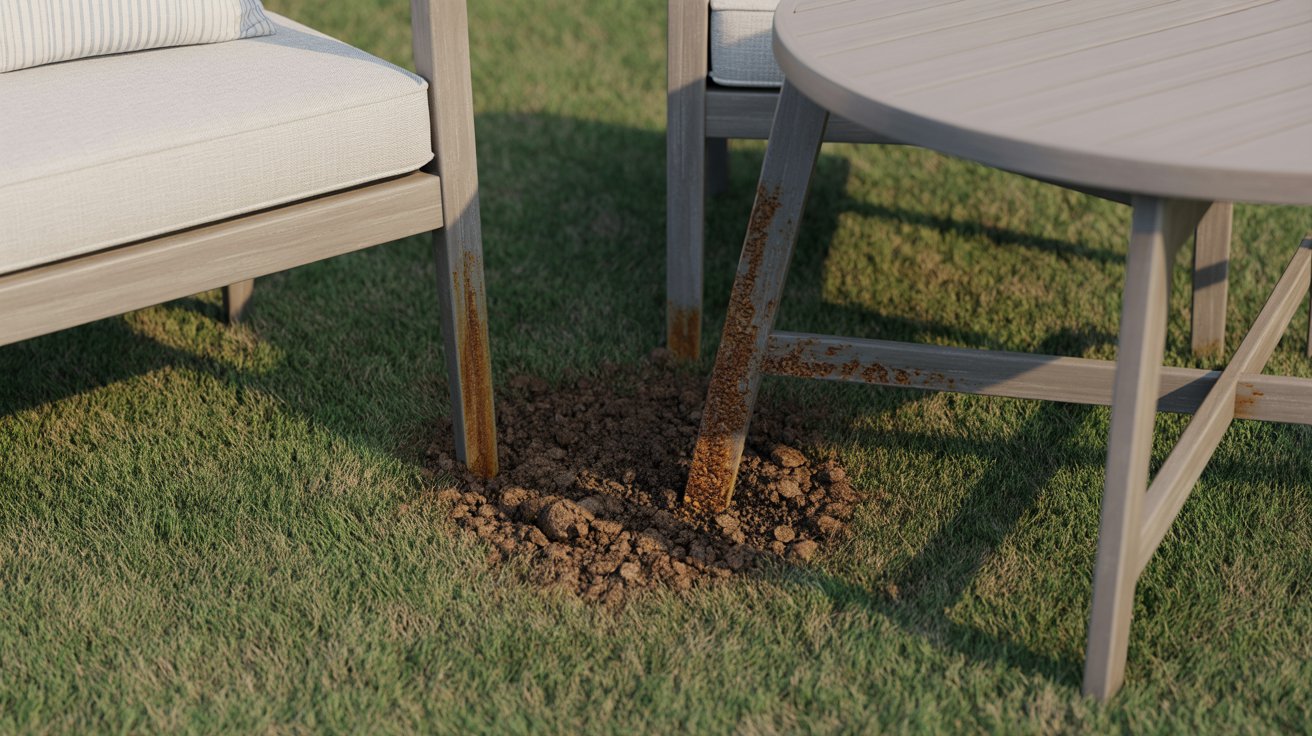
Wet grass and soil create conditions that slowly destroy outdoor furniture through moisture, dirt, and uneven ground.
Damp grass keeps metal furniture wet for hours, causing rust on steel and iron frames. Even small rust spots spread quickly and weaken the structure. Wood furniture soaks up moisture like a sponge, leading to rot and soft, wobbly pieces.
Constant wet-dry cycles make wood and bamboo swell and shrink, causing warping in chair legs and table tops.
Grass clippings and dirt leave tough stains on furniture bases. Tannins create yellowish or brown marks that show worse on light-colored pieces.
The uneven ground makes furniture rock and wobble since one leg might sink while others stay firm. This instability makes chairs tip easily and tables shake.
Best Ways to Set Up Patio Furniture on Grass
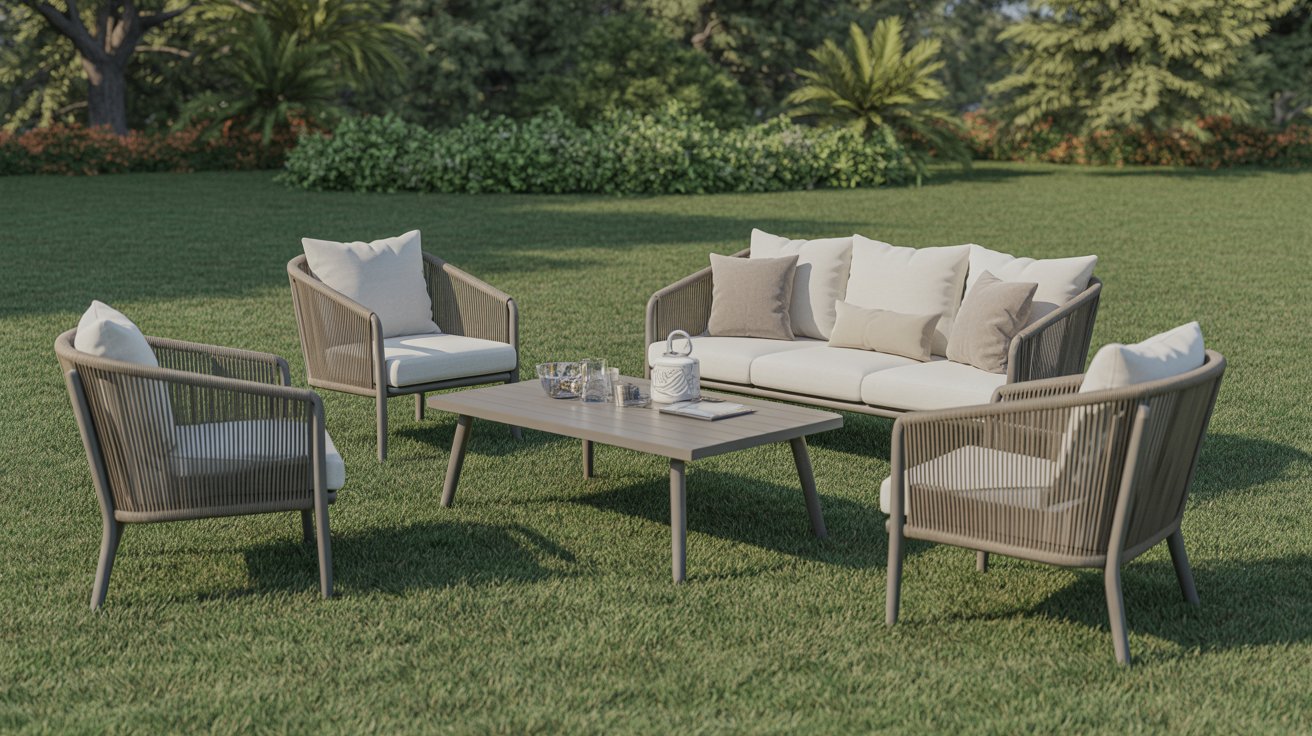
You can protect both your lawn and furniture with smart setup choices. These methods keep everything stable and dry.
Use Platforms or Pavers
Place flat pavers or wooden platforms under each furniture leg. This spreads the weight across a larger area and reduces soil compression. Pavers also lift furniture slightly off the wet grass.
I use 12-inch square pavers for most chairs and tables. For heavier pieces, try wooden deck tiles that snap together. Make sure platforms sit level so furniture doesn’t wobble.
Use Patio Mats or Protective Pads
Outdoor mats create a barrier between grass and furniture. Breathable rubber mats work best since they let some air through to the grass. Place individual pads under each leg for smaller pieces.
For full seating areas, lay down a large outdoor rug. These mats also make the space feel more like a room. Just remember to move them every week or two.
Choose All-Weather, Moisture-Resistant Materials
Buy furniture made to handle wet conditions. Powder-coated aluminum resists rust better than plain steel. Resin wicker sheds water instead of absorbing it. Teak and cedar naturally resist rot and moisture damage.
Check that cushions have waterproof covers you can remove and wash. Spend a bit more on quality materials now to avoid replacements later.
Opt for Furniture With Wide or Central Bases
Look for designs that distribute weight evenly. Furniture with wide feet causes less pressure per square inch than thin legs. Pedestal tables with a single central base work great on grass.
Adirondack chairs have broad, flat feet that won’t sink. Avoid furniture with small, pointed legs that dig into soft ground.
Pick Lightweight Designs for Flexibility
Lighter furniture is easier to move around regularly. Aluminum frames weigh less than steel or wrought iron. Folding chairs let you clear the space quickly when needed.
You can shift lightweight pieces to different spots without help. This flexibility helps you rotate furniture to prevent lawn damage.
Rotate Furniture Placement Regularly
Move your furniture setup every 3-4 days if possible. Shift everything a few feet in any direction. This gives grass underneath time to recover and get sunlight. Mark different positions with small stones so you remember your rotation pattern.
I move my setup every Sunday morning as part of lawn care. Even small moves make a big difference for grass health.
Lawn Care Tips to Prevent Damage
Healthy grass recovers faster from furniture pressure and stays green even in high-traffic areas.
- Aerate your lawn twice a year to reduce compaction. An aerator pulls small plugs of soil out, letting air and water reach roots. Do this in spring and fall, then apply fertilizer to feed stressed grass.
- Keep grass 3-4 inches tall in furniture areas. Taller blades make more food through photosynthesis and help grass stay strong under stress. Longer grass also shades soil and prevents it from drying out.
- Rake flattened areas gently after moving furniture. This lifts blades back up so they can catch sunlight. Use a leaf rake with flexible tines and rake in different directions to fluff up matted spots.
- Water compressed spots lightly after raking them. The grass will perk up within a few days if it’s still alive and getting proper sunlight.
- Focus extra care on high-traffic zones where you place furniture most often. These areas need more fertilizer and attention to stay healthy all season long.
Recommended Furniture Types for Grass
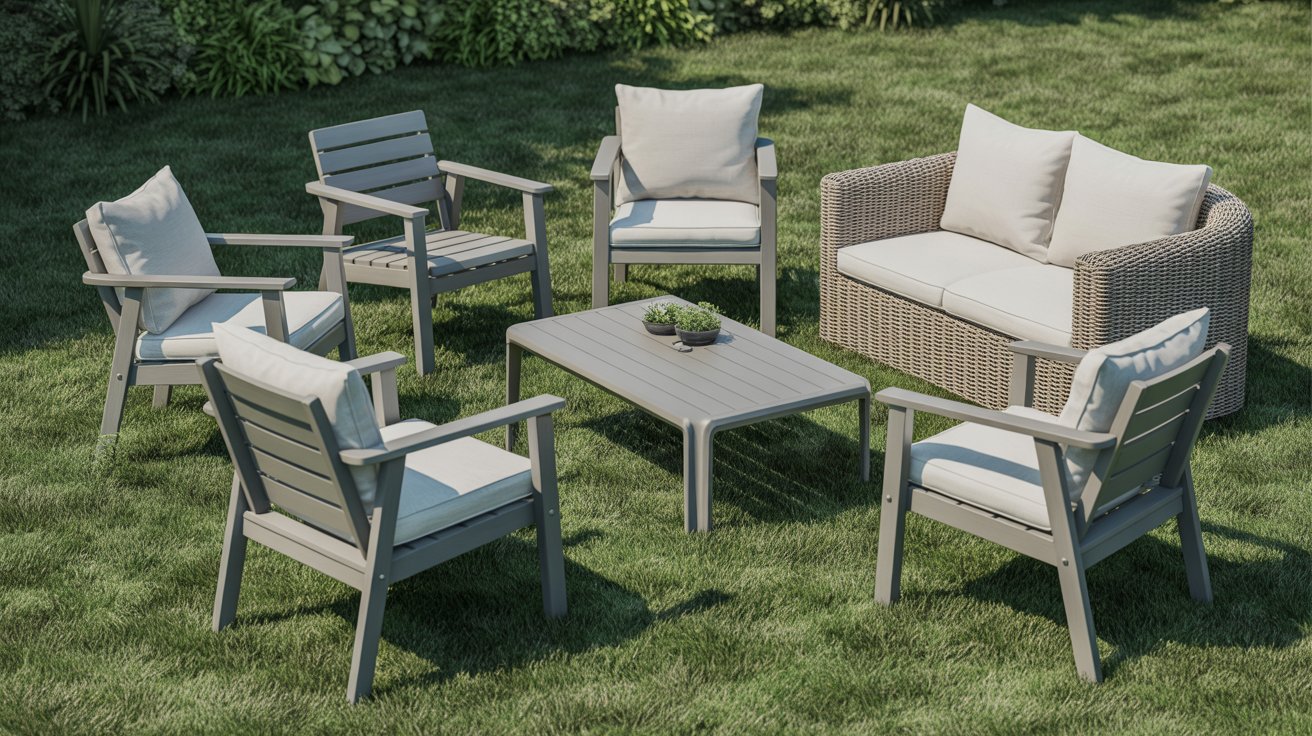
Some furniture materials handle grass placement better than others. Here are the top choices.
Powder-Coated Metal Furniture
Aluminum frames with powder coating resist rust and moisture damage well. The coating creates a protective barrier against damp grass. These pieces stay lightweight and easy to move around.
Look for a thick powder coating without chips or scratches. Powder-coated steel works too but weighs more than aluminum. Wipe down metal furniture regularly to prevent dirt buildup.
Synthetic Wicker and High-Density Plastics
Resin wicker looks natural but handles moisture much better than real wicker. It won’t rot, warp, or absorb water from grass. High-density polyethylene (HDPE) furniture is nearly indestructible.
These materials clean easily with soap and water. They come in many colors and styles to match your outdoor space. Plastic furniture is light enough to move daily if needed.
Weather-Treated Woods
Teak, cedar, and redwood contain natural oils that repel moisture. These woods resist rot even when sitting on damp grass. Acacia wood costs less but needs regular sealing to stay protected.
Apply wood sealant every spring before setting furniture out. Treated lumber works too but may leach chemicals onto grass. Check that any wood treatment is safe for lawn contact.
Conclusion
Setting up patio furniture on grass doesn’t have to be complicated. I’ve found that using pavers, rotating placement, and choosing the right materials makes all the difference.
Your lawn and furniture can both thrive with just a little planning. Start by picking one or two methods from this guide and see what works for your space.
I’d love to hear about your own setup tricks. Drop a comment below with your experience or questions. Check out our other outdoor living guides for more practical tips.
Frequently Asked Questions
How often should I move patio furniture on grass?
Move furniture every 3-4 days to prevent lawn damage. Even small shifts give grass time to recover and get sunlight.
Can I leave patio furniture on grass overnight?
Yes, overnight is fine. Problems start when furniture stays in one spot for days or weeks without moving.
What’s the best base for patio furniture on grass?
Pavers or rubber mats work best. They spread weight evenly and keep furniture dry while protecting your lawn.
Does grass damage wicker furniture?
Real wicker absorbs moisture and can rot quickly. Synthetic resin wicker is waterproof and handles grass much better.
How do I fix grass damaged by patio furniture?
Rake the flat area gently, water it lightly, and add grass seed if needed. Most grass recovers in 2-3 weeks.
