

Ever stared at a door handle and wondered what makes it work? You’re about to learn the parts of a door latch from the inside out.
This guide breaks down every component in simple terms so you can fix problems, choose the right hardware, or just understand what’s happening when you close a door.
I’ve spent years working with door hardware, and I know how confusing the terminology can be. You’ll find out what each piece does and why it matters for your home.
We’ll cover latch bolts, strike plates, spindles, and everything in between to give you the knowledge you need.
What Is a Door Latch?
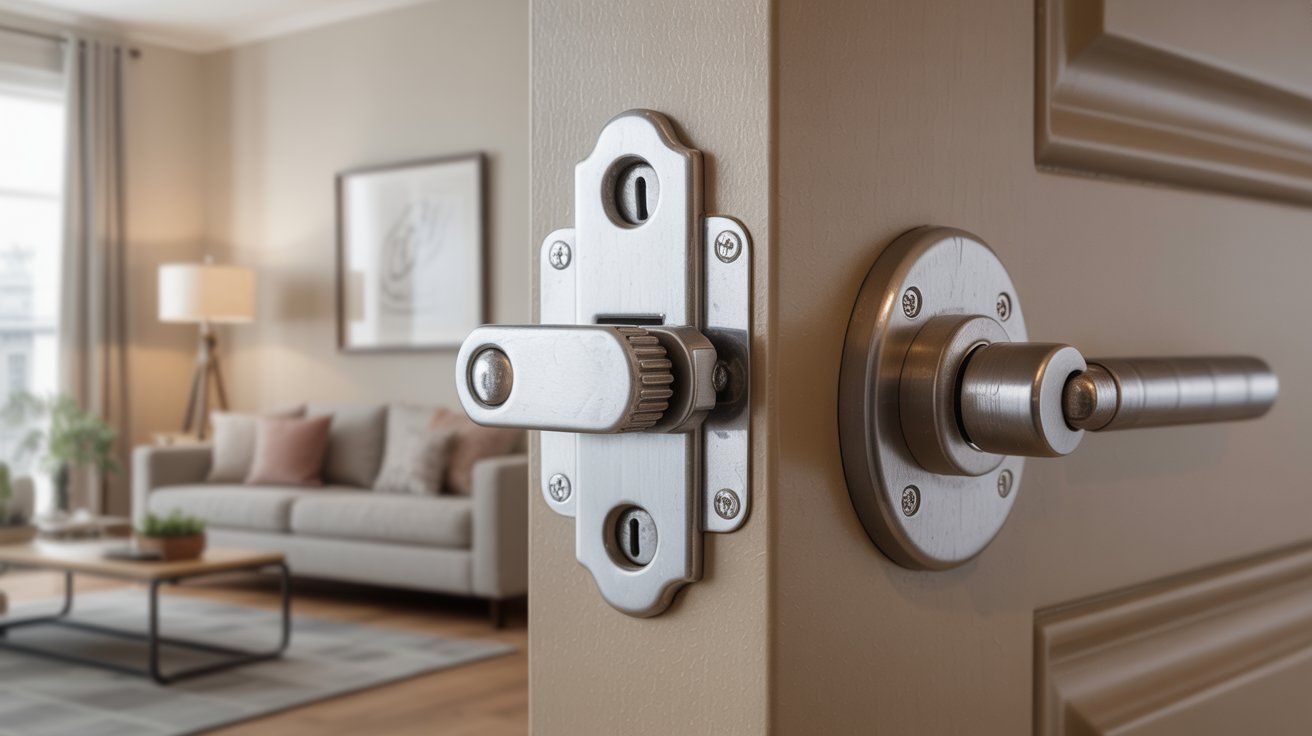
A door latch is the spring-loaded part inside your door that extends into the frame when you close it. When you turn the handle, the mechanism retracts so the door can open again.
The latch bolt slides in and out based on handle movement.
A spindle connects your knob or lever to the internal mechanism. When you twist or push down, the bolt pulls back from the strike plate.
Interior doors use simple passage latches. Exterior doors need stronger versions with added security features. Cabinet latches work on a smaller scale but follow the same basic principles.
Core Parts of a Door Latch
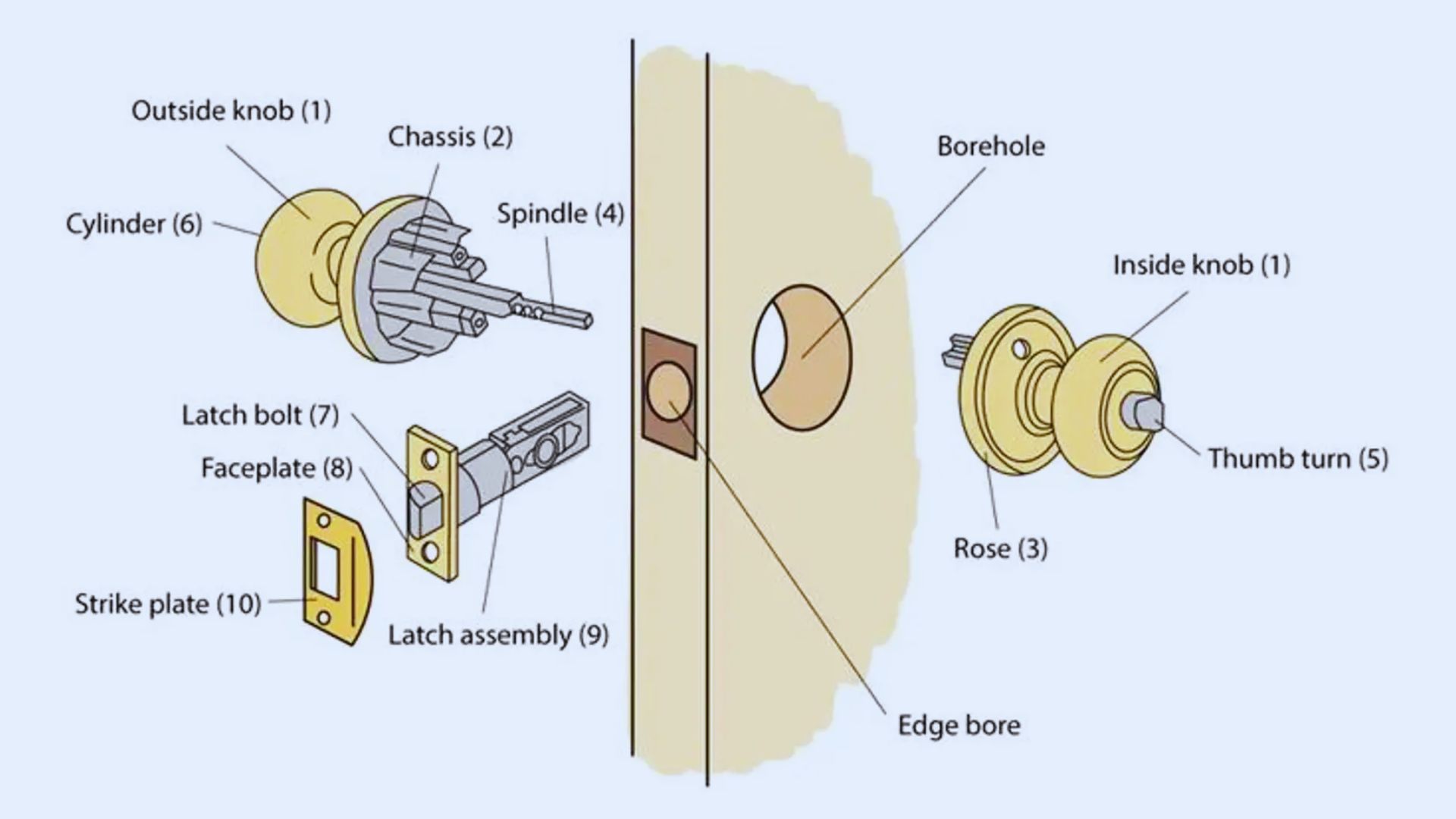
The necessary components that make everything work
Latch Bolt
The latch bolt is the moving part that holds your door closed. It has a spring inside that pushes it forward automatically.
One side has a beveled edge that lets the door close smoothly by sliding past the strike plate. Most bedroom and bathroom doors use this type. You close the door without turning anything.
Deadbolt (vs. Latch Bolt)
A deadbolt has a square end instead of an angle. This type won’t move by itself. You need a key from outside or a thumbturn from inside to make it work.
Front doors and back doors need this extra protection. A deadbolt can’t be pushed back like a regular latch.
Deadlocking Plunger
This small pin sits next to the latch bolt. When the door closes, it gets pressed in by the strike plate. Once pressed, the plunger locks the latch bolt in place.
You can’t slip a credit card between the door and frame to push the bolt back. Many modern latches include this feature as standard.
Spindle
The spindle is a square metal rod that runs through the latch body. Your handle or knob attaches to both ends. When you turn the knob, the spindle rotates inside the latch and pulls the latch bolt back from the frame.
Most spindles follow universal measurements so you can swap handles without replacing the whole latch mechanism.
Backset
The backset is the distance from the edge of your door to the center of the spindle hole. Most doors use either 2-3/8 inches or 2-3/4 inches.
Get this wrong and your new hardware won’t line up. Always measure before buying replacement parts.
Faceplate, Forend, and Strike Plate
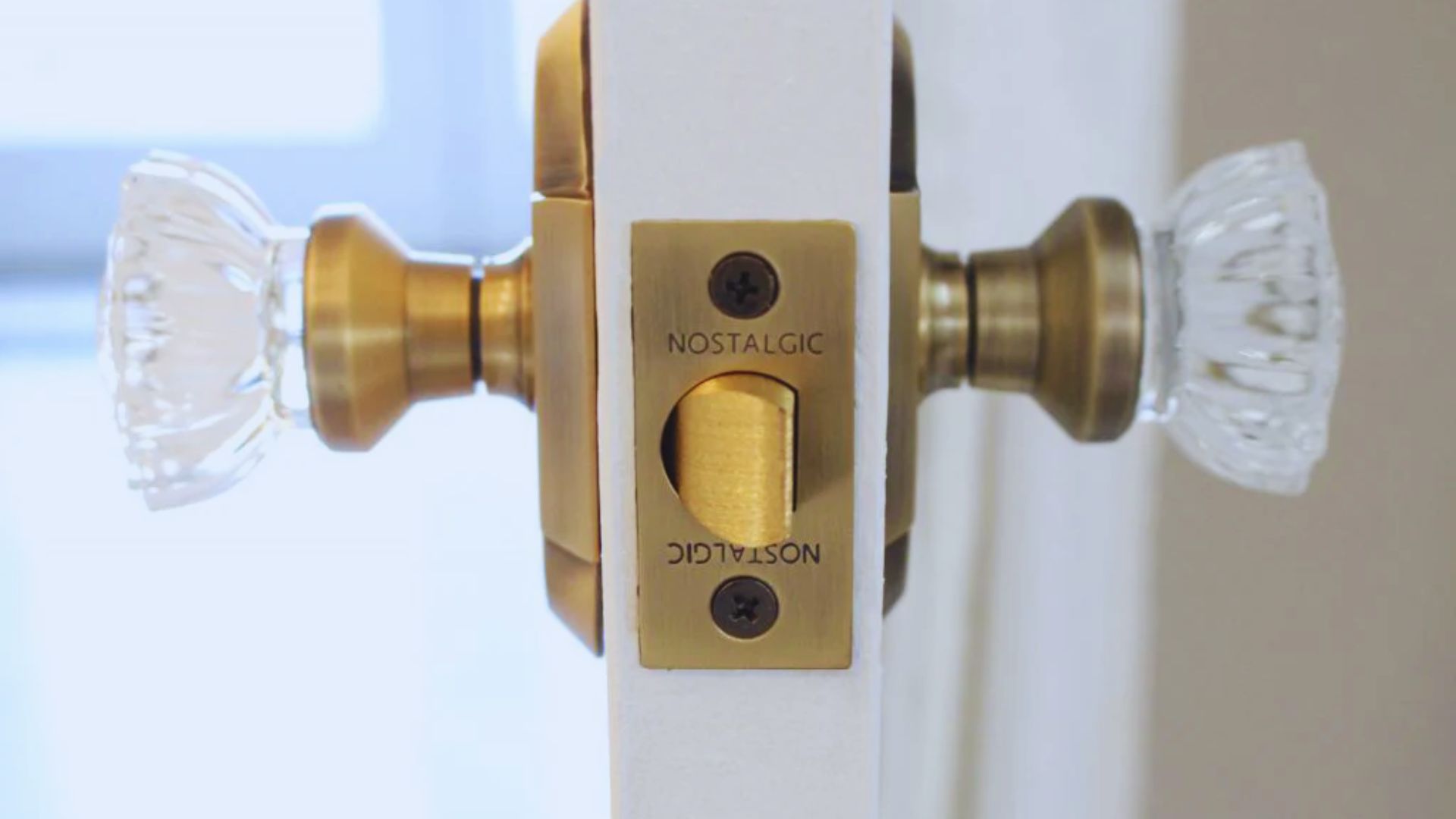
The visible metal parts that finish the installation
Faceplate
This flat metal piece mounts on the door edge. The faceplate covers the rectangular pocket where the latch body sits and creates a clean look.
It keeps the latch aligned properly. Without this plate, the latch could shift or get damaged.
Forend
Some manufacturers use “forend” instead of “faceplate.” It means the same thing in most cases. Higher-end latches have the plate permanently attached, which creates a stronger unit.
When ordering parts, use the term your manufacturer uses.
Strike Plate
This piece mounts on the door jamb where the latch bolt enters. The opening needs to match your latch bolt size. A beveled edge on the plate helps the bolt slide in smoothly.
Most strike plates use brass or steel. Look for rounded or beveled edges around the opening to prevent the bolt from catching.
Keep (Striker Box)
The keep is a metal box behind the strike plate. This box gives the bolt somewhere to go beyond the surface of the frame. Open box keeps have no back.
Dust box keeps are fully enclosed. Integrated keeps come molded as part of the strike plate. A proper keep reduces door rattle and makes closing quieter.
Understanding Latch Tongue & Strike Geometry
Getting the alignment right for smooth operation
Bevel Orientation
The angled side of the latch bolt needs to face the right direction based on which way your door swings. A left-hand door needs the bevel facing one way.
A right-hand door needs it facing the other way. Install it backwards and the door won’t close properly.
Aperture Size
The hole in the strike plate needs to fit your latch bolt with the right tolerance. A tight fit keeps the door stable but might cause sticking.
A loose fit lets the door rattle and wears out the bolt faster. If you hear clicking or rattling, the aperture is probably too large.
Lip Projection
Some strike plates have a lip that extends beyond the mounting surface. The latch bolt hits the metal lip instead of the wooden frame.
Over time, this saves your door jamb from wear and denting. A projecting lip also bridges the gap if your door sits further back from the frame surface.
Lever, Knob, and Handle Parts
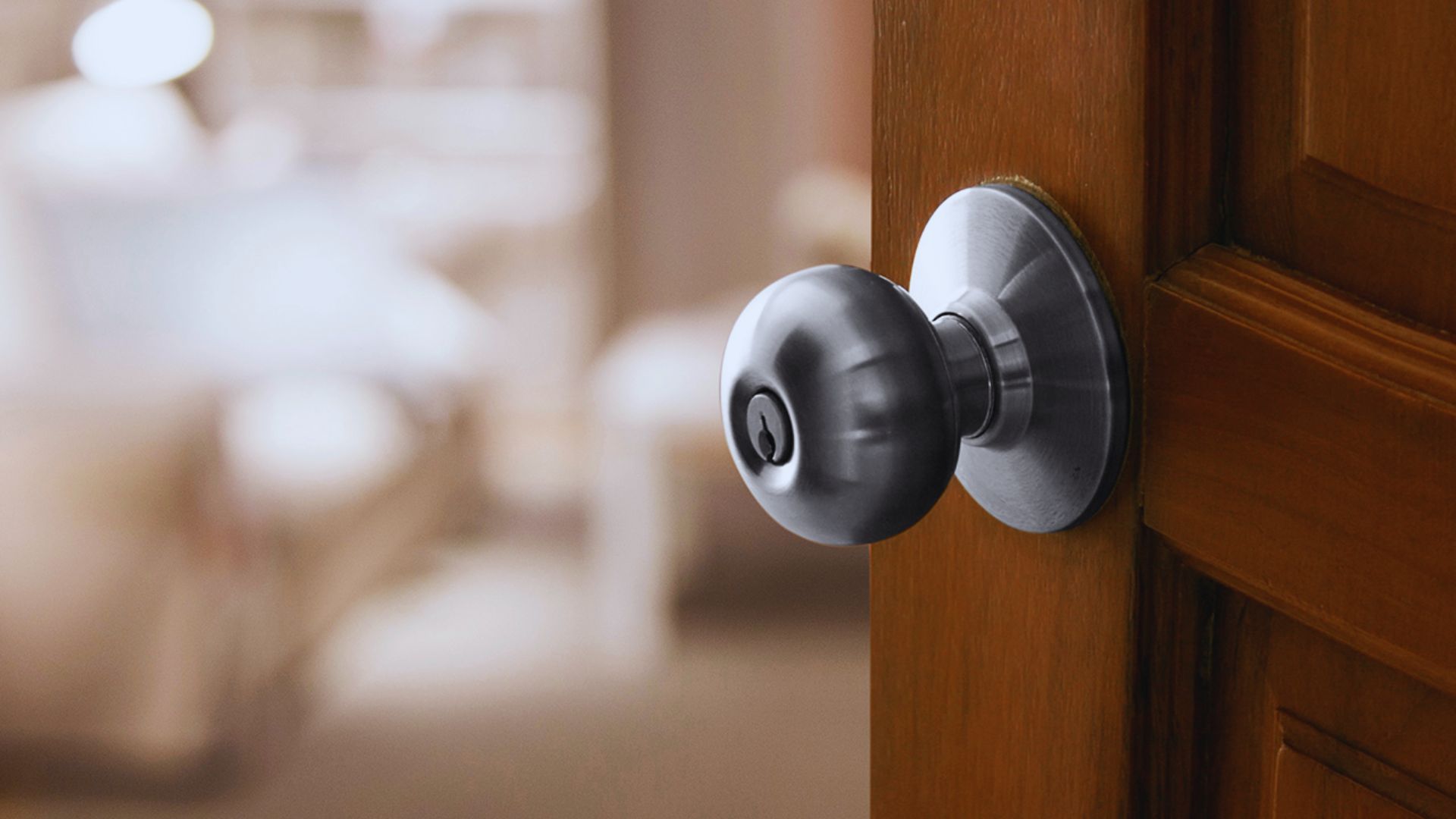
The pieces you touch every time you open a door
Lever Anatomy
A lever handle has several parts working together. The lever trim is the handle you grip. It extends horizontally from the door surface. A circular or rectangular piece mounts against the door and covers the holes.
The lever attaches to the spindle through this piece. The end of the lever often curves back toward the door to prevent sleeves from catching.
Knob Components
Knobs come in different shapes but all work the same way. Round knobs are classic. Mushroom knobs have a flatter top.
Faceted knobs have multiple flat sides. Square knobs offer a modern look. Smooth knobs can be slippery when wet. Textured designs give you better grip.
Handle Bars & Pulls
These are fixed handles that don’t turn. You pull to open instead of twisting. Straight handles mount on cabinet doors or drawers at two points. Edge pulls mount on the edge of a door.
Appliance pulls are larger versions designed for refrigerators and dishwashers. Curved handles create a softer look and give your hand a natural resting position.
How to Choose the Right Door Latch Parts
Making smart decisions for your specific needs
- Match to door thickness and prep. Standard doors are 1-3/8 inches or 1-3/4 inches thick. Measure your backset before buying. Tubular latches work for most residential doors.
- Select finish and style. Match your finish to other fixtures for consistency. Living finishes develop patina over time. Modern spaces suit minimal hardware while traditional rooms need detailed pieces.
- Ensure compatibility. Spindle size must match between latch and handle. Common sizes are 5/16 inch or 8mm. Heavy levers need stronger mechanisms.
- Consider traffic and security. Busy areas need heavy-duty latches. Exterior doors need deadbolts. Bedrooms need privacy functions. Closets use simple passage sets.
- Balance design and budget. Spend more on front doors and master suites. Save on closets and utility doors. Bold hardware works on focal points. Subtle pieces suit background spaces.
Conclusion
Now you know the parts of a door latch inside and out. I remember replacing my first strike plate and realizing how much smoother the door closed with proper alignment.
These small details make a real difference in how your home functions.
Take time to choose hardware that matches your needs and style. The right parts work quietly in the background for years.
What door hardware projects are you planning? Share your questions or experiences in the comments, and check out our other guides for more home improvement help.
Frequently Asked Questions
What is the difference between a latch bolt and a deadbolt?
A latch bolt has a beveled edge and springs back automatically. A deadbolt has a square end and only moves with a key or thumbturn for stronger security.
Why won’t my door latch properly?
The latch bolt and strike plate are probably misaligned. Check if your door has sagged on its hinges or if the strike plate needs repositioning.
Can I replace just the faceplate without changing the whole latch?
No. Most faceplates are specific to their latch model and aren’t sold separately. You’ll need to replace the entire latch mechanism.
What backset measurement do I need for a new door latch?
Measure from the door edge to the center of the handle hole. Most interior doors use 2-3/8 inches while exterior doors use 2-3/4 inches.
How do I know which way the latch bolt bevel should face?
The beveled edge should angle toward where the door closes. Stand by the hinges and the bevel should face the strike plate.
