


If you are planning to move to Texas, it is important to understand that the electricity utility system works differently here than in most other states. This matters because electricity is usually the most expensive utility in a home, and choosing the wrong plan can cost you hundreds or even thousands of dollars a year.
Texas has a unique electricity system, and new movers are often surprised by how many plans and offers show up online. With constant advertising and promotions, it is easy to pick a plan that looks cheap but ends up being the most expensive. This guide will help you understand how the deregulated electricity market works in Texas so you can make the best decision when you move in.
Why Texas Electricity Is Different
In most states, one utility company controls everything. They deliver the power, set the price, and send the bill. In Texas, things are separated into two different companies:
Energy Providers:
The Energy Provider (also called the Retail Electric Provider or REP) is the company that sells you electricity. You chose a plan and contract term and sign a contract with them. They are also the ones who send you your monthly bill.
TDU Providers:
The Transmission and Distribution Utility Company (TDU) delivers the electricity to your home. If there is an outage, they are the ones who fix it. You do not choose your TDU. It is assigned based on your address. Examples include CenterPoint Energy, Oncor, AEP Texas, and TNMP.
You will receive an electricity bill every month. The TDU adds the delivery charges, which are the same for everyone in your area, and then the Energy Provider adds the energy rate from your plan. This rate changes from company to company, and it is what affects your bill the most. You should not choose an Energy Provider based on outage reviews, because they do not control the prompt response to outages. The TDU does, and you cannot choose your TDU. When comparing companies, focus on the electricity rate, the plan type, the cancellation fee, and the transparency of the pricing.
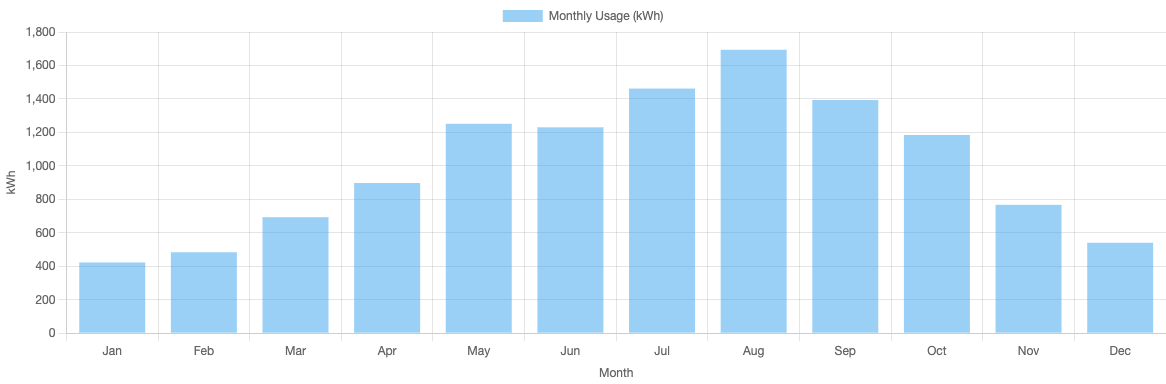
Average electricity use for a 2,500 sq ft house in Texas
Main Types of Electricity Plans in Texas
There are many plans available, but these four are the most common:
- Fixed Rate Plans:
This is the simplest and most recommended type of plan. The REP energy rate is the part that stays fixed for your whole contract, no matter how much electricity you use. The TDU delivery rate is not fixed and usually changes twice a year, but that charge is the same for everyone in your area. For most Texans, this is the best choice, especially for new movers.
The chart below shows what a true fixed-rate plan should look like. The higher rate below 500 kWh is normal because most plans include a base charge that gets diluted as you use more electricity. Notice how the line becomes stable and stays consistent as usage increases.
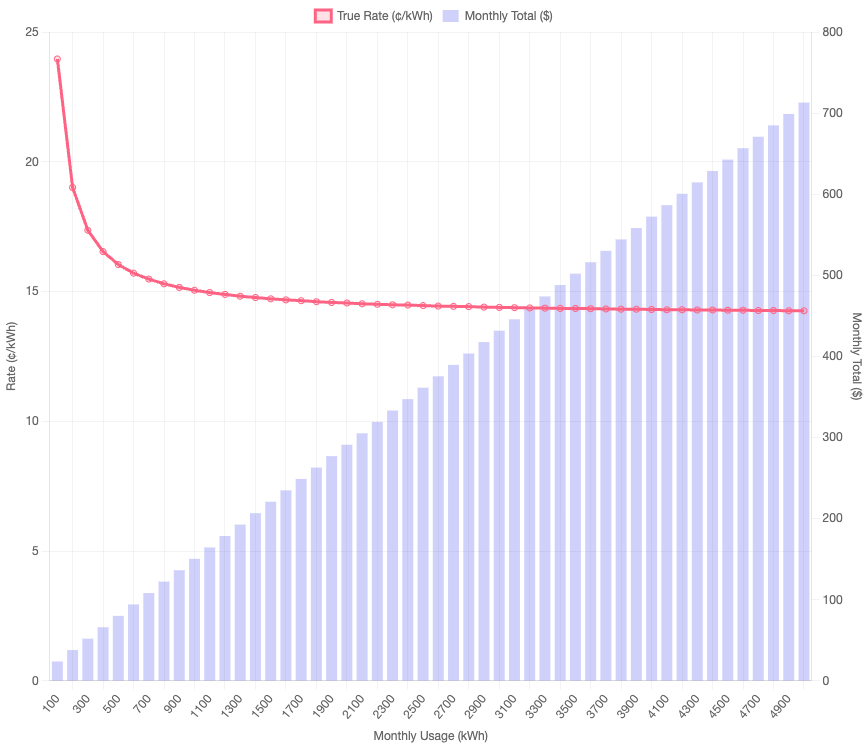
Figure 2 – True fixed Plan
- Billed Credit Plans:
These plans give you a credit when your usage falls inside a certain range. They often advertise the lowest rate based on the perfect usage number, for example 9.9 cents at exactly 1000 KWh. The problem is that your usage changes every month depending on the season, especially in summer when electricity use goes up. If you do not land inside the exact target range, you will pay more. These plans are also the favorite ones for Energy Providers to advertise because they can label them as fixed rate plans and display the cheapest rate at the perfect usage point, which makes the plan appear at the top of comparison sites. But in reality, the rate you pay most months is much higher than the advertised number.
The next figure shows a bill-credit plan. Notice how the rate drops sharply in the “sweet spot,” but continues increasing as you use more electricity. Also note the very high rate below 1,000 kWh. This is a major drawback for the average Texas household, since many months in fall and winter use less than 1,000 kWh and would be penalized heavily under this type of plan.
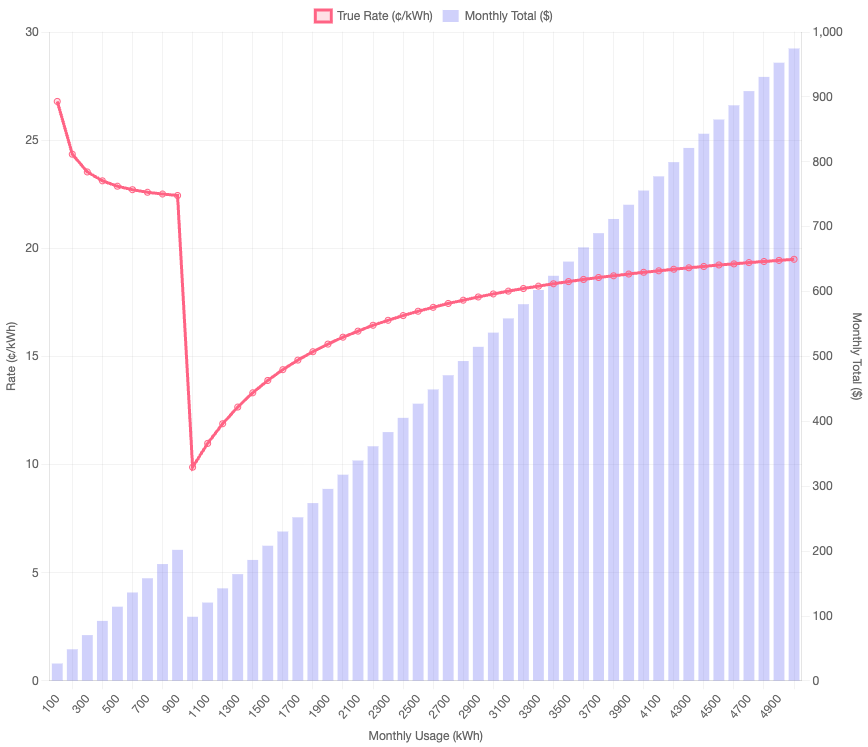
Bill Credit Plan
- Free Night/Day Hours or Weekends:
These plans offer free electricity during certain hours. Companies then increase the price during the paid hours, sometimes double the fixed rate price. These plans depend heavily on your habits. If you are not home during the day or if you have an electric vehicle it might work. Usually, it does not.
The chart below is an example of hourly consumption for a typical Texas household during the month of November. Notice how this type of plan depends heavily on your usage habits, and how the rate during daytime hours is significantly higher than a simple fixed-rate plan.
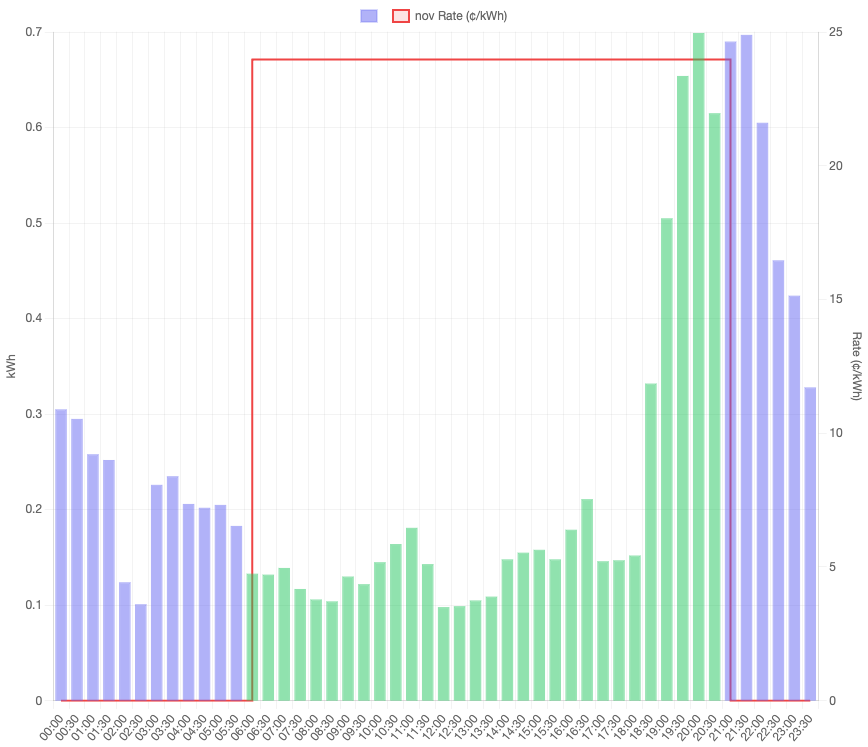
Figure 4 – Free Night Hours Plan
- Seasonal Plans:
These plans give rewards or discounts during certain seasons or months. Some examples are three high usage days free, 50% off in summer, or discounts in winter. Just like the free hours plans, the energy rates are very high and most people end up overpaying.
How do you know what type of plan you are getting?
Every plan has a document called the Electricity Facts Label (EFL). The EFL explains all the details of the plan. You can identify the type of plan by reading this document. Free hours and free weekend plans show the exact days and hours when energy is free. Bill credit plans show the specific usage level where the credit applies. Seasonal plans list the monthly rewards or discounts. The EFL is the only reliable way to know exactly what you are signing up for.
How To Choose the Right Plan
Here are a few simple steps to help new movers make the right choice:
- Choose your contract length. Plans start from month to month and go up to thirty six months or more. For first time movers, a six-month to twelve-month plan is usually a good start.
- Choose your plan type. Fixed rate plans are the safest and most predictable, and they are the best option for the vast majority of people in the state. Be careful, because some Energy Providers label bill credit plans or free hours plans as fixed rate plans. Always check the EFL to know exactly what type of plan you are choosing.
- Have a strategy to find the best plan. Knowing where to look is the key. PowerToChoose.org is the best starting point because it is the official PUCT website where companies list their cheapest plans. It gives you a good first look at the lowest-priced options available in your area. While customer service ratings can be helpful, the Retail Electric Provider does not control outages or how quickly they are fixed. That is the responsibility of the TDU. If everything is set up correctly and bills are paid on time, most customers will never need to contact their provider during the contract. This is why shoppers should not rely only on customer service reviews. Instead, focus on transparency, plan structure, rate competitiveness, and what the Electricity Facts Label actually says. When a contract is close to expiring, shop around again. You can often find a better price, and your current provider may match it if asked.
Electricity in Texas may seem complicated at first, but the process becomes clear once you know what to look for. Focus on true fixed rate plans, review the EFL, verify transparency, and use reputable comparison tools to avoid misleading offers. With the right information, you can secure a reliable and affordable plan from day one. Welcome to Texas!.
