

Masonry restoration is the skilled process of fixing and reviving damaged brick, stone, or concrete so it looks close to original and stays structurally sound. For property owners, this means a full approach that includes cleaning, repairing cracks, replacing damaged bricks or stones, and repointing worn mortar joints. Unlike simple patchwork, restoration aims to keep the building’s historical and architectural character in place for many years.
Taking care of your building’s exterior is about more than looks; it is about protection. When you invest in professional masonry restoration from Nova Construction, you address both visible issues and hidden problems that could weaken the structure over time.
By learning how different materials behave and how weather effects like freeze-thaw cycles work, owners can make smart choices that protect their building and extend its life.
What Does Masonry Restoration Involve for Property Owners?
Differences Between Masonry Restoration and Masonry Repair
Masonry repair and masonry restoration are often confused, but they are not the same. Repair usually means small, local fixes aimed at clear or urgent problems, such as one cracked brick or a small area of crumbling mortar. Repairs tend to cost less and focus on getting things functional again without looking at the whole structure.
Restoration is a larger project that reviews the entire building. It uses specific materials and methods-especially important for historic buildings-to help bring the structure back to its earlier condition. Restoration looks for the underlying causes of damage and makes sure new materials match the original work in color, texture, and key properties like breathability and strength.
Which Types of Masonry Structures Can Be Restored?
Masonry restoration can help many kinds of buildings, including private homes, row houses, churches, and major historic sites. Common materials include brick, natural stone such as marble, granite, and limestone, and even glass block.
Each material needs a different approach; for example, hard stones like granite resist water damage better but are often used in foundation areas that must be handled with very careful work.
Restoration covers more than basic walls. It often focuses on special building features. Chimneys, sometimes called “cold walls” because they are exposed to the weather on all sides, often need rebuilding or repointing. Foundations, parapets, and decorative cornices are also frequent problem areas, as they tend to show weather damage and age first.
Which Masonry Problems Should Property Owners Watch For?
Common Signs of Masonry Damage
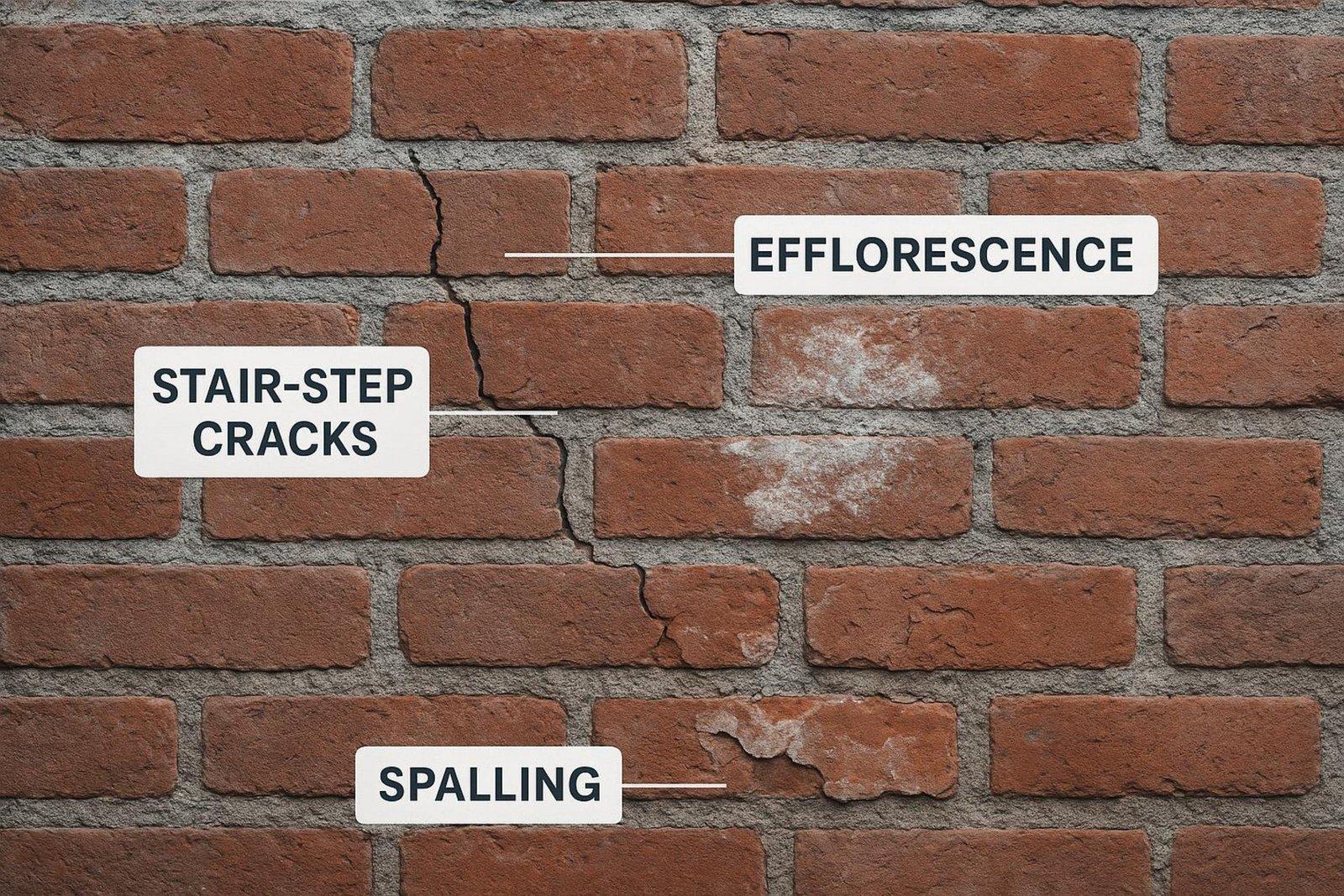
Finding issues early is the best way to stop small problems from turning into major structural failures. Property owners should watch for “stair-step” cracks along mortar joints, which can point to foundation movement or settling.
Another warning sign is efflorescence-a white, powdery crust on the surface caused by water drawing salts out of the masonry as it dries. Efflorescence itself does not usually harm the wall, but it is a clear sign that water is getting in.
Spalling is another serious problem, where the face of the brick or stone chips, flakes, or peels away. This often happens when water gets trapped inside the material and then freezes and expands. You should also watch for mortar that crumbles easily when touched, and for “lateral deflection,” where a wall bows or curves because the joints have lost strength and no longer hold the wall firmly.
What Are the Risks of Delaying Repairs?
Ignoring masonry damage is risky. Small cracks let water enter the wall, speeding up decay through freeze-thaw cycles. Over time, this moisture can reach internal supports, causing metal lintels and other steel components to rust and swell, which puts extra pressure on nearby bricks or stones. This ongoing stress can lead to serious structural weakness and even partial collapse, creating unsafe conditions for people in and around the building.
To prevent such hazards, it is essential to work with professionals who understand the lifecycle of a building’s facade; Nova Construction Services is a leading exterior restoration company that specializes in identifying and fixing these vulnerabilities through precise repair and restoration of structures.
Waiting also raises costs. A simple repointing job can grow into a full wall rebuild or foundation repair that costs tens of thousands of dollars. Gaps and cracks in masonry also allow air leaks, forcing heating and cooling systems to work harder and driving up energy bills.
Special Considerations for Historic Masonry
Older buildings-often those 50 years or more-need a gentle and historically aware approach. One of the worst mistakes an owner can make is using modern, very strong Portland cement mortar with old, handmade bricks.
Historic bricks are often softer and more absorbent; they work best with lime-based mortars that are intentionally weaker than the bricks. This way, the mortar takes on movement and moisture stress, rather than the bricks breaking.
Using modern, non-breathable paints or sealers on old masonry can cause serious harm. These products can trap moisture inside the wall, leading to fast spalling and hidden decay. Restoration work on historic structures should focus on compatible materials and traditional craft methods to protect the building’s character and story.
What Are the Primary Steps in Masonry Restoration?
Initial Inspection and Assessment
Every successful restoration starts with a professional checkup to find the true cause of the damage. A contractor will look at weather exposure, building movement, and the quality of any earlier repairs. They may use tools like moisture meters or 3D laser scanning to locate hidden issues. This stage helps decide whether the building only needs routine maintenance or more serious corrective work.
Cleaning and Surface Preparation
Cleaning removes dirt, mold, and air pollutants that hide the original look of the masonry. The main rule is to start with the gentlest option, such as low-pressure water or mild cleaning products. Harsh methods like sandblasting should be avoided because they strip off the protective “fireskin” of bricks and leave them open to rapid weather damage.
Repointing and Mortar Repair
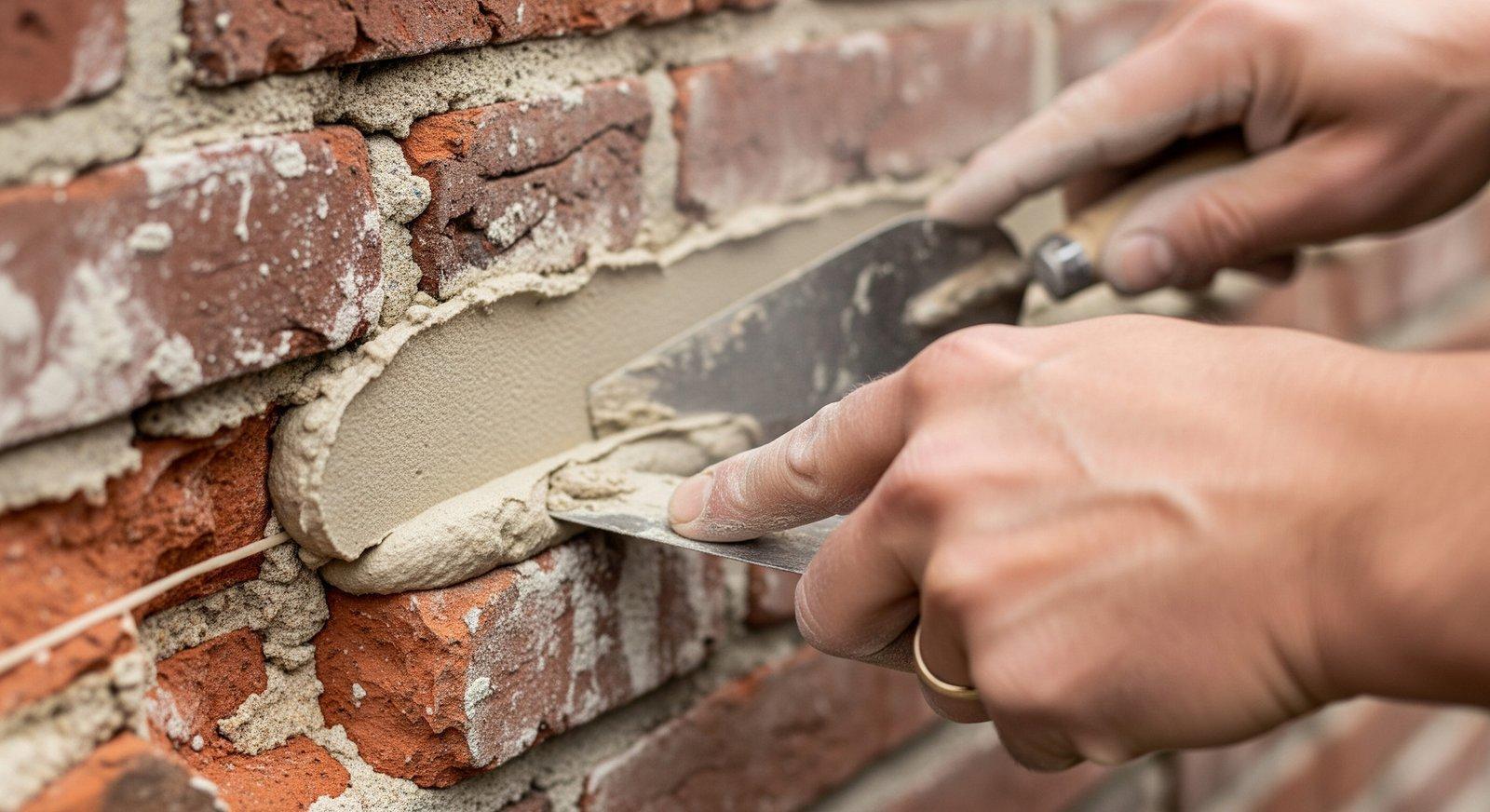
Repointing means carefully removing damaged or loose mortar to a set depth (usually 2 to 2.5 times the width of the joint) and filling the joint with new mortar. The new mortar should match the old in both color and makeup. This process restores the wall’s ability to keep water out and support loads, and it helps stop moisture from “wicking” deeper into the building.
Repairing Cracks, Stains, and Water Damage
Cracks can be treated with methods like grout injection, where cement-based or epoxy materials are pumped into gaps to rebuild strength. For water damage, the source of the moisture must be fixed first-such as repairing faulty gutters or downspouts-before the masonry is restored. In some cases, special biological cleaners are used to remove deep stains from stone without damaging the surface.
Brick or Stone Replacement
When individual bricks or stones are too far gone to repair, they need to be replaced. Skilled masons look for units that match the existing wall in color, texture, size, and durability. For historic buildings, this may mean using salvaged materials or custom-made bricks so the repaired area blends in smoothly with the original work.
Waterproofing and Protective Coatings
After repairs are done, a breathable water repellent may be applied. These products let moisture escape from inside the wall while blocking most water from entering from the outside. Property owners should choose products that do not form a solid film on the surface, since trapped moisture inside the wall is a common cause of future spalling and damage.
Restoring Architectural and Decorative Details
Restoration often includes rebuilding special features like cornices, belt courses, and carved stone details. New technology, such as 3D scanning and 3D printing, can work together with traditional hand carving to copy complex shapes with high accuracy, helping the building keep its historic style and presence.
Which Masonry Restoration Techniques Can Property Owners Use Themselves?
Basic Tools and Materials Needed
For small upkeep tasks, a handy owner can keep a simple masonry toolkit. This might include a masonry chisel and hammer for taking out loose mortar, a small trowel for placing new mortar, and a stiff natural-bristle brush for cleaning joints. Safety equipment-gloves, eye protection, and a dust mask-is mandatory, since old mortar and lime can irritate skin and lungs.
DIY Steps for Minor Repairs and Maintenance
Owners can often handle light “spot repointing” in areas that are not load-bearing. This involves removing loose mortar, brushing the joint clean, and applying a pre-mixed mortar that suits the age and type of the building. The new mortar should be kept slightly damp for several days so it cures slowly and evenly, which greatly improves the final strength of the repair.
Tips for Cleaning and Preventing Damage
Gentle washing with a garden hose and a soft brush can remove surface grime and slow down moss and algae growth. One of the best simple protection methods is moisture control: keep gutters clear, make sure downspouts carry water at least five feet away from the foundation, and watch for new cracks. A small gypsum plaster patch across a crack can help you see if the wall is still moving over time.
When Should Property Owners Call a Professional Masonry Contractor?
Identifying Complex or Unsafe Situations
If you see long horizontal cracks, walls that bulge, or a chimney that leans, stop DIY work and call a professional right away. These signs can point to serious structural problems that might lead to collapse. Work on historic buildings, projects that need tall scaffolding, or jobs involving dangerous materials like lead paint or asbestos should always be handled by trained and properly equipped specialists.
How to Choose a Qualified Masonry Specialist
When hiring a contractor, choose one with proven experience in restoration, not just new builds. Ask for references from projects completed 10 or more years ago so you can see how their work has held up over time. A skilled contractor should offer to create a small “mock-up” on a hidden part of your building to show they can match mortar color and texture closely.
How Does Masonry Restoration Improve Properties?
Safety and Structural Integrity
The main benefit of restoration is a stronger, safer building. By fixing cracks and replacing worn mortar, the structure becomes better able to resist fire, strong winds, and even minor seismic activity. Restoration helps keep load-bearing parts of the building stable, giving occupants greater confidence in the building’s safety.
Curb Appeal and Property Value
A clean, well-restored exterior makes a strong first impression. For businesses, this can mean more foot traffic and better brand image. For homeowners, a neat and attractive facade can noticeably raise resale value. Proper restoration removes ugly stains and poor-quality “scam pointing” and replaces them with careful workmanship that looks clean and well-finished.
Extending the Lifespan of Masonry Structures
Masonry is known for its long life, but it still needs care. Regular restoration works like resetting the clock on a building’s lifespan. By dealing with minor issues before they grow, you reduce the chance of needing total demolition and rebuilding, allowing the structure to keep serving its use for many generations.
Tips for Preserving and Maintaining Restored Masonry
Scheduling Routine Inspections
Maintenance is an ongoing process, not a one-time task. Property owners should walk around the building at least once a year, ideally in spring or fall. Look for new cracks, damp spots, or peeling sealant. A professional should perform a more detailed inspection roughly every five years to catch problems that are not obvious from the ground.
Effective Cleaning Methods
To keep restored masonry looking good, stick with gentle cleaning methods. Avoid high-pressure power washers, which can strip the protective skin from bricks and push water deep into the wall. If you see dark or patchy stains, use a masonry-safe biological cleaner that kills mold and algae without harming the brick or stone.
Importance of Moisture Management
Water is the main source of masonry damage. Make sure the soil around your foundation slopes away from the building so water does not pool and create pressure on the walls. Keep large trees and shrubs 10 to 15 feet away from the structure, since roots can crack foundations and dense foliage can trap moisture against the wall, leading to mold and decay.
|
Rating |
Brick Condition |
Mortar Condition |
|
0-4 |
Cannot be saved; heavy breakdown or spalling. |
Repointing required; mortar is missing or crumbles easily. |
|
5-8 |
Stable and sound; may need small repairs. |
Acceptable; needs tools like a chisel or hammer to remove. |
|
9-10 |
Excellent or new; sharp edges and a clear “ring” when tapped. |
Too hard for historic work; likely has a high Portland cement content. |
Conclusion
Beyond the technical tasks, property owners should think about how their maintenance choices affect insurance and long-term planning. Many modern insurance policies cover sudden events like storms or fires, but they usually do not cover slow wear or neglect. Keeping careful records and photos of your restoration work can help if you ever need to make a claim, as they show the building was well cared for before any damage occurred.
Masonry restoration is also one of the most environmentally friendly building practices available. The “greenest” building is often the one that already stands; by restoring instead of demolishing and rebuilding, you reduce the energy and emissions involved in making and moving new materials. Using high-quality, breathable silicate paints or traditional lime washes helps cut VOCs and keeps your building dry, breathable, and healthy for the people who use it for many years to come.
