


Getting the curtain width right makes a huge difference in how your room looks and feels.
When I first bought curtains for my living room, I made the classic mistake of choosing panels that were too narrow.
They looked stretched and flat against the window, and I couldn’t get that full, luxurious look I wanted.
In this guide, I’ll share what I’ve learned about measuring windows correctly, understanding fullness ratios, and choosing the best width for your style.
You’ll get the exact formulas that finally worked for me, plus tips to avoid the common mistakes I made along the way.
Why Curtain Width Matters
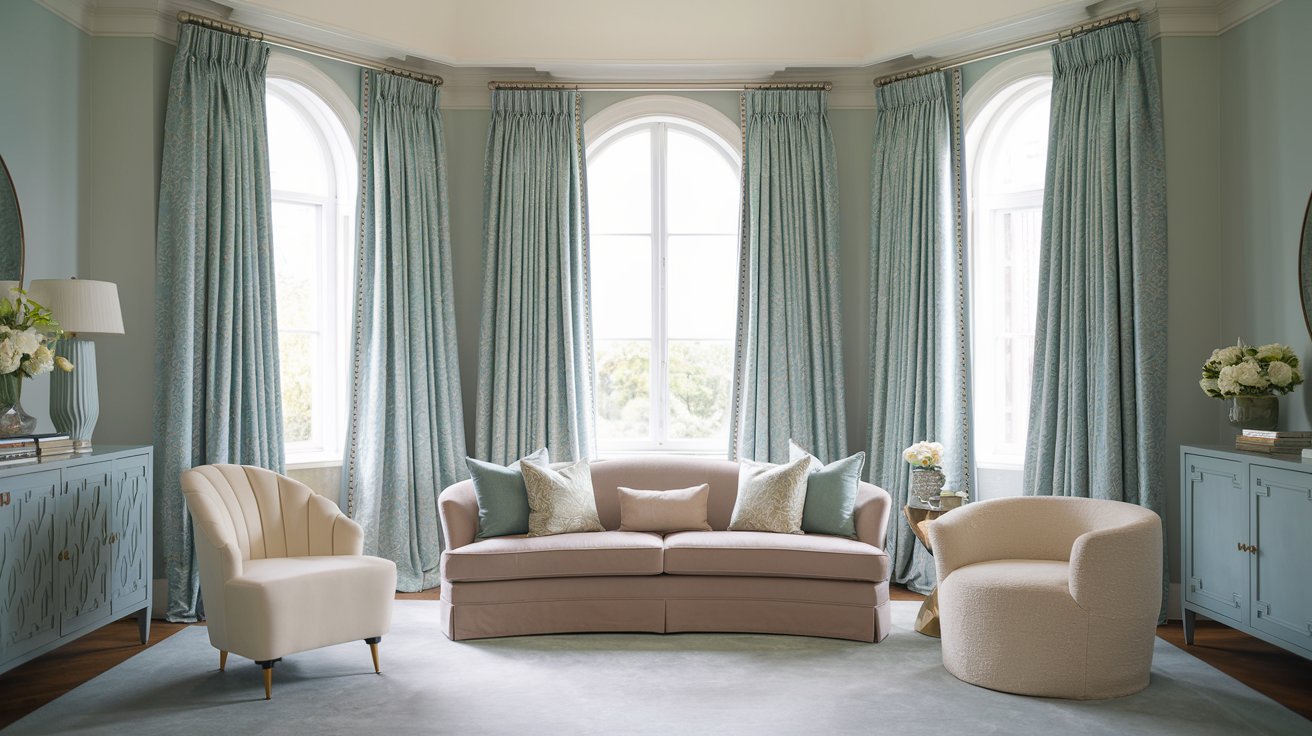
The width of your curtains changes how your entire room looks and feels.
Proper width gives you complete coverage when you close your curtains. This means better privacy and light control. Too narrow, and you’ll have gaps on the sides. Too wide, and everything looks bunched up and messy.
Width also affects your space. Wider curtains that extend past the window frame make your room feel bigger. Narrower panels create a cozier feeling.
Think of it like a picture frame. The right size makes your windows look complete and intentional.
The Golden Rule: Basic Curtain Width Guidelines
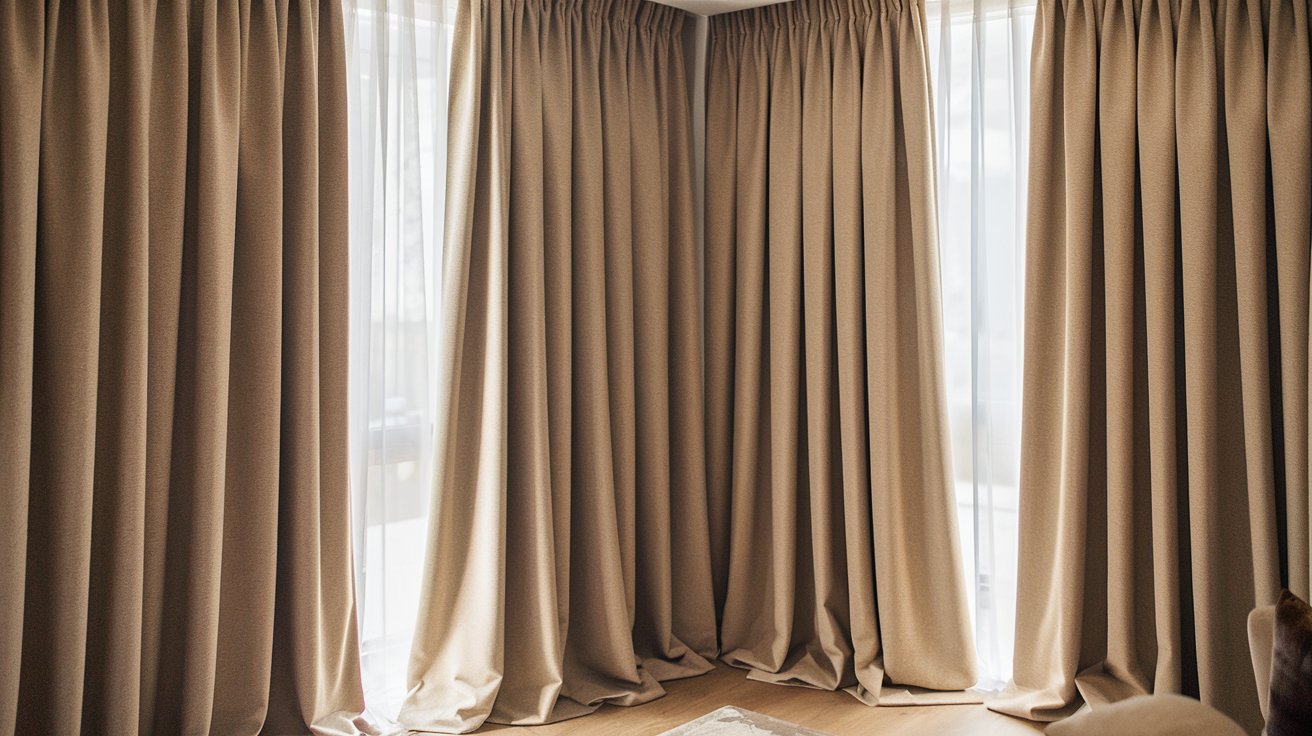
Here’s the simple formula that works for most windows. Your curtains should be 1.5 to 3 times wider than your window.
Let me break that down. If you have a 60-inch wide window, you’ll want curtains that are 90 to 180 inches wide total.
The lower end at 1.5 times gives you a clean, tailored look. These curtains hang straighter with fewer folds. They work great for modern spaces or smaller rooms.
The higher end at 2.5 to 3 times creates a full, luxurious appearance. You’ll get those rich, flowing folds that look professionally styled. This ratio works best for formal rooms or larger spaces.
There’s one exception. If your curtains are purely decorative and you never plan to close them, you can go as low as 1.2 times the window width. But honestly, I’d still recommend at least 1.5 times for a polished look.
How to Measure Windows for Curtains
Follow these three simple steps to get accurate measurements. Proper measuring ensures your curtains fit perfectly and look professionally installed.
Step 1: Measure Window Width
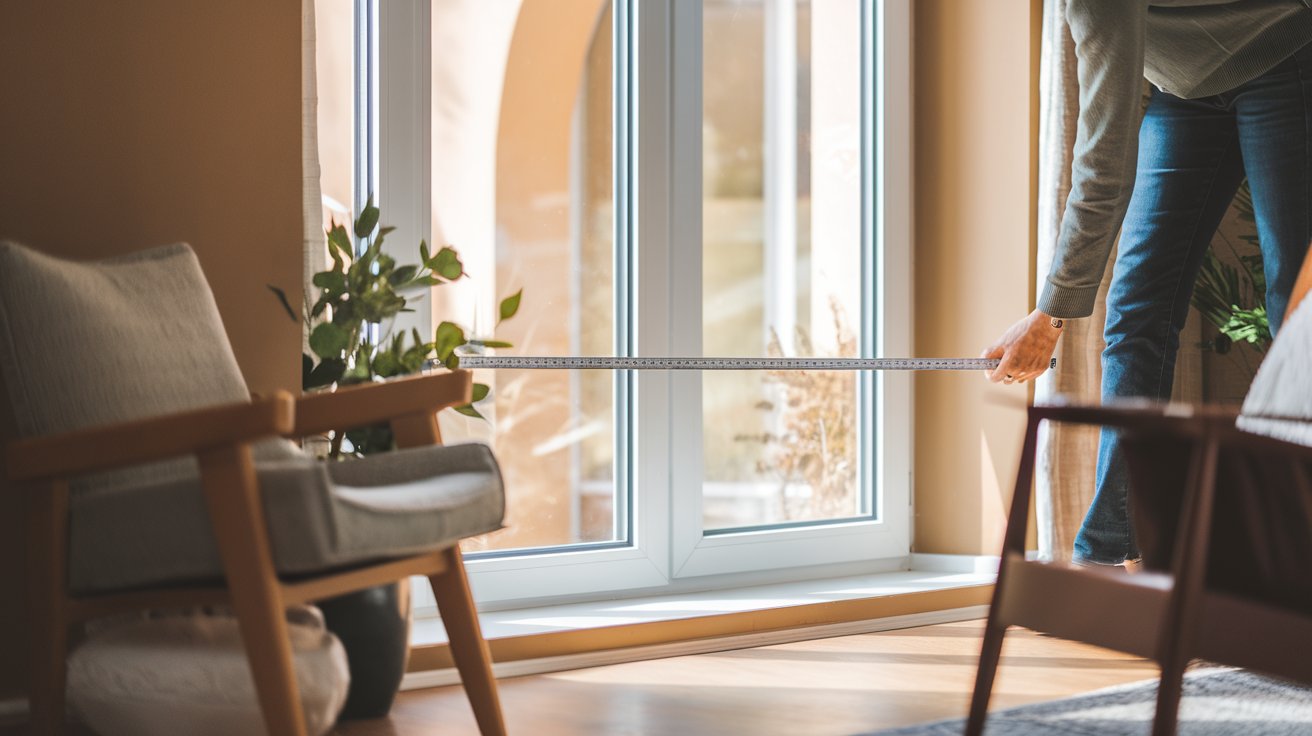
Start by measuring your window from edge to edge of the frame. Use a metal tape measure for accuracy. Make sure to include any trim or molding in your measurement.
This gives you the base number for calculating how wide your curtains need to be. Write this number down because you’ll use it for all your calculations.
Step 2: Add Rod Extension
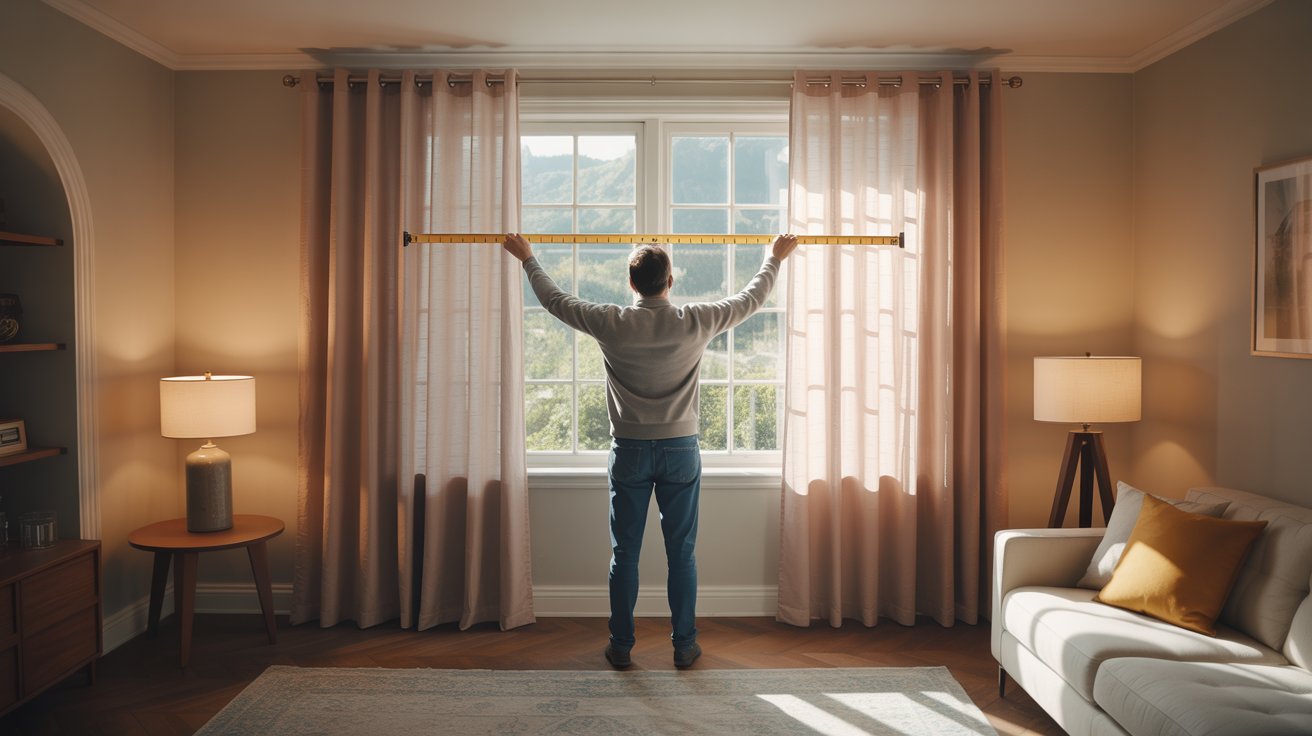
Your curtain rod should extend 4 to 8 inches beyond each side of the window. This extra space lets you pull curtains completely off the glass when they’re open.
That means more natural light floods into your room during the day. Measure from one end of where your rod will sit to the other end. This is your rod width.
Step 3: Determine Curtain Length
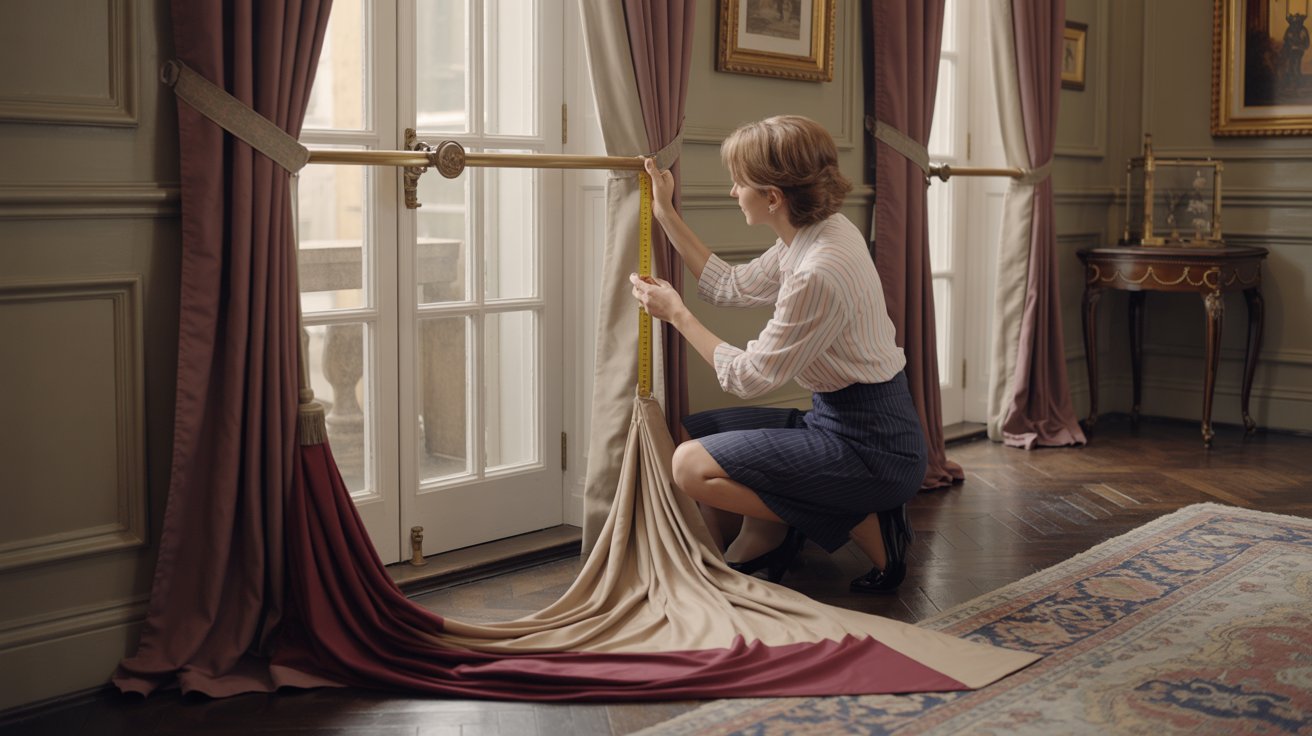
For floor-length curtains, measure from your rod down to about half an inch above the floor. This prevents dragging and makes cleaning easier. For window-sill length, measure to 4 inches below the sill.
Some people prefer a puddling style where fabric pools on the floor, or a kiss style where curtains just barely touch. Choose based on your room’s formality and your cleaning preferences.
Choosing the Right Width for Different Curtain Types
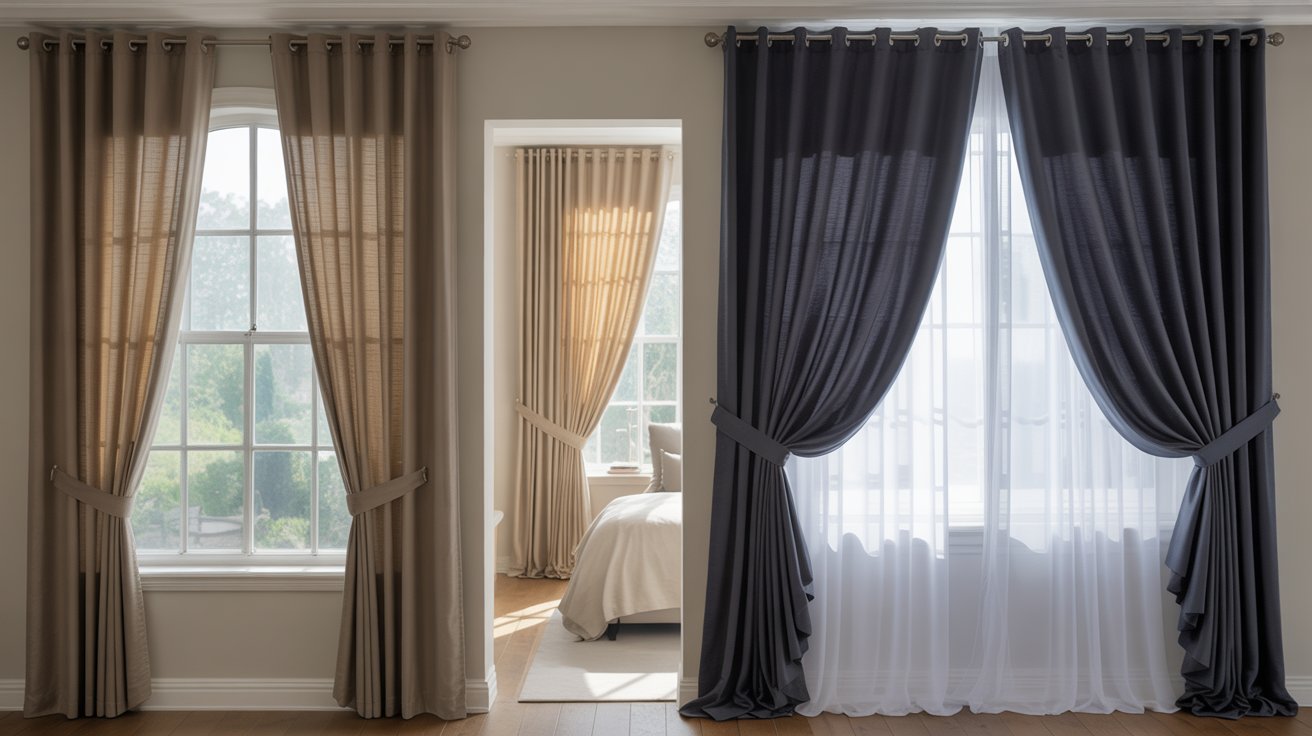
Different curtain styles need different amounts of fabric. Here’s how to size each type correctly for the best look and function.
Grommet and Rod Pocket Curtains
These curtains slide on a rod through holes or a pocket at the top. They need extra fabric to create those nice folds when you open and close them.
Plan for at least 2 times your window width. So a 50-inch window needs 100 inches of curtain width total. This gives you enough material to bunch and fold naturally without looking stretched tight.
French Pleated Curtains
French pleats are already sewn into the fabric at the top. The fullness is built right in. You can match the panel width to your window width and still get good coverage.
These work great if you have limited space or want a more structured look. The pleats do all the work for you.
Sheer Curtains
Lightweight, see-through fabrics need more width to look right. Go for 2.5 to 3 times your window width. This creates that soft, billowy effect sheers are known for.
Less fabric makes them look thin and sad. More fabric gives you beautiful, flowing volume that catches the light perfectly.
Blackout Curtains
When you need total darkness, width matters even more. These heavy curtains should be 2 to 3 times your window width.
The extra fabric eliminates gaps where light sneaks through. This is especially important for bedrooms or home theatres where you need complete light control.
Fullness and Header Styles
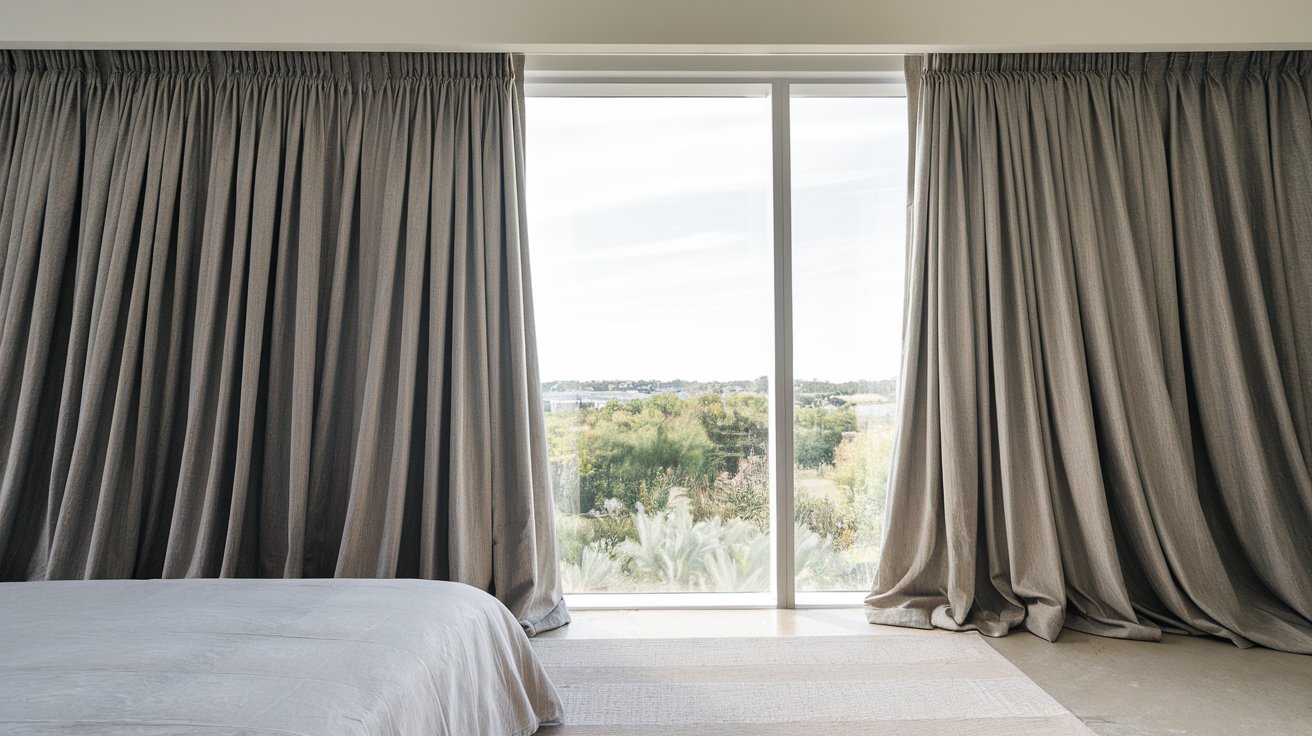
Fullness is the extra fabric that creates pleats and gathers in your curtains. It makes them look full instead of flat and stretched.
Here’s a quick guide. Standard fullness is 2 times your window width for most rooms. For a lush look or sheer fabrics, use 2.5 to 3 times the width. For minimal, modern styles, you can go with 1.2 to 1.5 times.
Your header style matters too. Pleated headers have built-in fullness, so you need less total width. Rod pocket and grommet styles need more fabric because they gather along the rod. Consider both your header type and desired fullness when calculating your curtain width.
Interior Design Tips
- Wide curtains make your windows look bigger than they actually are. This tricks the eye into seeing the whole room as more spacious.
- Hanging curtains close to the ceiling draws the eye upward. This makes your ceilings appear taller and your room feel more open.
- Consider the wall space around your window before choosing width. Your curtains should balance with nearby furniture and not overwhelm the area.
- Make sure your curtain rod extends far enough on each side. When panels are fully open, they shouldn’t block any part of the glass.
- The right width creates visual weight that grounds your window. Too narrow looks skimpy, while properly sized panels frame the window like it’s a work of art.
Conclusion
Getting your curtain width right really does make all the difference. I’ve learned this through my own trial and error, and now my windows look so much better than when I started.
Take your time with measuring. Think about your fabric type and the style you want. Remember that fullness ratio we talked about. These small details add up to curtains that look professionally done.
If you’re working with tricky windows or want custom treatments, don’t hesitate to call in a professional. Sometimes that expert eye is worth it. But for most standard windows, you now have everything you need to choose the perfect curtain width for your home.
Frequently Asked Questions
What happens if my curtains are too narrow?
Narrow curtains leave gaps on the sides that let light leak through. They also look stretched and skimpy, making your windows appear underdressed and your room feel incomplete.
Can curtains be too wide for a window?
Yes, curtains that are too wide create excessive bunching and look cluttered. They take up too much wall space and can overwhelm smaller rooms or windows.
How do I calculate the total width I need for two panels?
Multiply your window width by your chosen fullness ratio (usually 2 to 3 times). Then divide that number by two to get the width needed for each individual panel.
Should I buy wider curtains for sliding glass doors?
Absolutely. Sliding doors need extra width so the curtains can stack completely off the glass when open. Aim for 2.5 to 3 times the door width for proper coverage and function.
Do heavy fabrics need different width calculations than light fabrics?
Heavy fabrics like velvet can work at 1.5 to 2 times the window width because they create natural folds. Light fabrics like sheers need 2.5 to 3 times the width to avoid looking thin and limp.
