

Let me guess. You’re lying in bed at night, and you can hear everything happening in the bathroom next door.
Or maybe you live with roommates and feel self-conscious every time you take a shower. I get it. Bathroom noise can make you feel uncomfortable in your own home.
You shouldn’t have to deal with that. The good news is you don’t need a huge budget to fix it. I’m going to show you how to soundproof a bathroom using simple, affordable methods.
Most of these tricks are things you can do this weekend without any special skills.
Why Bathrooms Are Noisy
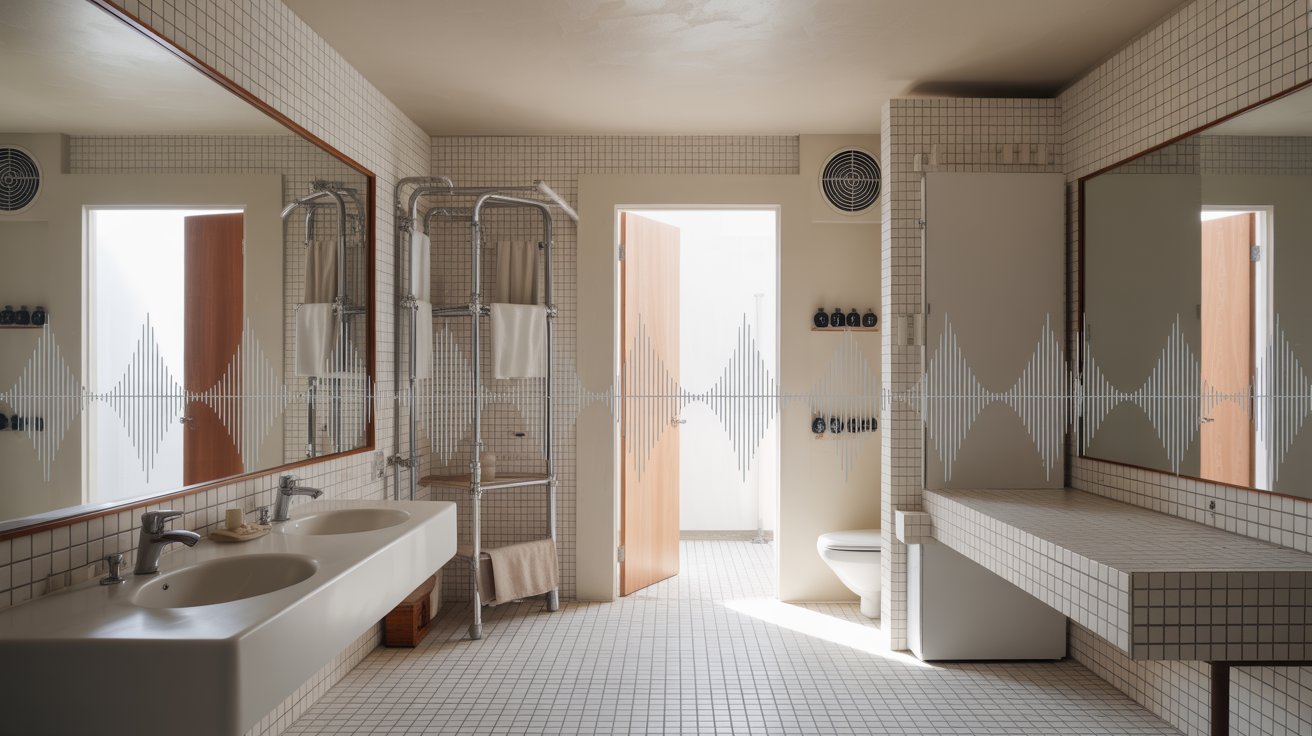
Bathrooms are naturally loud spaces. Understanding why helps you fix the problem more effectively.
Hard Surfaces Amplify Sound
Take a look around your bathroom. You’ll notice tile floors, ceramic walls, and large mirrors. These hard surfaces don’t absorb sound. Instead, they bounce it around the room.
Think about singing in the shower. Your voice sounds fuller and louder, right? That’s because the sound waves keep bouncing off these smooth surfaces. Every noise gets multiplied.
Bathrooms basically turn into echo chambers. A simple flush or running faucet becomes much louder than it needs to be.
Gaps and Openings Let Sound Escape
Sound finds the easiest path out of your bathroom. That gap under your door? It’s like a highway for noise.
Vents and exhaust fans create openings that let sound travel to other rooms. Even worse, plumbing pipes act as transmission lines. They carry noise through your walls to bathrooms and kitchens in other parts of the house.
Affordable DIY Bathroom Soundproofing Solutions
You don’t need expensive materials to make your bathroom quieter. These simple fixes work well and cost very little.
Block Door Gaps
That space under your door is your biggest problem. Sound escapes through it easily.
Grab a sound-blocking rug pad and slide it under the door. It creates a barrier that stops noise from getting out. You can find these at most home stores for under $20.
Door sweeps work even better for a permanent fix. These attach to the bottom of your door and seal the gap completely. Sealant strips around the door frame help too. They create an airtight closure that keeps sound inside.
Add Soft Textiles
Soft materials soak up sound like a sponge. The fluffier, the better.
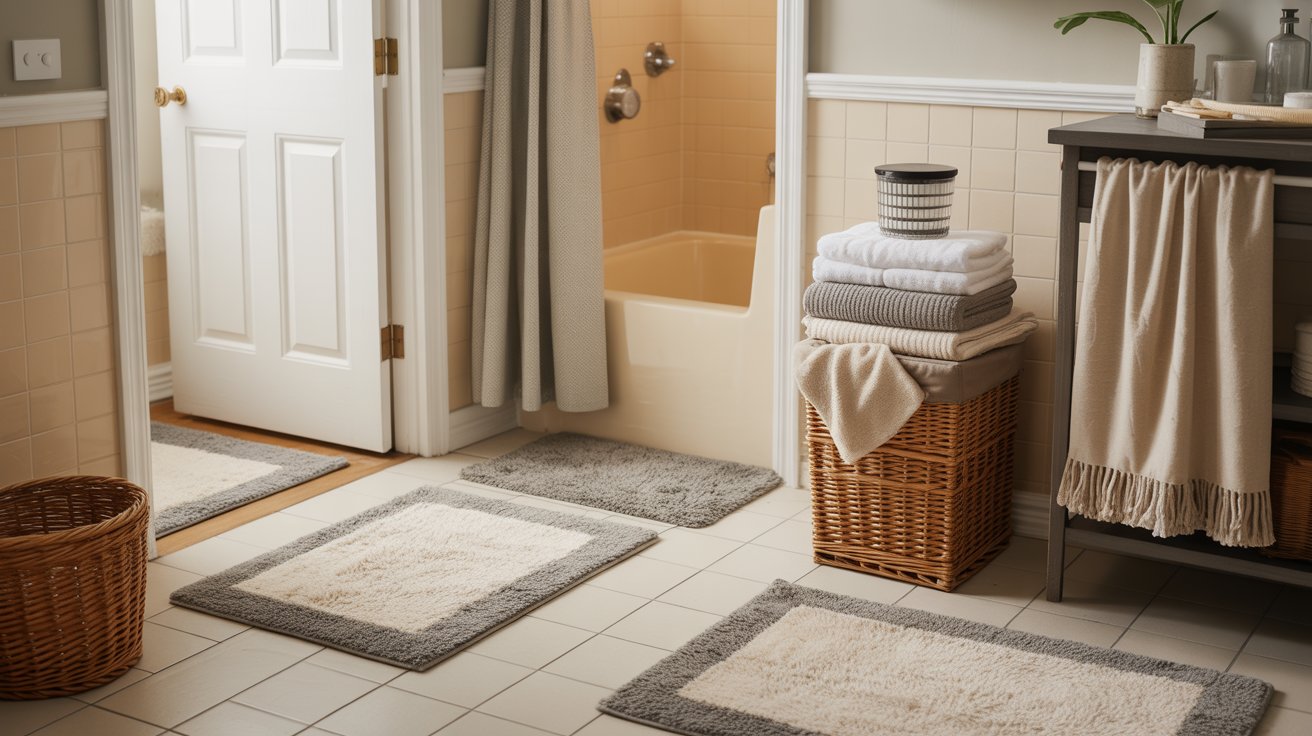
Stack extra towels on your towel rack. Put a thick bath mat on the floor. Add a fabric shower curtain instead of a plastic one. These small changes make a real difference.
A fabric-covered hamper absorbs more sound than a plastic bin. Even a cloth toilet paper holder helps a little bit.
Repurpose Existing Rugs
Got old rugs lying around? Put them to work in your bathroom.
You can stitch two rugs together to cover more floor space. This works great for large tile areas that reflect sound.
Just make sure the rug doesn’t block your door from opening. Trim it down if needed or fold the edges under.
Low-Cost Wall Soundproofing Options
Walls are the next place to focus. A few affordable additions can reduce echo and block noise from traveling.
Acoustic Panels and Wall Hangings
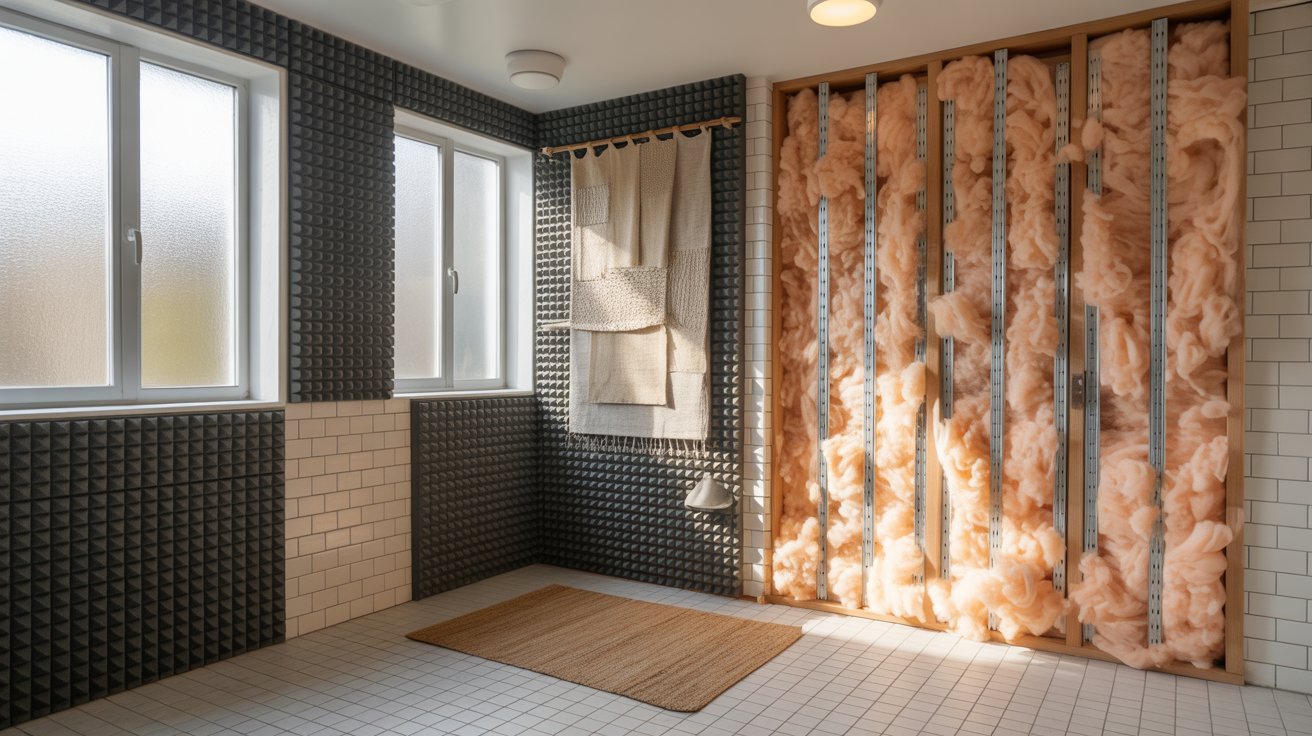
Peel-and-stick acoustic panels are your friend here. They’re lightweight foam squares that stick directly to your walls. No drilling or complicated installation needed.
You can find these online for around $30 to $50 for a pack. They work by absorbing sound instead of reflecting it back into the room.
Don’t want to buy new panels? Hang an old carpet or thick wall hanging instead. This might sound odd for a bathroom, but it works. Just make sure to hang it where it won’t get wet from the shower.
DIY Soundproofing Insulation
If you’re doing a bigger project, consider adding insulation inside your walls. Roxul Safe and Sound is a popular choice for soundproofing. It’s mineral wool that absorbs noise effectively.
This option requires opening up your walls, so it’s more work. But it gives you better results than surface treatments.
Resilient channels are metal strips that create space between drywall and studs. They help stop sound vibrations. For small bathroom projects, they’re worth considering if you’re already renovating.
Flooring and Ceiling Considerations
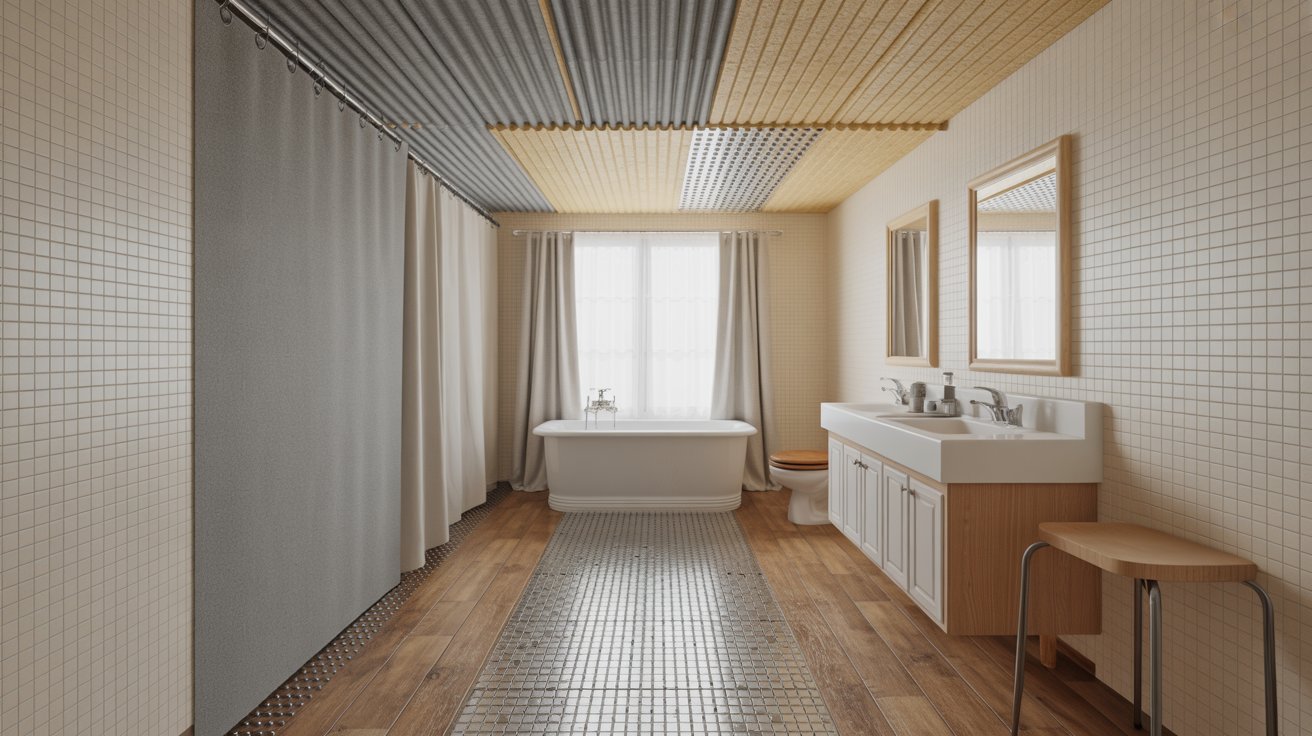
Floors and ceilings need attention too. These surfaces contribute a lot to bathroom noise.
Underlayments for Tile or Hardwood Floors
If you’re replacing your floor, add an underlayment beneath it. This layer sits between your subfloor and the tiles or hardwood on top.
Rubber or foam underlayment reduces echo significantly. It also stops sound from traveling to rooms below you.
PROFLEX 90 is a solid budget option. Impact Barrier QT works well too. Both cost less than premium brands but still do the job. You’ll spend around $1 to $2 per square foot.
This only works if you’re installing new flooring. But it’s worth the small extra cost when you’re already doing the work.
Ceiling Soundproofing Tips
Ceilings are tricky in bathrooms because of moisture. But you still have options.
Acoustic foam panels can go on the ceiling just like walls. Make sure you get moisture-resistant ones.
Drop ceilings are another choice. They create an air gap that traps sound. You can install these yourself with basic tools.
The same wall hanging methods work for ceilings, too. Just secure them properly so they don’t fall.
Plumbing Noise Solutions
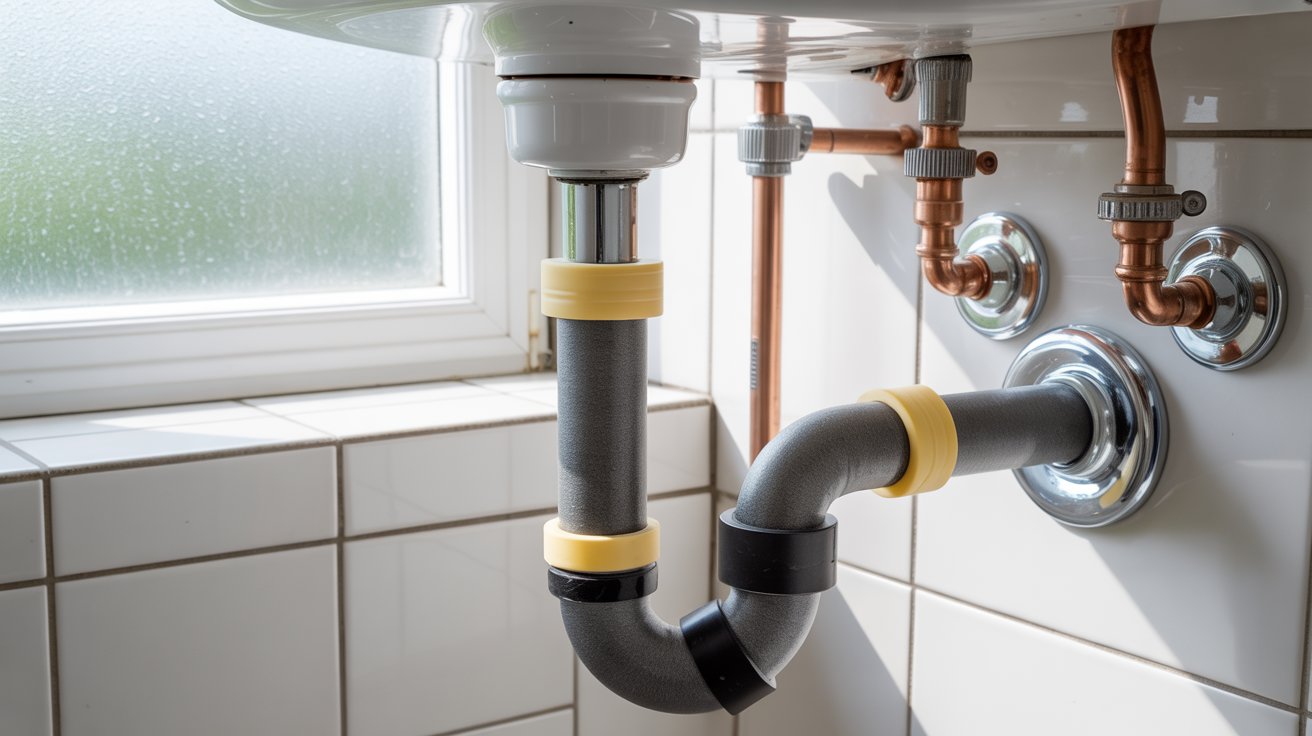
Water rushing through pipes creates a lot of noise. You can quiet them down without calling a plumber.
Wrap soundproofing tape or foam around exposed pipes. These materials muffle the sound of water flowing through. This tape costs around $10 to $20 per roll. Foam pipe insulation is even cheaper.
If you can access your pipes, add rubber washers or mounts. These cushion the pipes and stop them from rattling. The vibrations won’t transfer to your walls anymore.
When to Consider Professional Solutions
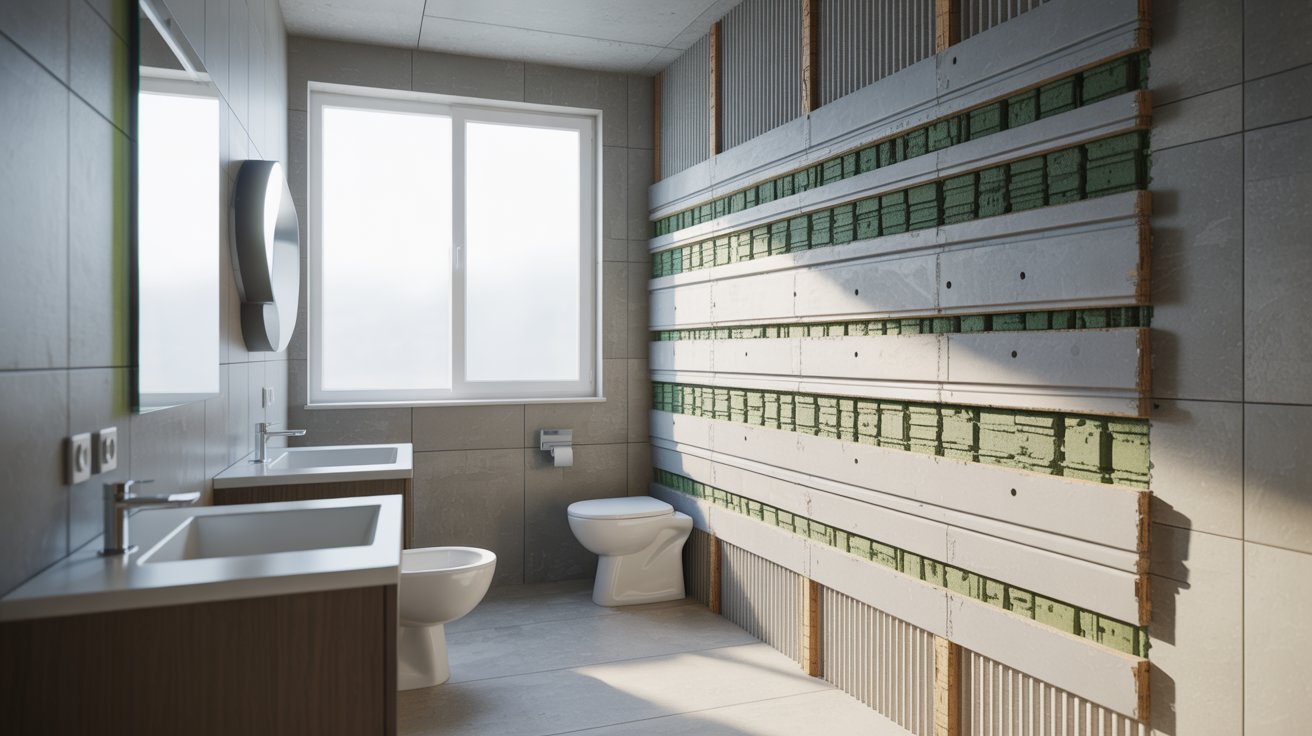
Sometimes DIY methods aren’t enough. Professional options exist for tougher noise problems.
Soundproof drywall is the serious solution. Green Glue goes between two layers of drywall. Quietrock is special drywall designed to block sound. These work great but cost more. You’re looking at $50 to $100 per sheet for Quietrock.
When should you go professional? If you share walls with neighbors or have a bathroom next to a bedroom, basic fixes might not help enough.
Compare what you’d spend on professional work versus how much the noise bothers you. Sometimes it’s worth the investment.
Conclusion
You now have a toolbox full of affordable ways to quiet down your bathroom.
Start with the basics: seal those door gaps, throw down some rugs, and add soft towels. Acoustic panels on the walls help too.
I recommend trying these simple fixes first. You might be surprised how much difference they make. Save the big renovations for later if you really need them.
Your bathroom should be a private, peaceful space. You deserve to feel comfortable in your own home. Start soundproofing your bathroom today and enjoy a quieter home!
Frequently Asked Questions
How much does it cost to soundproof a bathroom?
Basic soundproofing can cost as little as $50 to $200 using DIY methods like door sweeps, rugs, and acoustic panels. Professional solutions with specialized drywall can run $500 to $2,000 or more depending on your bathroom size.
What is the cheapest way to soundproof a bathroom?
Adding thick rugs, towels, and sealing the gap under your door are the most affordable options. These materials cost under $50 total and make a noticeable difference in reducing noise.
Can I soundproof a bathroom without renovating?
Yes, you can add sound-absorbing materials like acoustic panels, heavy curtains, and door seals without any major construction. These surface treatments work well for most everyday noise issues.
Do acoustic panels work in humid bathrooms?
Standard acoustic panels can work if placed away from direct water exposure. Look for moisture-resistant or waterproof acoustic foam specifically designed for bathrooms to avoid mold problems.
How do I stop toilet flushing noise from traveling?
Wrap exposed pipes with foam insulation or soundproofing tape to reduce water flow noise. Adding cushioned pipe mounts and sealing gaps around the toilet base also helps contain the sound.
