


Planning a new patio or driveway? The cost of pavers vs concrete is probably your biggest question right now.
I’ve been there myself when I redid my backyard, and I know how confusing pricing can be.
In this guide, I’ll break down 2025 prices, installation factors, and long-term value for both options. You’ll see real numbers for patios, driveways, and walkways.
I’ll also share maintenance costs and which choice saves money over time.
By the end, you’ll know exactly which material fits your budget and needs.
Average Costs of Pavers vs Concrete
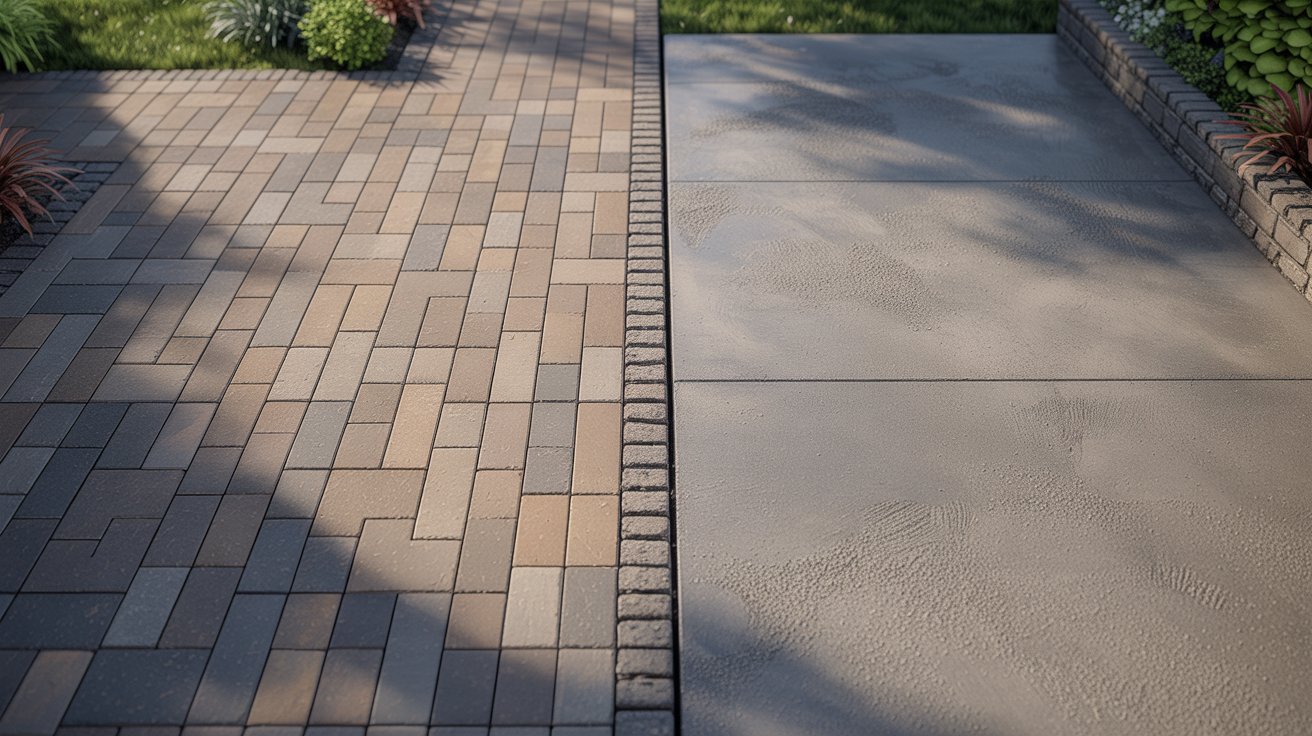
Standard poured concrete runs $6 to $15 per square foot installed. This includes basic gray concrete with a smooth or broom finish. Decorative options like stamped, stained, or epoxy-coated concrete cost $12 to $25 per square foot.
Pavers cost more upfront at $10 to $30 per square foot for material and installation. Concrete pavers are cheapest at $10 to $20 per square foot. Brick pavers run $15 to $25. Natural stone costs $20 to $30 or more. Permeable pavers fall in the middle range.
Installation takes more time and skill for pavers. Workers must lay each piece individually, level the base perfectly, and cut pieces to fit. This labor-intensive process drives up the final price compared to poured concrete.
Factors That Affect Costs
Several things impact what you’ll actually pay. Understanding these helps you get accurate estimates.
Material Type
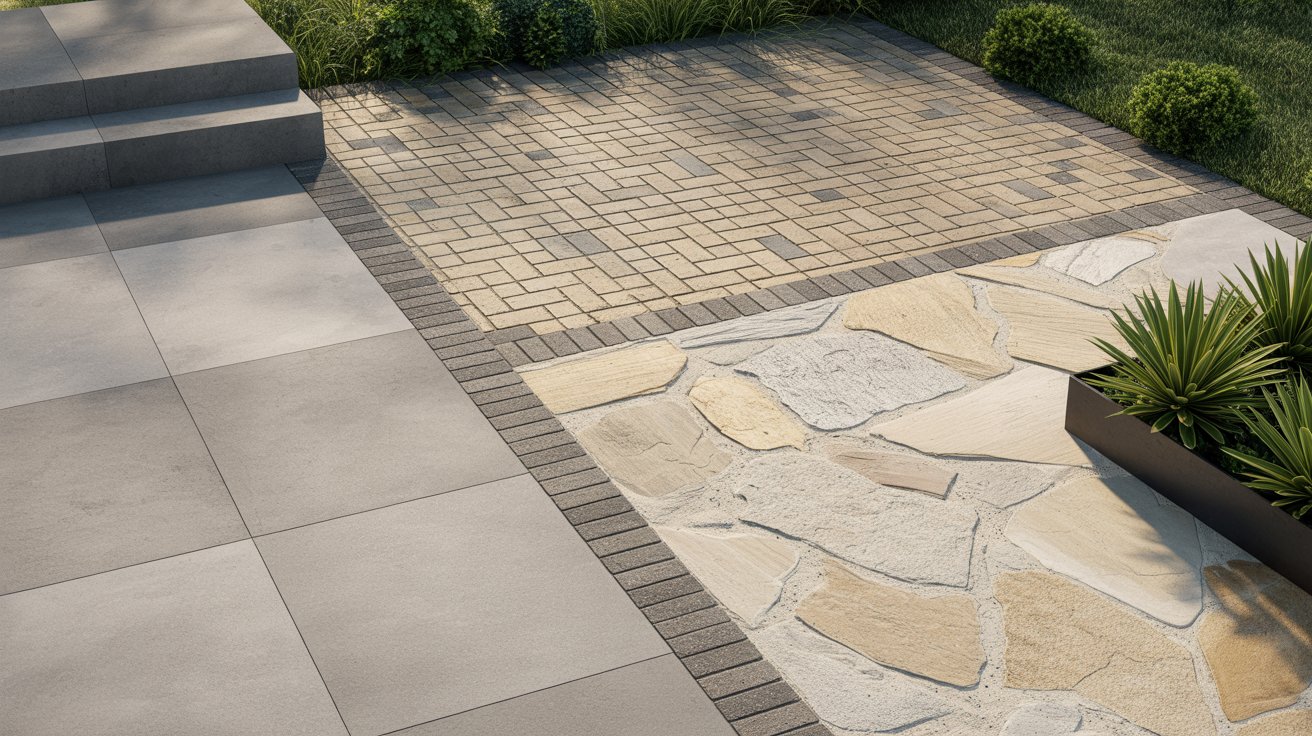
Not all pavers are created equal. Concrete pavers offer durability at a lower price. Brick pavers bring classic appeal and last for decades. Natural stone like flagstone or travertine costs the most but looks amazing.
Quality matters too. Cheaper materials might crack or fade faster. Higher-quality options last longer and need less maintenance. You get what you pay for.
Permeable pavers cost more initially but help with drainage and reduce runoff. Some areas require them for environmental reasons.
Installation Complexity
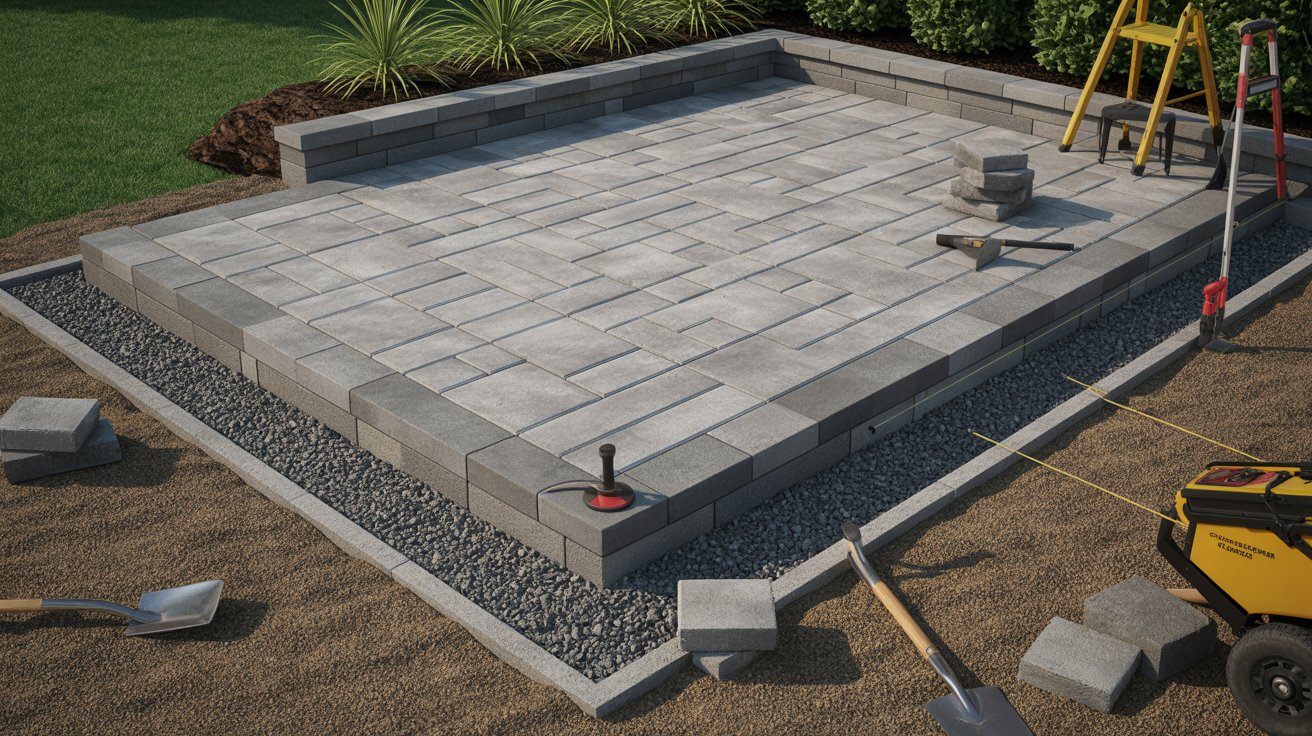
Base preparation makes or breaks your project. Contractors must excavate the area, add gravel for drainage, and compact everything firmly. Poor base work leads to sinking or cracking later.
Pavers require more precise work. Each piece needs perfect placement. Workers spend hours cutting, fitting, and leveling. Concrete just gets poured and finished in one day.
Grading ensures water runs away from buildings. Sloped sites need extra work. All of this adds labor hours and increases your bill.
Project Size and Shape
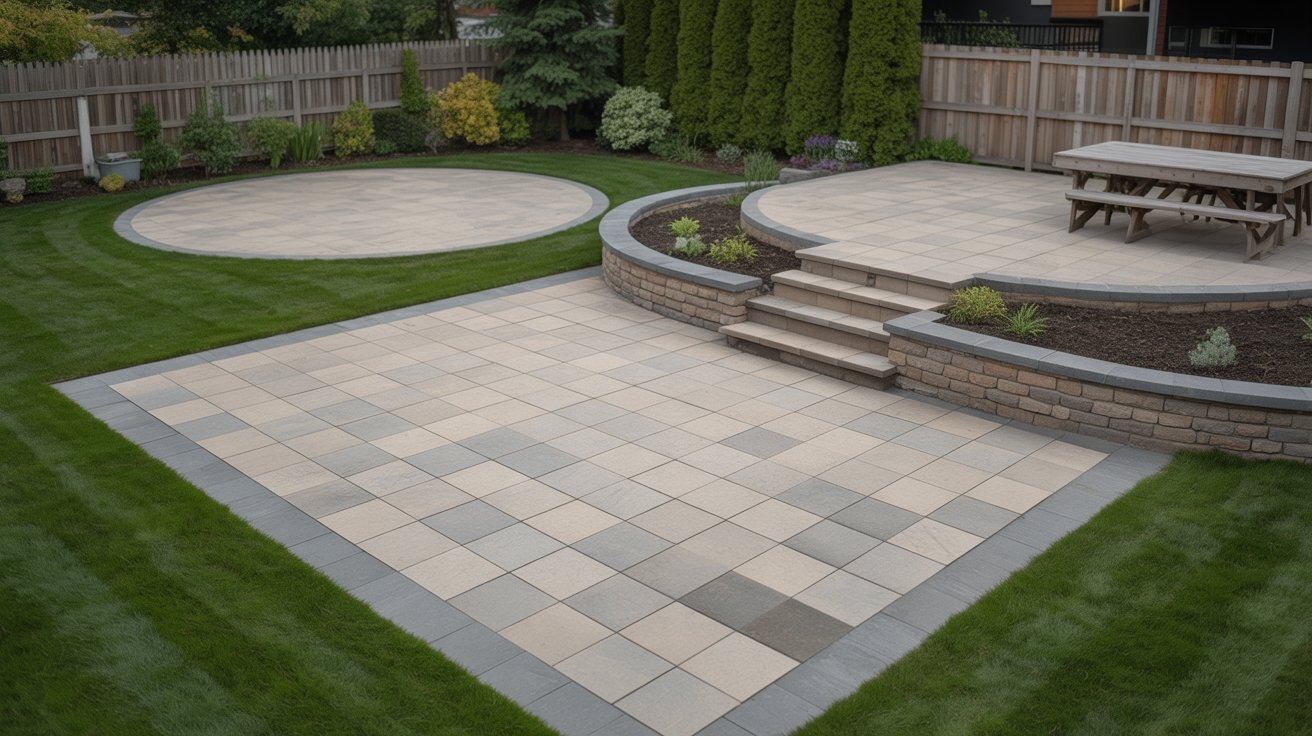
Bigger projects cost more total but less per square foot. A 500-square-foot patio costs less per foot than a 100-square-foot one. Contractors spread setup costs across more area.
Curved designs and irregular shapes add complexity. Workers need more cuts and custom fitting. Simple rectangles install faster and cheaper. Every corner and curve means extra time.
Multiple levels or built-in features like planters also raise costs. Keep designs simple to save money.
Decorative Finishes
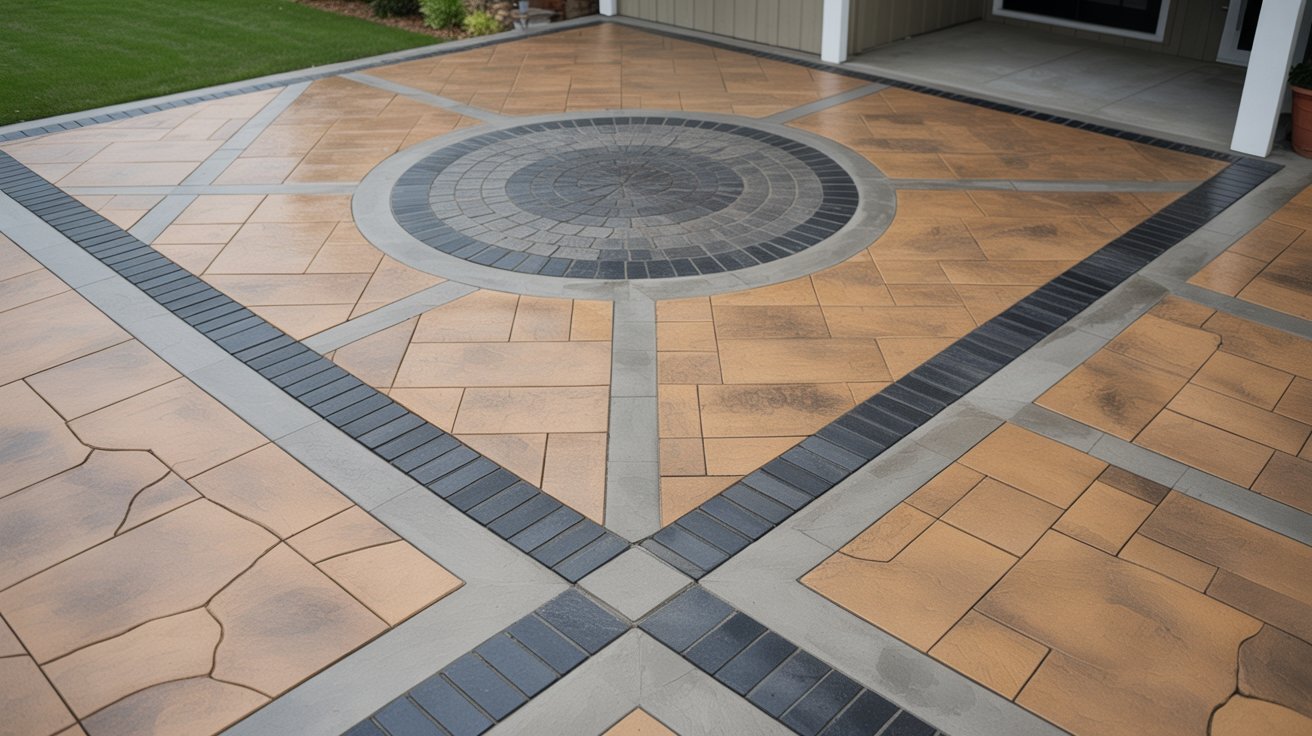
Plain concrete costs less. Add stamping, staining, or coloring, and prices jump. Stamped concrete that looks like stone costs $12 to $18 per square foot. Multiple colors or patterns push prices higher.
Custom paver patterns increase labor time. Herringbone or circular designs look great but take longer to install. Simple running bond patterns cost less.
Border treatments, inlays, and contrasting colors all add to the final price. Decide which details matter most to you.
Cost by Project Type
Different projects have different price ranges. Here’s what to expect for common outdoor spaces.
Patios
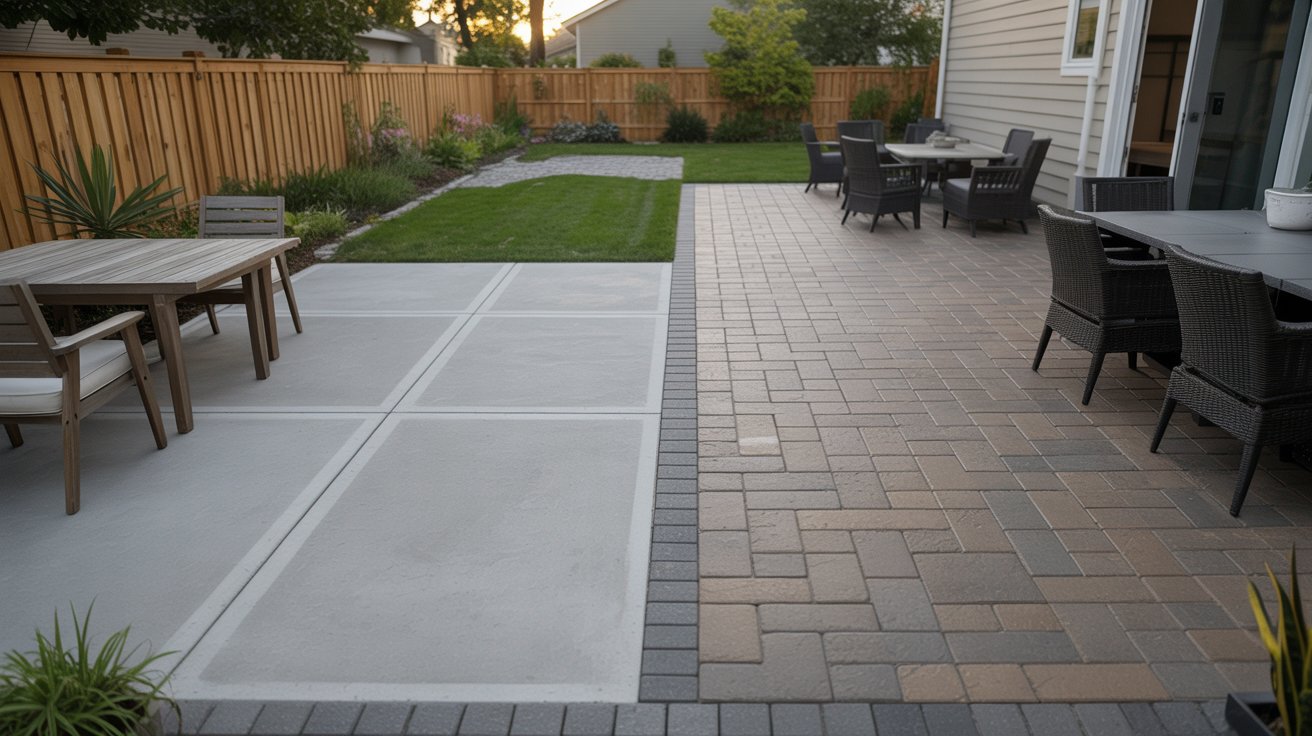
A basic concrete patio costs $1,800 to $4,500 for 300 square feet. Stamped or decorative concrete runs $3,600 to $7,500 for the same size.
A paver patio costs $3,000 to $9,000 for 300 square feet with standard materials. High-end stone pavers can push that to $12,000 or more. The extra cost buys you more design options and longer life.
Driveways
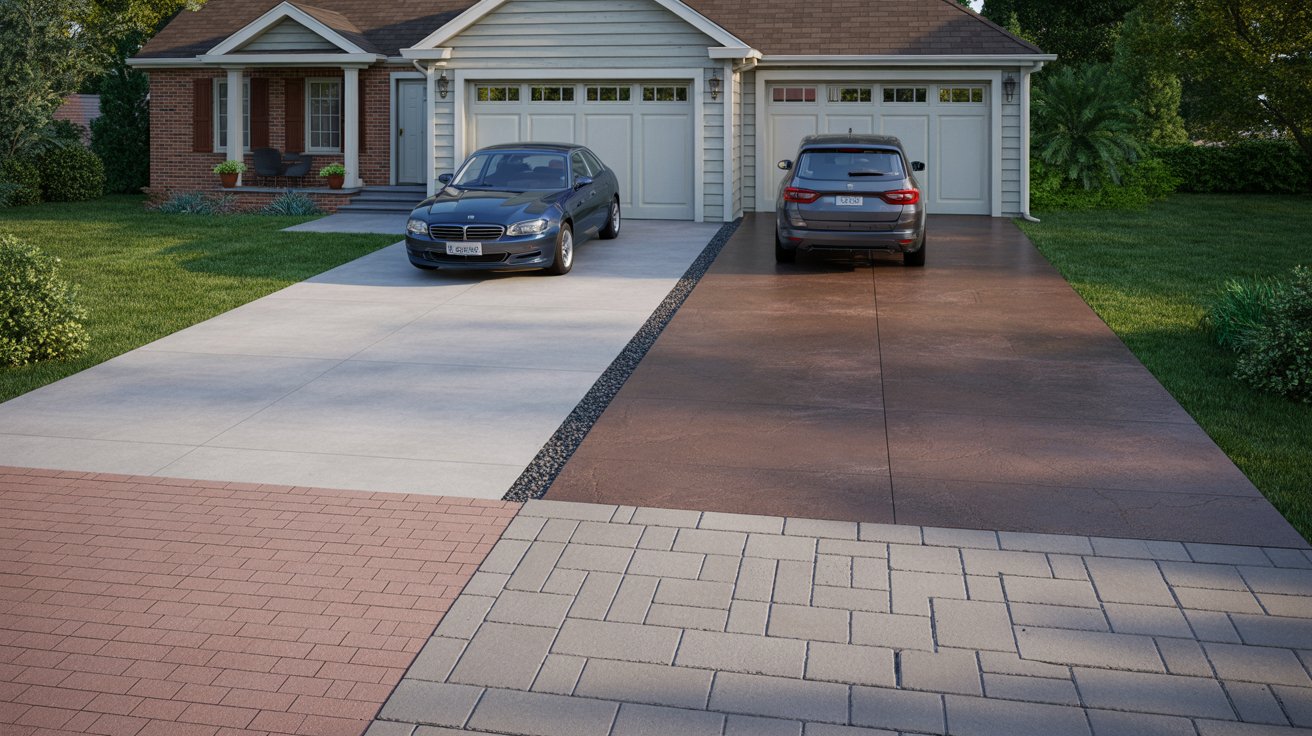
A standard one-car driveway (200 square feet) costs $1,200 to $3,000 in concrete. A two-car driveway (400 square feet) runs $2,400 to $6,000.
Stamped concrete driveways cost $4,800 to $10,000 for two cars. Paver driveways run $4,000 to $12,000 depending on material. Brick and stone pavers cost more but handle heavy vehicles better.
Concrete pavers for driveways fall in the middle. They’re tougher than standard concrete and cheaper than natural stone.
Walkways and Smaller Hardscapes
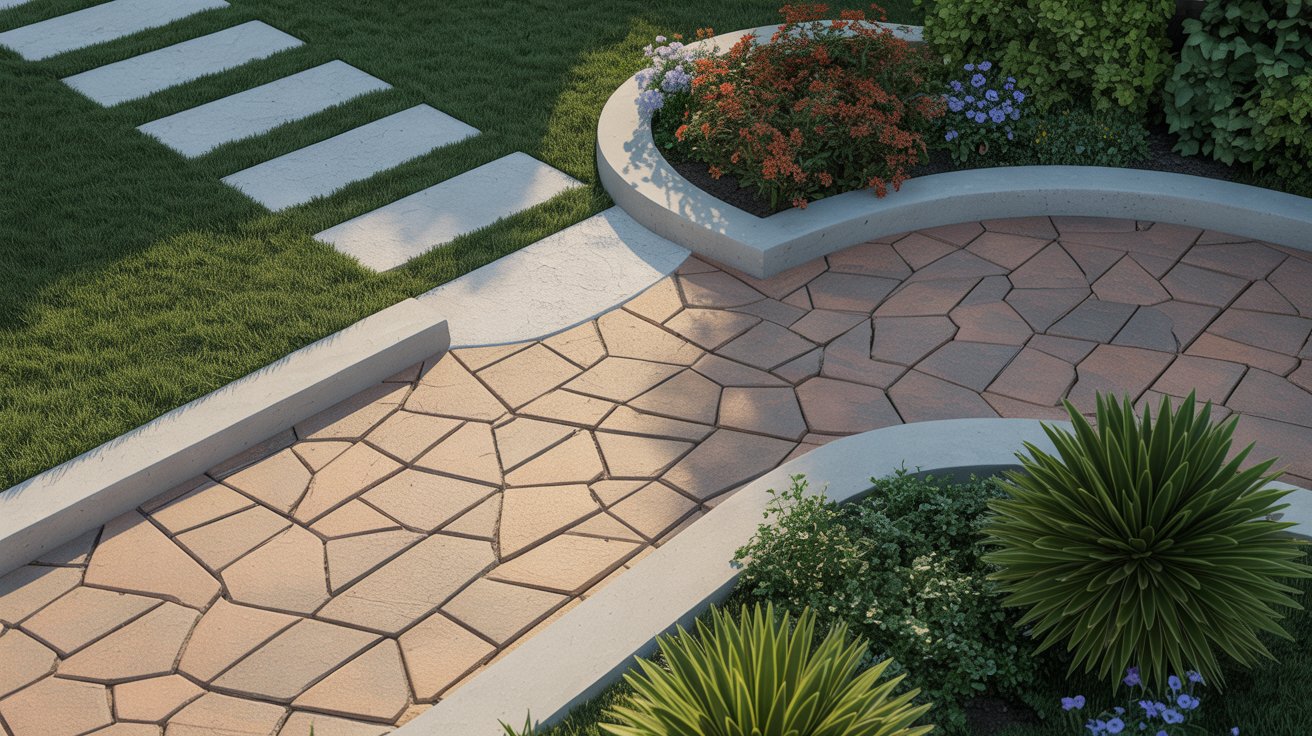
Small paths and garden areas cost $8 to $30 per square foot. A 50-square-foot walkway runs $400 to $1,500.
Concrete works fine for simple paths. Pavers look nicer and let you create interesting patterns in small spaces. Installation costs stay similar to larger projects per square foot.
Labor matters more in small projects. Setup time doesn’t change much, so per-foot costs run higher.
Long-Term Value vs Upfront Cost
The initial price isn’t everything. Consider what you’ll spend and gain over the years.
Durability and Lifespan:
Concrete lasts 20 to 30 years in most climates. It holds up well but tends to crack over time. Freeze-thaw cycles, heavy loads, and soil movement cause damage. Once concrete cracks, it’s hard to fix properly.
Pavers last 50 years or longer. Individual units flex with soil movement instead of cracking. If one breaks, you can replace just that piece. The interlocking design distributes weight better.
Climate affects both materials. Cold regions see more concrete damage. Hot areas can fade colored concrete faster.
Maintenance and Repairs:
Concrete needs crack patching every few years. Resurfacing costs $3 to $5 per square foot. Major repairs require replacing whole sections, which rarely matches the original perfectly.
Pavers need occasional re-sanding of joints. This costs $1 to $3 per square foot. Individual damaged pavers swap out easily. No special tools or skills required. Most repairs take an hour or less.
Sealing protects both materials. Concrete needs sealing every 2 to 3 years. Pavers benefit from sealing but don’t require it as often.
Curb Appeal and Property Value:
Pavers offer premium looks with tons of style choices. Mix colors, create patterns, and add borders. They signal quality to potential buyers. Real estate agents say nice pavers can add $5,000 to $15,000 in home value.
Concrete provides a clean, functional look. Stamped concrete improves appearance significantly. It’s acceptable but doesn’t have the same wow factor as pavers.
Your neighborhood matters. In upscale areas, pavers are expected. In standard neighborhoods, nice concrete works fine. Match your investment to your location.
Tips for Choosing Between Pavers and Concrete
Here are some practical tips to help you make the right choice for your project.
- Get multiple quotes. Compare at least three contractor estimates to understand fair pricing in your area and avoid overpaying.
- Consider your climate. Cold regions with freeze-thaw cycles damage concrete faster, making pavers a smarter long-term investment despite higher upfront costs.
- Think about resale plans. If you’re selling within 5 years, basic concrete works fine. Planning to stay longer? Pavers offer better return on investment.
- Match your neighborhood. Look at what nearby homes have installed. Your choice should fit the area’s overall style and property values.
- Factor in drainage needs. Properties with water issues benefit from permeable pavers. Check local regulations since some areas require specific drainage solutions.
Conclusion
Understanding the cost of pavers vs concrete helps you make a smart choice for your outdoor space. I remember when I helped my sister choose pavers for her patio.
She worried about the price, but five years later, it still looks great while her neighbor’s concrete has cracks.
Your decision depends on your budget and how long you plan to stay. Ready to start your project? Get quotes from local contractors and see which option fits your needs.
Drop a comment below if you have questions about your specific situation!
Frequently Asked Questions
Are pavers or concrete cheaper for a patio?
Concrete costs less upfront at $6 to $15 per square foot versus $10 to $30 for pavers. Pavers cost more initially but last longer and need fewer repairs.
How long do concrete patios last compared to pavers?
Concrete patios last 20 to 30 years before needing major repairs. Paver patios can last 50 years or more with minimal maintenance.
Can I install pavers or concrete myself to save money?
Concrete requires specialized tools and skills for proper installation. Pavers are more DIY-friendly but still need proper base preparation for best results.
Do pavers increase home value more than concrete?
Yes, pavers add more resale value because they look more upscale. Quality paver installations can add $5,000 to $15,000 in home value.
What maintenance do pavers and concrete need?
Concrete needs crack repairs, sealing every 2 to 3 years, and occasional resurfacing. Pavers need joint re-sanding every few years and simple piece replacement when needed.
