

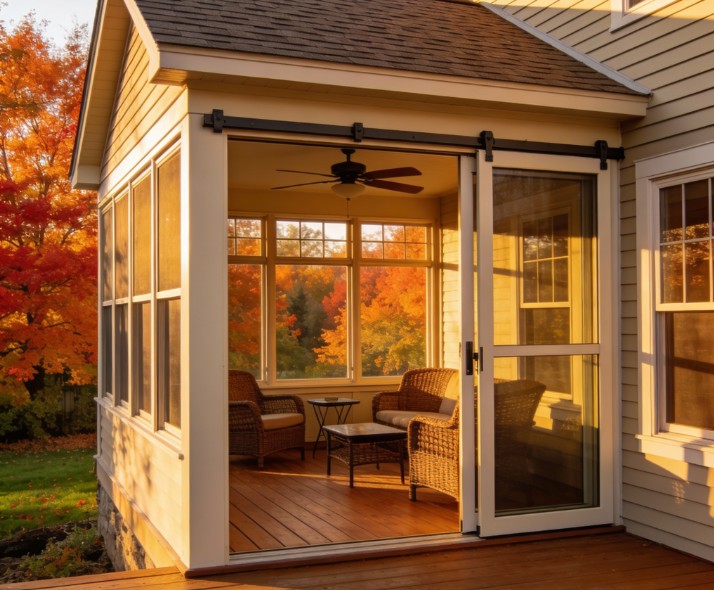
Your deck is great for sunny summer days, but what about those crisp spring mornings or cool October evenings? If you’re tired of your outdoor space sitting empty for most of the year, converting it to a three-season room might be the move. This project has been gaining serious traction with Illinois homeowners lately. Let’s walk through what you need to know before diving in.
Understanding Three-Season Rooms: What Makes Them Different
So, what exactly is a three-season room? Think of it as the middle ground between a screened porch and a full sunroom. You get walls, windows, and a roof, but without the insulation and HVAC hookup of a four-season room. That means you can use it comfortably from spring through fall, but it’s not built for those brutal Illinois winters.
The key features? Single-pane windows that you can open or close, lighatweight construction that doesn’t need heavy-duty climate control, and a design that keeps bugs and rain out while letting you feel connected to your yard. Unlike a screened porch that just has mesh barriers, you get actual window panels. And unlike a four-season room that costs a fortune to heat and cool, you keep things simpler and cheaper.
Here’s the thing about Illinois weather. We get solid use from March through October most years. That’s eight months where a three-season room really shines. During those months, you’re protected from unexpected rain, wind, pollen, and mosquitoes while still enjoying natural airflow.
Assessing Your Existing Deck for Conversion
Before you start planning window styles and paint colors, you need to figure out if your deck can actually handle this conversion. Not every deck is a good candidate.
First up is the foundation. Your deck’s footings need to support way more weight than they currently do. We’re talking about a roof structure, wall framing, windows, and everything that comes with an enclosed space. If your deck was built with basic 4×4 posts and shallow footings, you might need reinforcement or even new footings that go below Illinois’s frost line (which sits around 42 to 48 inches deep).
Next, check the condition of your joists and deck boards. If your deck is 15 years old with sagging boards and rusty fasteners, converting it might not make financial sense. Look for signs like soft spots, rot around the ledger board, or posts that wobble.
Illinois building codes are another factor you can’t skip. Most municipalities require setbacks from property lines, and adding walls and a roof changes how your structure is classified. A professional assessment saves you from expensive surprises halfway through construction.
Design Considerations and Planning
Once you know your deck can handle conversion, you start planning what your three-season room will actually look like.
Window systems are the biggest decision. Most three-season rooms use vinyl track windows like EZE Breeze because they’re affordable and easy to operate. These systems let you slide panels open for ventilation or close them completely when weather gets rough. You could also go with traditional sliding windows or casement windows if you want a more polished look.
Roofing style matters more than you’d think. A gable roof gives you extra height and better ventilation but costs more. A shed roof is simpler and cheaper but might not match your home’s architecture as well. Your roof needs to tie into your house properly with flashing and proper drainage, or you’ll deal with leaks down the road.
Don’t forget electrical planning. You’ll want outlets for lamps, phone chargers, and maybe a small space heater for shoulder season use. Ceiling fans are essential for air circulation. All of this needs to be wired properly and inspected.
Illinois Permits and HOA Requirements
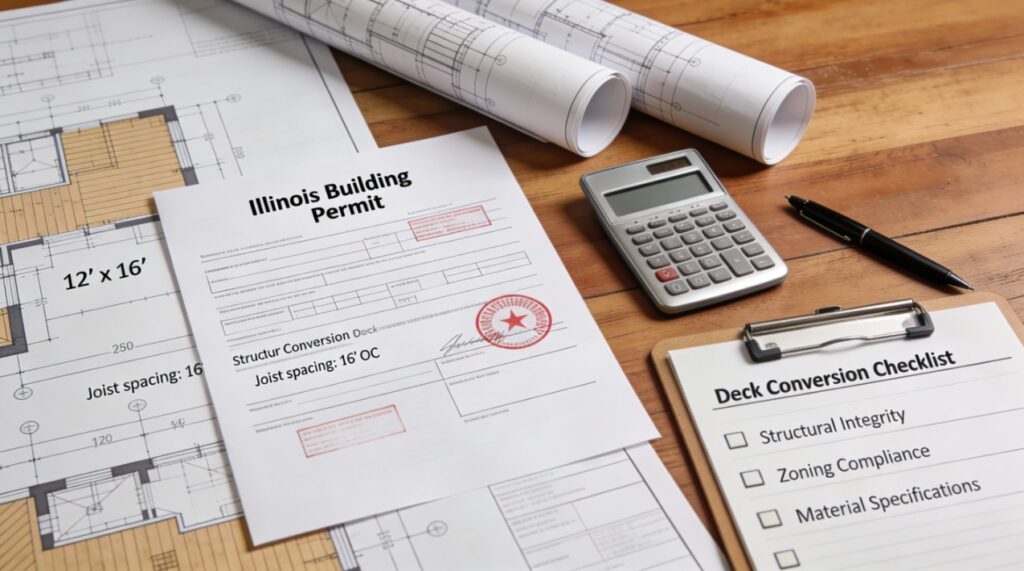
Converting your deck to a three-season room definitely requires building permits in Illinois. This isn’t optional.
Your local building department will want detailed plans showing dimensions, materials, electrical layout, and how the structure connects to your home. Permit fees vary by municipality but typically run a few hundred dollars.
Property line setbacks come into play too. If your deck is already close to your lot line, adding walls might push you over the allowed limit. If you live in an HOA community, add another layer of approval. Some HOAs take weeks to review and respond.
Working with a deck builder in Illinois who’s used to navigating local permit processes makes this way less painful. They know what inspectors look for and how to get things approved without endless back-and-forth. Timeline for permit approval usually runs two to four weeks.
Construction Process: What to Expect
Once permits are approved, actual construction moves pretty quickly. Most three-season room conversions take somewhere between two and four weeks, depending on size and complexity. Here’s the typical sequence:
- Foundation reinforcement: If your footings need beefing up, that happens first. Contractors dig new holes, pour concrete, and let it cure.
- Support posts installation: New posts go in to carry the roof load and get anchored to footings.
- Wall framing: Pressure-treated lumber creates the frame for walls, including headers over window openings.
- Roof construction: Rafters or trusses go up, get sheathed, and tie into your house with proper flashing.
- Window installation: Window systems get installed in the wall frames with proper sealing and weatherproofing.
- Electrical work: Wiring runs through walls for outlets, switches, and fixtures.
- Finishing touches: Trim work, flooring installation, paint or stain, and final details bring it all together.
Weather plays a bigger role than you might think. Illinois construction season runs smoother from May through October, but spring rain can cause delays. Fall is actually great for this work since temperatures are mild and contractors aren’t as slammed.
Cost Breakdown for Illinois Homeowners
A typical mid-range three-season room conversion in Illinois runs between $30,000 and $50,000 for a 12×16 space. Larger or more complex projects can push toward $70,000 or more.
Several factors move the price needle. Size obviously matters. Window quality makes a difference too. Basic vinyl track systems cost less than premium sliding windows. Your roofing choice affects the bottom line. And if your existing deck needs major structural work, that increases costs significantly.
Comparing conversion to building new? Converting an existing deck usually saves 20 to 30 percent versus starting from scratch because you’re working with an existing foundation. But only if that existing deck is in decent shape.
ROI typically ranges from 50 to 70 percent in Illinois markets. You won’t get back every dollar you spend, but you add usable square footage and appeal to buyers who want extended outdoor living.
Maintenance and Seasonal Care
A three-season room needs regular attention to stay functional and looking good. Here’s what you should stay on top of:
- Window cleaning: Clean tracks and panels twice a year with mild soap and water to keep them operating smoothly.
- Winter prep: Close and secure all window panels before cold weather hits. Fix any gaps or cracks in sealing.
- Spring inspection: Check all seals, look for winter damage, clean debris, and test that windows open and close properly.
- Regular checks: Inspect flashing where your roof meets the house and look for water stains on ceilings or walls.
- Professional help: Call in experts if you notice structural issues like sagging, leaks, electrical problems, or significant damage.
Don’t mess around with anything that affects the structure’s integrity. Catching small problems early prevents expensive repairs down the road.
Conclusion
Converting your deck into a three-season room extends your outdoor season by months and creates a versatile space that works for everything from morning coffee to evening entertaining. The project requires real planning, proper permits, and skilled construction, but the payoff is a comfortable area that protects you from weather and bugs.
Take time to assess your existing deck honestly, plan thoughtfully, and don’t cut corners on permits or structural work. If you’re ready to stop watching your deck sit empty for eight months a year, a three-season room might be exactly what your home needs.
