

Choosing between concrete stain vs paint can feel confusing when you want your floors, patios, or driveways to look great and last long.
I’ve spent years working with different concrete finishes, and I know how overwhelming this decision can be.
In this guide, I’ll walk you through everything you need to know about durability, looks, maintenance, and where each option works best.
You’ll learn which finish matches your home’s needs and saves you money over time.
I’ll cover what concrete stain and paint actually are, how they compare in real-world use, the best spaces for each option, and how to choose what fits your lifestyle.
By the end, you’ll have the confidence to pick the right finish for your concrete surfaces.
Understanding Concrete Stain and Concrete Paint
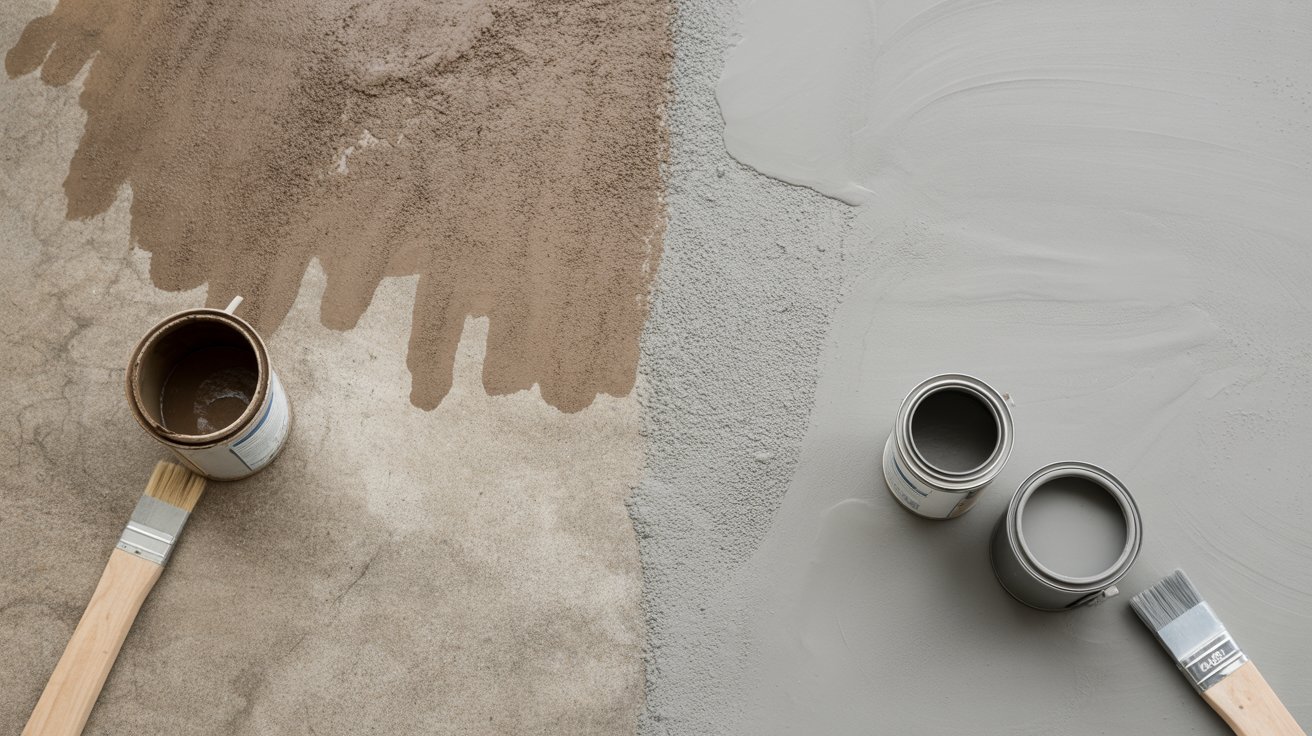
Before you pick a finish, you need to know how these two options actually work. They treat concrete in completely different ways.
Concrete stain soaks into the surface and creates a chemical reaction that changes the color from within. This gives you a natural, see-through finish that lets the concrete texture show through.
You can choose from acid stain for earthy tones like browns, blues, and greens, or concrete dyes for more color options. Stain works well in high-traffic areas like outdoor patios, driveways, and walkways because the chemical bond resists wear and weather.
Concrete paint creates a thick layer on top of the surface with solid, uniform color. You can’t see the concrete texture underneath.
Paint comes in three types: latex for light use, oil-based for stronger coverage, and concrete-specific paints that handle moisture and foot traffic better. Paint works best indoors for decorative projects when you want full coverage or need to hide cracks and stains.
Comparative Analysis: Concrete Stain vs Paint
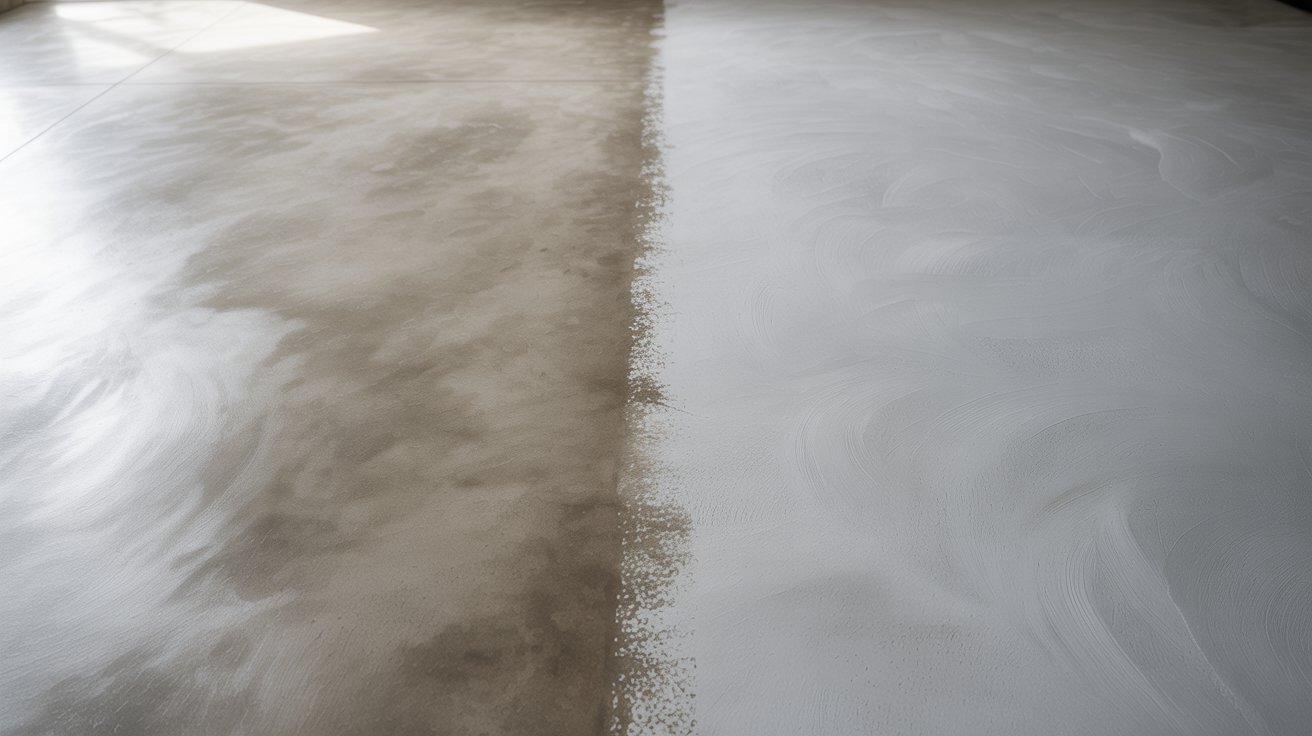
Let me break down how these finishes compare in five key areas. This will help you see which one matches your needs.
| Feature | Concrete Stain | Concrete Paint |
| Appearance | Natural, varied look with lighter and darker areas. Highlights concrete texture and adds character. | Uniform, solid color everywhere. Covers imperfections like cracks and stains for a clean look. |
| Durability | Bonds chemically with concrete. Won’t chip or peel easily. Can last decades with minimal wear. | Forms a surface layer. May peel or chip over time with heavy traffic or weather exposure. |
| Maintenance | Occasional cleaning with soap and water. Reseal every few years. Straightforward and infrequent. | Needs touch-ups for chips and scratches. Requires repainting every few years, especially outdoors. |
| Application | Requires cleaning, etching, and curing. Goes on in thin layers. Can DIY but professionals give even results. | Needs cleaning and degreasing. Requires primer plus two to three coats. Each layer must dry completely. |
| Cost | Higher upfront cost for materials and application. Saves money long-term due to durability and low maintenance. | Lower initial cost and easier DIY. Frequent touch-ups and repainting increase total cost over time. |
How They Look
Stain creates a natural, varied appearance. Each application turns out slightly different because the concrete absorbs it unevenly. You’ll see lighter and darker areas that highlight the texture. This gives your floor or patio character and depth.
Paint delivers the same color everywhere. It covers imperfections like small cracks, stains, and discoloration. If you want a clean, uniform look, paint gives you exactly that.
Durability and How Long They Last
Stain bonds with the concrete at a chemical level. It becomes part of the surface instead of sitting on top. This means it won’t chip or peel easily. A properly applied stain can last decades with minimal wear.
Paint forms a surface layer. Over time, heavy foot traffic, furniture, or outdoor weather can cause it to peel or wear away. You might see chips in high-use areas after a few years.
Maintenance Requirements
Stained concrete needs occasional cleaning with mild soap and water. You should reseal it every few years to keep it protected. The maintenance is straightforward and infrequent.
Painted concrete needs more attention. You’ll do touch-ups for chips and scratches. Eventually, you’ll need to repaint the entire surface. This happens more often in outdoor spaces where weather takes a toll.
Application Process
Applying stain requires proper surface prep. You’ll clean, etch, and cure the concrete first. The stain goes on in thin layers. You can do this yourself with the right tools, but many people hire professionals for even results.
Paint also needs surface prep. Clean and degrease the concrete thoroughly. Most projects need a primer coat, then two or three paint coats. The process takes longer because each layer needs to dry completely.
Cost Considerations
Stain costs more upfront. Materials and professional application can run higher than paint. But you save money over time because it lasts longer and needs less maintenance.
Paint costs less initially. You’ll spend less on materials and can do it yourself more easily. However, frequent touch-ups and repainting add up. The total cost over ten years often exceeds stains.
Best Use Cases for Residential Spaces
Different rooms and outdoor areas need different finishes. Here’s where each option shines.
Indoor Applications
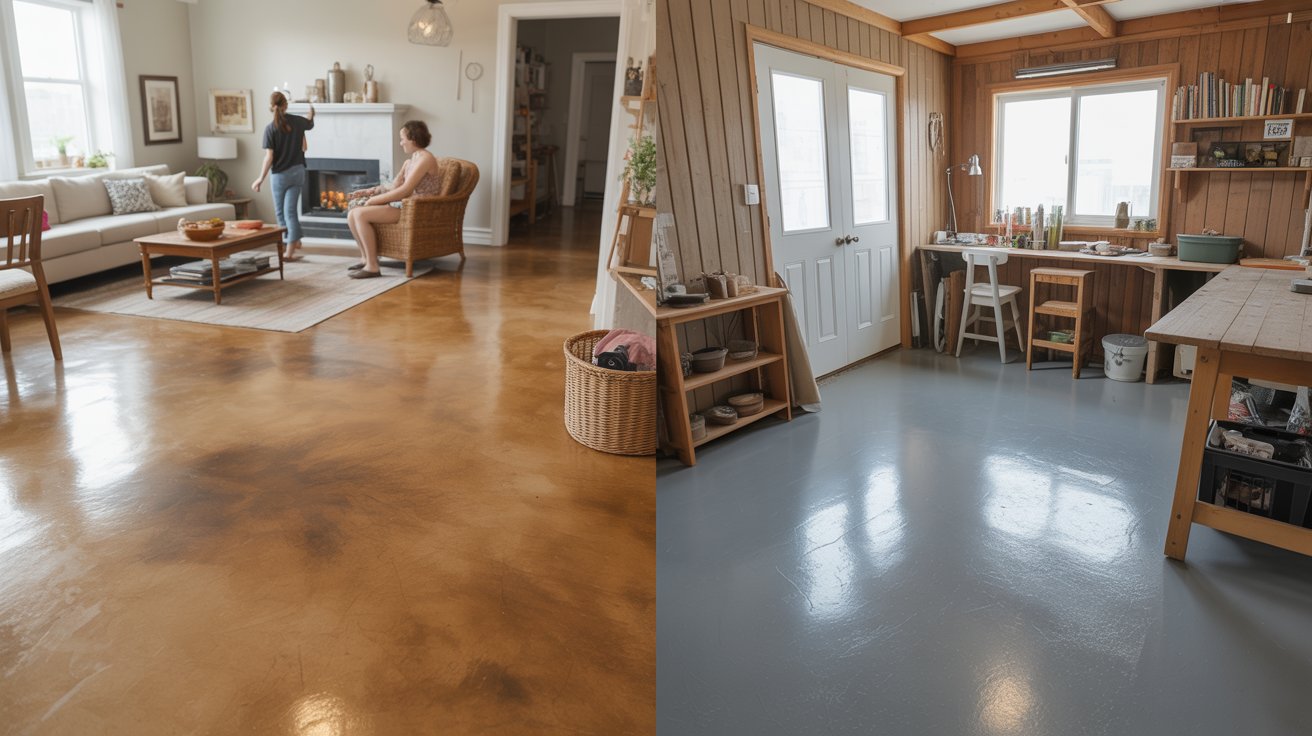
Stain works beautifully in living rooms, basements, and kitchens. It stands up to daily foot traffic and furniture movement. The natural look adds warmth to your space. You can mop it easily, and it won’t show normal wear patterns.
Paint gives you solid coverage for decorative indoor projects. Use it in craft rooms, workshops, or utility spaces where you want a specific color scheme. It hides old stains or uneven concrete well.
Outdoor Applications
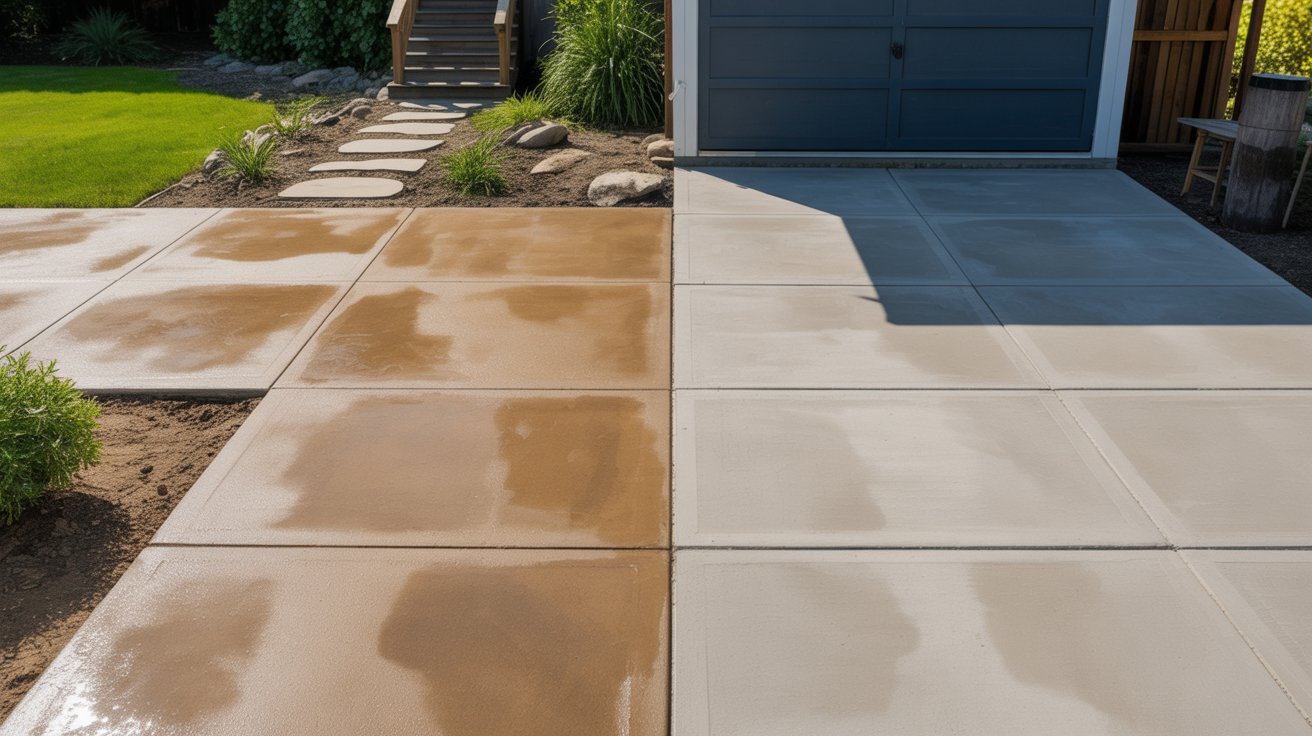
Stain excels on patios, driveways, and walkways. It handles weather changes without cracking or peeling. Rain, sun, and temperature swaps won’t damage it like they do paint. The natural look complements outdoor landscaping.
Paint can work outdoors if you want a uniform appearance. Just know you’ll do more maintenance. Weather exposure causes fading and peeling faster than indoor use. Plan for touch-ups every couple of years.
Choosing What Works Best for Your Home

Your decision comes down to three factors. Think about foot traffic, weather conditions, and what look you want.
Consider how much use the space gets. High-traffic areas benefit from stain’s durability. Low-traffic decorative spaces can handle paint just fine.
Weather matters for outdoor projects. Stain handles rain, snow, and sun better than paint. Indoor spaces don’t face these challenges, so paint becomes more viable.
Think about the appearance you want. Stain gives you a natural, textured look with color variation. Paint provides solid, consistent color that hides flaws.
Talk to a professional if you’re unsure. They can assess your concrete’s condition and recommend the best option. Good application makes a huge difference in how long either finish lasts.
Conclusion
I’ve seen both stain and paint transform concrete spaces. For most homes, stain wins on durability and natural beauty. It lasts longer and needs less work over the years. Paint works when you need uniform coverage or want specific decorative colors.
Your choice depends on the space, how much traffic it gets, and your long-term plans. I recently stained my garage floor, and three years later it still looks fresh with zero touch-ups.
Think about what matters most to you, then pick the finish that fits. Drop a comment below and tell me which option you’re leaning toward for your project.
Frequently Asked Questions
Can I apply concrete stains over old paint?
No, you need to remove the paint first. Stain must penetrate the concrete to bond properly, and paint blocks this process completely.
How long does concrete paint typically last?
Paint lasts three to five years with normal use. Outdoor surfaces need repainting sooner due to weather, while high-traffic indoor areas wear faster.
Is a concrete stain slippery when wet?
Bare stains can be slippery when wet. Apply a non-slip sealer on top for better traction, especially on outdoor patios and pool decks.
Can I change the color of stained concrete later?
Changing stain color is difficult because it penetrates deep. You can go darker easily, but going lighter requires grinding the surface down.
Do I need to seal concrete after painting?
Sealing isn’t required but adds protection and extends paint life. This matters most for floors and outdoor surfaces that face heavy use.
