

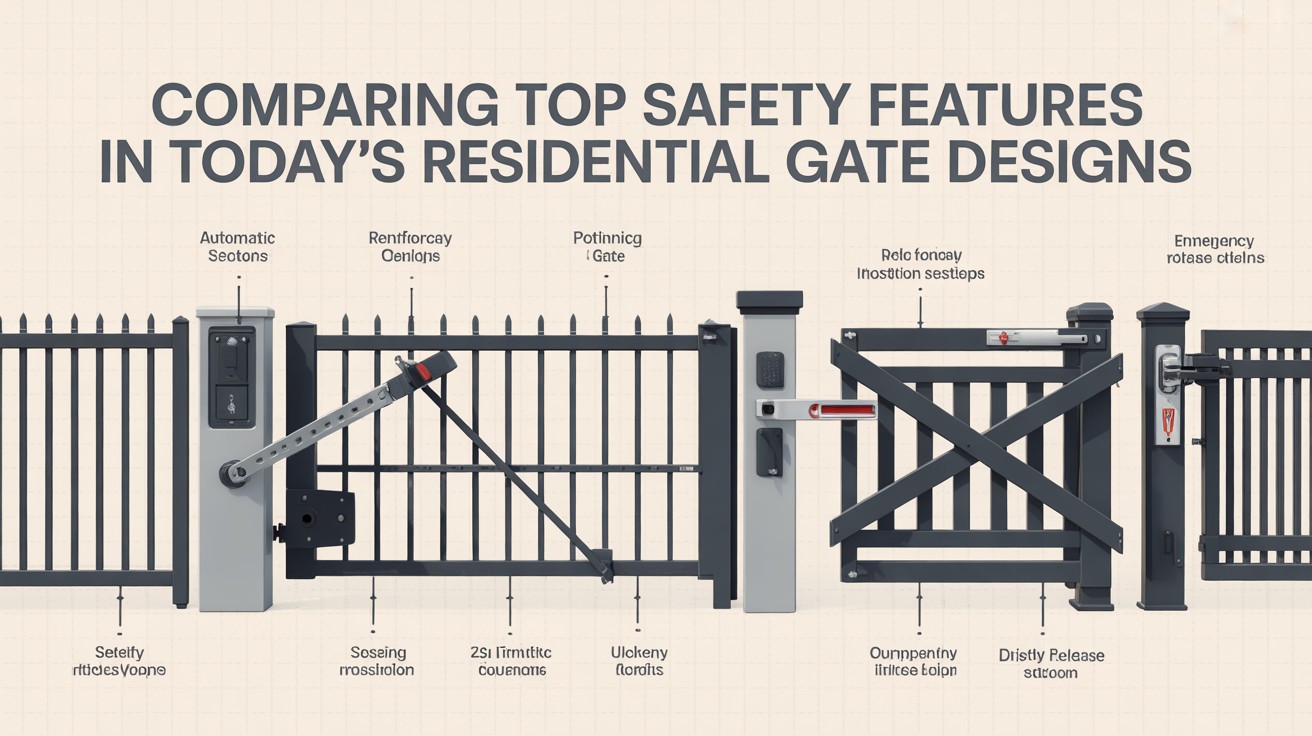
Residential gates have evolved far beyond simple property markers. Modern installations function as sophisticated security systems that combine physical barriers with advanced technology to protect homes and families. Understanding the available safety features helps homeowners select gate systems that match their specific security needs and lifestyle requirements.
Automatic Locking Systems
Contemporary security gates and fencing frequently incorporate automatic locking mechanisms that engage immediately upon gate closure. This automation eliminates the vulnerability of forgetting to secure an entrance, particularly during busy daily routines when manual locking might be overlooked.
The technology ensures consistent security without requiring homeowner intervention. Whether returning from work, managing deliveries, or supervising children’s outdoor activities, residents benefit from knowing their property automatically secures itself. This hands-free approach to perimeter security provides continuous protection that doesn’t depend on remembering to complete manual tasks.
Integrated Video Surveillance
Video camera systems transform gates from passive barriers into active monitoring stations. Cameras positioned at entry points allow residents to visually verify visitors before granting access, eliminating the uncertainty of voice-only communication.
Modern surveillance integration extends beyond simple recording. Live feeds stream directly to smartphones or dedicated monitors, enabling real-time observation from anywhere on the property or even while traveling. Many systems incorporate two-way audio, allowing homeowners to conduct complete conversations with delivery personnel, guests, or service providers without physically approaching the gate. This visual confirmation layer significantly reduces security vulnerabilities associated with unverified access.
Motion Detection and Obstacle Sensors
Sensor technology serves dual purposes in modern gate systems. Motion sensors alert homeowners to unexpected approaches, providing advance warning of anyone nearing the entrance outside normal visitor patterns. These detection systems can trigger alerts, activate recording devices, or illuminate the entry area to deter unwanted activity.
Obstacle sensors address a different but equally important safety concern. Installed on automatic gates, these sensors detect objects or people in the gate’s path and immediately halt or reverse movement. This protection proves essential for households with children or pets who may unexpectedly enter the gate’s operational zone. The sensors prevent injuries and equipment damage while maintaining smooth operation during normal use.
Anti-Climb Design Elements
Physical security features complement technological systems by creating barriers that resist climbing attempts. Modern gate designs incorporate multiple deterrents including pointed finials, closely spaced vertical bars that eliminate handholds, and smooth surfaces that offer no purchase for scaling.
These design elements make unauthorized entry significantly more difficult and time-consuming, factors that deter most intrusion attempts. The visible presence of anti-climb features also communicates security awareness to anyone observing the property, often preventing attempted breaches before they begin.
Emergency Manual Override Capabilities
Dependence on automated systems creates vulnerability during power failures or technical malfunctions. Quality gate installations include manual release mechanisms that allow operation without electrical power or electronic controls.
This redundancy ensures residents can exit during emergencies regardless of system status. Fire, medical emergencies, or natural disasters that disrupt power won’t trap occupants inside the property. The manual override provides peace of mind that access remains available under any circumstances, balancing automated convenience with emergency preparedness.
Intercom and Multi-Layer Access Control
Access control systems create verification checkpoints before allowing entry. Modern intercoms range from basic audio communication to sophisticated video panels with touchscreen interfaces. These systems enable homeowners to screen visitors remotely, granting access only after verification.
Advanced configurations integrate with keycard readers, PIN pads, or biometric scanners that require authenticated credentials for entry. This layered approach means multiple verification methods must be satisfied before access grants, significantly reducing unauthorized entry risk. Property owners can assign different access levels to family members, staff, or regular service providers while maintaining strict control over unexpected visitors.
Pressure-Sensitive Safety Edges
Safety edge technology addresses the physical risks associated with moving gates. Pressure-sensitive strips mounted along gate edges detect contact and immediately stop movement. This instant response prevents crushing injuries to people, pets, or vehicles that might unexpectedly contact a closing gate.
Soft-closing features complement safety edges by controlling gate speed during the final moments of closure. Rather than slamming shut with full force, gates decelerate to gentle contact, reducing impact forces that could cause injury or damage. These features demonstrate that modern gate design prioritizes user safety equally with security effectiveness.
Tamper Detection and Alert Systems
Sophisticated gate systems monitor for forced entry attempts or unauthorized manipulation. Tamper sensors detect unusual vibrations, attempted disassembly, or forced movement that suggests someone attempting to breach the gate through mechanical means.
When tampering is detected, systems respond through multiple channels. Audible alarms warn intruders they’ve been detected while simultaneously alerting homeowners via smartphone notifications. Some configurations automatically contact security monitoring services or local authorities, ensuring rapid response to security breaches. This immediate detection and response capability often stops intrusion attempts before they succeed, while providing evidence for any necessary investigation.
Selecting Features for Your Needs
The variety of available safety features allows homeowners to customize gate systems matching their specific security concerns and property characteristics. Families with young children might prioritize obstacle sensors and safety edges, while properties in high-crime areas benefit most from video surveillance and tamper detection.
Budget considerations, property layout, and local security conditions all influence which features provide the best return on investment. Understanding how each safety component functions helps homeowners make informed decisions that balance security effectiveness with practical usability and cost.
Modern residential gates represent sophisticated security platforms that protect families through multiple overlapping safety systems. The combination of automatic operation, visual verification, intelligent sensors, and emergency provisions creates comprehensive protection that adapts to various situations while maintaining convenient daily use.
