

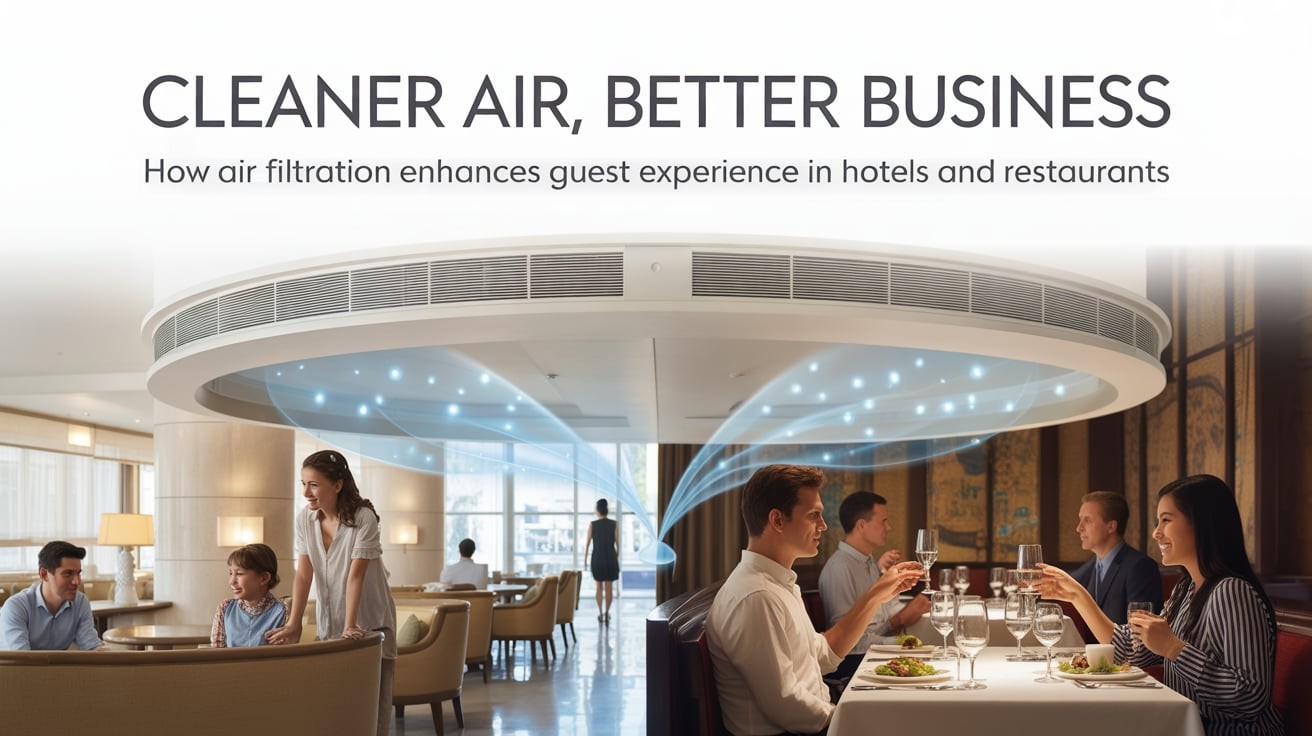
The comfort of guests in hotels and restaurants is influenced by many things, and hotel and restaurantair filtration plays a surprisingly huge part. Visitors may not consciously notice the air they breathe, but its quality shapes their overall impression of an establishment.
Stale or polluted air can leave guests feeling fatigued or irritated, while clean, well-circulated air promotes a sense of calm and well-being. Modern hospitality businesses increasingly recognize the connection between air quality and guest satisfaction.
Hospitality Challenges
Hospitality environments present a unique set of circumstances:
- Kitchens generate heat, smoke and cooking odors, while guest rooms demand a balance of warmth, freshness and comfort.
- Proper air filtration ensures that aromas remain inviting, without lingering grease or overly heavy cooking smells. That contributes to a perception of cleanliness and care—before any service interaction occurs.
- According to one study of hotel indoor environmental quality (IEQ), the component of indoor air quality (IAQ) registered a significant effect on guest comfort (β = 0.221) and in turn guest satisfaction.
- Another analysis showed that IEQ factors (including IAQ) can explain up to ~32.8 % of guest ratings in budget accommodations and ~23.9 % in luxury ones.
Advanced Air Purification
Modern systems go beyond simply removing large particles. Key benefits include:
- High-efficiency filters capture dust, pollen and microscopic pollutants, reducing allergens that can trigger discomfort among sensitive guests.
- Cleaner air helps minimize sneezing or coughing in public spaces—improving both guest comfort and staff productivity (fewer sick days or fatigue).
- In a restaurant context, poor IAQ has been linked to employee health issues including eye and nose irritation, coughing and headaches.
- On an online forum of indoor-air-quality enthusiasts, one user wrote:
“Mornings can be brutal if the air in your home isn’t doing you any favors… I wake up and immediately notice the dust that settled overnight.”
While this quote is from a domestic setting, the same principle applies in hospitality: when guests or staff sense heavy air or dust, it absorbs attention.
Beyond Temperature: Airflow and Comfort
Comfort in hospitality is not just about maintaining a set temperature:
- Air movement, humidity and purity all intersect to create a welcoming environment.
- Incorporating central A/C and furnace filtration lets hotels and restaurants maintain consistent airflow while trapping airborne impurities.
- Filters designed for HVAC systems can reduce particles without undue drag on system efficiency, helping ensure guests sense consistent climate control and fresh air, even if they cannot identify the filtration itself.
Humidity and Its Impact on Experience
Humidity levels within hospitality spaces can dramatically affect guests’ perceptions:
- Excess moisture encourages mold growth and creates unpleasant odors in guest rooms and dining areas.
- Overly dry air can lead to dry skin, respiratory irritation or even static discharge, none of which align with a “luxury” or “clean-comfort” experience.
- Balanced humidity together with effective filtration supports an atmosphere that feels breathable and comfortable throughout a guest’s stay.
Water Quality and Air Purity
The link between water and air quality is often overlooked:
- Kitchens, laundry rooms and spa areas vaporize water through ice machines, coffee brewers or humidifiers. If that water is untreated or mineral-laden, the vapor can carry odors or mineral particulates into the air.
- Water filtration systems help maintain the purity of water and steam/air that passes through these devices, so beverages taste fresher, steam is cleaner and guest-perceived air quality improves accordingly.
- Guests may not name “water quality” when leaving a review, but they do notice when a coffee tastes off or when a room just doesn’t “feel clean”.
The Perception of Safety and Cleanliness
In a post-pandemic world, guests associate clean air with attention to health:
- The invisible nature of air quality means that when it’s well-managed, no one notices. When it’s poor, guests do notice even if they can’t articulate the cause.
- A well-maintained filtration/ventilation system sends an unspoken message: the facility cares about guest well-being.
- In turn, this perception influences guest reviews, repeat bookings and word-of-mouth recommendations.
Operational Benefits of Filtration
Investing in air filtration yields business advantages beyond elevated guest satisfaction:
- HVAC and ventilation systems operate more efficiently when filters are correctly selected and maintained, reducing dust and debris build-up that wears mechanical components.
- Lower maintenance costs and extended system life free up budget for other guest-experience enhancements.
- A cleaner system also runs more quietly, which supports a premium ambiance in guest rooms and dining settings.
Air Quality in Dining Spaces
Air quality in restaurants and dining halls plays a direct role in guest perception:
- Kitchens produce smoke, cooking odors and fine particulates that can drift into dining areas if ventilation is weak.
- Effective air filtration prevents these by-products from lingering, ensuring the aroma of freshly prepared dishes remains appetizing and un-marred by residual odors.
- Guests may linger longer, order more and return more frequently when the environment feels fresh and inviting.
Quiet Efficiency and Staff Well-Being
The benefits of filtration extend to operational allies – your staff:
- When filters become clogged, fans must run harder, often increasing ambient noise levels in guest-facing areas. A well-maintained system can run more quietly, maintaining a peaceful atmosphere.
- Clean air reduces staff fatigue, allergies or respiratory irritation, enabling housekeeping, kitchen and dining-room teams to perform at their best.
- Healthy, energetic staff deliver better service and guest satisfaction naturally improves as a result.
Technology and Data-Driven Air Management
Modern air‐quality control is becoming increasingly intelligent:
- Real-time sensors monitor particle levels, humidity and airflow across guest rooms, dining halls and back-of-house zones.
- Data‐driven systems allow facilities to adjust filtration and climate control dynamically, helping maintain consistently fresh air, even as occupancy or kitchen loads change.
- Although guests rarely see these systems, the results become apparent: rooms that stay fresh throughout a stay, dining spaces that feel inviting even during “rush” periods.
Sustainable Comfort
Sustainability and comfort can go hand-in-hand:
- High-performance filters allow HVAC systems to maintain airflow without excess energy consumption, lowering operational cost and environmental impact.
- When hotels and restaurants succeed in aligning comfort, air quality and energy efficiency, they not only win on guest experience, but align with broader trends in eco-conscious hospitality.
Allergens and Indoor Materials
Guest comfort also depends on controlling allergens linked to furnishing and finishes:
- Carpets, upholstery and curtains trap dust and allergens which can later become airborne. If real-time filtration is absent, these particles may circulate and degrade air quality.
- Filters that effectively capture these particles help guests with sensitivities (or respiratory conditions) feel more comfortable—and that comfort can translate into loyalty and positive reviews.
Controlling Odors and First Impressions
Smell (or lack thereof) is a subtle but pervasive factor in guest perception:
- From kitchens to washrooms, lingering odors can quickly degrade a guest’s first impression of an establishment.
- Filtration systems help remove odorous particles before they circulate widely, maintaining a neutral and inviting atmosphere.
- Guests interpret freshness of air as professionalism and cleanliness – a key differentiator in competitive hospitality markets.
Continuous Cleaning for High-Traffic Areas
High-traffic spaces such as lobbies and dining zones accumulate airborne debris rapidly:
- Pollutants (dust, pollen, airborne debris) can settle on surfaces and degrade air quality within minutes if not filtered.
- Effective, continuous air purification acts as a “silent cleaning mechanism”, reducing the frequency and intensity of reactive surface cleaning and helping maintain that sense of freshness throughout the guest stay.
Surface Cleanliness Plus
Modern guests equate cleanliness not just with visible surfaces but with the air they breathe:
- By investing in air filtration, humidity management and water quality, hospitality venues create environments that support both wellbeing and comfort.
- The invisible nature of clean air becomes part of the overall brand experience, subtle, yet powerful.
Breathing Life into Guest Experiences
Clean air shapes more than the physical comfort of guests, it influences perception, satisfaction and loyalty:
- A thoughtful approach to filtration, ventilation, humidity and water quality turns routine stays and meals into distinct experiences that guests remember.
- The investment in air-quality management becomes a strategic choice – one that underpins guest satisfaction, operational efficiency and brand strength.
Frequently Asked Questions
Q: How much does air quality really matter in a hotel or restaurant?
A: Studies show that indoor environmental quality (IEQ) with air quality as a key component can explain up to ~32.8 % of guest rating variance in budget accommodations.
Q: What are common guest complaints linked to poor air quality?
A: In a study of budget hotels, the complaint rate for IAQ was ~3.89 % (second only to acoustics). Symptoms include feeling stuffy, noticing odors, poor sleep, dry/throat irritation or general discomfort.
Q: Can better air filtration benefit staff, too?
A: Yes, unmanaged indoor air quality in restaurants is linked to short-term health effects (eye/nose irritation, coughing, headaches) and long-term issues (bronchitis, lung ageing). Cleaner air supports healthier, more productive staff, improving service and guest satisfaction indirectly.
Q: Where should hospitality operations prioritize investments?
A: Focus areas include:
- High-efficiency particulate filters for HVAC/air handlers
- Humidity control (to avoid too dry or too moist conditions)
- Water-treatment for steam/ice machines that interact with air
- Real-time air-quality sensors for monitoring and optimization
These elements support the invisible but influential factor of air quality in guest experience.
Voices from Individuals Noticing Indoor-Air Issues
“This isn’t that abnormal. Cooking absolutely destroys air quality. It’s worse in places with open kitchens and poor ventilation.” “Mornings can be brutal if the air in your home isn’t doing you any favors… I wake up and immediately notice the dust that settled overnight.”
These anecdotes reflect a broader sentiment: guests and staff notice when air quality is off, even if they cannot diagnose the underlying cause. The hospitality industry can address that cost-effectively and with measurable outcomes.
