

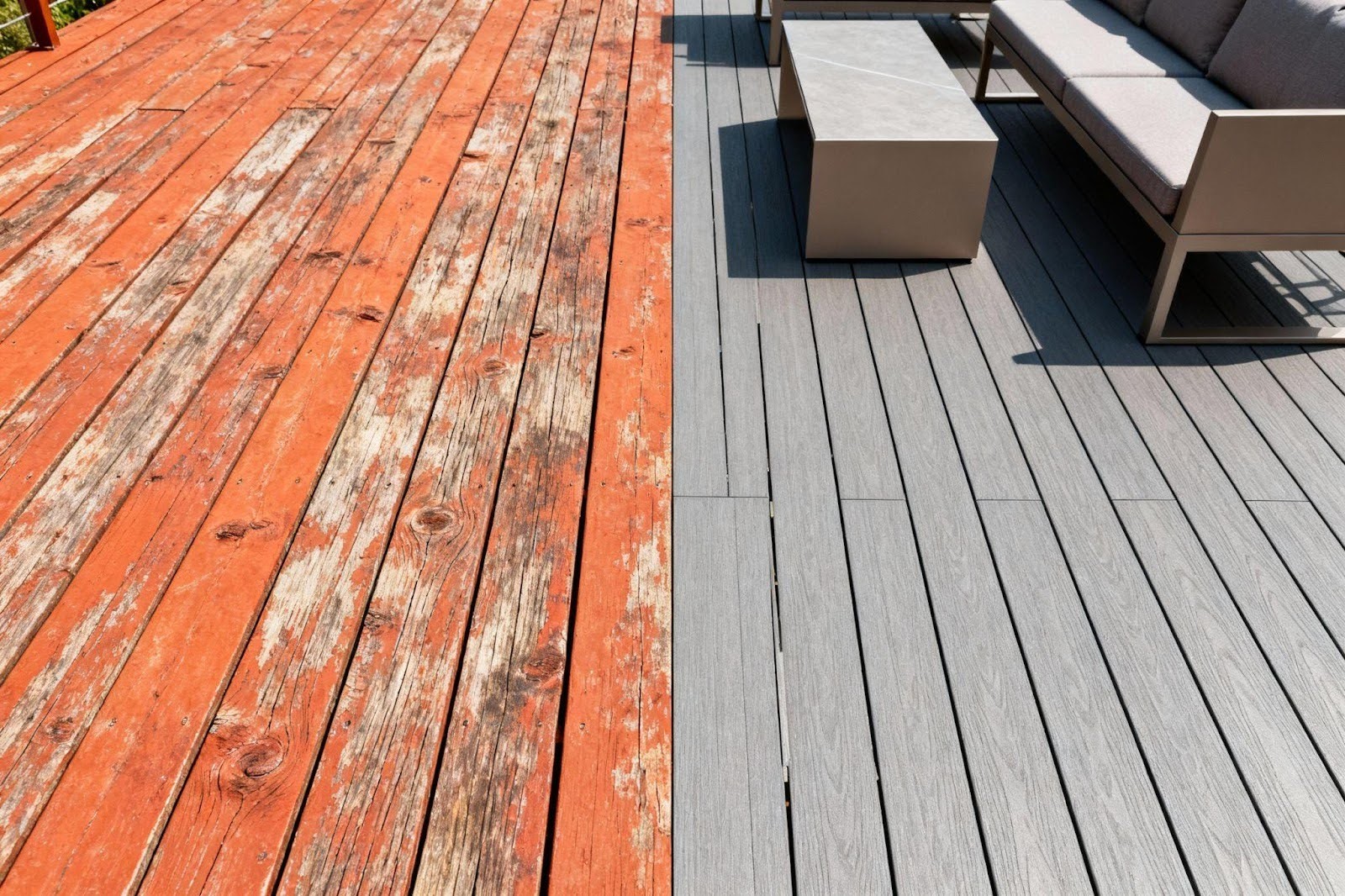
Deck colors have changed big time over the past few years. Walk around any neighborhood, and you’ll notice something different about the new decks popping up. They’re not all the same reddish-brown shade anymore. Homeowners are getting bolder with their choices, and honestly? It looks great.
The shift to modern colors isn’t just about following trends. It’s about creating outdoor spaces that actually reflect your style. When you’re talking to deck builders, the conversation starts with color way more often than it used to. That’s because color sets the tone for everything else.
Let’s dig into what’s happening with deck colors right now and why moving away from traditional wood tones makes sense.
The Shift Away from Traditional Reds and Oranges
Remember those classic deck stains? The orange-y reds and bright browns? They had their moment, but that moment is fading fast. There’s a reason for this shift, and it’s not just about what looks trendy.
Traditional wood-tone stains fade unevenly. After a few summers, that rich mahogany turns into a patchy mess that looks tired. Plus, those warm tones can feel dated now. Homeowners want something fresh, something that doesn’t scream “built in 2005.”
Modern composite materials have opened the door to way more color options. You’re not stuck with what nature gave you anymore. The materials hold their color better, resist fading, and give you choices that weren’t possible ten years ago.
What people want in 2025 is sophistication without losing comfort. They want decks that look intentional and modern but still feel like home. That’s a tough balance, and color is the main tool to get there.
Cool Grays and Charcoals: The Modern Deck Standard
If one color family is dominating right now, it’s gray. Drive through any new development, and you’ll see it everywhere. Light silver-gray, slate, deep charcoal, they’re all having a moment.
Why? Gray works with pretty much everything. Got a brick house? Gray deck. White siding? Still gray. It’s the safest bet for creating a clean, modern look that won’t clash with your home’s exterior.
Here are the real advantages of going gray:
- It hides dirt and scratches better than lighter colors
- It creates contrast without being dramatic
- It pairs beautifully with black or white railings
- It feels modern without trying too hard
There is one catch. Darker grays can get hot in direct sunlight. I’m talking really hot, sometimes 30 degrees above the air temperature. If your deck sits in full sun all afternoon, you might want to lean toward lighter gray shades or pick something with heat-reflective technology built in.
The charcoal deck with white cable railing combo? That’s the look right now. It’s sleek, it’s modern, and it photographs well. If you’re planning to sell your house in the next few years, this combination adds serious curb appeal.
Dramatic Darks: Espresso, Black, and Deep Browns
For homeowners who want luxury, dark is the way to go. Deep espresso, near-black composites, and Brazilian walnut hues create a high-end feel immediately. These colors make your landscaping pop. Seriously, put some green plants next to a dark deck, and everything looks more vibrant.
Dark decks work best in certain situations. They’re perfect for shaded areas where heat absorption isn’t an issue. They also look better on larger decks where the color doesn’t overwhelm the space.
But let’s be real about the downsides. Dark surfaces show everything. Dust, pollen, and footprints all show up. And yeah, the heat thing is real. Dark decks in sunny spots can get uncomfortable to walk on barefoot.
Professional builders have ways to work around these issues. Some use heat-mitigating materials that reflect infrared light. Others suggest two-tone designs where you use dark as an accent rather than the main color. A light deck with dark borders? That’s a smart compromise that gives you the luxury look without the downsides.
Warm Earthy Tones with a Modern Twist
Brown isn’t dead. It’s just evolved. The earthy tones trending now aren’t your grandparents’ deck colors. We’re talking about taupe, cognac, toasted sand, and warm chestnut colors that feel natural without feeling dated.
These shades hit a sweet spot. They bridge the gap between traditional and modern. They work well with natural surroundings but don’t have that orange undertone that makes decks look old-school.
The versatility is huge. Light-colored homes look great with deeper, earthy tones. Dark exteriors pair nicely with lighter sands and taupes. These colors adapt to different architectural styles without forcing you to commit to something super bold.
If you’re the type who wants a deck that feels timeless, this is your category. These colors won’t look dated in five years.
Light and Coastal Aesthetics
Lighter deck colors are having a comeback. Driftwood, weathered oak, coastal gray, and sandy birch all these shades create an airy, beachy vibe that people love.
There are practical reasons to go light. Small decks feel bigger when you use light colors. The surface stays cooler in hot climates because it reflects heat instead of absorbing it. And that coastal aesthetic? People want it even when they live nowhere near the ocean.
One thing to consider is maintenance. Light decks do show dirt differently than dark ones. Interestingly, many light colors with variegated patterns hide everyday grime better than solid dark colors that show every footprint.
Some deck builders in my area intentionally create a weathered look with light materials. It’s a specific technique that makes brand-new decking look like sun-bleached driftwood. Pair that with natural wood railing or metal accents, and you’ve got something special.
Color Psychology and Your Outdoor Living Space
Color affects mood. That’s not just design talk, it’s real. Cool colors like grays and blues feel calming and modern. They create a sense of tranquility that works well for relaxation spaces.
Warm colors like browns and taupes feel inviting and cozy. They encourage gathering and conversation. If your deck is mainly for entertaining, warmer tones might be the better choice.
Dark colors create intimacy and luxury. They make spaces feel more enclosed and special, which is great for evening use with landscape lighting.
This is why experienced professionals ask about your lifestyle during consultations. How you use your deck should influence what color you pick. A meditation spot needs different vibes than a party deck.
Working with Deck Builders to Choose the Right Color
Here’s where working with deck builders becomes critical. Picking colors online or from a tiny sample doesn’t cut it. You need to see large samples in your actual lighting conditions.
Professional builders consider several important factors when helping you choose:
- Sun exposure – This affects how hot your deck gets, how quickly colors fade, and how the color actually looks throughout the day. A deck in full sun needs different considerations than a shaded one.
- Home exterior – Your deck color must work with your siding, trim, and roof. The builder will evaluate these elements to create harmony rather than clash.
- Landscaping – Deck colors interact with plants and hardscaping around your property. Green plants look amazing next to certain colors and weird next to others.
- Climate – Heat and humidity impact how materials perform over time. What works in dry areas might not be ideal for humid regions.
- Maintenance willingness – Some colors require more frequent cleaning than others. Be honest about how much upkeep you’re willing to do.
Professional builders use something called the 60-30-10 rule. Your main deck color is 60 percent, railings or accents are 30 percent, and small details like post caps are 10 percent. This creates balance without overwhelming the design.
Digital visualizers are cool, but they’re not enough. Bring physical samples home. Look at them in morning light and afternoon sun. See how they look when it’s cloudy. Colors change dramatically based on lighting, and you need to see that before committing.
Don’t forget to ask about warranties. Quality materials come with fade resistance guarantees. If a builder can’t tell you about color warranties, that’s a red flag.
Final Thoughts
Bold deck colors aren’t risky anymore. With the right materials and professional guidance, you can pick something that feels unique without worrying about regret later.
Modern composite materials have completely changed what’s possible. The color options available now would have been impossible a decade ago. That means your deck can truly reflect your style, not just settle for whatever wood stain looks okay.
The key is working with experienced local professionals who understand materials, climate, and design. They’ll help you avoid mistakes like picking a dark color for a sun-drenched deck or choosing something that clashes with your home’s architecture. Take the time to view samples, ask questions, and consider how you’ll actually use the space. The right color doesn’t just look good, it transforms how your outdoor space feels and functions.
