

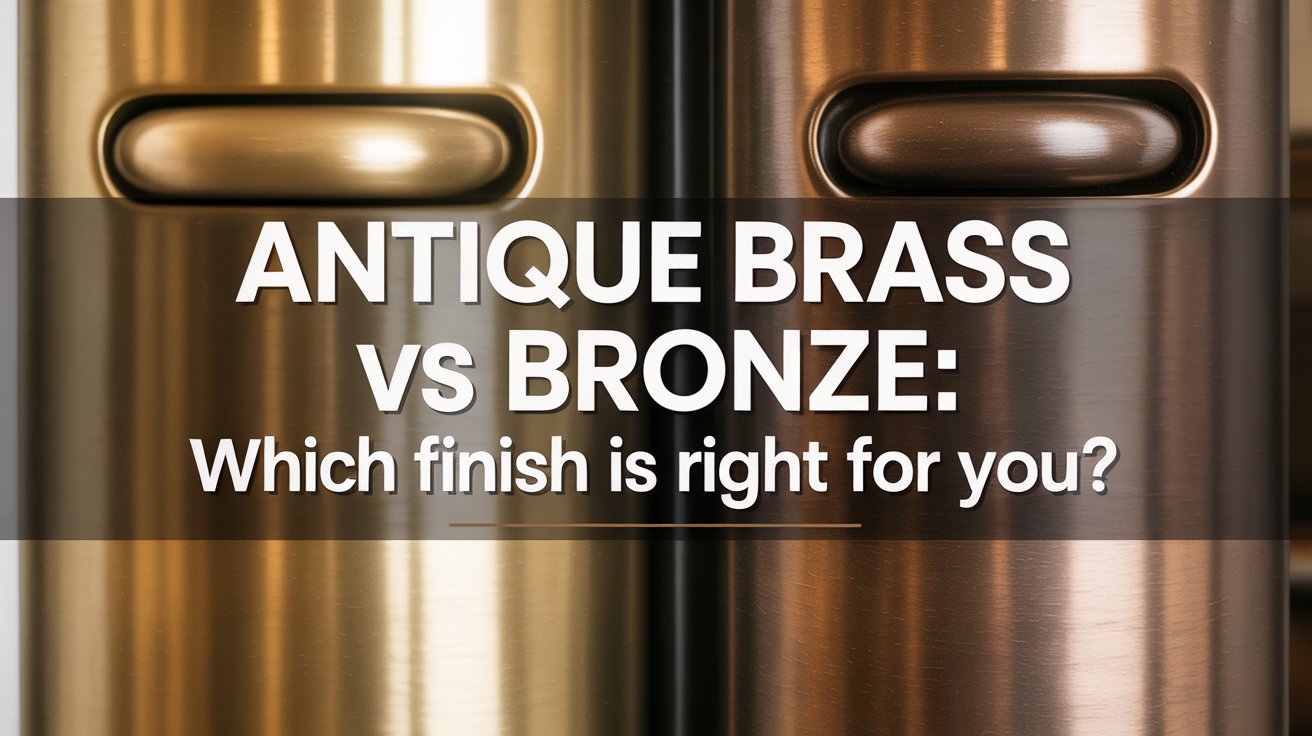
Are you stuck between antique brass and bronze for your home project? I get it. When I first started choosing finishes for my own space, these two looked almost identical to me.
But here’s the thing. They’re actually quite different, and picking the wrong one can throw off your entire design. The good news is that once you know what sets them apart, the choice becomes much easier.
In this guide, I’ll walk you through the real differences between antique brass and bronze. You’ll learn about their colors, how they hold up over time, and which rooms they work best in.
By the end, you’ll feel confident choosing the right finish for your home.
What Is Antique Brass?
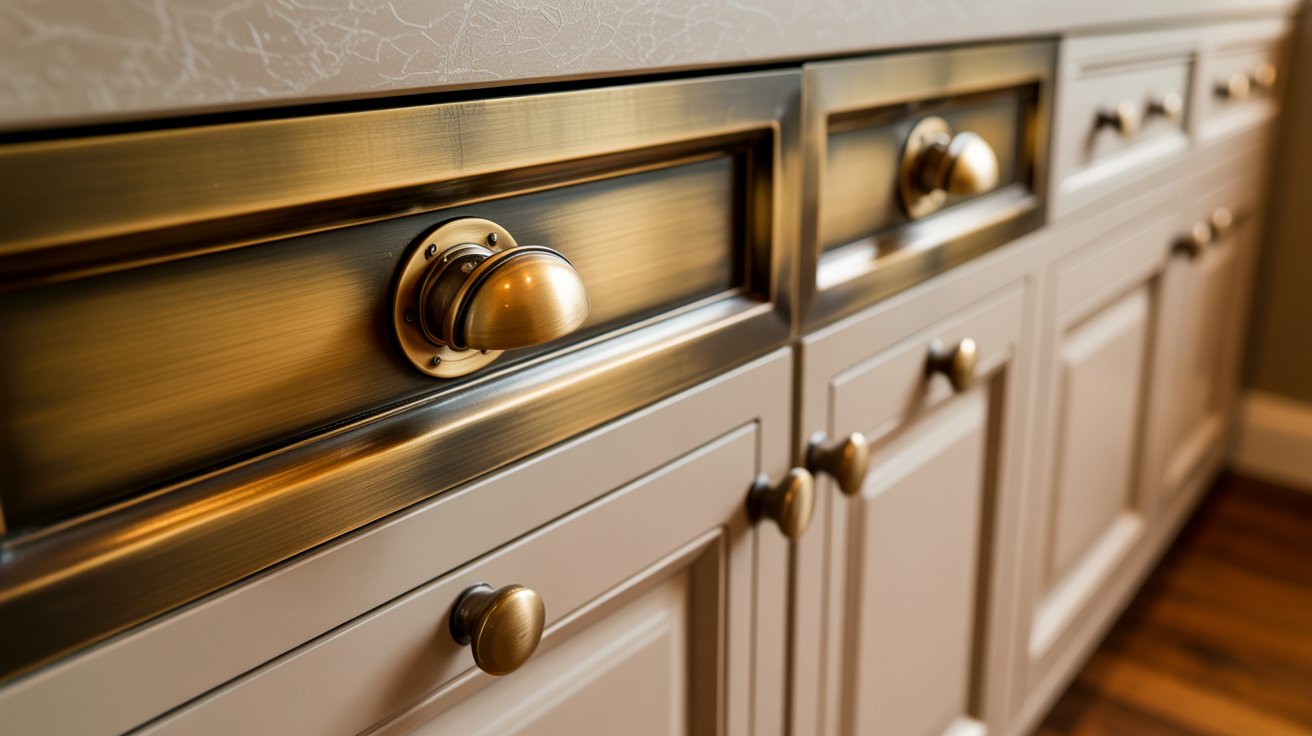
Antique brass offers a warm, golden-brown finish that brings timeless appeal to traditional and transitional homes through various hardware applications.
Composition and Finish
Antique brass has a warm, golden-brown color that looks naturally aged. You won’t find this finish on brand-new metal straight from the factory.
Manufacturers create this look using different methods. Some apply a special lacquer coating. Others use patina treatments or PVD coating on the metal surface. You can find antique brass in both matte and glossy finishes, depending on what matches your style.
Stylish Qualities
This finish brings warmth into any room. It has a classic, timeless quality that never goes out of style.
Antique brass works beautifully with neutral cabinets and natural wood tones. If you have a traditional or transitional home, this finish will fit right in. It adds character without being too bold or flashy.
Common Applications
You’ll often see antique brass on cabinet pulls and knobs in kitchens and bathrooms. It’s also popular for furniture hardware and decorative panels.
This finish works best in classic and transitional interiors. If your home has a traditional feel or you’re mixing old and new styles, antique brass is a solid choice.
What Is Bronze?
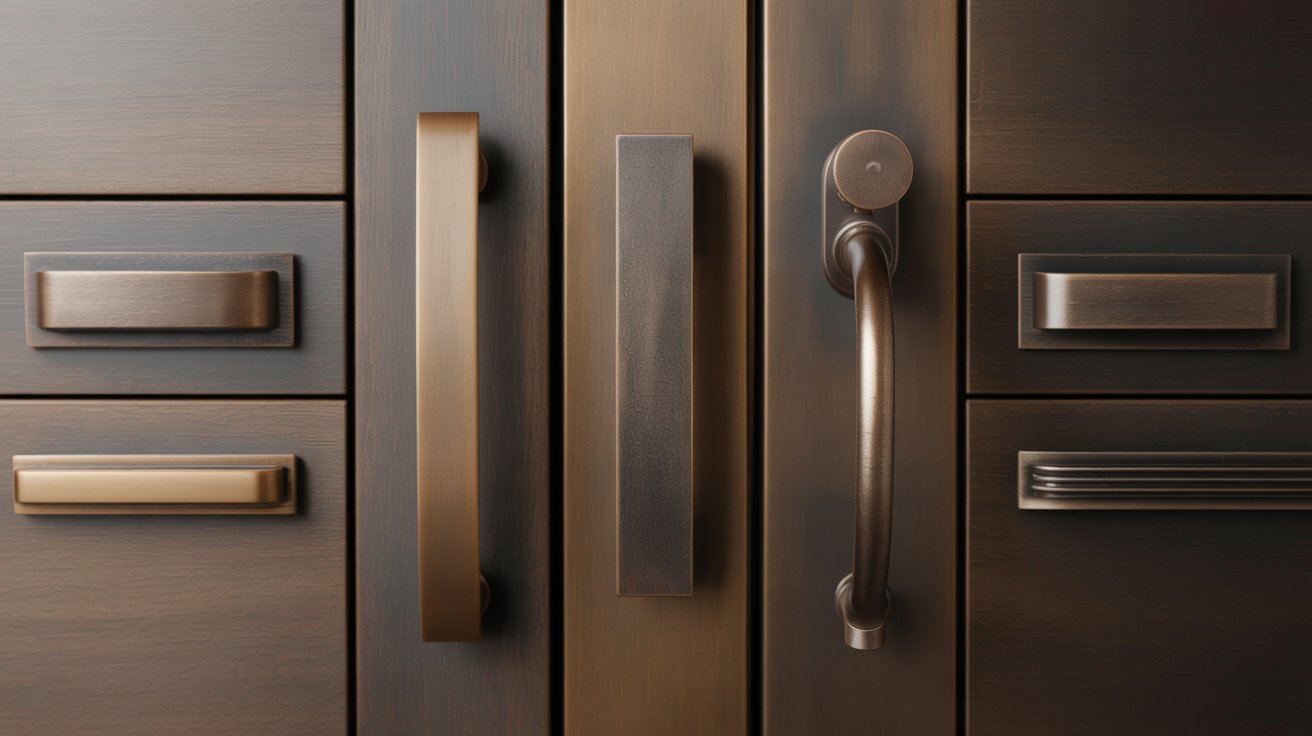
Bronze is a metal alloy made from copper and tin that creates rich, dark brown tones for hardware and fixtures throughout your home.
Composition and Finish
Bronze combines copper with tin, and sometimes includes other metals too. This creates its signature deep brown color.
You can get bronze in matte lacquer or PVD finishes. One interesting thing about bronze is how it changes over time. It develops a natural patina that gives it even more character as the years go by.
Classy Qualities
Bronze has a deep, dramatic look that grounds a space. It’s bolder and darker than most other finishes.
This finish creates strong contrast when you pair it with light-colored cabinets or pale surfaces. If you want your hardware to stand out and make a statement, bronze delivers that effect.
Common Applications
You’ll find bronze on cabinet hardware, bathroom and kitchen faucets, and door handles. It also appears on decorative metal sheets and accent pieces.
Bronze fits well in modern homes with clean lines. It also works in rustic spaces and anywhere you want high contrast. If your design style leans contemporary or industrial, bronze is worth considering.
Comparison table for Antique Brass vs Bronze
Antique brass and bronze are popular metal finishes with distinct characteristics. This comparison helps you understand their differences in appearance, durability, and uses.
| Feature | Antique Brass | Bronze |
| Color & Tone | Warm, golden-brown, aged | Dark brown with subtle gold, patina develops |
| Finish Options | Matte or gloss lacquer | Matte, patina finishes |
| Design Fit | Classic, transitional, vintage | Modern, rustic, bold |
| Durability | Durable, softer than bronze | Highly durable, corrosion-resistant |
| Maintenance | Occasional cleaning | Minimal, patina protects |
| Best Use | Cabinets, furniture overlays | Hardware, doors, high-traffic areas |
| Cost | More affordable | Higher-end |
Antique Brass vs Bronze: Key Differences
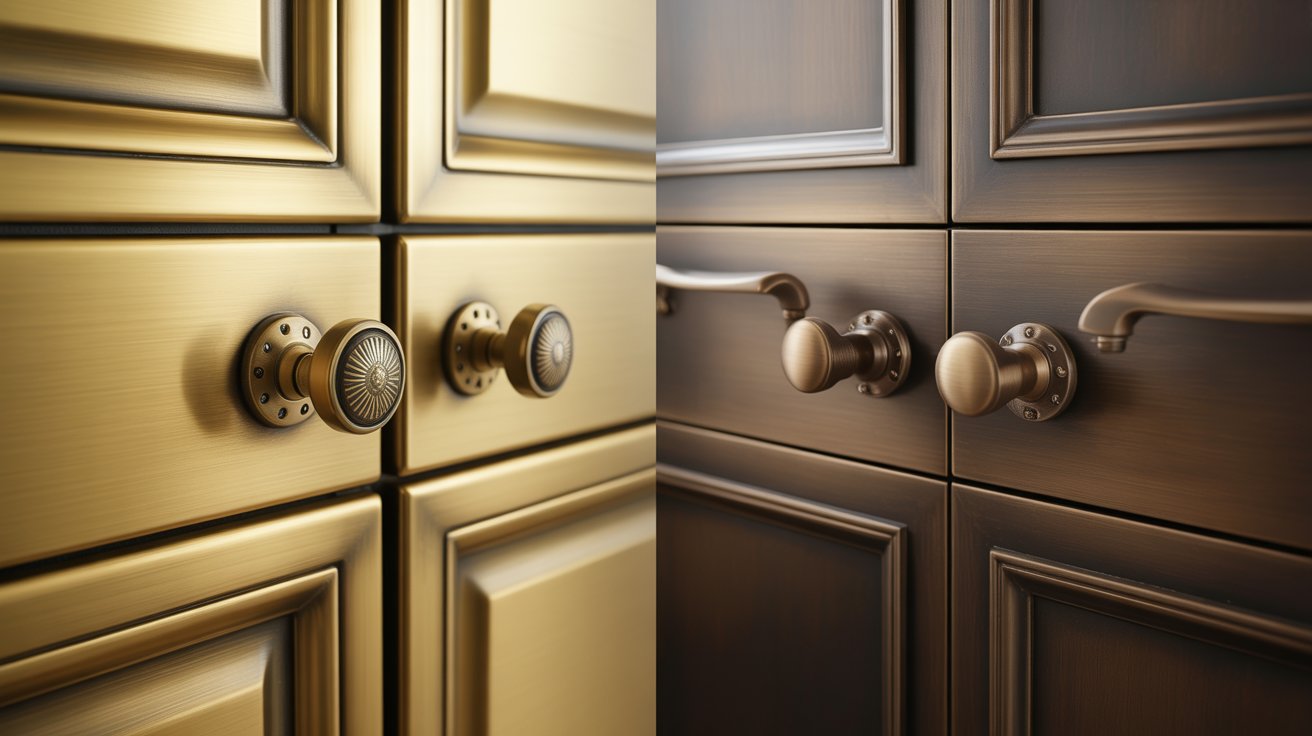
Now let’s compare these two finishes side by side so you can see exactly how they differ.
Color and Tone
Antique brass has a warm, golden color with a soft, aged appearance. It’s lighter and has that honey-toned glow.
Bronze is much darker. It has earthy, rich brown tones with just a hint of gold underneath. The color difference is the first thing most people notice.
Design Style Fit
Antique brass works best in classic and transitional spaces. It creates a warm, inviting feeling that suits traditional homes.
Bronze fits modern and rustic styles better. It makes a bold, dramatic statement. If your home has contemporary or industrial elements, bronze will feel right at home.
Finish Options
You can get antique brass in both matte and glossy lacquer finishes. This gives you more flexibility with the final look.
Bronze typically comes in matte lacquer. Over time, it develops a natural patina that adds more depth and character to the finish.
Maintenance and Durability
Antique brass resists tarnishing when it has a lacquer coating. You’ll need to clean it occasionally with a soft cloth, but it’s pretty low maintenance.
Bronze is highly durable and needs very little care. The patina that forms over time actually adds to its appeal rather than taking away from it.
Overall Feel
Antique brass brings warmth and timeless charm to your space. It has an elegant quality without being too formal.
Bronze adds depth and visual impact. It’s more dramatic and creates a sophisticated, grounded feeling in any room.
Choosing the Right Finish for Your Space

The right finish depends on your home’s style and what feeling you want to create in each room.
When to Choose Antique Brass
Pick antique brass if you want to add warmth and classic style to your space. It’s the better choice for traditional or transitional homes.
This finish looks great with neutral cabinets and natural wood tones. The golden-brown color complements these materials beautifully.
Choose antique brass if you want options. Since it comes in both matte and glossy finishes, you have more control over the final look.
When to Choose Bronze
Go with bronze if you want contrast and drama. This finish makes a bold statement that catches the eye.
Bronze works especially well with light-colored or modern cabinets. The dark tone creates strong visual interest against pale surfaces.
Pick bronze if you value durability and want something that needs minimal care. It holds up well over time and the natural patina only makes it look better with age.
Conclusion
Both antique brass and bronze have their place in home design. Antique brass brings warmth and timeless style, while bronze adds depth and striking contrast.
Your choice comes down to your personal style and what you need. Think about your existing colors, the mood you want to create, and how much maintenance you’re willing to do.
I’ve seen both finishes work beautifully in different homes. The key is matching them to your space and lifestyle. Trust your instincts. Go with the finish that makes you excited about your project.
Both options are versatile enough for hardware, fixtures, and decorative pieces throughout your home.
Frequently Asked Questions
Is antique brass more expensive than bronze?
The price varies by manufacturer and finish quality, but they typically cost about the same. Your final cost depends more on the brand and application method than the finish itself.
Can I mix antique brass and bronze in the same room?
Yes, but it requires careful planning. Keep one finish dominant and use the other sparingly as an accent to avoid a cluttered look.
Does bronze finish scratch easily?
Bronze is quite durable and resists scratches well. Minor wear actually adds to its aged character rather than making it look damaged.
How do I clean antique brass without damaging it?
Use a soft, damp cloth with mild soap for regular cleaning. Avoid abrasive cleaners or rough scrubbing that can strip the protective lacquer coating.
Will bronze hardware turn green over time?
Bronze can develop a greenish patina naturally, especially in humid environments. Many people appreciate this aged look, but you can seal it if you prefer to prevent the color change.
