

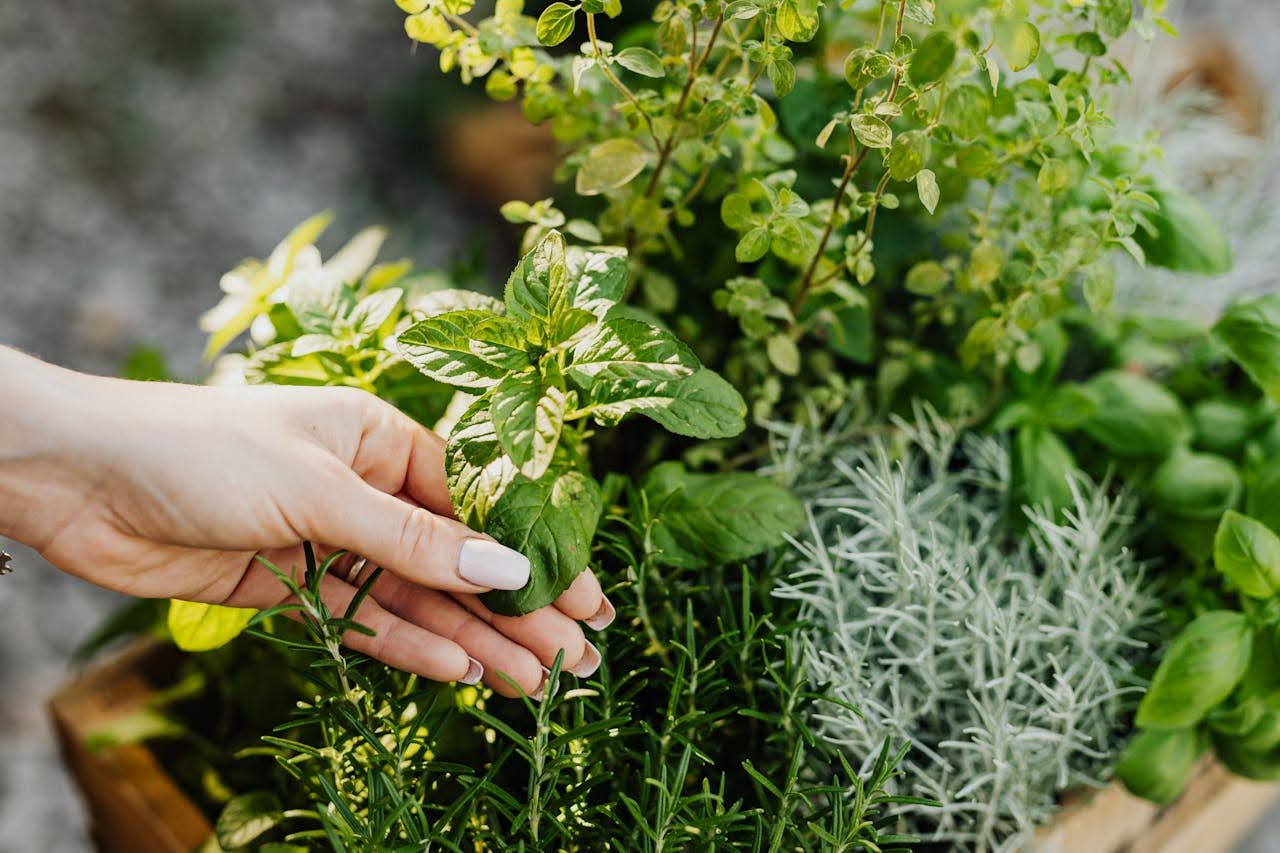
Due to their ease of cultivation, low maintenance requirements, and numerous benefits, herbs hold a particular position in Australian backyards. Herbs not only add flavour to our food but also create pleasant scents, add texture and foliage to our gardens, and even serve as organic insect repellents.
From parsley and mint to basil and rosemary, these inconspicuous plants are incredibly powerful. Whether it’s a few pots on a balcony or a combination of planter boxes and in-ground plants in your garden, the key to maximising them is in your garden design—picking the ideal arrangement for your area.
Choosing Herbs for Your Garden
Selecting what to grow is the first stage in building a herb garden, so consider the herbs you use most frequently in your cooking as they will yield the most benefits. In many kitchens, basil, oregano, and thyme are classics, and coriander and mint liven up salads and drinks. Hardy types like sage and rosemary are low-maintenance choices because they grow well with little effort. Climate also matters; parsley and chives can withstand colder temperatures, but sensitive herbs need warmth. You may enjoy variety and make sure that something is constantly in season by selecting a combination of annuals and perennials.
Using Planter Boxes to Create a Herb Garden
Because they let you group herbs together, enhance drainage, and boost plants to a convenient height—especially useful if you want to keep herbs near the kitchen for easy harvesting—planter boxes are a great starting point for a backyard herb garden. You can set aside one or two complementary herbs per box, or you can divide large planter boxes into smaller portions for different types. Additionally, their structure makes your garden appear purposeful rather than disorganised by adding neatness and order.
The Allure of Pots’ for Flexibility
Pots are a great choice for anyone who wants adaptability or has limited space. They can be nestled into tiny spaces in corners, arranged in groups for visual effect, or shifted to follow the sun. Glazed ceramic pots add colour and design, while terracotta pots provide rustic warmth. Additionally, you may regulate the soil conditions in pots for herbs that require particular conditions. For instance, basil grows best in a pot that is well-drained and receives plenty of sunlight, whereas mint spreads quickly and is best kept contained. Pots’ adaptability guarantees that you can rearrange them as your garden expands and try out different combinations.
How to Create a Traditional Formal Herb Garden
A formal herb garden, which is typically designed in geometric designs and frequently features a sundial or birdbath as the focal point, adds beauty and structure to your backyard. The herbs themselves fill each area with rich greenery and a wonderful smell, while low hedges, gravel walkways, and well-edged beds create symmetry. If you have the room and want a garden that is both extremely functional and visually spectacular, this is a great option.
Combining Function with Freshness
Herb gardens are evidence that a useful design may also be quite fulfilling. There are countless options, whether you prefer the clean lines of planter boxes, the adaptability of pots, or the classic elegance of a formal arrangement. Herbs are tolerant plants that provide flavour, colour, and aroma in exchange for little maintenance. The ideal herb garden design transforms your backyard into a space where new ideas are constantly accessible by fitting your lifestyle and available space.
