

A heat pump can feel like the “easy mode” of home comfort when everything is set up right. It heats in winter, cools in summer, and usually runs best when it’s allowed to work steadily instead of sprinting and stopping all day.
The tricky part is that efficiency is not only about the equipment. It’s also about your home: airflow, drafts, insulation, and even where you place furniture. The good news is that most of the biggest gains come from small, realistic changes you can make without turning your weekend into a construction project.
Below is a year-round guide that focuses on what actually moves the needle, with a homeowner mindset and a little “house logic” that keeps systems running smoother.
Think like an efficiency designer, not a thermostat warrior
The most efficient homes are the ones that make heating and cooling easier in the first place. Your heat pump works hardest when your house is leaking air, when airflow is restricted, or when the thermostat keeps demanding big temperature jumps.
A simple goal helps: keep airflow clean and easy, keep the house from bleeding heat, and avoid forcing the system to “catch up” too often.
Master airflow inside the house (this is where most efficiency is won)
Replace “cold rooms” with “airflow rooms”
If one room is always colder or warmer, the instinct is to crank the temperature. That usually raises energy use for the entire home while barely fixing the problem room.
Instead, start with airflow basics:
- Make sure supply vents and return grilles are not blocked by rugs, furniture, or curtains.
- Keep interior doors slightly open if the room does not have its own return path. Closed doors can create pressure problems that reduce airflow.
- Vacuum return grilles occasionally. Dust buildup here is small, but it stacks up over time.
This is boring advice, which is exactly why it works.
The air filter rule that saves money
A dirty filter is like breathing through a thick scarf. The system uses more energy to move the same air, comfort suffers, and efficiency drops.
Check the filter regularly during peak heating or cooling months. If it looks gray and loaded, replace it. If you have pets, high dust, or construction nearby, you may need to replace it more often than the “every three months” rule people repeat.
One more detail that matters: extremely high-filtration filters can reduce airflow in some homes. That does not mean “cheap is best,” it means “balance is best.” If you upgraded your filter and the system got louder, room temperatures became uneven, or cycles got shorter, the filter may be too restrictive for your setup.
Keep vents open unless you truly know what you’re doing
Closing vents to “push air” elsewhere often backfires. Many duct systems are not designed for that kind of manual balancing. You can create higher pressure, reduce total airflow, and make the heat pump work harder.
If you have a problem area, it’s better to address the cause: leaks, missing insulation, poor return airflow, or a supply run that is under-delivering.
Use thermostat habits that match how heat pumps actually work
Avoid huge temperature swings
Heat pumps are often most efficient when they maintain comfort steadily. Big setbacks can force the system into a long recovery, and in colder weather, that recovery may trigger backup heat, which can be expensive.
If you like setbacks, keep them modest. A small adjustment can still help without turning your morning into a “catch-up marathon.”
Know what “aux heat” and “emergency heat” really mean
Many homeowners accidentally burn extra energy by treating backup heat like a normal mode. Backup heat is there for specific situations, not everyday comfort.
- Aux heat may come on automatically when outdoor temps drop or when the system needs help reaching the setpoint.
- Emergency heat is usually meant for when the heat pump has a problem, and you need a temporary backup.
If you keep bumping the thermostat up by several degrees at once, you can trigger backup heat more often. A more efficient move is raising the temperature gradually, then letting the system stabilize.
Stop fighting the schedule
If you constantly override your thermostat, the schedule is not helping. A simple schedule that matches real life is better than a perfect schedule that never survives Monday.
A practical approach is comfortable when you’re home, slightly relaxed when you’re asleep or away, and has minimal dramatic swings.
Treat the outdoor unit like part of your home’s landscaping
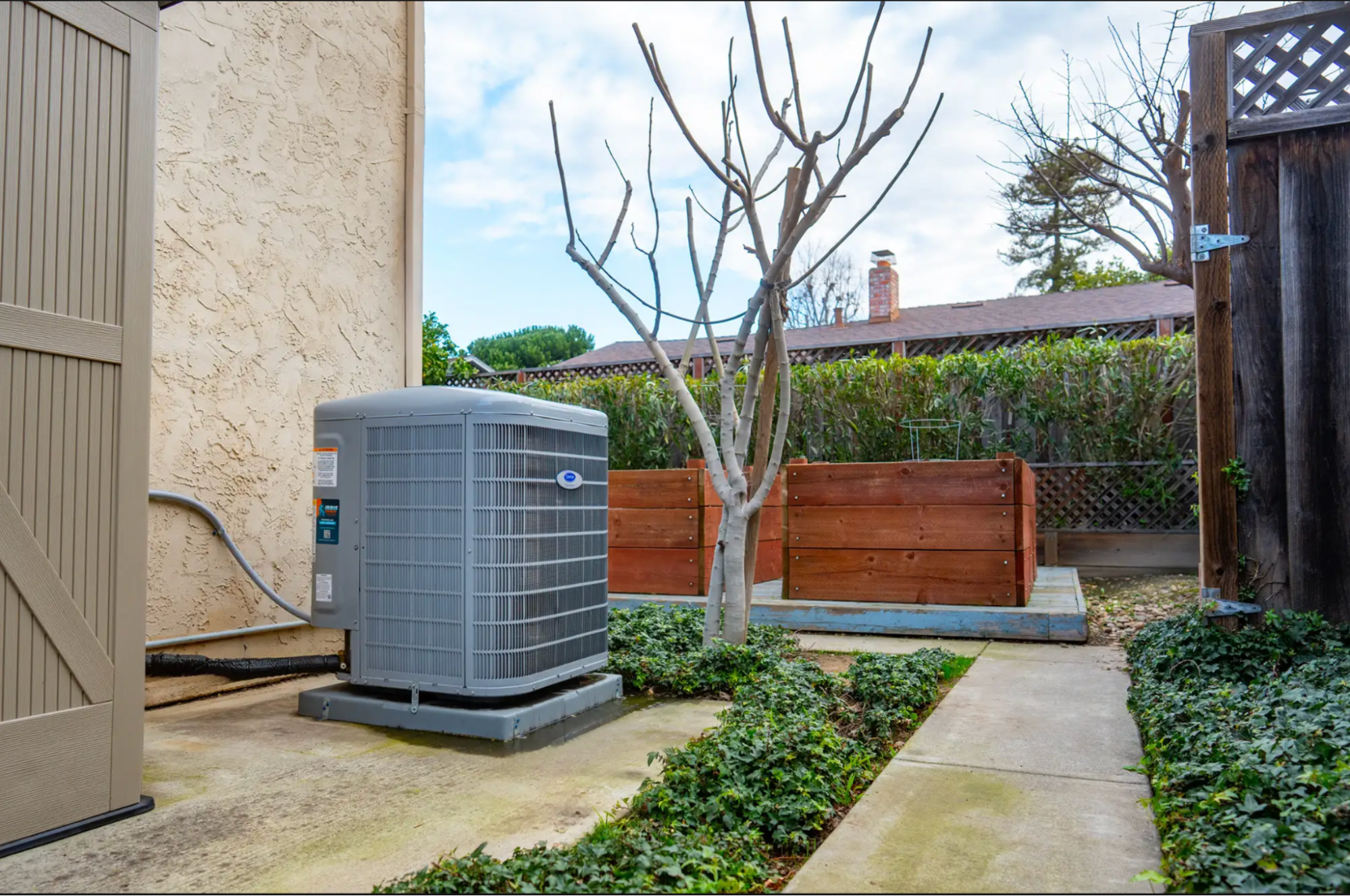
Your outdoor unit is where heat exchange happens. If it can’t “breathe,” your system can’t perform.
Give it space and keep it clean
Leaves, grass clippings, pollen, and dust can reduce airflow through the coil. Over time, that makes the system work harder and longer.
Keep a clear area around the unit, and avoid using it as a storage corner for patio items. After mowing or trimming, take a minute to check if the coil looks coated in debris.
If the coil looks dusty, a gentle rinse can help:
- Turn the system off.
- Use a garden hose with light pressure.
- Spray gently from the outside of the unit toward the coil surface.
Skip pressure washers. They can damage fins and create bigger problems than dirt ever did.
Winter reality: defrost is normal, but airflow still matters
In winter, you may see steam or hear a change in sound during defrost. That’s normal. What is not helpful is a unit blocked by snow, ice, or yard clutter. The unit needs airflow to do its job, even during defrost cycles.
If you live in an area with snow, keep the area around the unit clear and make sure water can drain away. Standing water that refreezes can create nuisance ice.
Improve the house itself (the upgrades that make your heat pump feel “stronger”)
This is the part most people skip, and it’s the part that gives the best long-term payoff. A heat pump is only as efficient as the building envelope allows.
Seal leaks before you chase equipment settings
Air leaks are like leaving a window cracked all season. You feel drafts, the system runs more, and rooms become inconsistent.
High-impact spots to seal include door weatherstripping, window gaps, attic hatches, and penetrations under sinks where pipes enter the wall. If you feel cold air near baseboards or outlets on an exterior wall, that’s a clue your home is losing heat you already paid for.
Add insulation where it counts
If your attic is under-insulated, improving it can be one of the fastest ways to reduce heating and cooling demand. This helps your heat pump in both seasons and makes indoor temperatures more stable.
You do not need to renovate the whole house to get meaningful results. One well-targeted insulation upgrade can make the entire system feel more efficient.
Use decor that supports comfort
This is where home design meets energy use.
Thicker curtains or thermal drapes can reduce heat loss in winter and block solar gain in summer. Area rugs can cut the “cold floor” feeling in winter, especially in rooms above garages or crawl spaces. Even furniture placement matters: if a sofa blocks a return grille, your system’s airflow suffers no matter how good the equipment is.
Small decor choices can reduce the temptation to crank the thermostat.
Build a simple year-round routine (without turning it into a chore)
Spring: get ready for longer cooling runs
Spring is a good time to check airflow and clean up the outdoor unit after winter debris. It’s also a great moment to notice which rooms warm up first and adjust shading before summer arrives.
Summer: reduce the heat coming in
In summer, your efficiency improves when your home absorbs less heat. Close blinds on the sunniest side during the hottest part of the day. If you have ceiling fans, use them to improve comfort – thus you keep the thermostat at a more efficient setting. Keep doors open when possible to reduce pressure issues and help air circulate.
Fall: prep before the first cold stretch
Fall is the moment to replace the filter, clear leaves from the outdoor unit, and handle weatherstripping before cold air finds its way inside. A little prep here prevents “mystery drafts” that make heating season feel expensive.
Winter: avoid backup heat triggers
In winter, gentle thermostat changes help. Keep the outdoor unit clear, and avoid using emergency heat unless you truly need it. If comfort suddenly drops, check the filter and make sure vents and returns are open before you assume the equipment is failing.
When it’s time to call a pro (and what to ask for)
DIY steps can take you far, but some efficiency issues need professional eyes. If your bills jump, airflow feels weak even with a clean filter, or the system cycles oddly, it’s worth scheduling a check.
When you talk to a technician, ask for a visit that includes system performance testing and airflow verification, not just a quick look. If you want a helpful reference point for what maintenance and service typically cover for a heat pump, that page outlines common options and can help you ask smarter questions during the appointment.
Conclusion
Maximizing heat pump efficiency year-round is less about tricks and more about making your home easy to condition. Keep airflow open, filters clean, and thermostat changes gradual. Treat the outdoor unit like a piece of your home’s exterior that needs space and occasional cleaning. Then focus on the upgrades that really pay off, like sealing drafts, improving insulation, and using window coverings and layout choices that reduce heat loss and overheating. Do those things consistently, and your heat pump will usually reward you with steadier comfort and lower energy use across every season.
