

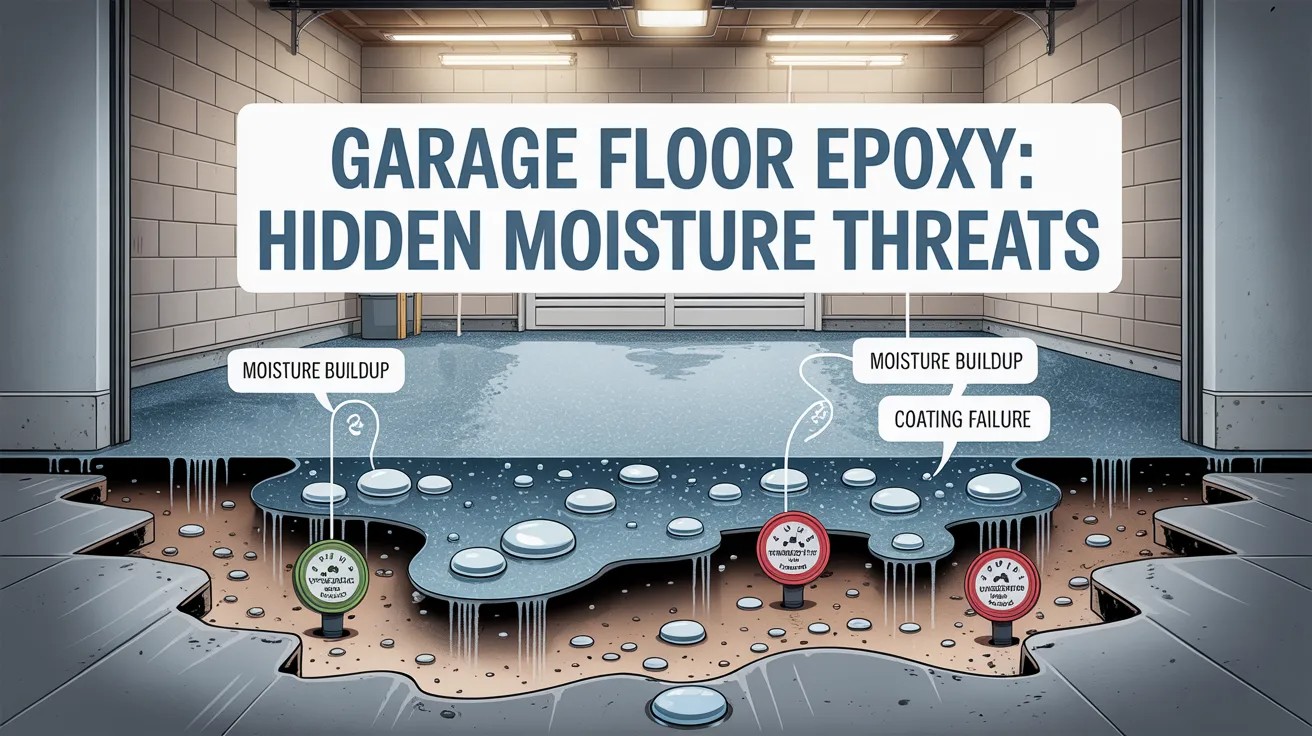
Orlando homeowners invest in durable garage floor epoxy systems for appearance and long-term protection. However, hidden moisture beneath concrete slabs remains one of the biggest threats to coating performance. Even strong finishes can fail when water vapor rises through porous concrete and disrupts adhesion.
This issue affects both traditional epoxy and polyaspartic garage floor coatings when moisture is not properly addressed before installation. At Kongcrete Coatings, we understand that lasting results begin with identifying slab conditions early. Recognizing moisture risks before installation protects your investment and prevents costly repairs later.
Moisture Risks with Epoxy Coatings
Concrete is naturally porous. When it sits over damp soil, water vapor can migrate upward through the slab. Without proper mitigation, this movement places stress on any coating system applied above it.
Common moisture-related risks include:
- Vapor Pressure Buildup: Rising moisture creates pressure beneath the coating layer, leading to bubbling or blistering within months or years.
- Adhesion Failure: Trapped vapor weakens the bond between the concrete and the garage floor epoxy, causing peeling or delamination.
- Surface Discoloration: Moisture migration can create cloudy patches or uneven finishes beneath sealed surfaces.
- Efflorescence Formation: Mineral deposits carried by groundwater appear as white residue on coated floors.
- Long-Term Structural Stress: Ongoing vapor transmission accelerates deterioration beneath the visible surface.
In humid regions like Central Florida, these risks increase due to high groundwater levels and year-round moisture exposure.
Understanding the Role of Polyaspartic Systems
Polyaspartic garage floor coatings provide faster cure times and enhanced durability compared to many traditional systems. Their flexibility and resistance to Florida’s heat and UV exposure make them well-suited for local conditions.
However, no coating can compensate for excessive slab moisture if proper testing and preparation are skipped. Moisture mitigation must occur before installation begins. Polyaspartic systems perform best when applied over a properly prepared and tested surface.
The strength of any coating system depends on preparation, not just material selection.
Essential Steps for Moisture Mitigation
Preventing moisture-related failures requires a structured process before applying garage floor epoxy or polyaspartic systems.
Key steps include:
- Slab Moisture Testing: Relative humidity probes, calcium chloride tests, or professional moisture meters identify vapor transmission levels.
- Mechanical Surface Preparation: Diamond grinding opens concrete pores and removes contaminants that interfere with bonding.
- Application of Moisture-Blocking Primers: High-solids primers create a barrier that reduces vapor intrusion beneath the coating.
- Environmental Monitoring: Proper temperature and humidity control during installation improves curing stability.
- Professional Installation Standards: Following manufacturer guidelines ensures coating systems perform as intended.
Addressing these factors early significantly reduces the likelihood of blistering, peeling, and premature coating failure.
Protecting Your Garage Floor Investment
Moisture beneath your slab can quietly compromise even well-installed systems if not properly managed. By combining slab testing, professional preparation, and high-performance materials, long-term durability becomes achievable.
At Kongcrete Coatings, our process includes moisture evaluation and mitigation steps before applying polyaspartic garage floor coatings or garage floor epoxy systems. This approach helps protect against Florida’s humidity while supporting a stable, long-lasting finish.
When moisture is properly controlled, your garage floor remains durable, visually consistent, and ready for daily use in Orlando’s demanding climate.
