


Your air conditioner does not just become inefficient overnight. Rather, performance decreases slowly, usually far before a breakdown takes place. You may observe longer cooling periods, uneven room temperatures, or increased energy bills despite the same usage. Such indicators reveal that the system labors more than it should to maintain comfort.
As a reaction to these early warning signs, preventive air conditioning service controls performance losses before they escalate into a serious problem. Routine maintenance is important to keep the systems in good condition by cleaning parts, ensuring good airflow, and keeping the system settings properly adjusted, instead of waiting until the system breaks down due to high temperature. Consequently, this preventive care allows quick cooling, regulated energy consumption, and less mechanical load. Once you know what preventive services can do to save on efficiency, you can ensure consistent indoor comfort and ensure your system is not subjected to unnecessary wear.
The following article describes the major points of preventive air conditioning maintenance and how each stage of the process contributes to proper cooling and system performance in general.
1. System Inspection

Much of preventive air conditioning service starts with an inspection of the entire system. Firstly, the process concentrates on those components that directly impact the cooling performance, such as coils, filters, fans, electrical connections, and refrigerant lines. Each element has a direct role in heat transfer, the movement of air, or the control of operations. Hence, a failing performance by one of these components leads to a drop in efficiency.
During this inspection, dirt accumulation, loose wiring, refrigerant leakage, corrosion, or deteriorated parts would be noticed. These problems tend to be minor but eventually create strain on the system. As an illustration, a loose electrical connection will lead to inconsistent performance of the refrigerator, whereas a slight imbalance of refrigerant will decrease the cooling capacity. Once such issues are identified early enough, additional loss of performance is prevented.
In general, a complete check-up guarantees that your system is safe, has constant output, and does not experience unnecessary mechanical overload.
2. Cleaning Of Critical Parts
Dust and debris naturally collect in your cooling system over time. This causes airborne particles to settle on evaporator coils, condenser coils, and filters. The larger this accumulation, the more the airflow is limited, and the efficiency of heat exchange decreases. As a result, the lack of transfer of heat causes the system to take longer cycles to reach the same temperature, which consumes more energy.
To correct this, preventive service involves cleaning off the coils, debris around the components, clearance of the condensate drains, and replacement or cleaning of filters. These measures reinstate good air circulation and aid in the proper transfer of heat. Clean coils absorb and release heat better, enhancing the speed of cooling and system reaction. Simultaneously, a lower airflow resistance decreases the load on fans and motors. Clean components thus enable the system to undertake its cooling mandate without any waste of effort.
3. Performance Optimization

Cooling systems are based on controlled conditions of operation. Nevertheless, when the settings become out of range, efficiency is compromised even when the system would seem to be operating as intended. To deal with this, preventive service checks airflow, refrigerant charge, thermostat accuracy, and electrical output. All these are combined to define the efficiency of the system in responding to cooling needs.
In addition, when the refrigerant is either too low or too high in concentration, the performance of cooling will be compromised, and system pressure will vary. On the same note, improper distribution of air impacts the temperature distribution and the cycle length. The inaccuracy of thermostats may result in the unit operating longer than required. As such, modification during preventive service is used to restore the proper operating conditions. Consequently, the system cools uniformly, recycles correctly, and has a lower temperature maintenance using less effort. Optimization minimizes wastage of run time and maintains a smooth running of the system.
4. Wear And Damage Prevention
During normal use, mechanical and electrical parts undergo significant wear. Motors, capacitors, belts, and electrical contacts deteriorate gradually and in most cases without obvious indicators. In due course, when wear is not slowed, parts break down under load and cause abrupt system failures.
To prevent this, preventive service identifies early signs of deterioration, such as overheating motors, weakened electrical connections, or misaligned moving parts. Addressing these issues before failure protects critical components from damage.
For instance, correcting motor strain early prevents compressor overload, which is one of the most costly system failures. Consequently, early intervention reduces the frequency of emergency repairs and keeps cooling performance dependable.
5. Efficiency And Lifespan Protection
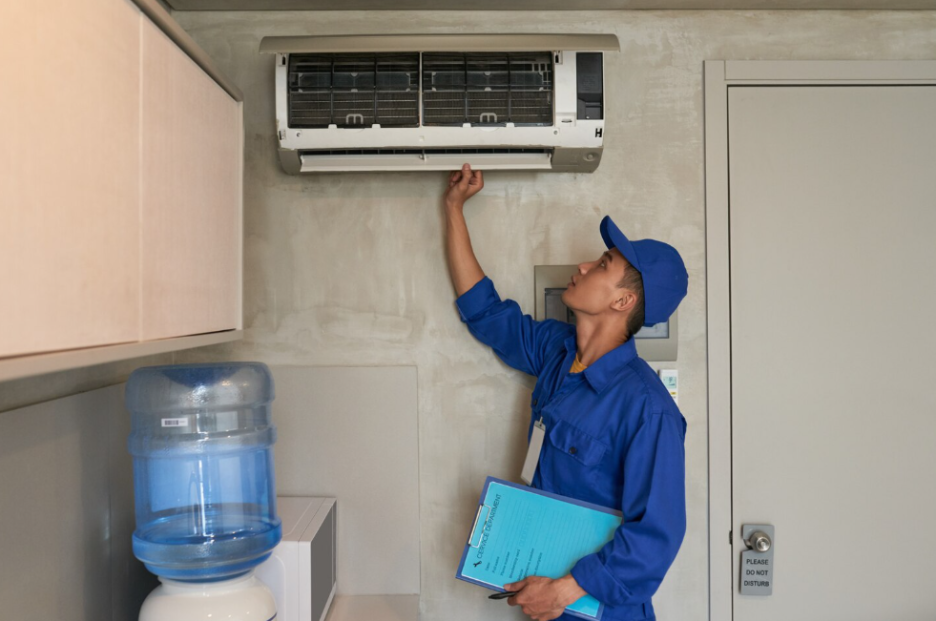
When system parts remain clean, balanced, and properly adjusted, energy use stays controlled. This stable operation limits heat buildup, vibration, and mechanical stress, all of which contribute to long-term wear. Because of this, a system that runs smoothly avoids the constant strain that shortens equipment life. Stable airflow, accurate controls, and proper refrigerant levels also help maintain consistent cooling output during daily operation.
Preventive service supports consistent efficiency by eliminating the small conditions that cause a gradual decline. Reduced strain allows components to operate within their intended limits, slowing overall deterioration. As a result, the system maintains reliable performance over a longer period. Instead of facing premature replacement, you sustain stable cooling through steady system care.
Efficiency protection and lifespan support work together, ensuring your cooling system performs effectively year after year while maintaining steady operational reliability.
6. Consistent Cooling Distribution
Even when a system runs, cooling may not distribute evenly throughout your space. Some rooms feel warmer, while others cool quickly. This often results from airflow imbalance, minor duct restrictions, or performance drift within the system. Because airflow is uneven, comfort levels vary, and the system runs longer to compensate.
Preventive air conditioning service checks airflow pathways, verifies fan performance, and ensures system output matches design capacity. Correcting airflow irregularities supports uniform temperature distribution across rooms. Balanced circulation reduces runtime, lowers strain on components, and improves overall comfort.
In addition, consistent cooling distribution also helps the system maintain steady operation instead of cycling excessively to correct temperature differences. Proper airflow balance further supports thermostat accuracy and prevents localized hot or cold spots from developing over time.
Conclusion
Preventive air conditioning service focuses on maintaining system condition to preserve long-term system reliability. Regular inspection, cleaning, calibration, and early wear detection address small internal issues that reduce efficiency. These steps maintain proper airflow, balanced operation, and lower mechanical strain.
When components stay clean and correctly adjusted, the system cools more effectively and runs more steadily. As a result, energy waste decreases, unexpected failures become less likely, and key parts stay protected from excess stress.
Consistent preventive care supports dependable comfort and steady operation. By prioritizing routine maintenance instead of reacting to breakdowns, you sustain cooling efficiency and protect the overall health of your air conditioning system over time.
