

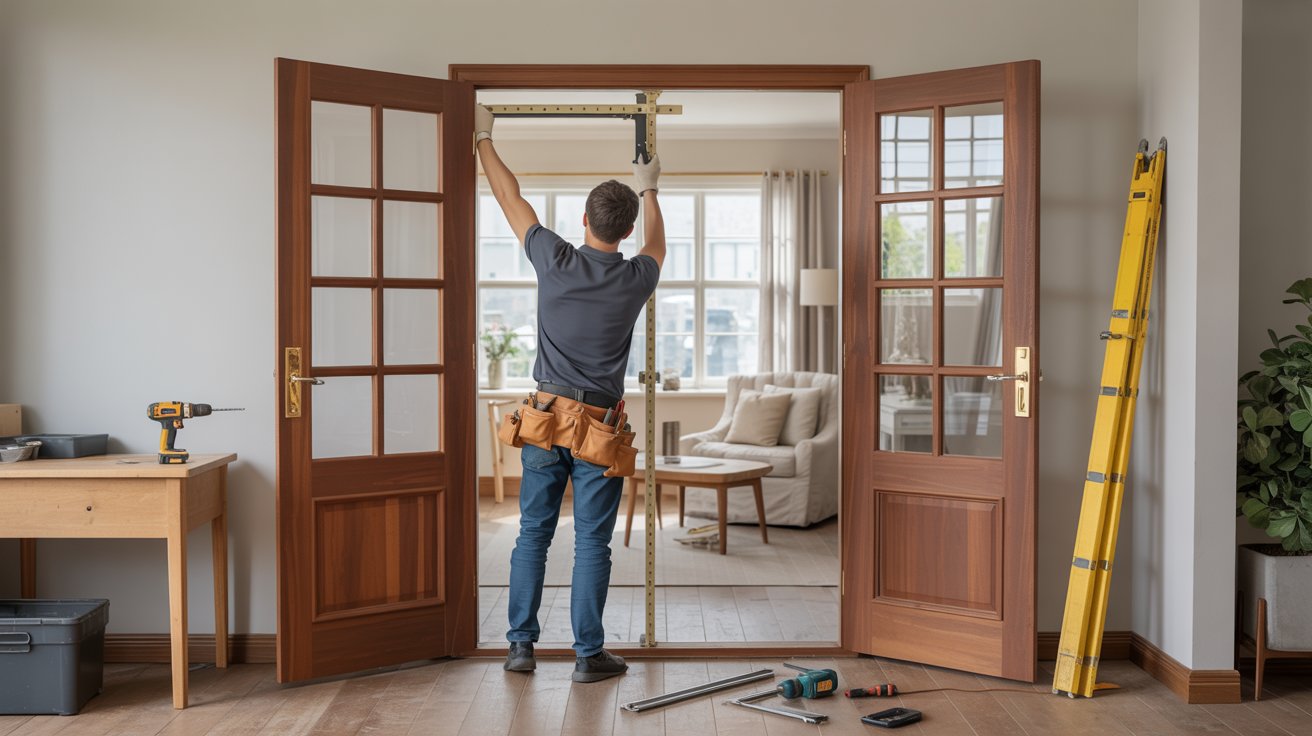
Want to know how to install French doors in your home? I’ll show you exactly how to do it. This guide covers everything.
The tools you need, each installation step, and tips to avoid mistakes. I’ve helped friends with this project, and it’s easier than you think.
You’ll learn to remove old doors, prepare openings, install frames, hang panels, and add finishing touches.
French doors bring more light into your space. They also add value to your home. If you can use basic tools, you can handle this.
Let me walk you through it.
Why Choose French Doors?
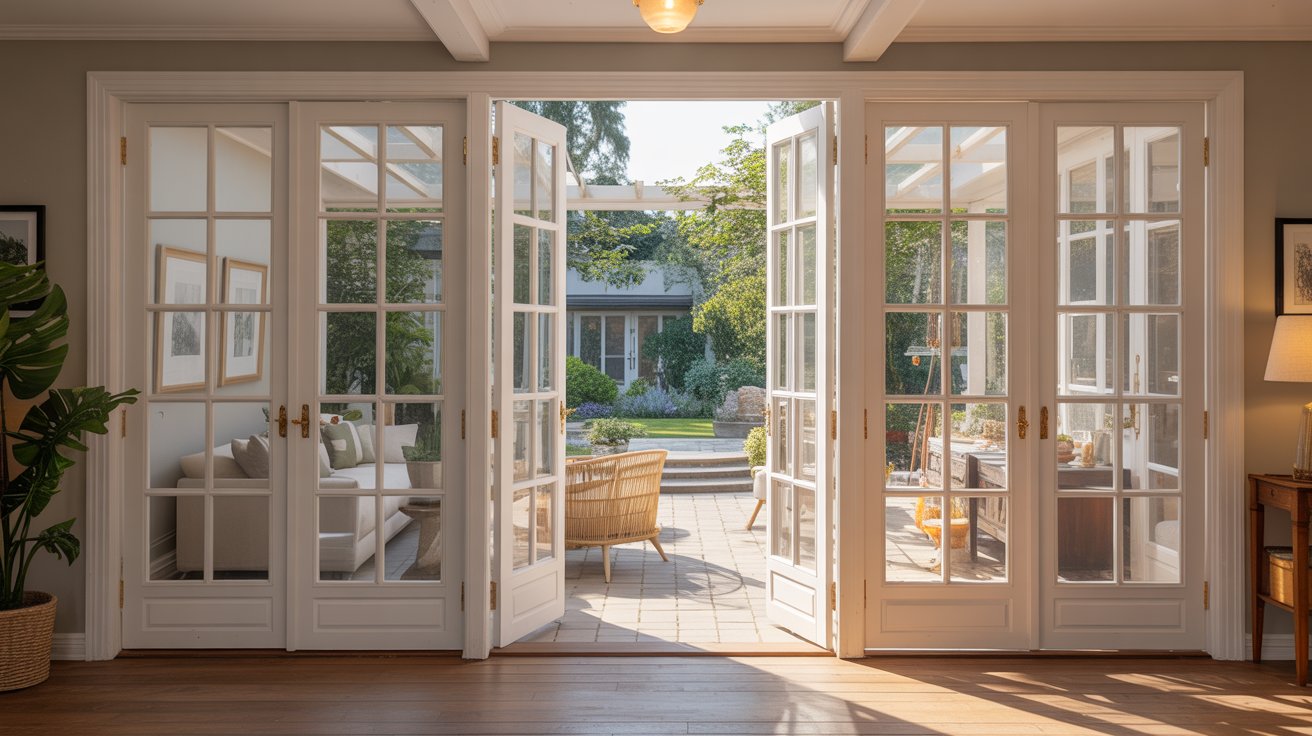
French doors bring in more natural light than standard doors. The glass panels let sunshine fill your rooms throughout the day.
Your space feels bigger and brighter. These doors create a strong connection between inside and outside areas.
You can see your patio or garden while staying indoors. Your home value goes up when you install French doors. Buyers love them.
They work great between living rooms and patios, opening to backyard decks, or connecting dining areas to outdoor spaces.
Tools and Materials Needed
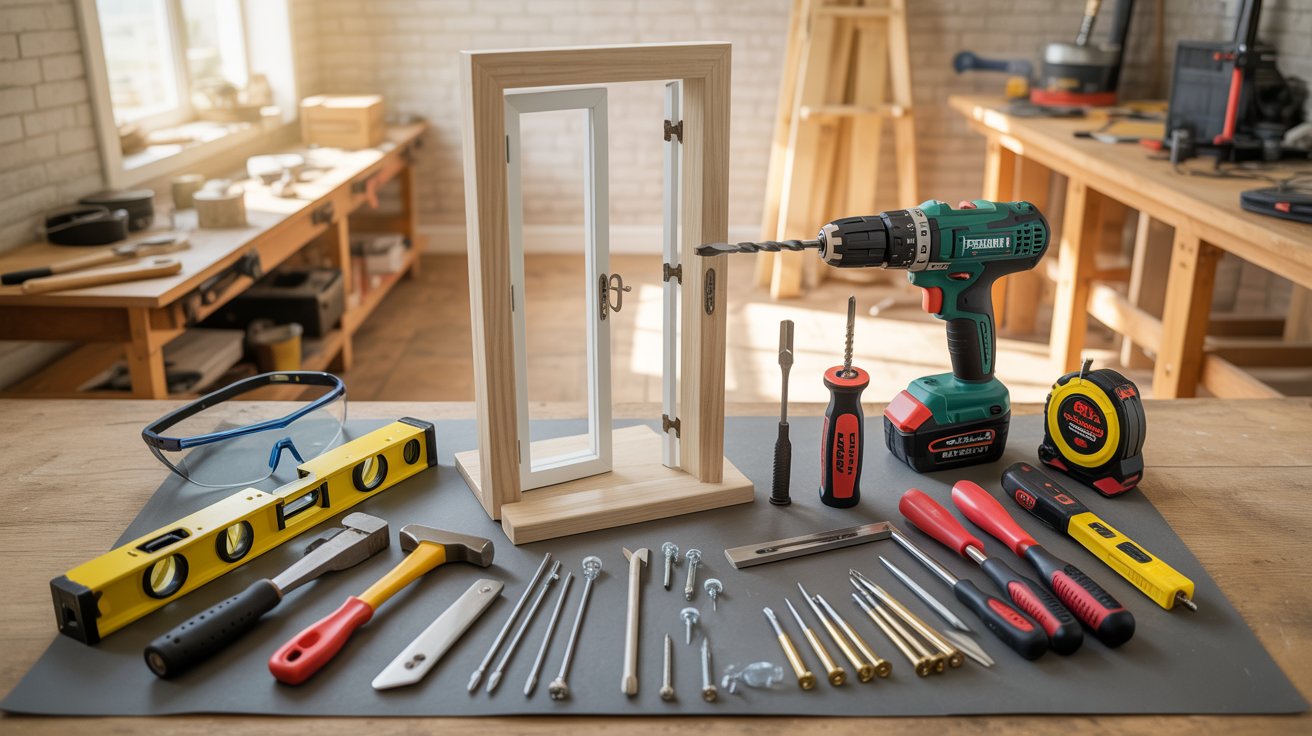
You’ll need several tools for this project. A power drill with drill bits and a hole saw. Get both Phillips and flat-head screwdrivers.
Keep a hammer, pry bars, and nail punch handy. A chisel, flush cutting saw, and rubber mallet help with adjustments.
Use a carpenter’s square, long level, and torpedo level to ensure everything sits straight. Don’t forget your tape measure and safety glasses.
Buy a complete French door kit that includes the frame. Pick up handles and latches that match your style. Stock up on shims, nails, and screws in various sizes.
Installing Your French Doors: Complete Process
Follow these seven steps to install your French doors correctly from removal to final touches.
Step 1: Remove the Old Door and Frame
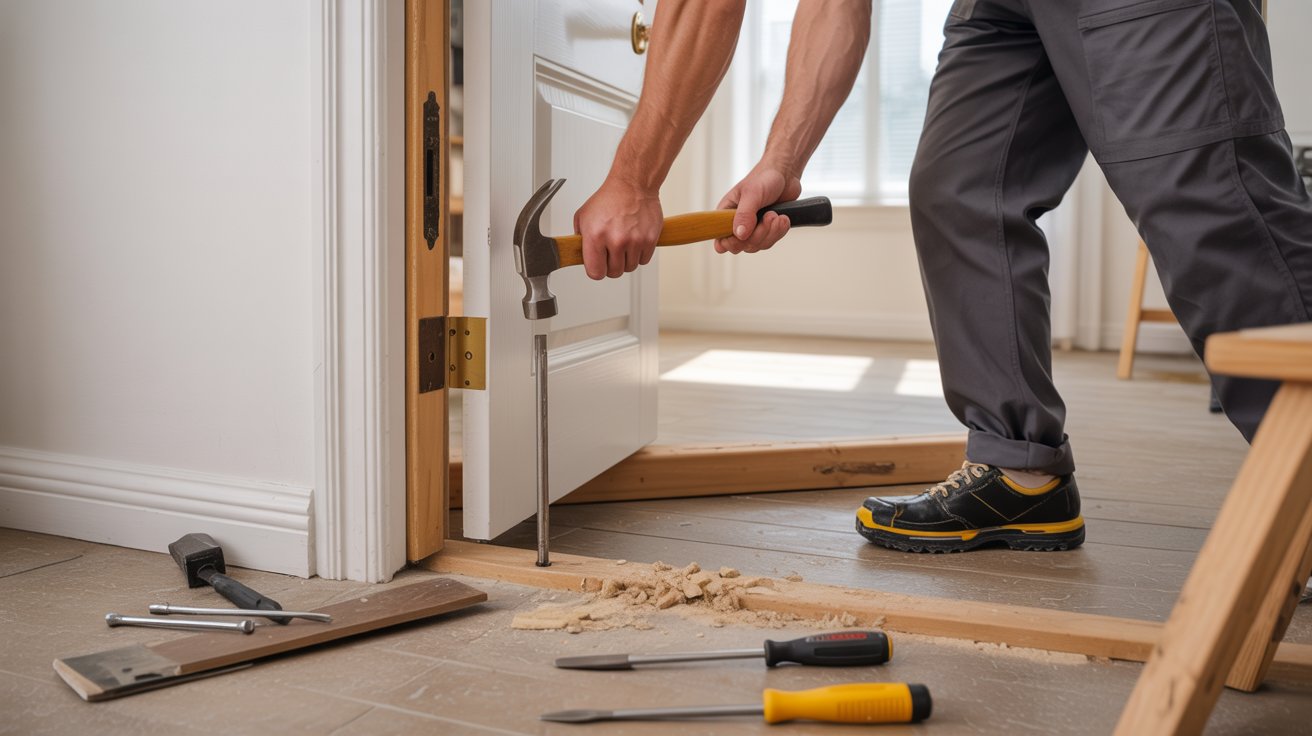
Use your pry bars with a gentle touch. Rush this step and you’ll crack the trim. Label each trim piece as you remove it.
Write where it came from on the back. This makes putting it back later super easy. Pull out all the old nails and debris from the opening.
Scrape away any old caulking that’s stuck to the frame. A clean opening makes the next steps go faster.
Step 2: Check and Prepare the Opening
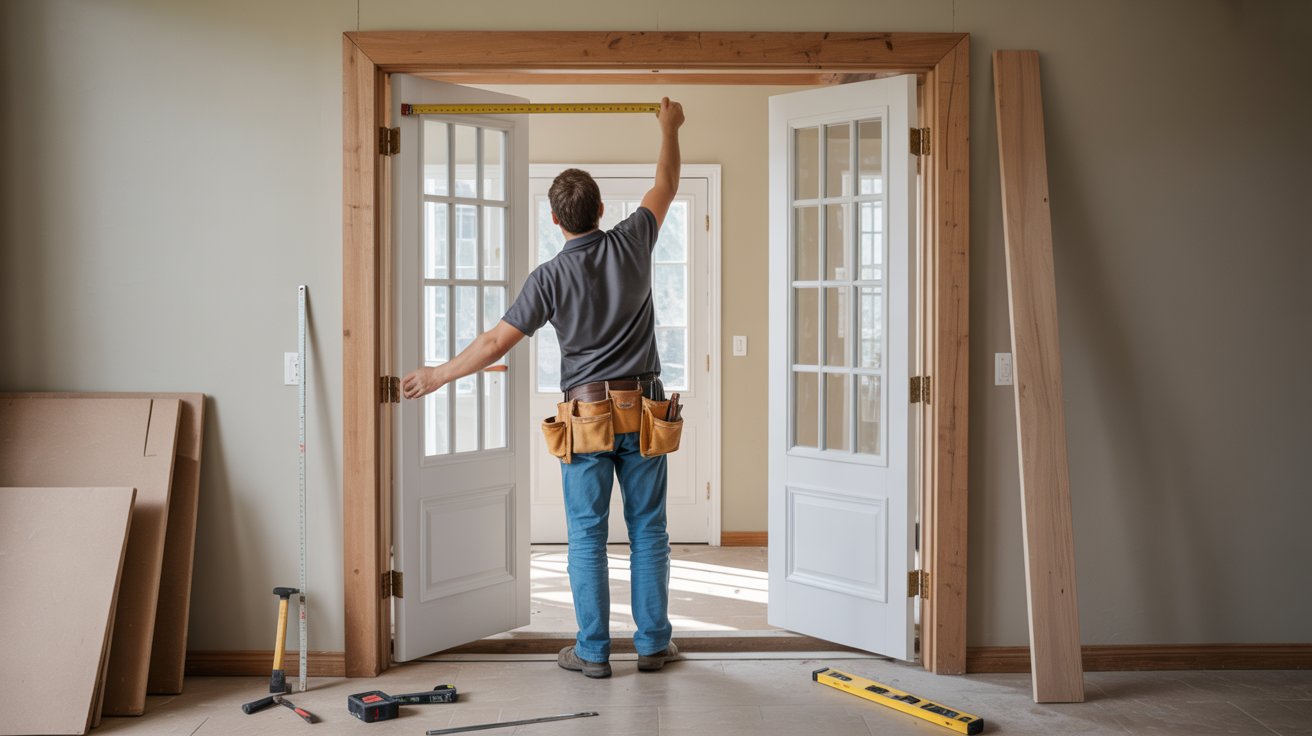
Grab your long level and carpenter’s square. Check if the opening is actually square. Measure the height on both sides.
Then measure the width at top and bottom. Finally, measure both diagonal corners. All measurements should match.
If they don’t, your opening isn’t square. Fix any uneven framing you find. Sometimes you need to shave down high spots.
Add extra support where the structure feels weak. Better to fix it now than have problems later.
Step 3: Install the New Door Frame
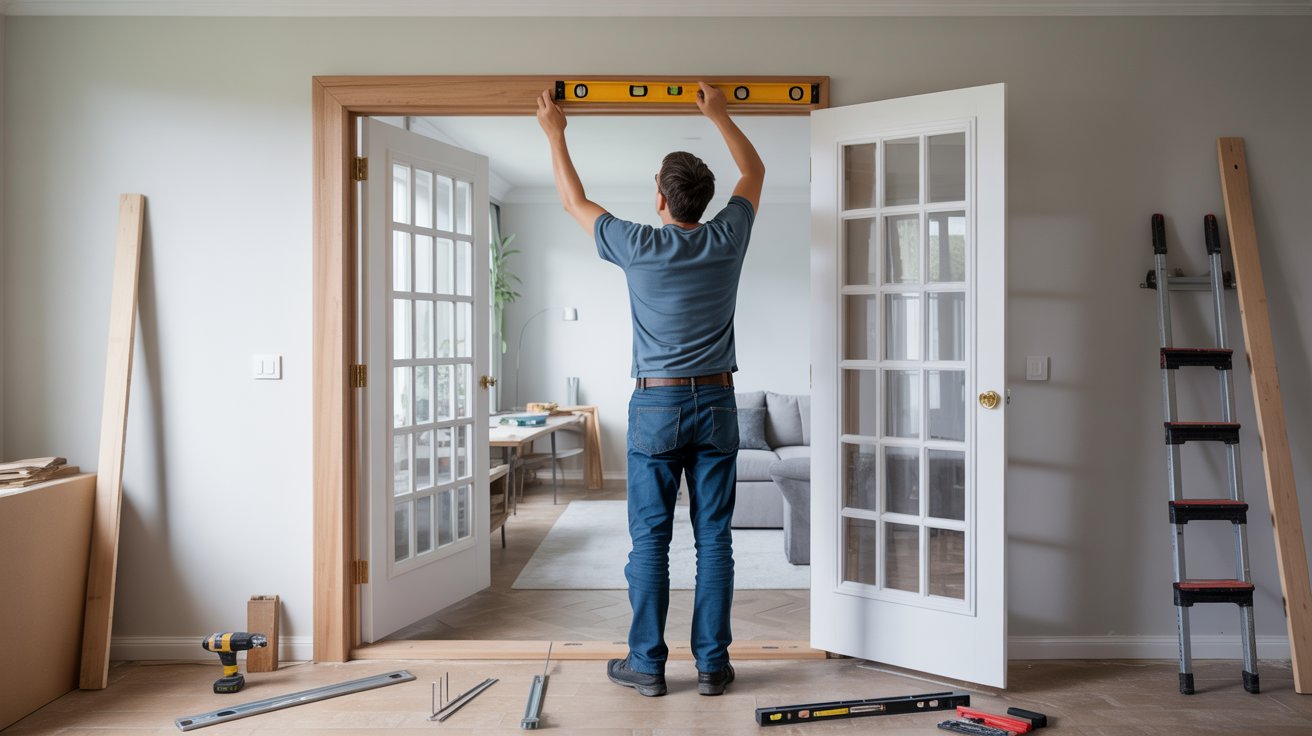
Set the frame into the opening. Line it up so it looks centered and straight. Slide shims between the frame and the opening at key points.
These create the level surface you need. Drill pilot holes through the shims and into the frame. This prevents wood from splitting.
Put in a few nails to hold everything in place. Don’t drive them all the way in yet.
Step 4: Test Fit the French Doors
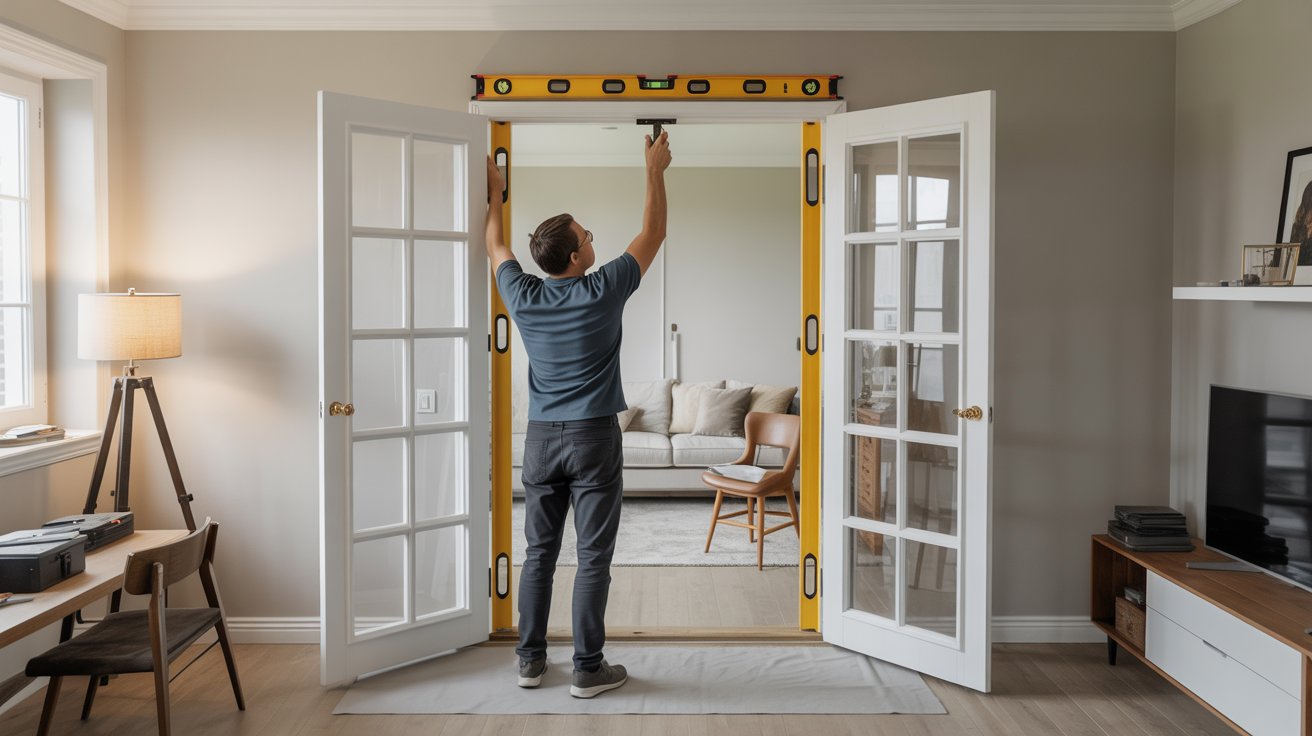
Swing the doors open and closed several times. They should move smoothly without sticking. Look for gaps between the doors and frame.
Also check if the doors rub anywhere. Move the shims around until the doors work right. You might need to add or remove some.
Use your level to confirm all sides are plumb. A door that’s not plumb will never close properly.
Step 5: Secure the Frame Permanently
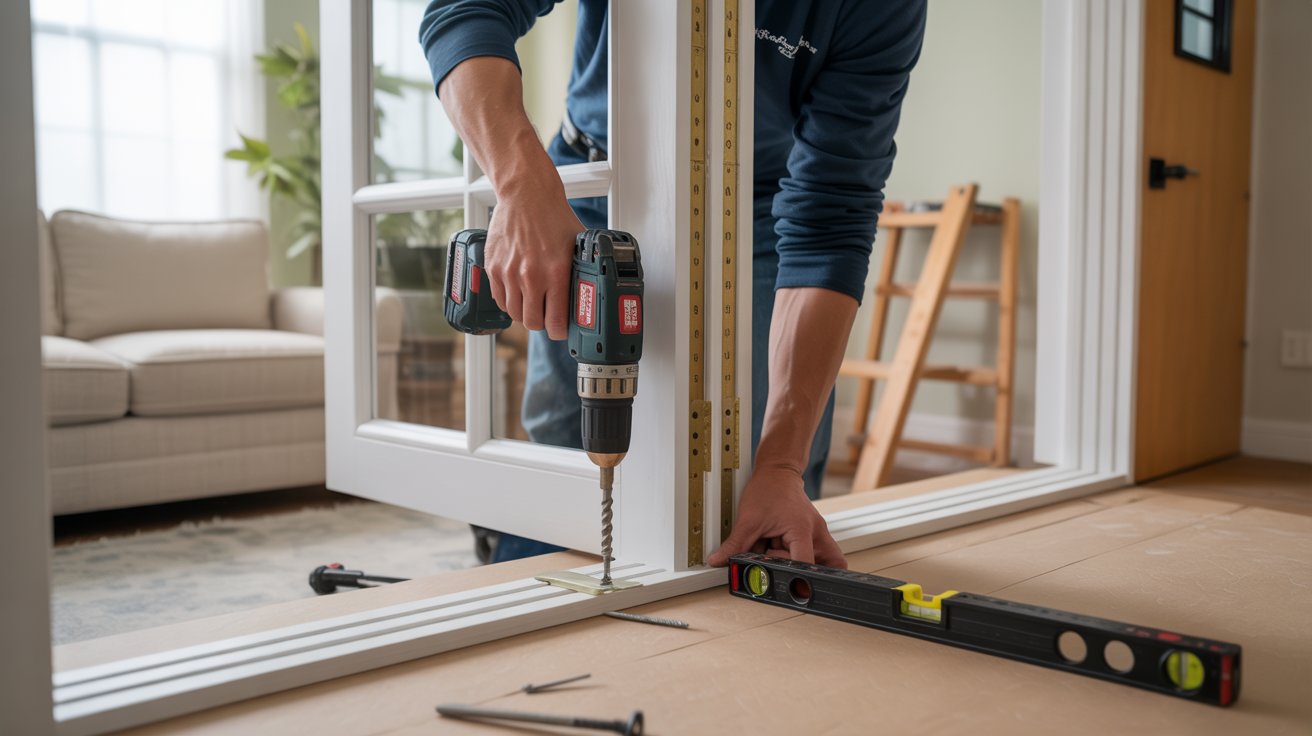
Replace those temporary nails with long screws. Drive them through the frame and shims into the wall studs.
Tighten each screw evenly. Go around the frame in a pattern rather than finishing one side at a time.
This prevents the frame from twisting as you work. Keep checking with your level as you go.
Step 6: Hang the French Doors
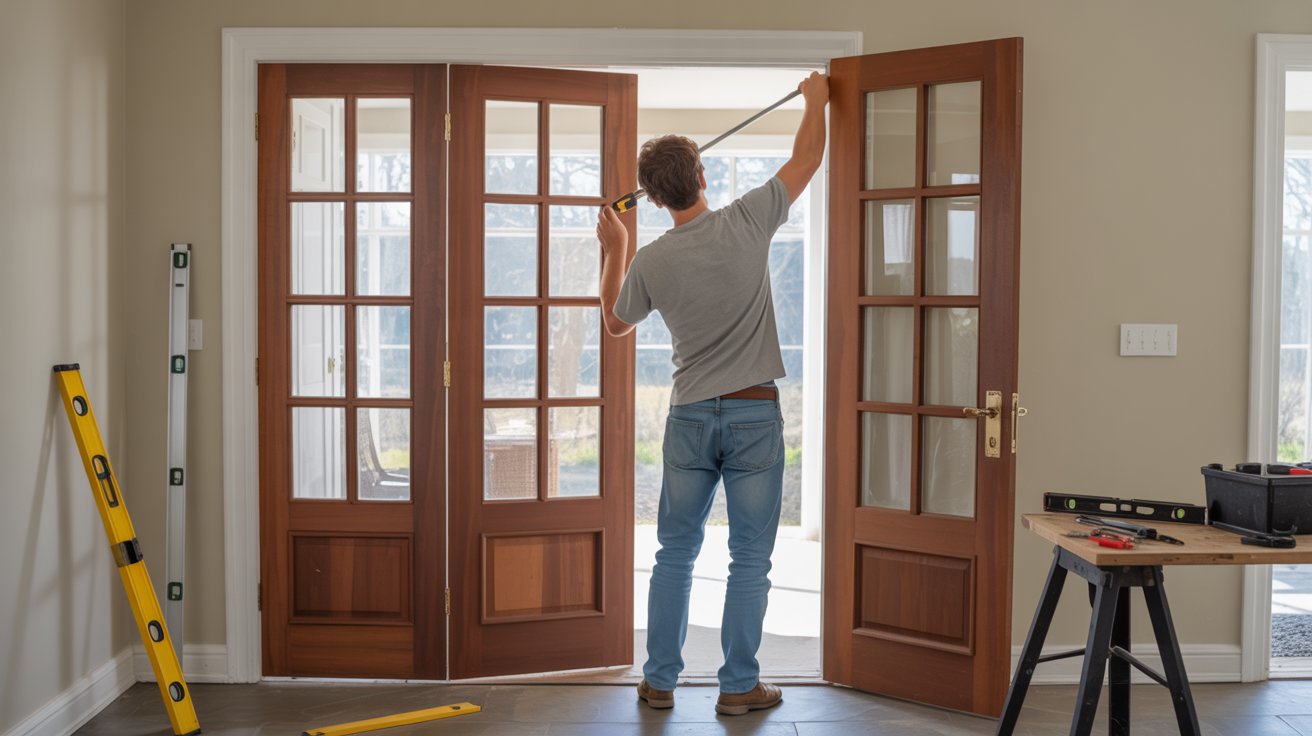
Line up the hinges on both the frame and door. The position needs to be exact for proper balance.
Make sure there’s equal space between both doors when they’re closed. This looks better and works better.
Attach the handles, knobs, and latches according to what the manufacturer tells you. Each brand is a bit different.
Test everything as you install it. The hardware should feel solid and work smoothly.
Step 7: Reinstall Trim and Add Finishing Touches
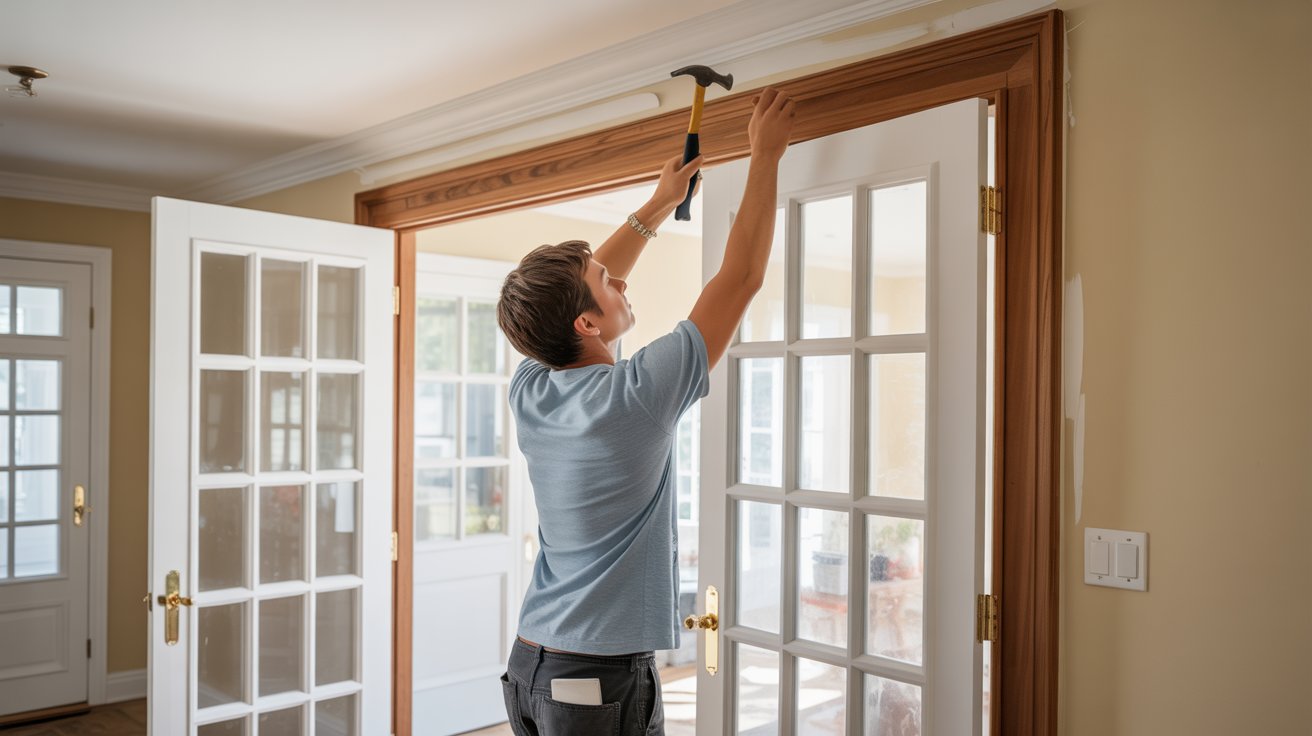
Remember those labels you made? Now they pay off. Fit each trim piece back where it came from. Nail the trim securely around the new frame.
Fill any nail holes with wood filler. Run a bead of caulk along the seams between trim and wall. This seals out drafts.
Paint or stain the trim to match your room. If these are exterior doors, add weatherproofing to protect against rain and sun.
Final Checks Before Finishing
Test all door functions and fix any issues to ensure your French doors operate perfectly for years.
Do a complete swing test from fully open to fully closed. The doors should move without effort. Check that the latch catches properly every time.
Give each door a gentle tug to verify it’s secure. Misaligned doors usually mean you need to adjust the hinges.
Loosen the screws slightly and shift the door. If doors rub on the frame, look for where they’re catching.
You might need to plane down that spot. Loose hinges need tightening.
If screws won’t tighten, remove them and fill the holes with wood glue and toothpicks, then reinsert.
Conclusion
You now know how to install French doors from start to finish. I installed these in my dining room last year, and the extra light changed everything.
Take your time with measurements and leveling. Those steps matter most. If the frame sits crooked or the doors bind, call a professional.
Some jobs need expert hands. Ready to start? Share your results in the comments below. I’d love to see what you create.
Frequently Asked Questions
How long does it take to install French doors?
Most DIY installations take 4 to 6 hours for experienced people. First-timers should plan for a full day to avoid rushing important steps.
Can I install French doors by myself?
You can do it alone, but a helper makes it much easier. Doors are heavy and awkward. An extra pair of hands helps with lifting and alignment.
Do French doors need special frames?
Yes, French doors require frames designed for double-door systems. Regular door frames won’t work. Buy a complete kit that includes the proper frame.
What’s the best material for French doors?
Wood looks classic but needs maintenance. Fiberglass resists weather and doesn’t warp. Vinyl costs less but doesn’t feel as solid. Pick based on your climate and budget.
How do I weatherproof exterior French doors?
Apply weatherstripping around all edges where doors meet the frame. Use exterior-grade caulk on seams. Add a door sweep at the bottom to block drafts and water.
