

Getting cabinet height from floor measurements right can make or break your kitchen’s functionality. I learned this when I helped plan my sister’s kitchen remodel.
We triple-checked every measurement, and those extra hours saved us from costly mistakes. Wrong heights mean reaching too high or bending too low every single day.
In this guide, I’ll show you standard heights for base, wall, and tall cabinets. You’ll learn how ceiling height affects your choices, what factors influence positioning, and how to measure accurately.
I’ll cover practical tips and real measurements so you can create a kitchen that works comfortably for your household.
Standard Cabinet Heights From the Floor
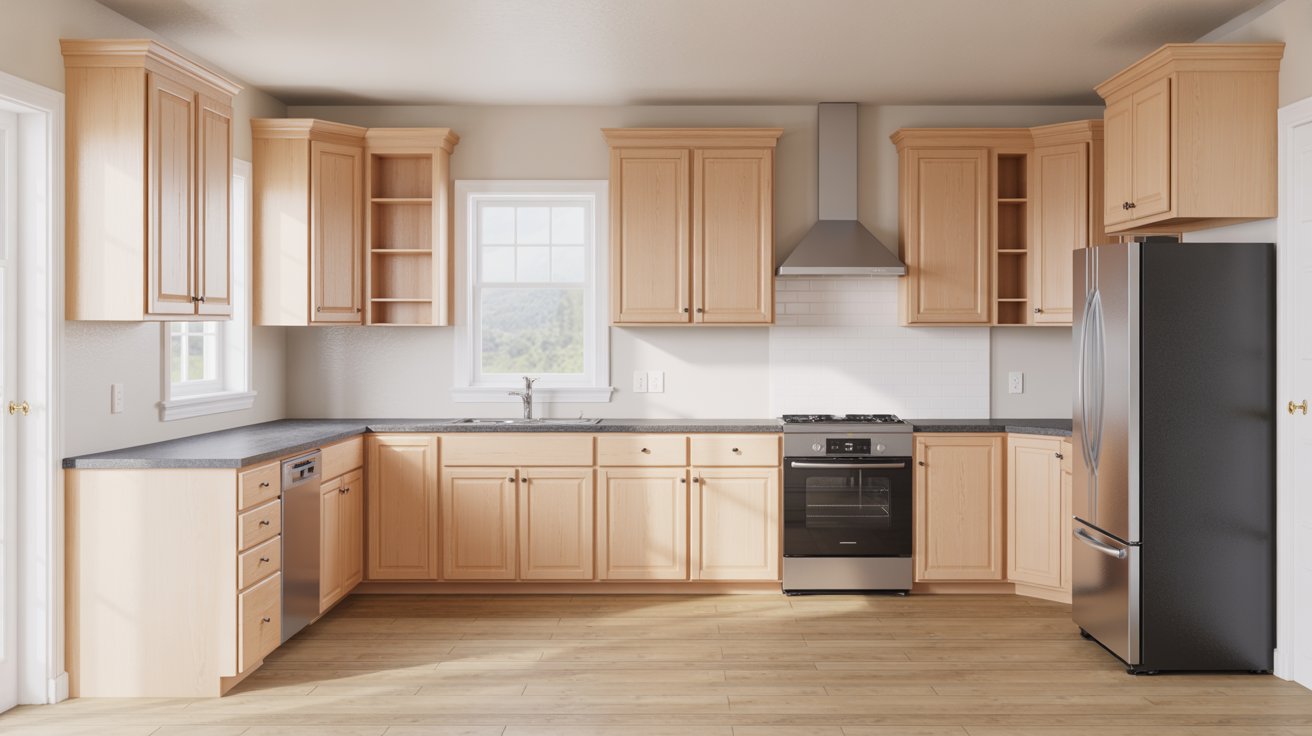
Base cabinets measure 34.5 inches tall without a countertop, or 36 inches with a standard countertop added. They’re typically 24 inches deep with widths from 9 to 48 inches. The toe kick at the bottom is 4.5 inches. Thick countertops or special appliances may need height adjustments.
Wall cabinets sit 54 inches from the floor at the bottom, creating 18 inches of space above your counter. Common heights are 30, 36, 39, and 42 inches. Standard depth is 12 inches, except over refrigerators where they can be 24 inches deep.
Tall cabinets come in heights of 84, 90, 93, and 96 inches to match ceiling heights. They’re either 12 or 24 inches deep and typically reach close to the ceiling for maximum storage.
How Ceiling Height Affects Cabinet Placement
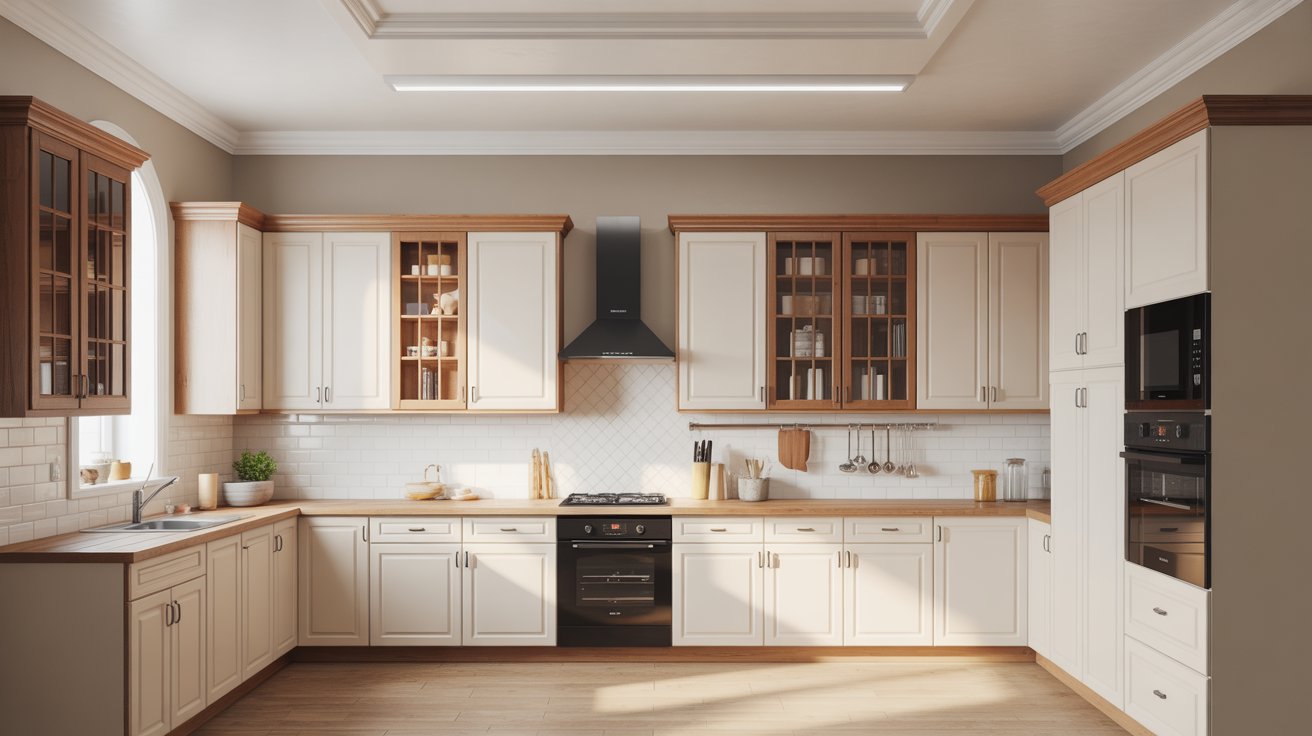
Your ceiling height determines which cabinet sizes work best and how much storage you can fit.
8-foot ceilings: Standard approach
Most homes have 8-foot ceilings. Use 30-inch or 36-inch wall cabinets here. This leaves minimal space above the cabinets.
You can add crown molding at the top. Some builders include soffits, but these collect dust and waste storage space.
9-foot ceilings: Extra height options
Nine-foot ceilings let you install 36-inch or 42-inch wall cabinets comfortably. The extra height creates a more open feel.
This works great for adding decorative elements or lighting above cabinets without looking awkward.
10+ foot ceilings: Custom solutions
High ceilings open up creative options. Stacked cabinets are popular, with one row of cabinets above another. Custom cabinets extending nearly to the ceiling provide tons of storage.
You’ll need a step stool or ladder for the highest shelves. Leave space for crown molding to bridge the gap between cabinets and ceiling.
Factors That Influence Cabinet Height
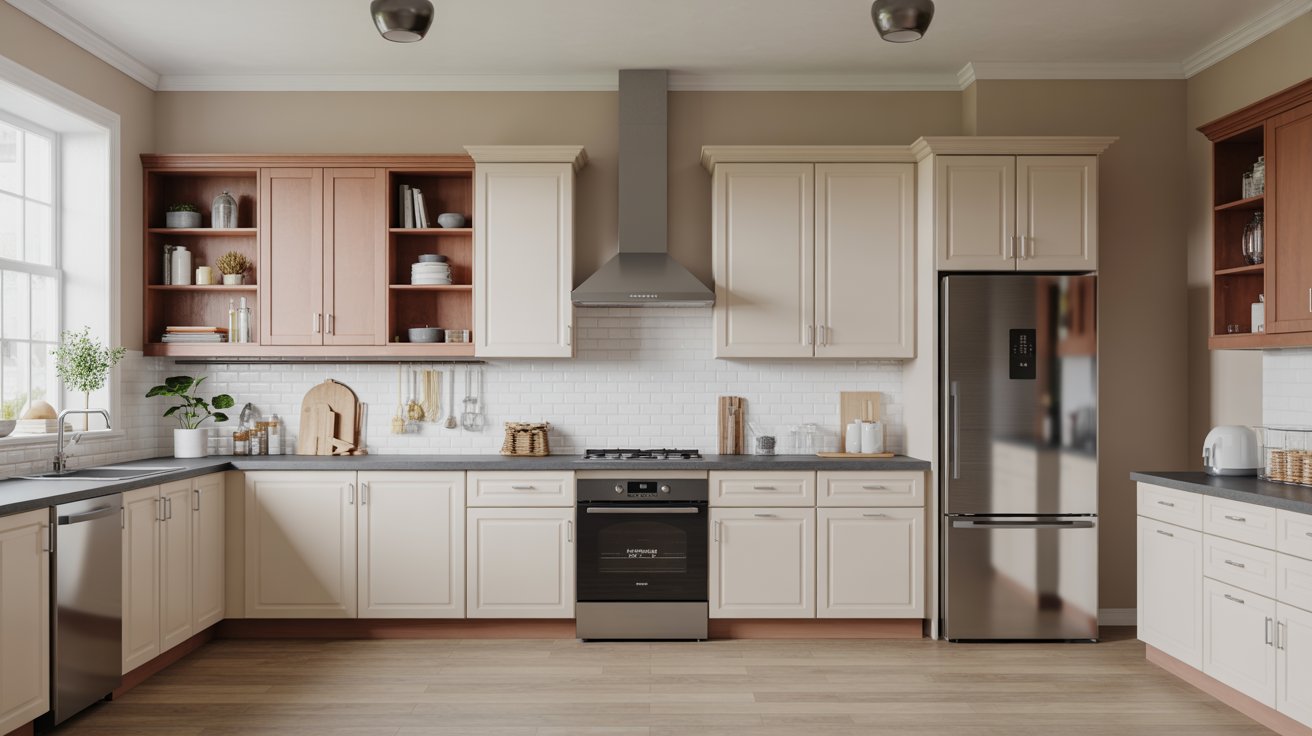
Several key factors beyond standard measurements affect where you should place your cabinets.
User height and accessibility
Your height matters when setting cabinet positions. Shorter users benefit from lower wall cabinets for easy reach.
Taller users might want base cabinets slightly higher by adding a thicker countertop or adjusting the toekick. Step stools, pull-out shelves, and lazy Susans help everyone access cabinets comfortably.
Appliance integration
Appliances dictate certain measurements. Range hoods need at least 24 inches of space between the cooktop and the bottom of the hood.
Refrigerators need space for doors to open fully without hitting cabinets. Keep wall cabinets high enough to use countertop appliances like coffee makers and toasters comfortably.
Kitchen layout
An ergonomic workflow means you don’t bend or stretch too much during cooking. Base cabinets, wall cabinets, and tall cabinets should align visually.
Matching depths creates a cohesive look. Wall cabinets at consistent heights feel more organized. Your main prep area should have the most convenient cabinet heights.
Measuring and Installing Cabinets Accurately
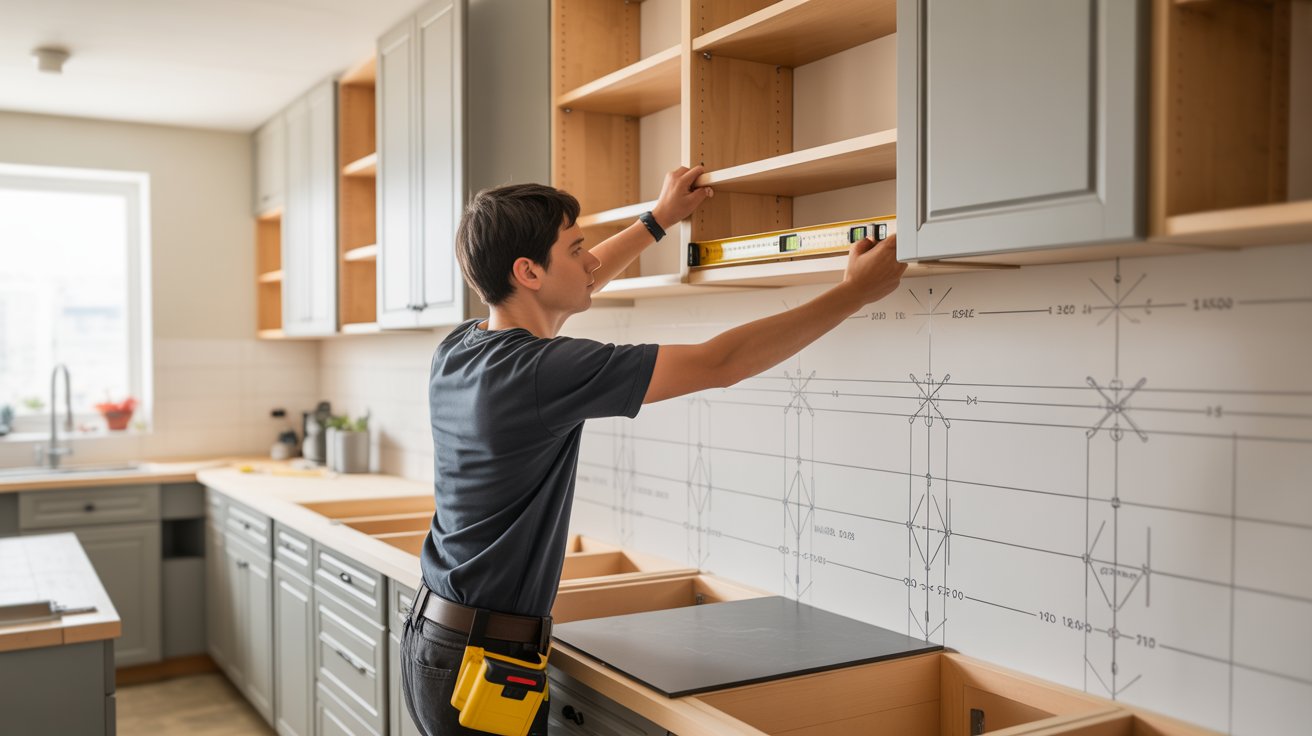
Precise measurements are critical to avoid costly mistakes and ensure your cabinets fit perfectly.
Start with floor-to-ceiling measurements:
Measure from the finished floor to the ceiling in several spots. Floors and ceilings aren’t always level. Find the lowest point and work from there.
Write down all measurements. Don’t trust your memory when precision matters.
Account for all elements:
Countertop thickness varies from 1 to 2 inches. Granite and quartz are typically 2 inches. Laminate is closer to 1 inch. Factor this into your total base cabinet height.
Backsplashes add height behind the counter. Most are 4 inches, but some go higher. This doesn’t affect the main cabinet height but matters for planning.
Crown molding at the top of wall cabinets needs space. Typically 2 to 4 inches. Decide early if you want molding so you can plan accordingly.
Timing matters:
Always measure after installing finished flooring. Tile, hardwood, or vinyl affects the overall floor height. Measuring before flooring is installed leads to incorrect cabinet heights.
Double-check measurements before ordering cabinets. Mistakes are expensive to fix once cabinets arrive.
Spacing checks:
Confirm the space between the counter and wall cabinet bottom. The standard 18 inches works for most people, but verify this feels right for you.
Check the space above tall cabinets. A small gap is fine, but plan how you’ll finish it. Some people add trim. Others extend the cabinets with a custom filler piece.
Make sure base cabinets sit firmly on the floor. Shim as needed to level them before securing to walls.
Tips for Getting Cabinet Heights Right
These practical tips will help you avoid common mistakes and create a kitchen that works perfectly for you.
- Measure your ceiling height in multiple spots since floors and ceilings aren’t always level, then work from the lowest point.
- Always install and measure flooring first before ordering cabinets to account for the additional floor height.
- Test the 18-inch space between countertop and wall cabinets by mocking it up with cardboard to see if it feels right for you.
- Consider who uses the kitchen most when deciding heights, especially if someone is significantly shorter or taller than average.
- Leave extra space above ranges for proper ventilation, with range hoods positioned at least 24 inches above the cooktop.
- Account for countertop thickness in your measurements since granite and quartz add 2 inches while laminate adds about 1 inch.
- Mark wall stud locations before installation to ensure cabinets mount securely and don’t rely solely on drywall anchors.
Conclusion
Getting your cabinet height from floor measurements right makes all the difference in how your kitchen feels. I spent hours double-checking measurements for my sister’s kitchen remodel, and seeing her cook comfortably in that space was worth every minute.
Base cabinets at 36 inches, wall cabinets at 54 inches, and tall cabinets reaching up create a workspace that just works. Measure after your flooring is done and don’t skip the countertop thickness.
If you’re unsure about anything, reach out to a professional. Have questions about your own kitchen? Drop a comment below.
Frequently Asked Questions
What is the standard cabinet height from floor for base cabinets?
Base cabinets are 34.5 inches tall without a countertop. Add a standard countertop, and the total height is 36 inches.
How high should wall cabinets be from the floor?
Wall cabinets sit 54 inches from the floor at the bottom. This leaves 18 inches of space above your countertop.
Can I adjust cabinet heights for my height?
Yes. Shorter people can lower wall cabinets for easier reach. Taller people can raise base cabinets for better comfort.
What cabinet height works best with 8-foot ceilings?
Use 30-inch or 36-inch wall cabinets with 8-foot ceilings. This leaves little space at the top for a clean look.
Do I need to measure before or after installing flooring?
Always measure after flooring installation. Flooring thickness changes the floor height and affects your cabinet measurements.
