

Have you ever struggled with awkwardly placed cabinet pulls? Getting them right makes a huge difference in how your kitchen or bathroom works.
When you place them correctly, opening drawers and doors becomes easier and more comfortable. The right size also ties your whole design together.
This guide walks you through everything you need to know. You’ll learn where to position your pulls, how to pick the right size, and get helpful tips from the pros.
By the end, you’ll feel confident making choices that look good and work even better for your daily routine.
Understanding Cabinet Hardware Basics
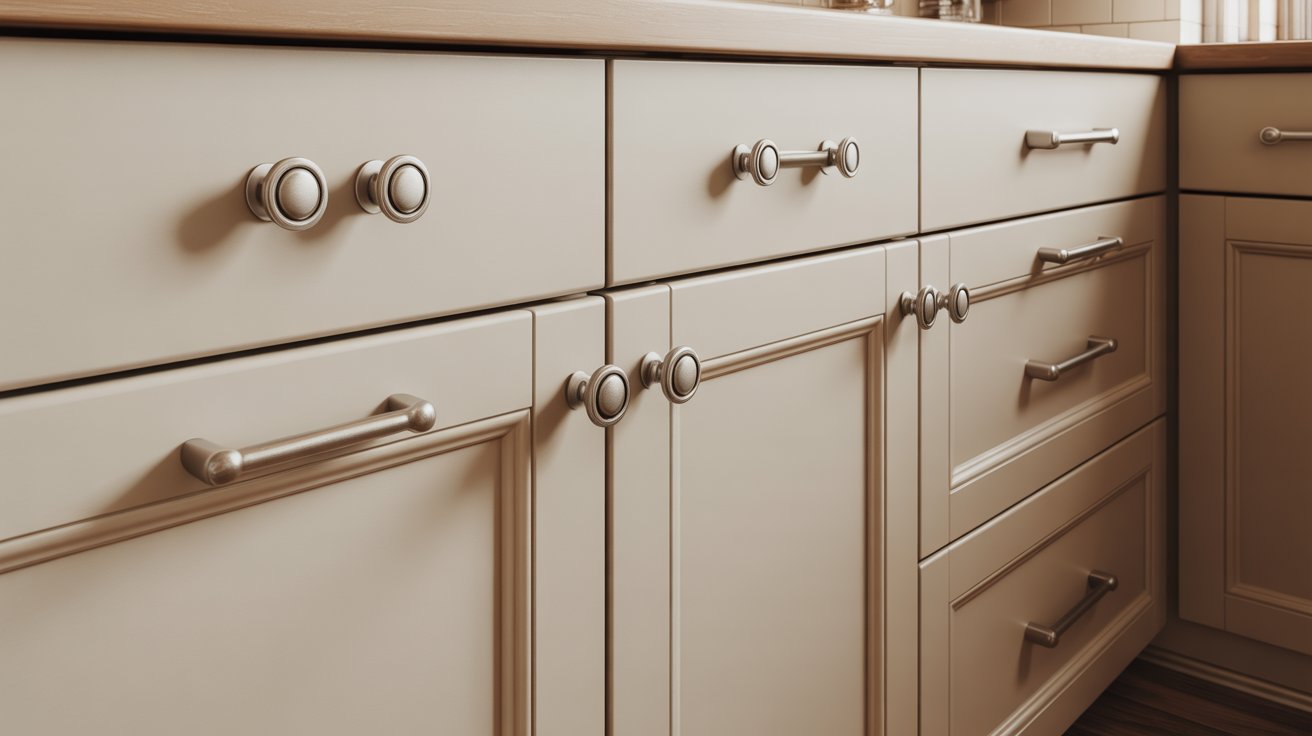
Before you start installing, you need to know the difference between knobs and pulls and how to measure them correctly.
Types of Cabinet Hardware (Knobs vs. Pulls)
Knobs are single-point handles that you grip with your fingers. They work well on cabinet doors and smaller drawers. You’ll find them in round, square, and decorative shapes.
Pulls are longer handles with two mounting points. They give you a better grip, especially on larger drawers and heavy doors. Most people find them easier to use than knobs.
Both styles can work in the same space. Many homeowners mix knobs on doors with pulls on drawers for a balanced look.
Key Measurements You Must Know
- Centre-to-centre (CC): The distance between the two screw holes on a pull. Common sizes are 3 inches, 4 inches, and 5 inches. This is the most important measurement when replacing hardware.
- Overall length: The total length of the pull from end to end. A 5-inch pull might have a 3-inch center-to-center, so check both numbers.
- Projection: How far the pull sticks out from your cabinet. Lower projection works better in tight spaces or near walls.
- Grip comfort: How the pull feels in your hand. Thicker pulls are easier to grip, especially if you have arthritis or hand pain.
Cabinet Pull Size Guide (Choosing the Right Length)
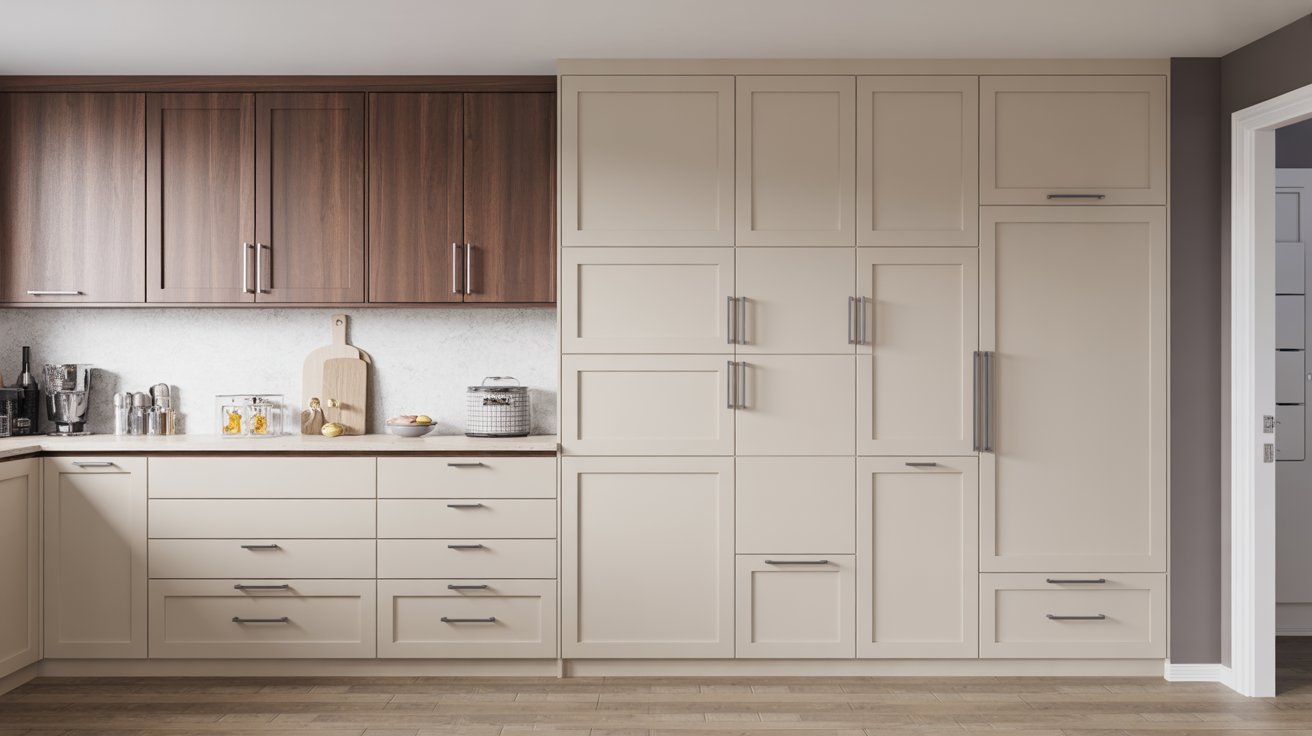
Picking the right pull size affects both how your cabinets look and how well they function in daily use.
Standard Pull Sizes & Their Uses
- 3-inch pulls: Best for small drawers, bathroom cabinets, and narrow cabinet doors. These work well in compact spaces.
- 5-inch pulls: The most popular size for standard kitchen drawers and cabinet doors. They fit most applications comfortably.
- 7-inch pulls: Good for wider drawers and larger cabinet doors. They give you more grip space and look balanced on bigger surfaces.
- 12-inch pulls: Perfect for deep drawers, pantry doors, and modern kitchen designs. These make a bold statement.
- 18-inch pulls: Used on oversized drawers, appliance panels, and contemporary kitchens. They create a sleek, streamlined look.
How to Choose Pull Size Based on Drawer Width
Lets understand few basics to choose the right size:
The 1/3 rule explained
Take your drawer width and divide it by three. That gives you a good starting point for pull size. For example, a 12-inch drawer works well with a 4-inch pull.
This keeps everything proportional and balanced.
When to size up for modern designs
Modern and contemporary kitchens often break this rule. You can go bigger for a more dramatic look.
A 12-inch pull on an 18-inch drawer creates clean lines and a high-end feel.
Pull Size Tips for Different Cabinet Types
- Base cabinets: Use 4 to 5-inch pulls on doors and 5 to 7-inch pulls on drawers. These sizes feel comfortable when you’re standing and reaching down.
- Upper cabinets: Stick with 3 to 4-inch pulls since these cabinets are smaller. Oversized pulls look out of place up high.
- Oversized pantry doors: Go with 12 to 18-inch pulls for tall pantry doors. The extra length makes them easier to open and matches the scale of the door.
- Appliance panels: Use pulls that match your drawer sizes, typically 12 to 18 inches. This keeps your appliances looking like part of the cabinetry.
Cabinet Hardware Placement Guide
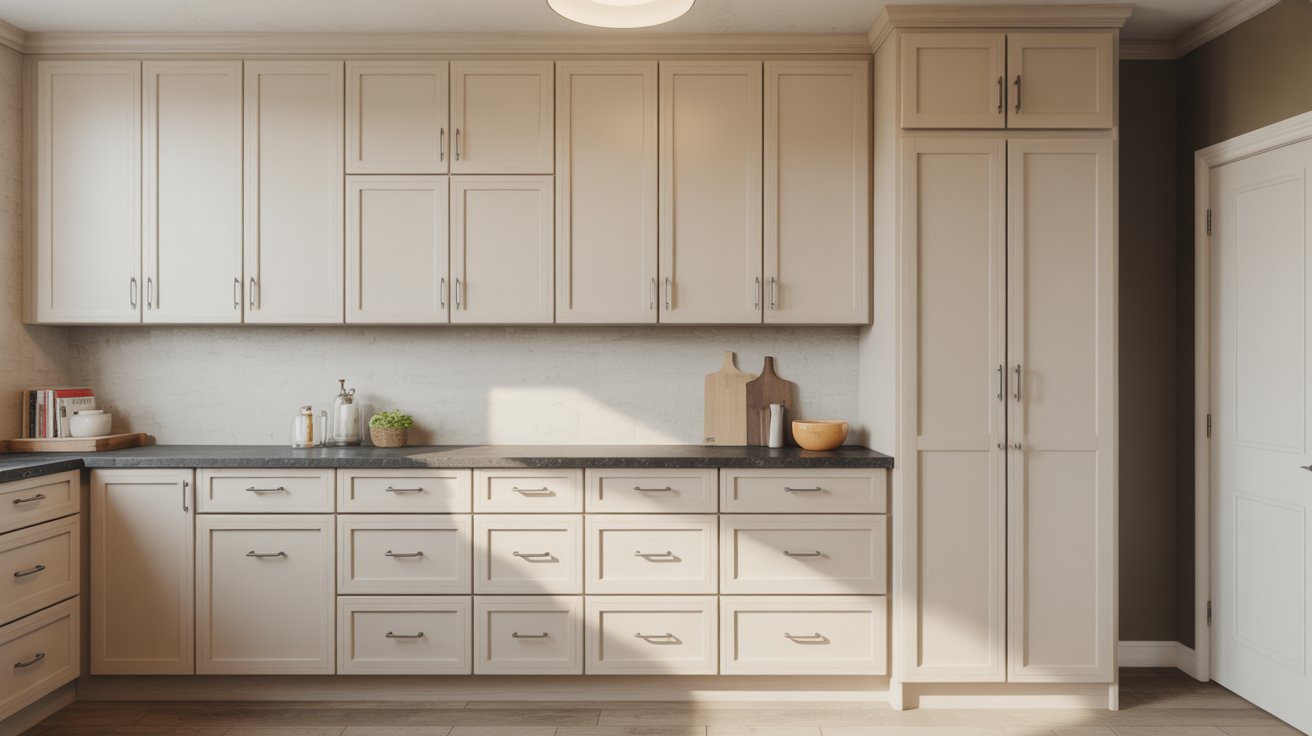
Where you put your hardware matters just as much as the size you choose. Good placement makes cabinets easier to use.
Placement on Cabinet Doors
Place pulls 2.5 to 3 inches from the edge of the door. This gives you enough room to grip without hitting the cabinet frame.
Vertical pulls give a traditional look. Horizontal pulls feel more modern and work well on wider doors.
On tall pantry doors, place the pull 36 to 48 inches from the floor. This feels more natural than placing it at the top corner.
For lower cabinets, put knobs on the top corner. For upper cabinets, put them on the bottom corner. Keep them about 2.5 inches from both edges.
Placement on Drawer Fronts
Center most pulls on the drawer front, both horizontally and vertically. Use a measuring tape to find the exact middle.
Small drawers under 12 inches need just one centered knob or 3-inch pull.
Medium drawers between 12 and 24 inches work best with a 4 to 7-inch pull in the center.
Large drawers over 24 inches can handle 12-inch pulls or two separate pulls spaced evenly.
Placement for Modern Slab-Style Cabinets
Keep all pulls at the same height and distance from edges for a clean look.
Stack your drawer pulls in a straight vertical line. This makes your kitchen look organized and intentional.
Trending Pull Sizes & Placement Styles
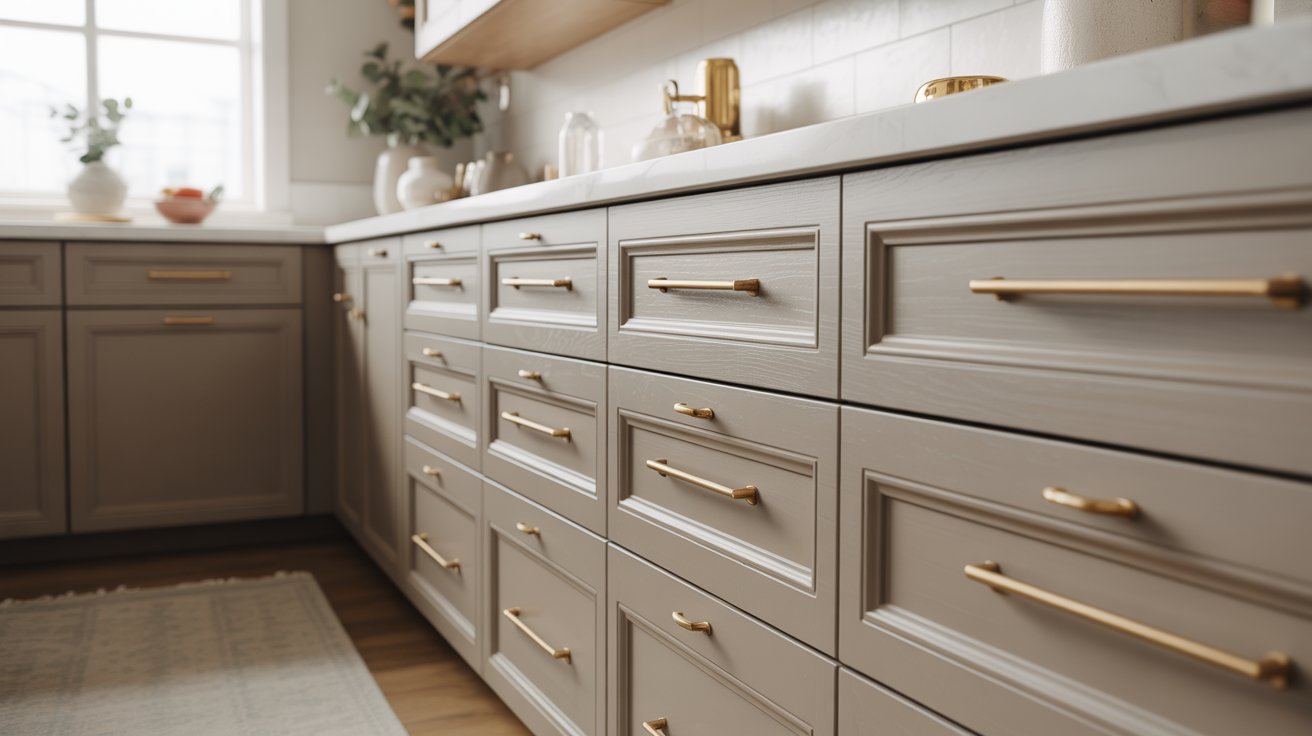
Cabinet hardware trends keep changing. Here’s what homeowners are choosing right now for a fresh, current look.
Longer Pulls for a Modern Look
Oversized pulls between 12 to 18 inches are popular right now. These long handles create clean horizontal lines across your cabinets and make them easier to open from any angle.
Some homeowners use full-width pulls that span the entire drawer. This creates a sleek, handleless appearance that feels very current.
Mixing Hardware Styles (Knobs + Pulls)
You don’t have to pick just one style. The most common approach uses knobs on upper cabinet doors and pulls on lower drawers.
Another option combines different pull lengths. Use shorter pulls on upper cabinets and longer ones on base cabinets.
Keep your finishes consistent when mixing styles. All brass or all black looks intentional.
Popular Finishes for Contemporary Spaces
Matte black remains the top choice for modern kitchens. It works with almost any cabinet color.
Brushed brass and gold tones add warmth without feeling too shiny. Stainless steel and chrome still work well in very modern spaces.
Mixed metal finishes are trending too. Some homeowners use black pulls with brass knobs for added personality.
Common Mistakes to Avoid
- Installing pulls too high or too low makes cabinets awkward to use. Place them at consistent, comfortable heights based on whether they’re on upper or lower cabinets.
- Using different pull sizes randomly across your kitchen looks unplanned and messy. Stick to one or two sizes and use them consistently throughout the space.
- Forgetting to check finger clearance between the pull and cabinet causes bruised knuckles. Leave at least 2.5 inches from the edge so your hand fits comfortably.
- Placing pulls at different heights on similar cabinets breaks the visual flow. Measure carefully and align all hardware at the same distance from edges.
- Choosing pulls that are too small for large drawers makes them hard to open. Follow the one-third rule to keep everything proportional and functional.
Final Thoughts
Getting your cabinet pulls right brings together both function and beauty. When you place them correctly and choose the right sizes, your whole kitchen or bathroom feels more polished and works better every day.
Take your time with measurements and use the charts and rules we’ve covered here. These guidelines exist because they work. I’ve seen countless kitchens go from feeling just okay to feeling completely finished, all because someone took the extra effort to get the hardware details right.
Your cabinets deserve hardware that makes sense and looks good. You’ve got this.
Frequently Asked Questions
What is the standard height for placing cabinet pulls?
For lower cabinets, place pulls on the top corner about 2.5 to 3 inches from the edges. For upper cabinets, place them on the bottom corner at the same distance for consistent, comfortable access.
How do I know what size pull to buy for my drawers?
Use the one-third rule as a guide. Divide your drawer width by three to get a good pull size. For example, a 15-inch drawer works well with a 5-inch pull.
Can I mix knobs and pulls in the same kitchen?
Yes, mixing hardware is very common and looks great. Most people use knobs on cabinet doors and pulls on drawers, keeping the finish consistent throughout.
How much space should I leave between the pull and cabinet edge?
Leave at least 2.5 to 3 inches between the pull and the cabinet edge. This gives your fingers enough clearance to grip comfortably without hitting the frame.
What pull size works best for large pantry doors?
Large pantry doors need 12 to 18-inch pulls placed at a comfortable height, around 36 to 48 inches from the floor. This makes them easy to open and matches the door’s scale.
