

Thinking about quartzite countertops for your kitchen? I completely understand why. You want a surface that looks beautiful but can also stand up to real life.
And let’s be honest, the big question you’re asking is: can I set my hot pans on it without worrying?
I’ve talked to so many homeowners who have the same concern. You’re cooking dinner, you grab a pot off the stove, and you don’t want to stress about damaging your counters.
In this guide, I’ll walk you through how quartzite handles heat and compare it with granite, quartz, and other materials.
Understanding Quartzite
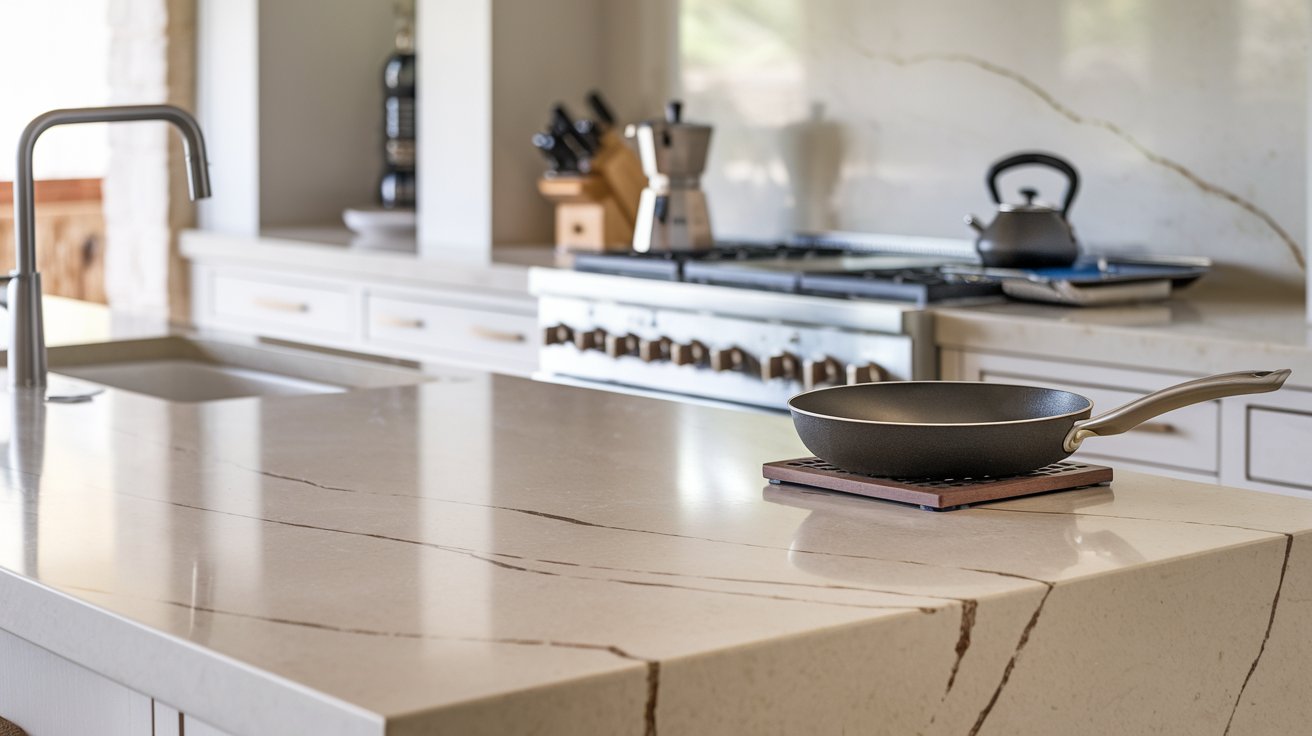
Learn what quartzite really is and why its heat resistance matters for your everyday kitchen activities.
What Is Quartzite?
Quartzite is a natural stone that forms deep underground. It starts as sandstone and transforms under extreme heat and pressure over millions of years. This process creates one of the hardest natural stones available.
Here’s a key difference: quartzite and quartz are not the same. Quartzite is completely natural. Quartz countertops are engineered products made from ground quartz mixed with resins and polymers. This distinction affects how they handle heat.
Why Heat Resistance Matters for Countertops
Think about your daily kitchen routine. You pull hot pans off the stove, set down baking trays from the oven, and place your coffee pot on the counter. These actions happen constantly.
Your countertops need to handle this heat without damage. When hot items meet cool surfaces, thermal shock can occur. Some materials handle this stress better than others. Understanding heat resistance helps you avoid costly repairs and keeps your kitchen looking great.
Heat Resistance of Quartzite
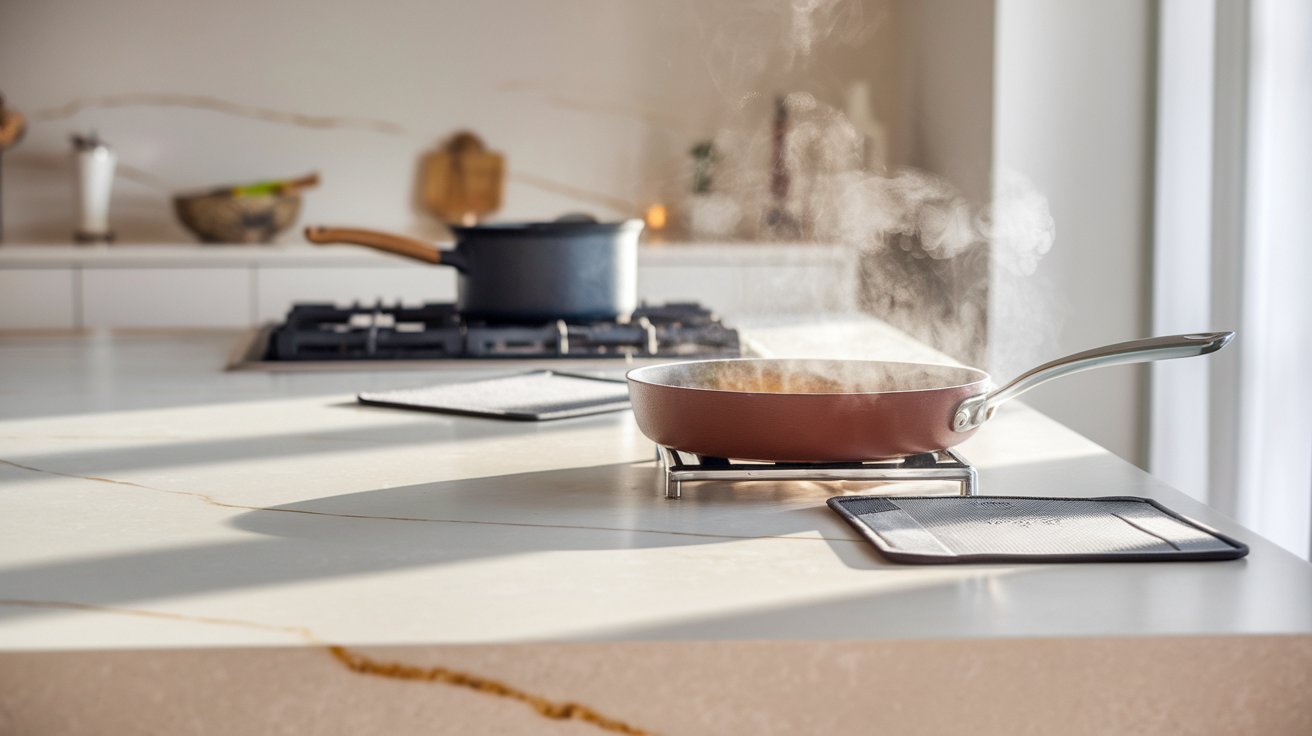
Find out how quartzite handles high temperatures and what precautions you should take in daily use.
Natural Heat Resistance Properties
Quartzite handles heat remarkably well. You can place hot items on it without seeing cracks or color changes. This strength comes from how it formed in the first place.
Remember, quartzite developed under extreme heat and pressure deep in the earth. This natural process gave it built-in resistance to thermal stress. The stone has already survived temperatures much higher than anything in your kitchen.
Limitations and Precautions
But quartzite isn’t completely bulletproof. Sudden temperature changes can cause problems. If you place a very hot pan on a cold counter, thermal shock might occur. This rapid change can create small cracks over time.
There’s another thing to consider. Most quartzite counters have a sealer applied to protect against stains. Direct heat can break down this sealer faster than normal wear and tear.
Here’s my advice: use trivets or hot pads when setting down hot items. This simple habit protects both the stone and its protective coating. It takes just seconds and can save you from future headaches.
Quartzite vs Other Countertop Materials
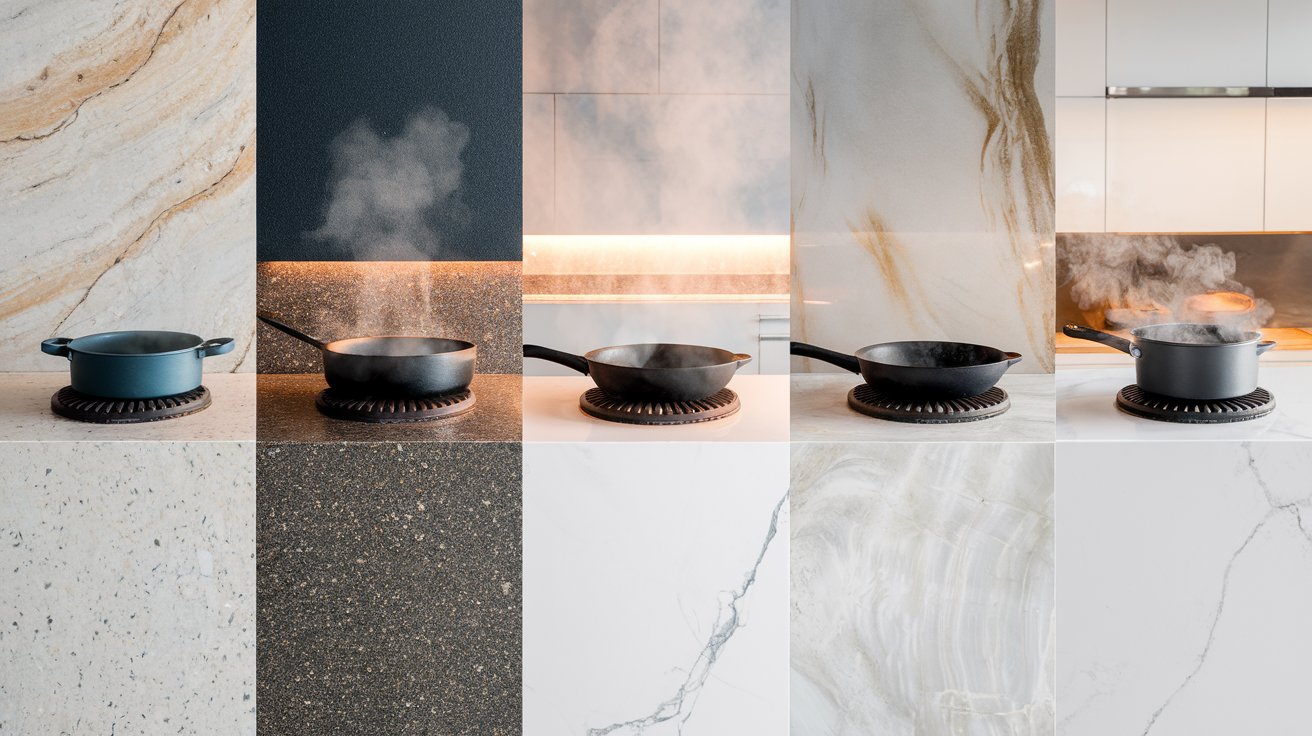
See how quartzite compares to granite, quartz, marble, and porcelain when it comes to handling heat.
Quartzite vs Granite
Both quartzite and granite handle heat well. They’re both natural stones that formed under high temperatures underground. But quartzite has a slight edge here.
Quartzite went through more intense heat during its formation. This makes it a bit more resistant to thermal stress. Granite is still very durable and heat resistant, but it may have slightly lower tolerance when exposed to extreme temperatures repeatedly.
Quartzite vs Quartz
This is where you’ll see a major difference. Quartz countertops are engineered, which means they contain polymer resins that bind the material together. These resins start breaking down at around 150°C or 300°F.
A hot pan fresh off your stove can easily reach 200°C or higher. That’s why quartz manufacturers warn against placing hot items directly on the surface. Quartzite doesn’t have this limitation since it’s pure natural stone with superior heat resistance.
Quartzite vs Marble and Porcelain
Marble is beautiful but not ideal for heat exposure. It can etch and suffer damage from both heat and acidic substances. You’ll need to be more careful with marble than with quartzite.
Porcelain handles heat quite well and won’t crack or discolor. However, it doesn’t have the authentic natural stone look that many homeowners want. It’s a practical choice but different in appearance and feel.
Practical Tips for Protecting Quartzite Countertops from Heat
Simple habits that keep your quartzite counters safe and looking new for years to come.
- Use trivets and hot pads consistently: Make it a habit to place these under all hot cookware, even if quartzite can handle the heat. This protects your sealer from breaking down.
- Let items cool for a minute before setting them down: You don’t need to wait long, just give extremely hot pots and pans from the stove or oven a brief moment to cool slightly.
- Give your counters time to adjust: If your kitchen is very cold, let the stone warm up to room temperature naturally before placing hot items on it to avoid thermal shock.
- Reseal your quartzite regularly: Most counters need resealing once or twice a year. This maintains the protective barrier that guards against both heat damage and stains.
- Keep hot pads within easy reach: Store them near your stove and oven so you’re more likely to use them. Convenience makes protection automatic.
Conclusion
So, is quartzite heat-resistant? Absolutely. This natural stone handles high temperatures better than most materials, including engineered quartz and even granite.
I’ve seen countless kitchens where quartzite has held up beautifully for years. Just remember to use trivets and avoid sudden temperature changes.
These small steps keep your sealer intact and your counters looking great. With proper care, quartzite gives you that perfect mix of good looks and real-world performance.
It’s why so many homeowners choose it and why I confidently recommend it for busy kitchens.
Frequently Asked Questions
Can I put hot pans directly on quartzite countertops?
Yes, quartzite can handle hot pans without cracking or discoloring. However, I recommend using trivets to protect the sealer that’s applied to the surface from heat damage over time.
How hot can quartzite get before it’s damaged?
Quartzite formed under extreme temperatures and can withstand heat far beyond what your kitchen produces. The main concern is the sealer, which can degrade with repeated direct heat exposure above 150°C.
Is quartzite more heat resistant than quartz countertops?
Yes, quartzite is significantly more heat resistant than engineered quartz. Quartz contains resin binders that can melt or discolor at temperatures around 150°C, while quartzite has no such limitations.
Will thermal shock crack my quartzite counters?
Thermal shock can potentially cause cracks if you repeatedly place very hot items on cold quartzite surfaces. The risk is low, but using hot pads helps prevent this gradual stress from building up.
How often should I reseal quartzite to maintain heat protection?
Most quartzite counters need resealing once or twice per year. This maintains the protective barrier against stains and prevents heat from degrading the sealer faster than normal wear would.
